Do these 3 things before closing this tab:
1Clear out junk files and repair common Windows errors2Scan for outdated or missing drivers - takes under a minute3Repair Windows errors before they cause bigger problemsMost fish do not give birth to live young. They spawn: a female releases eggs and a male releases sperm, usually into the water, where fertilization occurs outside the body. Some species retain embryos and release fully formed young, and seahorse and sea-dragon males carry developing offspring and give birth.
Do fish lay eggs or give birth?
Both happen, but egg-laying is by far the usual pattern, especially among bony fish (teleosts). In a typical spawning event, the female releases roe (eggs) and the male releases milt (sperm) at the same time or in close sequence. Water carries sperm to the eggs, and each fertilized embryo develops using nutrients in its yolk.




In most fish, spawning and fertilization are external and completed in the water. The eggs then develop outside the parent’s body until they hatch. A smaller group uses internal fertilization and retains embryos inside a parent, eventually releasing live young.
How spawning works
- The fish prepare to spawn. Temperature, day length, suitable habitat and the presence of mates can signal that conditions are favorable. Some species migrate to a particular spawning ground; Atlantic salmon, for example, return from the sea to freshwater rivers.
- The female releases eggs. Depending on the species, she may broadcast them into open water, attach them to vegetation or another surface, place them in gravel or a cavity, or deposit them in a nest.
- The male releases milt. Sperm mixes with the eggs in the water or at the spawning site, producing external fertilization in the common pattern.
- Embryos develop. The fertilized eggs use their yolk while they develop. Eggs may float or drift, remain near the bottom, or stay attached to a substrate.
- Hatching and early life follow. The young emerge as larvae or small, formed fish, depending on the species and reproductive strategy.
Where fish eggs develop
Egg placement is as varied as fish habitat. Marine teleost eggs are often pelagic, meaning they float or drift in the water column and can be carried by currents. Freshwater eggs are commonly demersal, remaining on the bottom or attached to a substrate, although neither pattern applies to every species.
Quick wins for a faster PC:
Scan for outdated or missing drivers - takes under a minuteDriver Scan →Clear out junk files and repair common Windows errorsFree Scan →Broadcast spawning
Many fish release large numbers of eggs and sperm into open water, then provide no further care. Producing numerous eggs and larvae helps offset heavy losses from predators and environmental hazards.
Attached or hidden eggs
Sticky eggs may be fastened to plants, rocks or other surfaces. Other fish place eggs in gravel, shells, hollow objects or cavities, where the site offers shelter from currents and predators.
Nests and parental guarding
Some species build or use nests and defend the eggs or newly hatched young. Nest-guarding sunfish and catfish are examples. Parental investment can therefore range from none after spawning to active defense of offspring.
Rank #2
A 2018 review of reproduction at the air–water interface describes four broad modes across 18 teleost orders; its most common mode includes fish from 21 families. These categories show why “fish lay eggs” does not describe one single nesting behavior.
What’s actually slowing this PC down?
Pick the symptom - the matching free tool is one click away.
Which fish give live birth?
Live-bearing is an umbrella term for fish that fertilize eggs internally, retain the developing embryos and release formed young. The embryos may receive most of their nourishment from their own yolk, or receive more direct support from the mother.
Ovoviviparous reproduction
In ovoviviparous fish, eggs are fertilized and retained inside the parent until they hatch. The embryo is nourished mainly by yolk, and the mother releases young that are already developed. This is different from laying eggs externally, but it is not the same kind of placental nourishment seen in mammals.
Viviparous reproduction
In viviparous fish, embryos develop internally with more direct maternal support. Both ovoviviparous and viviparous species are commonly called livebearers in aquarium discussions.
Rank #4
Examples
Poeciliids—including familiar aquarium livebearers such as guppies, mollies, platies and swordtails—are well-known examples. A 2023 Ask Extension summary describes live-bearing in about a dozen families of bony fishes and sharks, showing that the strategy is uncommon compared with external spawning but spread across several lineages.
Smalltooth sawfish are a marine example. NOAA Fisheries describes them as yolk-sac viviparous: embryos remain inside the mother and are nourished by yolk sacs, then emerge as developed pups. Their gestation is estimated at about 12 months, and a female may give birth every other year.
Best Value
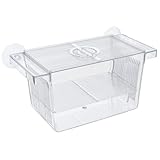
- Tiny Hatching Box: With inner size of 4.2" L x 2.7" W x 2.8" H, it protects newborn fry from being eaten or attacked. Suitable for feeding tiny fish or shrimp ONLY.
- Slotted Bottom Panel: It can effectively prevent soiling of the box by debris, food residues or excrement, and the slim slots in it keep the newborn fish from escaping.
- Floating Design: The balancing panel and 2 handles help keep the box floating on water, it can also be secured inside the tank with 2 suction cups. Space-saving during use.
- Acrylic Material: The highly transparent acrylic box allows you to watch the breeding process or fish fighting without any barriers, bringing you with endless enjoyment.
- Easy to Use: The incubator can be easily installed or disassembled for cleaning without any tool. And its side vents ensure optimum water flow, requiring no heater or air pump.
Do male fish give birth?
Yes, but only in the exceptional seahorse and sea-dragon group. The female transfers her eggs into the male’s brood pouch. The male carries the developing young there and later releases them in a birth-like process. NOAA Ocean Service identifies seahorses and sea dragons as the only species in which the male becomes pregnant and gives birth.
This male pregnancy is a specialized reproductive system, not the typical pattern for fish. It should not be confused with ordinary external spawning, in which males release sperm but do not carry embryos.
How long does it take fish eggs to hatch?
There is no single incubation time for fish eggs. Development depends on species and environmental conditions, particularly water temperature, habitat and oxygen conditions. Reproductive timing is also influenced by day length, access to a suitable spawning site and the availability of a mate.
Eggs that drift in open water may develop under very different conditions from eggs attached to a nest or substrate. For that reason, a hatch time quoted for one aquarium species or one wild population should not be applied to fish generally. In live-bearing species, the relevant interval is gestation rather than egg incubation; smalltooth sawfish, for example, are believed to carry young for about 12 months.
Quick Recap
Fish reproduction compared
| Strategy | Where fertilization occurs | Where embryos develop | Main nourishment | Typical parental care |
|---|---|---|---|---|
| Broadcast spawning | Outside the body, in water | Floating or drifting eggs | Egg yolk | Often none; many eggs compensate for high losses |
| Substrate, nest or cavity spawning | Usually outside the body | Eggs attached to or placed on a protected site | Egg yolk | May include nest building and guarding |
| Ovoviviparous live-bearing | Inside the female | Eggs retained until they hatch | Mainly the embryo’s yolk | Protection comes from retention inside the parent |
| Viviparous live-bearing | Inside the female | Embryos retained inside the female | More direct maternal support | Young are released already formed |
| Male pregnancy in seahorses and sea dragons | Eggs are transferred into the male’s pouch | Male brood pouch | Developing young supported in the pouch | Male carries the pregnancy and gives birth |
Key terms
- Spawning: releasing eggs and sperm for reproduction.
- Roe: fish eggs.
- Milt: sperm released by a male fish.
- Oviparous: reproducing by laying eggs.
- Ovoviviparous: retaining fertilized eggs until they hatch, with yolk providing most nourishment.
- Viviparous: developing embryos internally with direct maternal support.
- Pelagic eggs: eggs that float or drift in the water column.
- Demersal eggs: eggs associated with the bottom or a substrate.




