Ocean warming generally makes fish use oxygen faster while warm, increasingly stratified water supplies less of it. That oxygen mismatch can reduce swimming capacity, feeding, growth, reproduction, abundance, and survival. Fish may move toward cooler or better-oxygenated water, alter migration and spawning schedules, become smaller on average, and face changing prey fields and fishery conditions. The result is not uniform: species, life stage, location, oxygen, food supply, fishing pressure, and other climate stressors determine who declines and who benefits.
Why warmer water can limit fish performance
Most fish are ectotherms, so their body temperature and many biochemical reaction rates track the surrounding water. As temperature rises, baseline metabolism usually accelerates, increasing the oxygen needed to swim, feed, grow, heal, and reproduce.
At the same time, warm water can hold less dissolved oxygen. Stronger stratification also makes it harder for oxygen-rich surface water to mix into deeper layers, while respiration in poorly renewed subsurface water consumes oxygen. The combination narrows the aerobic scope available for activity and maintenance.
When oxygen delivery cannot keep pace with demand, aerobic performance falls first. A Science study of eelpout found that temperatures causing thermally limited oxygen delivery corresponded to temperatures beyond which growth performance and abundance declined. Pörtner and colleagues summarized the implication this way: “Decrements in aerobic performance in warming seas will thus be the first process to cause extinction or relocation to cooler waters.”
Do these 3 things before closing this tab:
1Fix the driver behind crashes, sound loss and screen glitches2Clear out junk files and repair common Windows errors3Scan for outdated or missing drivers - takes under a minute#1 Best Overall

- 【Necessary Cooler for Aquariums】The summer heat is endangering your axolotl's health, but the AQUASMITH aquarium fan provides the Professional Support. Unlike costly chillers, it offers affordable and efficient aquarium cooling fan. Unlike regular fans,it utilizes the principle of evaporative cooling and features a true temperature control system,with powerful cooling capacity (3°F-7°F), creating an ideal environment for your pets.
- 【Smart Temperature-Control Fan】The Aquarium Chiller features an independent LED display controller and high-precision temperature probe, with dual display of set temperature and real-time temperature for intelligent water temperature stabilization. With an adjustable range of 59°F-93°F, it's suitable for various aquatic plants and animals requiring cooling, delivering visible cooling effects. It 24/7 Protection for Your Aquatic Pets.
- 【High Speed、High Output、Ultra-Quiet】The fish tank fan is equipped with a brushless motor and features a unique pressurized air duct design. Dual fans (3000rpm & 3m/s) ensure quiet operation (<40dB) while concentrating airflow onto the water surface to minimize dispersion and achieve rapid cooling, with performance far surpassing other fish tank cooling fan products. With 30° adjustable airflow angle and 360° rotation capability, it better adapts to aquariums of different sizes.
- 【Auto Start-Stop & Multi-Function】The aquarium cooler system features automatic mode with intelligent start/stop to maintain stable water temperature. It offers 3-Speed Airflow Adjustment,1st gear Ultra-quiet operation;2nd gear for 24/7 operation,3hd gear for extreme temperatures.The Independent Controller Prevents moisture damage to internal components. The ceramic temperature probe is compatible with both saltwater and freshwater environments.
- 【Out-of-the-box/Professional Support】The Aquarium Chiller Fans features simple installation without requiring additional accessories. The package includes a power plug for quick and easy setup. Its adjustable clip (0.2in-0.95in) effortlessly fits aquarium edges of varying thicknesses,Solving compatibility issues. If you have any questions during use, please contact our customer service team via email. We will provide a solution within 24 hours.
Do fish move when the ocean gets warmer?
Many populations shift their distribution rather than remaining in water that exceeds their usable thermal or oxygen range. Common directions include:
- Poleward: temperate and subtropical species move toward higher latitudes.
- Deeper: fish seek cooler layers, provided those layers still contain enough oxygen and prey.
- Locally cooler or better-oxygenated habitat: fish redistribute around fronts, currents, depth contours, and other refuges.
A NOAA-hosted analysis of 38 demersal fish species in the northeast Pacific found biomass trends that were negatively associated with warming and positively associated with dissolved oxygen. In the warmest locations, warming velocities were linked to negative biological velocities for 19 of 69 species–maturity combinations; the coolest locations more often showed stable or positive biological velocities. These results indicate local winners and losers, not a single response shared by every species.
Rank #2

- IMPORTANT ACCESSORIES FOR AQUARIUMS: We’ve always had a heck of a time keeping our kid’s axolotl tank cool in the summer time. The PAIZOO aquarium chiller fan has eliminated that difficulty! Unlike expensive water chillers, if you're looking for a cheap solution, then I believe this is a great option
- HIGH QUALITY: The PAIZOO fish tank cooling fans is designed with dual turbo fans, and the fan is made of ABS plastic, which is sturdy and durable. Dual-drive pure copper motor and double-cap mute bearings, more powerful and efficient while still producing less noise
- 3 MODES ADJUSTEST: The axolotl tank fan has three different air speed modes that you could adjust for different usage scenarios. The soft mode is good for evening use and it runs quieter compared to the other modes. If you need to reduce the temperature quickly, you could turn on the high mode. Standard mode is suitable for any time
- INSTALL IT WHEREVER YOU WANT: The aquarium fan has extra wide sturdy clips, perfect for use on aquarium walls less than 26mm thick. The installation process is simple and easy with no additional tools required. The fan angle is adjustable at 45 degrees and can blow anywhere. And the extra-long 150 cm cable can handle most scenarios
- TIP FOR LARGER TANK: This fish tank fan delivers reliable cooling for tanks up to 20 gallons. For 20+ gallon aquariums, We strongly recommend using two or more fans to achieve a more noticeable cooling effect. Combine with chillers or AC to beat summer heatwaves
What happens to migration, spawning, and young fish?
Temperature cues regulate migration, gonad development, spawning dates, and the length of reproductive seasons. Warming can shift each event earlier or later and can change how long suitable spawning conditions persist.
Those changes may separate fish from the plankton or forage species their larvae and adults depend on. IPCC assessments report altered timing of plankton blooms, migrations, and spawning, with consequences for fisheries and aquaculture. A fish can therefore encounter an apparently suitable temperature while still losing food at a critical life stage.
The Tool Desk
Outbyte Driver Updater FREEScan for outdated or missing drivers - takes under a minuteDriver Scan →Outbyte PC Repair FREEClear out junk files and repair common Windows errorsFree Scan →Rank #3

- INDISPENSABLE REASON: In addition to being affected by the hot summer weather, and the air in the basement garage and other places is not circulated. The aquarium fish tank also generates a lot of heat every day, which comes from the water pump, the built-in filter, the wave pump and other equipment, especially the aquarium light, which emits the most heat. Coral tanks especially need to pay attention to water temp. So hygger aquarium chiller fan is a good choice, energy-saving and silent
- USEFUL FISH PRODUCT: In addition to the unique functional creation (timer/wind speed setting) of the hygger cooling fan, its own quality is also worthy of recognition. ABS plastic shell, sturdy and beautiful. The all-copper core motor and FDB bearings bring a big comfortable wind feeling while the working sound is not disturbing
- 5 LEVELS OF WIND: Not only need aquarium cooling equipment in hot summer, but also need it all year round. The hygger fish tank cooling fan has 5 levels of wind speed, can be used according to different environmental scenarios. In summer, if there is no air conditioner and other cooling equipment, you can use the 5th gear. Use 1/2/3/4 gear wind in spring/fall/winter
- Easy to use: fixed by strong plastic screws, it can be hung on the wall of the fish tank less than 0.45 inches thick, safe and stable. The angle of each independent fan head can be adjusted freely, no need to worry about angle restrictions, you can blow wherever you want. In addition, hygger's unique 3 pin deconcentrator cord design can satisfy fan heads placed on1~ 3 tanks, and one controller and power cord can control
- AUTO ON/OFF: Aquarium fan has its own timer setting, which can be selected from 0.5H/1H/2H/4H/12H through an external controller. When the temperature cools down at night, or the refrigeration equipment is turned on, the fan can be stopped during this period of time. It is not necessary to turn it off manually every time. The timer function can perfectly solve this problem
Why life stage matters
- Eggs and larvae often have narrower environmental limits and less ability to move.
- Juveniles may be affected by changes in nursery habitat and prey timing before adults show a distribution shift.
- Spawning adults need enough aerobic capacity for migration and reproduction, not merely survival.
Does warmer water make fish smaller?
Many studies report lower growth, reduced average body size, and changes in age or size structure as oceans warm. Smaller individuals may mature at different ages, produce fewer eggs, or alter predator–prey relationships. However, the pattern is not universal: species differ in thermal history, food supply, oxygen exposure, and access to cooler habitat. A population can show no simple average-size trend while still undergoing important changes in its age or size distribution.
Why warming oceans change fisheries
Warming affects fisheries through growth, reproduction, survival, distribution, and the primary production that supports food webs. Catches can move geographically, contain different species, or become less predictable as stocks cross thermal and oxygen boundaries.
Rank #4
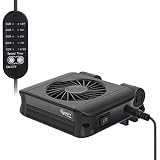
- INDISPENSABLE REASON: In addition to being affected by the hot summer weather, and the air in the basement garage and other places is not circulated. The aquarium fish tank also generates a lot of heat every day, which comes from the water pump, the built-in filter, the wave pump and other equipment, especially the aquarium light, which emits the most heat. Coral tanks especially need to pay attention to water temp. So hygger aquarium chiller fan is a good choice, energy-saving and silent
- USEFUL FISH PRODUCT: In addition to the unique functional creation (timer/wind speed setting) of the hygger cooling fan, its own quality is also worthy of recognition. ABS plastic shell, sturdy and beautiful. The all-copper core motor and FDB bearings bring a big comfortable wind feeling while the working sound is not disturbing.
- 5 LEVELS OF WIND: Not only need aquarium cooling equipment in hot summer, but also need it all year round. The hygger fish tank cooling fan has 5 levels of wind speed, can be used according to different environmental scenarios. In summer, if there is no air conditioner and other cooling equipment, you can use the 5th gear. Use 1/2/3/4 gear wind in spring/fall/winter
- Easy to use: fixed by strong plastic screws, it can be hung on the wall of the fish tank less than 0.45 inches thick, safe and stable. The angle of each independent fan head can be adjusted freely, no need to worry about angle restrictions, you can blow wherever you want. In addition, hygger's unique 3 pin deconcentrator cord design can satisfy fan heads placed on1~ 3 tanks, and one controller and power cord can control
- AUTO ON/OFF: Aquarium fan has its own timer setting, which can be selected from 0.5H/1H/2H/4H/12H through an external controller. When the temperature cools down at night, or the refrigeration equipment is turned on, the fan can be stopped during this period of time. It is not necessary to turn it off manually every time. The timer function can perfectly solve this problem
The IPCC reports an average decrease of approximately 3% per decade in population replenishment and a 4.1% decline in maximum catch potential associated with warming and changing primary production. The very likely range for the maximum-catch estimate spans a 9.0% decline to a 0.3% increase. These are global averages across highly variable stocks, not a forecast for every fishery.
In the eastern tropical Pacific, a 2022 analysis found warming was the main driver of changes in physiological performance and pelagic catch composition. Extreme warm anomalies, including strong El Niño events, reduced the physiological performance of large pelagic fishes; oxygen limitation may contribute to that relationship.
Quick wins for a faster PC:
Scan for outdated or missing drivers - takes under a minuteDriver Scan →Clear out junk files and repair common Windows errorsFree Scan →Fix the driver behind crashes, sound loss and screen glitchesFind Drivers →Best Value

- 【Necessary Cooler for 24/7 operation】Axolotls and other sensitive species are vulnerable to heat stress. The AQUASMITH aquarium fan offers efficient cooling via evaporative technology. Unlike ordinary fans, Its dual-fan pressurized duct concentrates airflow onto the water surface, ensuring all wind force acts directly on the water surface,It can quickly lower aquarium water temperature by 3-7°F to thereby creating a consistently cool and stable living environment for aquatic life.
- 【A New Cooling Choice】Compared to a chillers, this cooling fan offers a more economical and flexible cooling alternative.with 58 high-density blades and a dual-turbine system.It concentrated airflow to deliver powerful,focused wind at up to 3600 RPM.The brushless motor reduces noise to just 35 dB,quieter than ordinary Fans.It causes no disturbance even during nighttime use, ensuring a peaceful home environment.
- 【3 Speeds Aquarium Cooler】This aquarium cooler features three adjustable speed settings: Gentle Mode, ideal for quiet, undisturbed operation at night; Standard Mode, suitable for all-day everyday use; and Strong Wind Mode, specifically designed to handle extreme high-temperature conditions. You can freely switch between modes based on day/night cycles, seasonal changes, or energy-saving needs. The fan is suitable for 20-50 gal, allowing your beloved pets to making management easier.
- 【Versatile Installation】It comes with an adjustable, sturdy mounting clamp (0.2-0.95 in), compatible with both rimless and framed aquariums,solving compatibility issues. The fan head offers 360° rotation and 30° wind direction adjustment for precise airflow delivery.It is suitable for freshwater tanks,saltwater tanks, coral reef tanks, planted aquariums, and axolotl/amphibian tanks.
- 【Out-of-the-box/Professional Support】The Aquarium Chiller Fans features simple installation without requiring additional accessories. The package includes a power plug for quick and easy setup.If you have any questions during use, please contact our customer service team via email. We will provide a solution within 24 hours.
Why the same warming can help one population and harm another
Risk depends on how close a population already is to its thermal limits and whether it can reach suitable habitat. Tropical and already-warm regions generally have less thermal headroom, while some higher-latitude species may temporarily gain habitat as conditions warm.
| Factor | Higher-risk situation | Potentially more favorable situation |
|---|---|---|
| Starting temperature | Population already near its warm edge or thermal optimum | Cool habitat with room to warm |
| Oxygen | High demand combined with declining or poorly renewed dissolved oxygen | Reliable oxygen supply through mixing or circulation |
| Mobility | Eggs, larvae, or adults blocked from cooler/deeper refuge | Access to suitable cooler habitat |
| Food web | Prey declines or becomes out of sync with spawning and feeding | Prey remains abundant and seasonally aligned |
| Fishing pressure | Already depleted stock with limited management capacity | Healthy stock with management able to adjust locations and limits |
| Other stressors | Warming combined with acidification, deoxygenation, habitat loss, or pollution | Fewer simultaneous pressures |
What about marine heatwaves?
Short marine heatwaves can produce abrupt effects that differ from the gradual response to a rising long-term average. A brief extreme may push temperatures past a physiological threshold, disrupt spawning or prey availability, or cause a rapid redistribution even where a slow trend had produced little visible change.
A 2024 meta-analysis found significant effects of warming on physiology, reproduction, behavior, development, metabolism, and survival, but the direction was not identical across studies or species. Therefore, an overall average near zero does not demonstrate that warming had no biological effect; opposing responses can cancel in an average.
How to evaluate a particular fish or fishery
For a local species, ask these questions in order:
- Where is its thermal optimum? Measure the population’s baseline temperature against the conditions it can tolerate, not against a global average.
- Can oxygen delivery keep up? Examine dissolved oxygen, depth, seasonal stratification, and the species’ oxygen demand.
- Which life stage is exposed? Check egg, larval, juvenile, and adult limits separately, along with spawning dates and nursery habitat.
- Can it move? Determine whether cooler or better-oxygenated habitat is reachable and whether barriers or fishing grounds constrain that movement.
- Will prey remain available? Compare plankton and forage-fish timing with migration, feeding, and reproduction.
- How much fishing pressure is present? A stock already reduced by fishing has less buffer when warming changes productivity or location.
This framework explains why two populations of the same species can show different trends and why a regional catch record cannot be generalized to all oceans.
Can fish survive in warmer water?
Yes, if the new conditions remain within the population’s usable thermal and oxygen range and food and reproduction stay viable. Survival alone is not the same as a healthy population: fish may persist while growth, body size, spawning success, abundance, or catch potential decline. Once aerobic performance and recruitment are sufficiently impaired, relocation or local loss becomes more likely.
Quick Recap
Product prices and availability are accurate as of the date/time indicated and are subject to change. Any price and availability information displayed on Amazon at the time of purchase will apply.




