What’s actually slowing this PC down?
Pick the symptom - the matching free tool is one click away.
The Maine Coon is a large, slow-maturing American cat with a shaggy coat, tufted ears, a long plumed tail, and a generally sociable personality. It is often an adaptable family companion, but its size, grooming needs, inherited health risks, and equipment requirements deserve practical consideration before adoption.
Maine Coon at a glance
| Trait | What to expect |
|---|---|
| Origin | A naturally developed American breed associated with Maine and documented in the United States by the 1850s. |
| Adult size | Males commonly weigh about 18–22 pounds; females commonly weigh about 12–15 pounds. Individual cats vary. |
| Growth | Slow-maturing, with full physical development often taking approximately 3–4 years. |
| Coat | Long, shaggy, two-layered, and uneven in length, with longer fur on the belly, britches, ruff, and tail. |
| Personality | Usually gentle, intelligent, playful, sociable, and relatively easygoing. |
| Grooming | Comb at least two or three times weekly; dense or cottony coats may need daily attention. |
| Important health concerns | Hypertrophic cardiomyopathy, hip dysplasia, spinal muscular atrophy, obesity, and dental disease. |
What does a Maine Coon look like?
Maine Coons are among the largest pedigreed domestic cats. They have a muscular, broad-chested, long rectangular body, substantial bone, large feet, and a long tail covered in flowing fur. The head is also distinctive: it is rectangular rather than rounded, with a strong square muzzle, firm chin, large expressive eyes, and large ears that often have prominent tufts.
The coat is shaggy and moderately uneven rather than uniformly silky. Fur is generally shorter around the shoulders and longer over the abdomen, rear legs, neck ruff, and tail. Coat texture differs considerably between individuals. A silky coat may be fairly straightforward to maintain, while a dense, cottony coat can form mats quickly.
Maine Coons occur in many colors and patterns. However, pointed coloration is not accepted under The International Cat Association (TICA) Maine Coon standard. Polydactyly—having extra toes—can occur in Maine Coons, but it is not a feature every cat has.
Free tools Windows power users keep installed
One-click scans. No signup required.
#1 Best Overall

- ROUND & GENTLE COMB TEETH: Unlike dematting combs with sharp teeth, this dog grooming comb features round teeth that break up tangles +effectively remove loose hair, dander & dirt trapped beneath fur.
- ERGONOMIC NO-SLIP HANDLE: Finished with a rubbery grip, our grooming comb is safer & easier to use than most groom tools. The non-slip coating prevents slippery accidents to keep you & your pet safe.
- IMPROVES OVERALL PET HEALTH: Designed to gently massage your pet's coat, the anti-scratch teeth on our dog & cat comb naturally support the health of your furry best friend by boosting circulation.
- COMB COMES WITH FREE EBOOK: DIY pet grooming can be a bit tricky if tools are not used correctly, which is why every SP pet hair comb includes a download of our helpful instructional guide.
- RISK-FREE LIFETIME GUARANTEE: We firmly stand by the lasting quality of our pet grooming tool. If for any reason you're not 100% happy with it, reach out to us to receive a refund or replacement.
How big does a Maine Coon get?
Healthy adult male Maine Coons commonly weigh around 18–22 pounds, while females commonly weigh about 12–15 pounds. Some mature males may reach or exceed 20 pounds, but these figures are typical ranges, not a guarantee or a target.
Internet claims that every Maine Coon weighs 25–30 pounds are misleading. An unusually heavy cat may be exceptionally large, but it may also be overweight. Body condition, muscle, and overall health matter more than a record on the scale.
This breed also grows more slowly than many cats. Full physical development may take approximately three to four years. A one-year-old Maine Coon can still have substantial bone, muscle, coat, and body length to develop.
Maine Coon temperament and behavior
Maine Coons are commonly gentle, friendly, intelligent, and moderately active. Many enjoy being near their people without demanding constant physical attention. A Maine Coon may follow family members from room to room, settle beside them, and then wander off when it wants some independence.
They are not all lap cats. Because of their size and individual preferences, some prefer sitting alongside a person or moving between family members rather than remaining on one lap. Breed tendencies cannot predict every cat’s personality.
Many remain playful well into adulthood and can learn games such as fetch, harness walking, and simple reward-based behaviors. Their vocalizations may include chirps, trills, and purrs as well as ordinary meows. “Quiet” Maine Coon usually means relatively unobtrusive, not silent.
Some Maine Coons show unusual interest in water, but this is only a tendency. It does not mean every cat will enjoy baths, swimming, or having its water bowl disturbed.
Rank #2
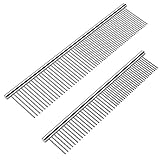
- ✅ FUNCTION -This dematting tool for dogs can removes tangles, mats, loose hair, besides, it’s perfect to promote blood circulation and massage skin.
- ✅ PREMIUM MATERIAL - Made of high quality stainless steel, this comb is durable, corrosion resistant and will not fade, good for avoiding static electricity.
- ✅ COMFORTABLE & SAFE - Rounded pin ends are gentle to the skin. This comb grooms and massages for a healthy coat, prevent snagging and pet injury.
- ✅ WHAT YOU GET- 2 Pack combs for removes both small & large areas tangles, knots. Large comb size: 7.4 x 1.65 IN, small comb size: 6.3 x 1.2 IN.
- ✅ RISK-FREE LIFETIME GUARANTEE - We firmly stand by the lasting quality of our pet grooming tool. If for any reason you're not 100% happy with it, reach out to us to receive a refund or replacement.
Are Maine Coons good with children and other pets?
They can be good family cats when children are taught to handle them respectfully. Introductions to dogs or other cats should be gradual, with separate resources and escape areas for each animal. A gentle breed reputation does not remove the need for supervision, particularly with young children or excitable dogs.
Grooming requirements
A practical starting schedule is combing two or three times per week. Cats with dense or cottony coats may need daily combing, especially during heavy shedding. Regular grooming removes loose fur, reduces hairballs, and gives you a chance to find skin problems, parasites, or painful mats early.
Concentrate on areas that tangle easily:
- Neck ruff and under the chin
- Behind the ears
- Armpits
- Belly
- Britches and tail base
Use a suitable metal comb and work in short, calm sessions. Begin handling a kitten’s paws, ears, mouth, and coat early so grooming does not become an annual struggle. Do not pull hard on mats or cut close to the skin with household scissors. Extensive or tight mats are safer for a professional groomer or veterinary team to remove.
Routine bathing is usually unnecessary. A bath may be appropriate when the cat is dirty or oily, cannot keep itself clean, or has a veterinary condition requiring medicated bathing. Water tolerance varies, so introduce bathing carefully rather than assuming the breed will enjoy it.
| Task | Useful baseline |
|---|---|
| Coat combing | Two or three times weekly; daily for coats that mat readily. |
| Nail trimming | Often every four to six weeks, adjusted for nail growth and scratching habits. |
| Teeth | Regular tooth brushing and veterinary dental checks. |
| Ears | Check routinely and seek advice for odor, discharge, redness, or excessive scratching. |
| Bathing | Only when needed, unless a veterinarian prescribes a schedule. |
Exercise, enrichment, and home setup
Maine Coons are not necessarily hyperactive, but they benefit from daily activity and mental stimulation. Offer interactive play, climbing, scratching, and opportunities to investigate their surroundings. Chasing toys, retrieving games, puzzle feeders, and short training sessions can all help prevent boredom.
Buy equipment for the cat’s eventual adult size, not its kitten size. A lightweight cat tree may tip under a large adult, and a narrow litter box may be uncomfortable or lead to accidents.
- A large, stable litter box—often more than one in a multi-cat home
- Heavy or non-tip food and water dishes
- A tall, strongly anchored cat tree
- Large horizontal and vertical scratching surfaces
- Sturdy beds with enough room to stretch out
- Puzzle feeders and toys for chasing or retrieving
- Safe window perches or a secure catio
Harness walks are optional. Some cats enjoy them after gradual training, while others find the restraint stressful. Never force a cat outdoors on a harness if it consistently shows fear or resistance.
Rank #3

- PERFECT COMB FOR GROOMING LONG OR SHORT HAIRED CATS - Designed to make cat grooming easier. It penetrates the undercoat without hurting your cat. No more nipping or snarling! Get mats & tangles out and prevent painful matting. Pamper your fur baby!
- LOVED BY DOODLE OWNERS - Best dog comb for any poodle mix; perfect for dogs with long or curly fur. It combs, detangles, & removes matting. Keep your dog’s coat shiny, healthy, and tangle-free. No more sad visits to the groomer to shave it all off.
- SLIP-PROOF HANDLE MADE FOR ADDED COMFORT - A great comfortable grip makes grooming easier and pain-free. Great for arthritic hands. The anti-slip handle protects your fur baby from any slippery accidents. Enjoy grooming your pet again!
- HOW TO REMOVE TANGLES & PREVENT PAINFUL MATTING - Comb pet in short strokes to detangle. For large mats, hold the mat firmly and use tip of the comb to isolate hairs from the mat. Keep combing through tangles without pulling pet’s skin.
- FRESHLY BAILEY QUALITY RECOMMENDED BY GROOMERS - Solid stainless steel teeth make this comb sturdy. The rounded head pins keep your pet’s sensitive skin from getting scratched. Long and short stainless steel teeth cut grooming time in half.
Feeding and weight control
Maine Coons do not require a special breed-only diet. Feed a complete and balanced food appropriate for the cat’s life stage, weight, activity level, reproductive status, and health. A large frame does not justify unlimited food, and many Maine Coons are food-motivated.
Measure portions, monitor body condition, and discuss calorie needs with a veterinarian. Avoid adding supplements unless a veterinary professional recommends them. Excess weight increases stress on joints and can make grooming more difficult.
Health concerns in Maine Coon cats
Breed predisposition is not a diagnosis, and an individual Maine Coon may remain healthy throughout its life. Nevertheless, several conditions deserve attention when choosing a kitten and during routine veterinary care.
Hypertrophic cardiomyopathy
Hypertrophic cardiomyopathy (HCM), a disease in which the heart muscle becomes abnormally thickened, is a major concern in the breed. Maine Coons can carry an A31P mutation in the MYBPC3 gene that increases risk.
The genetic test has important limits. A positive result does not guarantee that a cat will develop HCM, and a negative result does not rule out HCM caused by another mutation or another mechanism. For breeding cats, DNA testing should be combined with veterinary cardiac evaluation, particularly echocardiography; DNA testing alone is not a complete cardiac screen.
Seek urgent veterinary care for rapid or difficult breathing, collapse, marked weakness, or sudden severe lethargy. Cats can hide heart disease, so regular examinations remain important even when no symptoms are visible.
Windows Errors? Fix Them Before They Spread
Repair common Windows errors and clear accumulated junk for a smoother, more stable PC - no reinstall needed.Free scan · no reinstallOutdated Drivers Are Slowing You Down
One free scan finds every outdated or missing driver and matches the right update for your exact hardware.Free scan · exact hardware matchHip dysplasia
Maine Coons are susceptible to feline hip dysplasia. In one study of Orthopedic Foundation for Animals registry data, radiographic hip dysplasia was found in 24.9% of 2,548 evaluated Maine Coons. Registry results should not automatically be treated as the prevalence in every Maine Coon population.
Rank #4

- SPECIALIZED DOG GROOMING COMB expertly crafted with both long and short metal teeth to brush your pet's top coat and undercoat simultaneously. The Long pins eff ectively tackle tangles & straighten fur, while shorter pins remove & condition undercoat!
- PERFECT FOR SHORT TO LONG-HAIRED BREEDS: Unlike typical cat and dog detangling combs, this dog comb for matted hair is most eff ective on short thick coats or long, moderately thick coats. It's ideal for breeds Pomeranians, Poodles, Persian cats, etc.
- GENTLE & SAFE ON SKIN: Engineered specifi cally to swiftly and painlessly detangle matted hair and eliminate bothersome knots. The rounded teeth provide a comfortable and safe massage for your pet's skin, enhancing blood circulation for a glossy coat!
- ANTI-SLIP HANDLE GRIP: Our Detangling brush features a high-quality, nicely rubberized handle that prevents slipping. The comfortable grip, designed to fi t in the palm with a sturdy and controllable feel, makes grooming easier and pain-free.
Possible signs include reluctance to jump, reduced activity, an altered gait, difficulty with stairs, trouble entering the litter box, or apparent pain. Diagnosis requires a veterinary examination and imaging. Large size alone does not prove that a cat has hip dysplasia.
Spinal muscular atrophy
Maine Coon spinal muscular atrophy is an autosomal-recessive inherited disorder. Affected kittens commonly begin developing progressive unsteadiness, hind-leg muscle loss, or abnormal posture at around three to four months of age. The condition is generally disabling but described as nonpainful and nonfatal.
Genetic reports are commonly interpreted as follows:
Recommended Free Tools
| Result | Meaning |
|---|---|
| N/N | No tested copies detected. |
| N/S | Clinically normal carrier. |
| S/S | Affected. |
Two carrier parents can produce affected kittens. Breeders should use test results to avoid carrier-to-carrier pairings.
Dental disease and other issues
Dental disease can affect any cat. Brush the teeth regularly if the cat will tolerate it and arrange veterinary dental assessments. Bad breath, drooling, mouth pain, dropping food, or difficulty eating warrants an examination.
Breeding programs may also consider joint disorders, luxating patella, and pyruvate kinase deficiency. Ask a veterinarian about an appropriate preventive-care plan rather than assuming that every listed condition will occur.
Independent reader supportYour contribution helps us test, update, and keep practical guides available for everyone.How to choose a Maine Coon breeder
Responsible breeders should provide documentation, not just verbal claims that their cats are “healthy.” Ask to see records for the kitten and relevant health information for both parents.
The Tool Desk
Outbyte Driver Updater FREEFix the driver behind crashes, sound loss and screen glitchesFind Drivers →Outbyte PC Repair FREERepair Windows errors before they cause bigger problemsFix Now →Best Value
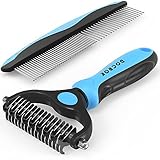
- 【Easy Dematting and Deshedding Tools】: Our Grooming brush and comb combo help effortlessly dematting and reduces shedding. A must have dog brush for shedding, pet supplies, cat supplies, dog supplies metal comb for dogs shedding.
- 【Safe Design】: Soft and protective edge brush and comb creating a comfortable feeling while detangling matted hair and deshedding without hurting your pet. Perfect metal comb for dogs, dematting comb for cats, undercoat rake for dogs double coat.
- 【2-in-1 Rake】: Our undercoat rake is perfect for medium and long-haired dogs and cats and other double coat pets. Wide side for easy dematting, dense side for deshedding. Well made deshedding tool, grooming brush and deshedder brush for dogs.
- 【2-in-1 Comb】: Wide sided for comb knot, smoothing and modeling your pet's hair, dense side for removal of loosen hair, you can use it on the legs, head or tail of your pets where the brush can’t. Perfect metal comb for dogs, dematting comb for cats deshedding tool for dogs.
- 【Sturdy and Comfortable Design】: Premium Stainless steel metal teeth and compact design make our product sturdy and durable. High-quality & lightweight TPR handle make your grooming effortlessly. High-quality undercoat rake for dogs double coat, metal comb for dogs, dematting comb for cats, dog comb for matted hair.
- Ask whether both parents have received veterinary cardiac screening.
- Request results for the Maine Coon A31P HCM variant test.
- Ask whether the parents have been tested for Maine Coon spinal muscular atrophy.
- Ask whether hip evaluations or radiographs are available.
- Read the written health guarantee and return policy before paying a deposit.
- Confirm that kittens are raised indoors and regularly handled by people.
- Obtain vaccination, deworming, veterinary examination, and registration records.
Interpret health certificates precisely. A result described as “HCM negative” may only mean negative for the tested Maine Coon A31P variant. It does not prove that the cat can never develop HCM.
Common Maine Coon claims that need correcting
| Claim | What is actually true |
|---|---|
| They are part raccoon. | This is a historical name-and-appearance story, not biology. Cats and raccoons cannot produce offspring. |
| Every Maine Coon weighs 25–30 pounds. | Typical adult weights are lower, and an unusually heavy cat may be overweight. |
| The HCM DNA test clears a cat of heart disease. | The test detects one known breed-associated variant; it does not rule out every cause of HCM. |
| Every Maine Coon has extra toes. | Polydactyly occurs in some cats but is not universal. |
| They need breed-specific food. | They need complete, balanced nutrition. Their size mainly affects portions, monitoring, and equipment. |
| They are fully grown at one year. | They may continue developing until approximately three or four years old. |
FAQ
Are Maine Coon cats good house pets?
Often, yes. They are commonly sociable, playful, intelligent, and adaptable indoors. They still need daily interaction, sturdy climbing and scratching equipment, regular grooming, and careful weight management.
How often should a Maine Coon be brushed?
Comb the coat two or three times per week as a baseline. A dense or cottony coat that mats easily may require daily grooming, especially around the ruff, armpits, belly, britches, and tail base.
How long does a Maine Coon take to become fully grown?
Maine Coons mature slowly. Full physical development may take approximately three to four years, although the exact rate varies between cats.
Quick wins for a faster PC:
Fix the driver behind crashes, sound loss and screen glitchesFind Drivers →Repair Windows errors before they cause bigger problemsFix Now →Scan for outdated or missing drivers - takes under a minuteDriver Scan →What health tests should a Maine Coon breeder provide?
Ask for veterinary cardiac screening, testing for the Maine Coon A31P HCM variant and spinal muscular atrophy, and any available hip evaluations or radiographs. An HCM DNA result alone does not rule out all heart disease.
Do Maine Coons need a special diet?
No breed-only diet is automatically necessary. Feed a complete and balanced food suited to the cat’s life stage, activity, weight, and health, and measure portions to prevent obesity.
The Bottom Line
Maine Coons combine a striking size and coat with a generally friendly, interactive temperament, but they are not maintenance-free cats. Plan for frequent combing, large and stable equipment, daily enrichment, measured meals, and preventive veterinary care. If buying from a breeder, prioritize documented cardiac, genetic, and orthopedic screening over promises about exceptional size or appearance.
Quick Recap
Product prices and availability are accurate as of the date/time indicated and are subject to change. Any price and availability information displayed on Amazon at the time of purchase will apply.




