Hong Kong can make more places welcoming to dogs, but access alone will not make it dog-friendly. The city also needs “dog literacy”: practical knowledge shared by dog owners, venue operators and the public about control, welfare and how to share space. That is an argument for making access and responsibility grow together—not for treating every place as suitable for every dog.
What dog literacy means in a city
Dog literacy is not a formal government programme or a measured score. It is a useful way to describe the knowledge and habits that let people and dogs share public life safely and humanely. Owners need to understand their legal duties and their individual dog’s needs; operators need clear, workable rules; and other users need to know what to expect and how to maintain comfortable distance if they prefer it.


This matters because “dog-friendly” should not mean unrestricted access. A crowded restaurant, a busy train and a quiet walking path place different demands on dogs and people. Good policy asks whether a setting can accommodate dogs with predictable control, hygiene and consideration—not simply whether entry is allowed.
What Hong Kong’s rules already require
Control in public
In an enforcement notice dated August 28, 2026, the Hong Kong Government said dogs in public places must be on a leash or otherwise under control. For a dog weighing 20kg or more, the handler must hold the dog on a leash no longer than 2 metres. These are legal control requirements, not a guarantee that a dog is ready for every crowded or unfamiliar setting. Owners should also check for stricter rules at a particular venue. Hong Kong Government public-control notice.
#1 Best Overall
Identification, vaccination and licensing
The Agriculture, Fisheries and Conservation Department (AFCD) says dogs over five months old must be microchipped, vaccinated against rabies and licensed. A licence lasts three years, and renewal requires revaccination. AFCD says failure to license a dog over five months may carry a maximum fine of HK$10,000. AFCD guidance on responsible pet ownership.
Those duties are the baseline for accountability. A dog-friendly city also depends on owners providing care throughout an animal’s life and not abandoning it when circumstances change. AFCD animal-welfare guidance.
Welfare is more than keeping a dog out of trouble
Permission to enter is not necessarily a benefit to the dog. AFCD’s Five Domains overview considers nutrition, environment, health, behaviour and mental state, including positive experiences such as curiosity and playfulness. A responsible owner must judge whether a dog can cope with a specific environment: noise, heat, crowds, waiting, unfamiliar people and proximity to other dogs can all affect that decision. AFCD overview of the Five Domains.
Preparation is practical, not performative. Dogs should have gradual, appropriate exposure to the kinds of settings they will visit, and owners should be able to redirect or leave with them if they become distressed or disruptive. Training can help; so can choosing a quieter time, a shorter visit or no visit at all. The aim is not to demand that every dog behave identically, but to help each dog succeed without imposing avoidable stress on it or others.
Do these 3 things before closing this tab:
1Fix the driver behind crashes, sound loss and screen glitches2Clear out junk files and repair common Windows errors3Scan for outdated or missing drivers - takes under a minuteRank #3
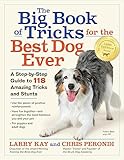
- Book: the big book of tricks for the best dog ever: a step-by-step guide to 118 amazing tricks and stunts
- Language: english
- Binding: paperback
Restaurant access is expanding, but check the live rules
Hong Kong’s 2025 Policy Address announced a licensing arrangement under which food-premises operators could allow dogs, with permitted restaurants displaying clear signage. The Associated Press reported on July 10, 2026 that the first phase covered more than 900 approved restaurants and took effect the previous day. Restaurant participation and operating conditions can change, so use current official information and the individual venue’s policy before setting out; the AP report is not a live directory. Associated Press report on the restaurant scheme; 2025 Policy Address.
For diners, literacy means recognizing that a dog-permitted restaurant is not automatically comfortable for every dog or customer. Owners should follow the venue’s conditions, keep their dog controlled, prevent contact with people who have not invited it, and clean up after it. Operators should make entry conditions and any limits easy to understand before customers arrive. Other diners should not be expected to interact with a dog simply because it is present.
Shared space needs rules people can understand
The Government’s 2025 Policy Address reports more than 240,000 Hong Kong households keeping over 400,000 pet cats and dogs. That combined figure signals that pets are part of many households’ lives; it is not a count of dogs alone. Wider access will therefore affect people with different needs and preferences, including those who welcome dogs and those who want distance from them. 2025 Policy Address.
Public education is not absent. AFCD says its Animal Management (Development) Division, established in 2010, carries out education and publicity on animal welfare and responsible pet ownership, including dog-training courses, seminars, adoption activities, exhibitions and public information materials. The opportunity is to make those efforts useful in everyday shared settings: clear expectations, accessible guidance and consistent application matter as much as awareness campaigns. AFCD responsible-pet-ownership information.
What’s actually slowing this PC down?
Pick the symptom - the matching free tool is one click away.
Access also depends on practical design. Space, customer or passenger capacity, hygiene facilities, signage and a clear way to handle problems shape whether a policy works. A 2024 government answer described these kinds of considerations in the context of pet-friendly measures, including transport. The principle is straightforward: a rule should be intelligible to owners and operators, and the space should support the behaviour it expects.
Independent reader supportYour contribution helps us test, update, and keep practical guides available for everyone.Why owner accountability belongs in the debate
Expanding access and preventing abandonment are connected by a broader standard of care: people must consider a pet’s needs for its whole life, not just the places it can accompany them. AFCD encourages adoption and neutering and says pets should not be abandoned. On stray-dog policy, AFCD reports that its 2015–2018 trial of trap-neuter-return did not meet its target of reducing stray-dog numbers at the trial sites. It says it has no current plan to implement a TNR programme and continues a multi-pronged approach involving education, proper care, neutering and adoption. That account describes AFCD’s trial and current policy; it should not be read as a verdict on every TNR programme elsewhere. AFCD policy on stray animals.
Historical administrative figures also show why outcomes should be described carefully. A 2025 Legislative Council Research Office paper reports dog-and-cat surrenders declining from 1,413 in 2015 to 426 in 2022, while the rehoming rate rose from 19.3% to 48.2% over those years. These figures combine dogs and cats and end in 2022; they are not current totals or dog-only measures. Legislative Council Research Office paper on animal welfare.
What a more dog-friendly approach should deliver
- Owners who can manage their dogs: they understand control and licensing duties, assess whether a setting suits their dog, and are prepared to leave if it does not.
- Rules that are visible and consistent: operators state whether dogs are permitted, what conditions apply and how hygiene and disruption are handled.
- Spaces designed for real use: access decisions account for capacity, safety, cleaning and the needs of people who do not want close contact with dogs.
- Welfare as well as entry: the question is not only whether a dog may come in, but whether the experience is appropriate for that animal.
Dog literacy will not settle every disagreement about access, and the available figures do not measure public attitudes or prove that literacy alone causes a city to become dog-friendly. It does offer a practical standard for judging progress: more welcome for dogs should come with clearer expectations, better-informed owners and spaces that work for everyone who uses them.
Windows Errors? Fix Them Before They Spread
Repair common Windows errors and clear accumulated junk for a smoother, more stable PC - no reinstall needed.Free scan · no reinstallOutdated Drivers Are Slowing You Down
One free scan finds every outdated or missing driver and matches the right update for your exact hardware.Free scan · exact hardware matchQuick Recap
Product prices and availability are accurate as of the date/time indicated and are subject to change. Any price and availability information displayed on Amazon at the time of purchase will apply.




