Free tools Windows power users keep installed
One-click scans. No signup required.
A Pomsky may be affectionate, playful, bright, energetic, and closely attached to its family. It may also be noisy, easily bored, independent, sensitive, or difficult to manage around small animals. All of those descriptions can be accurate because a Pomsky is a variable cross between a Siberian Husky and a Pomeranian—not a predictable miniature Husky.
Appearance, eye color, size, coat pattern, and labels such as F1 cannot guarantee how an individual Pomsky will behave. The most useful clues are the behavior of the parents, the puppy’s early experiences, health, training, and the dog’s own responses to people and situations.


What is a Pomsky?
A Pomsky is generally bred from a Siberian Husky and a Pomeranian. Because of the parents’ substantial size difference, first-generation litters have commonly been produced using artificial insemination, with a female Husky and a male Pomeranian.
Pomsky is not an American Kennel Club-recognized breed. The AKC’s recognized-breed list does not include it as of January 1, 2026. Some private organizations maintain registries and publish Pomsky standards, but those standards describe an organization’s breeding goals or ideal—not the guaranteed temperament of every dog.
Do these 3 things before closing this tab:
1Scan for outdated or missing drivers - takes under a minute2Repair Windows errors before they cause bigger problems3Fix the driver behind crashes, sound loss and screen glitchesThat distinction matters when choosing a puppy. Research in domestic dogs suggests that breed explains only a limited share of behavioral differences between individual dogs. A large 2022 study published in Science estimated that breed accounted for about 9% of individual behavioral variation (study summary). Parentage still matters, but it is one influence rather than a personality forecast.
Typical Pomsky temperament
The safest description is a range rather than a fixed personality. A well-bred and well-socialized Pomsky may show several of these traits:
| Possible trait | What it can look like at home | What owners should plan for |
|---|---|---|
| Affectionate | Follows family members, seeks attention, and enjoys interactive play | Teach independence as well as closeness |
| Intelligent | Learns patterns quickly and works out how to open, reach, or obtain things | Use short, consistent training sessions and prevent problem-solving from being rewarded accidentally |
| Energetic | Needs active play, walks, exploration, and mental challenges | Provide enrichment, not just a quick bathroom break |
| Vocal | May bark, whine, howl, yelp, or react noisily to activity outside | Identify the cause instead of simply shouting for quiet |
| Independent | May understand a cue but decide that another activity is more rewarding | Build motivation and reliability gradually; do not rely on intimidation |
| Prey-driven | May chase birds, squirrels, cats, rabbits, or other small animals | Use secure equipment and careful introductions |
The Husky side helps explain why some Pomskies are energetic, vocal, self-directed, and interested in chasing. The Pomeranian side may contribute alert barking and a strong interest in people. But inheritance is not a checklist: one Pomsky may be outgoing and easy to settle, while another from a similar pairing may be cautious, reactive, or unusually independent.
Are Pomskies easy to train?
They can learn quickly, but intelligence is not the same as automatic obedience. Siberian Huskies are described by the AKC as relatively self-willed, and a Pomsky may inherit that tendency. A dog that knows a behavior may still ignore it when the environment is more interesting than the reward.
Reward-based training is the appropriate foundation. Use food, toys, praise, access to sniffing, and other rewards to reinforce the behavior you want. Avoid shock, pain, intimidation, physical corrections, and dominance-based methods. The American Veterinary Society of Animal Behavior states that there is no evidence that aversive methods are necessary for dog training.
Useful training priorities
- Recall: Start indoors, then progress to enclosed areas. Do not test an unreliable recall near roads, wildlife, or unfenced spaces.
- Loose-leash walking: Reward the dog for being near you before pulling becomes the way to reach interesting places.
- Settle: Teach a mat or bed behavior so the dog can relax while people eat, work, or answer the door.
- Drop it and trade: Exchange objects for something better rather than chasing the dog or forcibly taking possessions.
- Cooperative handling: Pair brushing, nail care, ear checks, and veterinary handling with rewards.
- Alone-time skills: Practice brief, successful separations and provide safe independent activities.
- Appropriate vocal behavior: Reduce triggers, reward quiet pauses, and teach an alternative behavior such as going to a mat.
Keep sessions short enough that the dog can succeed. A Pomsky that becomes frustrated, overexcited, or bored is less likely to learn from a longer session.
Rank #2
Are Pomskies good family dogs?
Some Pomskies fit well into family life, but “good with children” is not a breed guarantee. A small Pomsky can be injured by rough handling, while an energetic dog can accidentally knock over a toddler. Every interaction between a dog and a young child needs active adult supervision.
Children should be taught not to hug, climb on, corner, chase, disturb, or ride the dog. They should not take food, toys, or chews away from it. Give the Pomsky a quiet escape area that children cannot enter, and leave the dog alone while it is eating or sleeping.
A friendly puppy is not proof of an equally social adult. Dogs can continue developing socially and behaviorally from roughly 12 to 36 months. Watch for changes as the dog matures rather than assuming that puppy behavior will remain unchanged.
Pomskies and cats or small pets
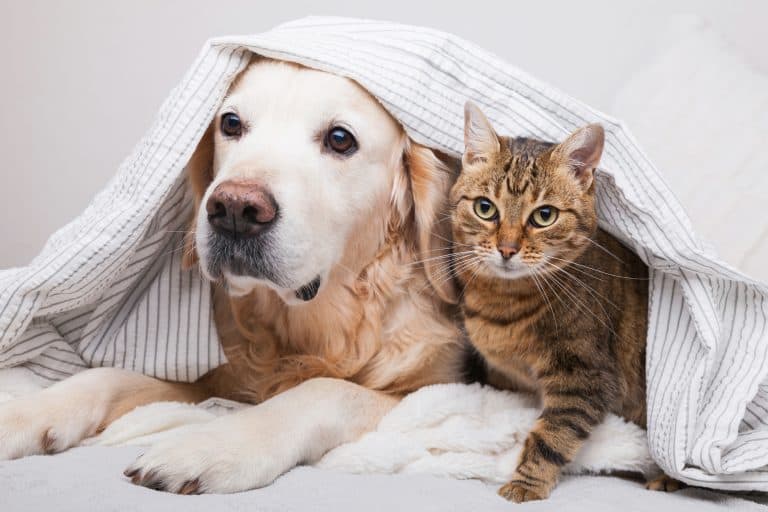
Do not assume that a Pomsky will be safe with cats because it is small or affectionate with people. Some may live peacefully with a household cat, especially when introductions are gradual and carefully managed. Others may chase, stalk, fixate on, or lunge at cats.
The Husky parent’s documented prey-drive tendency is a reason for additional caution around rabbits, guinea pigs, hamsters, ferrets, birds, and other small animals. A dog that coexists with one familiar cat is not automatically safe with an unfamiliar cat or with wildlife outdoors.
Introducing a Pomsky to a cat
- Keep the animals separated initially, with the new dog behind a gate or in a crate when appropriate.
- Allow scent exchange before face-to-face meetings.
- Give the cat elevated escape routes and dog-free rooms.
- Use a leash for initial visual introductions and reward the Pomsky for looking away or remaining calm.
- End the session if the dog stares, stiffens, lunges, whines intensely, or tries to chase.
- Continue supervision until the dog has demonstrated reliable calm behavior over time.
Never leave a Pomsky and a small animal together simply because an early meeting seemed calm.
The Tool Desk
Outbyte PC Repair FREEClear out junk files and repair common Windows errorsFree Scan →Outbyte Driver Updater FREEFix the driver behind crashes, sound loss and screen glitchesFind Drivers →Vocal behavior and separation-related problems
Huskies are known for howling, whining, yelping, and other vocalizations. Pomeranians may bark when they notice people, animals, or changes in their surroundings. A Pomsky may inherit either pattern, both, or neither.
Vocalization can be triggered or maintained by attention, boredom, frustration, access to desired objects, outside activity, or distress when alone. A noisy dog does not automatically have separation anxiety. Separation anxiety requires a pattern of distress specifically associated with being left alone, such as persistent vocalizing, escape attempts, destruction, pacing, or panic shortly after departure.
Build alone-time skills gradually. Schedule naps and calm independent activities even when someone is home, and avoid suddenly leaving a puppy alone for a full workday. A sudden increase in barking or howling deserves a veterinary check because pain, illness, anxiety, and other medical problems can change behavior.
Socializing a Pomsky puppy
The most important socialization period is early puppyhood, especially the first three months. Safe exposure should include people, calm and healthy animals, surfaces, sounds, handling, car travel, household activity, and different environments.
Quick wins for a faster PC:
Clear out junk files and repair common Windows errorsFree Scan →Fix the driver behind crashes, sound loss and screen glitchesFind Drivers →Socialization is not a contest to meet as many people as possible. The puppy should remain comfortable enough to eat, play, investigate, or disengage. Do not force it toward a person, dog, object, or sound when it is frightened. Exposure that produces persistent fear or withdrawal can make the experience worse.
Waiting until all vaccinations are complete before beginning every type of socialization is outdated. The AVSAB supports controlled, safe puppy socialization before the vaccination series is finished. Ask your veterinarian which locations, animals, and classes are appropriate given local disease risks. Continue positive exposure throughout the first year; one puppy class does not complete socialization.
If a puppy repeatedly hides, freezes, cannot recover from ordinary noises, or becomes more fearful, contact your veterinarian rather than simply increasing the intensity of exposure.
Common Pomsky behavior concerns
Barking and howling
First identify the pattern. Does the noise occur at windows, during play, when the dog wants attention, or only when it is alone? Block access to visual triggers, provide appropriate activity, reward quiet behavior, and avoid reinforcing barking with immediate attention or access to the desired item.
Pulling, chasing, and poor recall
These problems are particularly important if the dog shows strong interest in moving animals. Use a secure harness or collar, a standard leash, and enclosed areas for off-leash exercise. Long-line recall practice should take place away from roads and wildlife, with rewards valuable enough to compete with the environment.
Fear, reactivity, or aggression
“Aggressive” describes behavior in a situation; it does not prove that a dog is inherently mean or vicious. Fear, anxiety, genetics, early experiences, learning, and pain can all contribute to growling, snapping, lunging, or biting.
Do not punish growling. It is communication that the dog is uncomfortable or expects conflict. Increase distance, prevent another rehearsal of the behavior, and arrange qualified help. A new or worsening behavior change should receive a veterinary examination because pain and other medical conditions can lower a dog’s threshold for fear or aggression.
Independent reader supportYour contribution helps us test, update, and keep practical guides available for everyone.How much does an F1 or F2 label tell you?
Generation terms are commonly used as follows:
| Term | Common meaning |
|---|---|
| F1 | First-generation offspring of a Siberian Husky and a Pomeranian |
| F2 | Offspring of two F1 Pomskies |
| F1b | An F1 Pomsky backcrossed to one of the foundation breeds |
These are breeding terms, not AKC classifications, and they do not predict temperament. “F1” also should not be treated as proof of exactly 50% ancestry unless the parentage is documented and the stated foundation breeds are in fact the parents. Ask for records rather than treating the generation label as a personality guarantee.
Best Value
How to assess a Pomsky before bringing it home
- Meet the parents: Observe how they respond to visitors, handling, novel sounds, restraint, and recovery from mild surprises.
- Ask for specific behavior histories: Find out about barking, escape behavior, prey drive, resource guarding, fear, and time spent alone.
- Observe the puppy repeatedly: Look for recovery after a small startle, interest in people, ability to disengage, and comfort with gentle handling. One brief test cannot predict adult temperament.
- Ask about early rearing: A responsible breeder should explain the puppy’s exposure to household sounds, surfaces, handling, travel, people, and appropriate veterinary care.
- Check health information: Pain and inherited disease can affect behavior, so health screening and veterinary records matter.
- Match energy and management needs: Consider your schedule, noise tolerance, secure exercise options, other pets, and willingness to train every day.
Is a Pomsky right for you?
A Pomsky may suit a home that wants an interactive companion and can provide daily training, enrichment, secure exercise, grooming, and gradual alone-time practice. Small size does not make it a low-maintenance apartment dog. A small dog can still howl, bark, chase, become frustrated without activity, and struggle with long periods alone.
The best match is not the puppy with the most striking eyes or the smallest advertised adult size. It is the individual whose behavior, parent temperaments, early development, and needs fit the household.
FAQ
Are Pomskies naturally friendly?
Many are affectionate and interested in people, but friendliness is not guaranteed. A Pomsky can also be cautious, fearful, reactive, or uncomfortable with particular people or situations. Assess the individual dog and its parents.
Are Pomskies aggressive?
Aggression is not an inevitable Pomsky trait. Growling, snapping, or lunging can result from fear, anxiety, pain, genetics, learning, or a specific trigger. A new or worsening problem should be assessed by a veterinarian and qualified behavior professional.
Outdated Drivers Are Slowing You Down
One free scan finds every outdated or missing driver and matches the right update for your exact hardware.Free scan · exact hardware matchWindows Errors? Fix Them Before They Spread
Repair common Windows errors and clear accumulated junk for a smoother, more stable PC - no reinstall needed.Free scan · no reinstallCan Pomskies live with cats?
Some can, but they should not automatically be considered cat-safe. Introductions should be gradual and supervised, and the dog’s response to movement and chasing should be taken seriously.
Do Pomskies have separation anxiety?
They may become distressed when left alone, particularly if they are strongly people-oriented, but attachment alone is not separation anxiety. Gradual alone-time training and veterinary or behavior assessment are appropriate when distress occurs.
Are Pomskies easy to train?
They are often capable learners, but they may also be independent, distractible, or self-willed. Short reward-based sessions, consistent routines, and valuable reinforcement generally work better than force or punishment.
What is the best way to socialize a Pomsky puppy?
Provide controlled, positive exposure to people, animals, handling, surfaces, sounds, travel, and new environments, especially during the first three months. Keep the puppy below its fear threshold and follow your veterinarian’s advice about disease-safe locations.
The Bottom Line
A Pomsky may be a loving, clever, playful family companion, but it may also be vocal, energetic, independent, sensitive, or interested in chasing small animals. The label, generation, and appearance cannot guarantee temperament. Choose based on documented parent behavior, responsible early rearing, health information, direct observation, and a commitment to reward-based training and careful management.
Quick Recap
Product prices and availability are accurate as of the date/time indicated and are subject to change. Any price and availability information displayed on Amazon at the time of purchase will apply.