Sheep can suppress some weeds when the right animals graze the right plant at its most vulnerable stage, but they rarely eradicate an infestation in one treatment. Success depends on weed identification, timing, controlled stocking, clean water, temporary fencing, animal-health precautions and follow-up over several years.
What sheep can—and cannot—control
Sheep are narrow-mouthed grazers that can select many nonwoody, broad-leaved plants. They may reduce weed height, flowering and seed production, and repeated defoliation can weaken perennial plants. They do not reliably kill every weed, however. Defoliation is not the same as plant mortality, and weed populations can rebound after grazing stops.
A 2021 meta-analysis by Katherine M. Marchetto and colleagues examined 70 studies from 17 countries (86% peer-reviewed and 14% gray literature). Across livestock species—including cattle, goats, horses and sheep—targeted grazing reduced undesired plants and increased desirable or neutral plant richness. The authors also noted that long-term outcomes after grazing ends remain uncertain.
The University of California Agriculture and Natural Resources WeedCUT guidance summarizes the practical limit: “Grazing and browsing, even at high intensity, are seldom effective at eradicating weed populations,” so grazing should be part of an integrated pest-management plan.
#1 Best Overall

- 🐑 Effectively contain livestock, protect beehives, or deter predators from a garden with Starkline Premium Netting. This versatile netting system provides reliable containment for various types of livestock, ensuring their safety and security.
- 🐑 Our fence system allows you to effortlessly design any configuration of up to 1600 square ft, providing ample space for your needs. Plus, with the flexibility that the fence does not need to come together at the ends, you have the freedom to customize and adapt the enclosure to suit your specific requirements.
- 🐑 Healthier and Happier: Sheep and Goats thrive with access to ample space, fresh forage, and varied nutrition. Starkline Electric Netting allows your flock to graze on diverse vegetation, resulting in healthier, happier livestock and high-quality meat
- 🐑 Built for Reliability: Featuring rigid fiberglass posts and large solid foot spikes that provide sturdy support even in challenging conditions
- 🐑 Experience quick and easy setup with our innovative solution. Our fence system is easily set up, saving you time and effort. Moreover, it moves with ease, allowing you to conveniently rotate pastures and optimize grazing areas for your livestock. Streamline your farming practices with our solution that offers swift setup and seamless pasture rotation capabilities.
Examples of documented responses
- Field bindweed: In a 2024 Utah study, 40 sheep and 40 goats grazed acre paddocks for 3.5–4 days. Sheep consumed more field bindweed than goats under those trial conditions.
- Common ragwort: A two-year field study used 12 sheep per hectare from May through October and observed voluntary ragwort intake without apparent health effects in that study population. Ragwort contains pyrrolizidine alkaloids, so this result must not be generalized to other breeds, species, locations or nutritionally stressed animals.
- Fallow-plot weeds: USDA Agricultural Research Service experiments used five mature ewes confined to small plots for 24 hours. Treatments of about 400 sheep-days per hectare with one grazing, or 800 sheep-days per hectare with combined fall-and-spring grazing, produced lower post-treatment weed biomass and density than controls. These are experimental treatment rates, not universal stocking recommendations.
- Cheatgrass: Sheep-specific evidence remains sparse. Boise State’s management-scale Idaho project, established in 2022, is evaluating vegetation response, belowground processes and economic costs; definitive sheep-specific wildfire-risk conclusions are not yet available.
Which weeds are suitable targets?
Start with a positive identification of the plant, including any protected or poisonous species. Palatability varies with plant maturity, weather, the animals’ previous diet and nutritional state. Sheep may eat a target readily in one pasture and avoid it in another.
Plants sheep may be useful against
Sheep are often suited to leafy, nonwoody broad-leaved weeds such as some knapweeds and leafy spurge. Their small mouths can remove individual leaves and stems among desirable plants more selectively than large grazers. That selectivity is relative, not absolute: at high pressure, sheep also consume preferred pasture species.
When goats may be a better choice
Goats generally have stronger browsing ability for woody plants, shrubs and vines. Choose goats rather than sheep when the main target is woody browse or when the site’s vegetation is predominantly above sheep grazing height. The Utah bindweed comparison shows why species choice should be based on the specific target, not a general assumption that goats always eat weeds better.
Rank #2

- Portable Four-Wire Fence System | Creates up to 328 feet of four-wire electric fence using three lines of braided polywire and one line of highly conductive Turbo Braid. Includes ten integrated fence posts, and a multi-reel tensioning system. Installed fence height is approximately 35.5 inches.
- Energizer Required | The Smart Fence 2 must be connected to a compatible fence energizer or an existing powered electric fence. An energizer and grounding equipment are not included and must be purchased separately.
- Versatile and Safe Livestock Containment | Designed for temporary containment of cattle, sheep, goats, and horses that have been previously exposed to electric fencing. This lightweight system is not a rigid physical barrier - animals should be exposed to the Smart Fence inside a secure enclosure before relying on it as the sole method of containment.
- Lightweight and Portable | Weighing approximately 16 pounds, the Smart Fence 2 combines posts, wires, and reels into one portable unit for convenient transport and storage. Its containment effectiveness comes from properly electrified wires rather than heavy structural strength.
- Built to Perform Year-Round: While suitable for spring pasture setups and temporary animal containment, the Smart Fence 2 is durable enough for all-season use. Whether you're building out fencing for rotational grazing, dividing pastures, or responding to short-term fencing needs, it delivers flexible, field-ready performance that lasts.
Why timing determines the result
The Bureau of Land Management’s targeted-grazing policy identifies three conditions for effective noxious-weed management: the target must be acceptable forage, grazing must occur during a vulnerable life stage, and livestock must be controlled to limit damage to non-target plants and other ecosystem components.
Free tools Windows power users keep installed
One-click scans. No signup required.
Many plants are most susceptible after flowering begins and before seeds form. Removing foliage or flower stems in that window can reduce seed production. The exact window shifts with species, elevation, rainfall and temperature, so observe the target locally rather than applying a calendar date from another region. Grazing too early may allow rapid regrowth; grazing after mature seed has formed may spread viable seed or miss the main opportunity.
How many sheep per acre or hectare?
There is no safe universal number. Required pressure depends on forage supply, target density, animal size, terrain, soil moisture, desired residual cover and how much damage desirable plants can tolerate. Use local carrying capacity to set a provisional rate, then adjust density and duration from field observations.
Rank #3

- Durable Material: The grid fence is made of high-strength PE and stainless steel wire mesh, which can be used outdoors for a long time.
- EASY INSTALLATION: Just unfold the goat fence, insert the stakes into the ground, and connect the energizer Lightweight and portable, it can be rotated for grazing.
- Strong Stability: Fiberglass columns with 45# steel piles ensure maximum stability
- MULTI-USES:; Agricultural Fencing netting suitable for goats, pigs, dogs, foxes, wild boars, wolves in the farm.
- Warm Reminder: For use, electric net requires a fence booster to be effective, 0.5 joule solar or AC/DC energizer is recommended.
| Figure | What it describes | How to interpret it |
|---|---|---|
| 12 sheep/hectare | Common-ragwort study, May–October for two seasons | A study population and schedule, not a general prescription |
| 40 sheep and 40 goats; 3.5–4 days per acre paddock | 2024 Utah field-bindweed comparison | A controlled comparison under that site’s conditions |
| Approximately 400 sheep-days/hectare | USDA ARS fallow experiment with a single grazing | An experimental intensity, not a recommended stocking rate |
| Approximately 800 sheep-days/hectare | USDA ARS fall-and-spring combined grazing | A combined experimental treatment, not a universal target |
“Sheep-days per hectare” combines animal number and time: ten sheep for one day equals ten sheep-days per hectare if they occupy one hectare. Do not transfer a research rate without accounting for your pasture’s forage, soil and conservation limits.
A practical grazing prescription
- Map and identify the vegetation. Confirm the weed, look for toxic species and mark desirable, rare or protected plants. Get local extension or veterinary help when identification is uncertain.
- Set a measurable objective. Examples include reducing flowering stems, preventing seed set or lowering weed cover while retaining a specified amount of groundcover. Decide in advance what residual dry matter, habitat structure and sensitive-species protection are acceptable.
- Select the livestock. Use sheep for suitable herbaceous targets and consider goats for woody browse. Animal training, prior diet and current nutrition affect what they will select.
- Choose a provisional density and duration. Base it on local forage and carrying capacity, not a figure copied from another study. Use temporary electric or net fencing to create a treatment paddock and prevent animals from escaping or overusing preferred areas.
- Provide infrastructure before turnout. Supply clean water, safe access and any needed mineral or forage supplement. Place troughs to distribute animals and avoid bare, muddy concentration points.
- Inspect frequently. Check animals, fences, gates, water, soil condition, target plants and desirable vegetation at least daily during an intensive treatment. Stop or move the flock when target pressure is adequate but before pasture, soil or animal condition deteriorates.
- Record the response. Note weed height or cover, flowering and seed set, residual groundcover, bare soil, erosion and livestock condition. Photographs from fixed points make repeat assessments more reliable.
- Rest and repeat. Allow desirable plants and soil to recover, then treat again at the next vulnerable growth stage. Plan for multi-year follow-up and add mowing, herbicide, reseeding or another control when monitoring shows grazing alone is insufficient.
Water, fencing and soil protection
Government of Saskatchewan grazing guidance reports that sheep consume about 8–12 litres of clean water per animal per day. Actual demand changes with temperature, feed moisture, lactation and travel. Test water quality, refill troughs reliably and position them so animals do not create a single compacted or eroded sacrifice area. Sheep may not travel far enough to find a poorly placed source.
The Tool Desk
Outbyte Driver Updater FREEScan for outdated or missing drivers - takes under a minuteDriver Scan →Outbyte PC Repair FREERepair Windows errors before they cause bigger problemsFix Now →Temporary fencing lets you apply pressure where the weed is and release it before non-target damage becomes severe. It also helps keep animals away from steep, wet or erosion-prone ground. Wet soils are particularly vulnerable to pugging and compaction, while concentrated water points can start rills or bare patches. Provide rest or rotation so desirable pasture can recover.
Rank #4
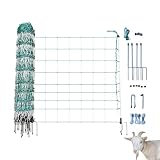
- Reliable Electric Fence for Goats | Help give your goats, sheep, alpacas, and other livestock a safer outdoor space with this 42" tall, 168’ long electric goat fence. Copper as well as Triple-braided stainless-steel conductive wire helps deliver consistent current when connected to a compatible low-impedance pulse energizer. Energizer sold separately
- Portable Fence for Flexible Setups | Whether you’re creating a temporary pasture, rotating grazing space, or expanding your animals’ outdoor area, this 168' long portable electric fence is easy to set up, move, and adjust as your needs change. Great for backyards, farms, homesteads, and rotational grazing
- Helps Protect Against Common Predators | Create a stronger boundary between your animals and common ground-level predators while helping keep goats and livestock away from gardens, roads, and other off-limit areas. This electric fence netting provides over 1,700 square feet of coverage when fully enclosed
- Built Stronger to Stay Upright | Pre-fastened fiber-reinforced plastic (FRP) posts spaced every 12 feet make setup simple, while sturdy double-spiked posts, corner guylines, and metal stakes add support across outdoor terrain. Mini-posts help reduce gaps on uneven ground
- Customize for Your Farm or Yard | Shape the electric netting fence around your pasture, barn, garden, property line, or temporary grazing area. Use it as a standalone goat fence, connect multiple fences together, or pair it with the optional gate handle kit for easier access
Poisonous plants and other animal-health hazards
Identify poisonous plants before turnout. Queensland animal-health guidance warns against forcing sheep to eat plants they would normally avoid; some plants can poison animals rapidly. Overgrazing removes safer preferred forage and can force consumption of toxic species.
Ragwort, bracken fern, sorghum and other hazardous plants require local veterinary or extension advice. The ragwort study’s lack of apparent health effects applied only to its sheep and management conditions; ragwort’s pyrrolizidine alkaloids remain a serious reason not to treat that result as a blanket safety guarantee. Never use hungry, nutritionally stressed or otherwise compromised animals to “clean up” a toxic stand.
Remove animals and seek veterinary advice immediately if you see abnormal appetite, weakness, tremors, breathing difficulty, digestive signs or sudden deaths. Do not wait for the flock to finish a treatment block.
Best Value
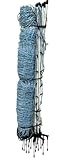
- Experience unrivaled durability and support with our electric netting system. Our meticulously designed netting features 14 preinstalled fiberglass posts, boasting heavy-duty 7" galvanized double-spiked stakes. This combination ensures rigid support, capable of withstanding the toughest conditions.
- Effortlessly installed in under 20 minutes. This ready-to-install solution arrives fully equipped, ensuring a hassle-free experience. With optimal height for security, it's perfect for livestock, pets, or gardens. Upgrade your fencing with ease and achieve the desired security in no time.
- Our netting system is well-suited to meet the unique demands of diverse environments, ensuring exceptional performance and protection in any application. Whether you're tending to your backyard homestead or managing a vast countryside property, Starkline Electric Netting is your go-to solution for reliable containment and peace of mind.
- Our innovative design ensures protection from a wide range of predators including foxes, coyotes, stray dogs, skunks, bears, raccoons, and deer. Enjoy peace of mind knowing your flock is safeguarded from potential threats.
- With a low power requirement of only .15 output joules per 164' net, our utility netting maximizes energy efficiency without compromising effectiveness. Say goodbye to excessive energy consumption and hello to a cost-effective and environmentally friendly solution for reliable containment.
How to monitor whether sheep are working
Measure both the weed and the pasture. Useful observations include:
- target-weed cover, height and number of flowering or seed-bearing stems;
- desirable-plant cover and species richness;
- residual dry matter and bare-ground percentage;
- soil pugging, compaction, runoff or erosion;
- animal body condition, grazing behavior, water intake and signs of illness.
Low stocking pressure can leave untreated patches. Excessive pressure can remove desirable forage and force toxic-plant intake. Adjust the next treatment’s density, duration or paddock layout based on these records rather than trying to maximize eating time.
Do not expect a perennial-weed transformation after one season. The American Sheep Industry Association’s Targeted Grazing handbook reader’s guide states that a minimum of three years is usually required before noticeable differences in perennial herbaceous weeds appear.
Sheep compared with other control options
| Option | Best fit | Main strengths | Main limitations |
|---|---|---|---|
| Sheep grazing | Palatable herbaceous weeds in areas animals can safely reach | Can suppress foliage and seed production while adding targeted disturbance | Needs fencing, water, labor and repeated monitoring; may damage desirable plants or expose animals to toxins |
| Goat browsing | Woody plants, shrubs and vines | Stronger browsing behavior for woody vegetation | Not automatically superior for every herbaceous weed; infrastructure and follow-up still required |
| Mowing | Accessible, relatively even stands where cutting can be timed before seed set | Fast, predictable removal without animal-health exposure | May spread or stimulate some plants, miss low-growing crowns and provide no lasting control alone |
| Herbicide | Species and sites where a labeled product is legal and compatible with conservation goals | Can target plants that livestock avoid | Requires correct identification, label compliance and protection of non-target plants, water and animals |
Compare methods using target palatability, vulnerable season, risk to desirable vegetation, terrain and access, fencing and water costs, animal-health risk, labor, time to visible change and the likelihood of follow-up treatments. Combining methods is often more durable than relying on grazing alone.
Recommended Free Tools
Bottom line for a sheep-based weed plan
Use sheep as a controlled biological tool, not as a guarantee of eradication. Identify the weed, graze during its locally vulnerable stage, confine animals, provide clean water, protect soil and desirable plants, watch for toxic exposure, and measure results. Expect repeated treatments over at least several years, with mowing, herbicide or reseeding added when the monitoring shows that sheep are not meeting the objective.
Quick Recap
Product prices and availability are accurate as of the date/time indicated and are subject to change. Any price and availability information displayed on Amazon at the time of purchase will apply.




