Recommended Free Tools
Most saltwater fish that eat plankton consume zooplankton—drifting animals such as copepods, krill, amphipods and tiny larval animals. A few small or specialized fish take in phytoplankton directly, often by filtering plankton-rich water. Larger fish may obtain plankton-derived energy indirectly by eating small fish that fed on zooplankton. The actual menu changes with species, body size, life stage, habitat and the plankton available at that time.
What “plankton” means
Plankton is a lifestyle, not one type of food. It includes organisms that drift with currents rather than swim strongly enough to control their position over long distances.
Phytoplankton
Phytoplankton are microscopic, photosynthetic organisms concentrated near the sunlit surface. They use sunlight to make organic energy and form the base of much marine food production. Fish generally do not rely on phytoplankton as their immediate prey, although some small or specialized species can consume them while filtering water.
Zooplankton
Zooplankton are drifting animals. The group includes copepods, krill, amphipods, larval animals and other small organisms. Most zooplankton graze on phytoplankton or smaller microbes, which makes them the main link between microscopic producers and fish.
#1 Best Overall

- Check out our Reviews and Visit Our Aquatic Foods & Blackworm Co. Amazon Storefront Where We Have More than 400 Tropical Fish Foods to Choose From.
- We at Aquatic Foods sift all of our Freeze Dried Foods, Spirulina Algae Wafers, Floating Pellets, Sinking Pellets to remove most Dust, Pieces and Particles prior to shipping to ensure you receive the highest quality Tropical Fish Food.
- Please note: All product photos are not exact, product color and sizes may vary a little.
- Tropical Fish Foods for Cichlids, Discus, Angel Fish, Bettas, Koi, Tetras, Goldfish, Parrot Fish, Marine Fish, Axolotls, Snails, Shrimp, Pelcos, Flower Horns, Gourami, Loaches, Catfish
- We are Aquatic Foods & Blackworm Co. A third generation Aquarium Hobbyist and Family Owned Business selling and shipping quality Tropical Fish Foods to Fellow Fish Keepers.
The plankton foods saltwater fish actually take
| Prey or food source | How it fits a fish’s diet | Fish most likely to use it |
|---|---|---|
| Microzooplankton | Very small drifting animals eaten by larvae and tiny juveniles | Newly hatched fish and other small-mouthed stages |
| Copepods | A common, energy-rich zooplankton prey and a major food-web link | Many small and schooling planktivorous fish |
| Krill | Larger zooplankton that can be captured individually or in dense patches | Fish with mouths and gill structures suited to larger prey; also larger filter feeders |
| Amphipods and other zooplankton | Animal plankton taken when local communities and currents make them available | Species whose feeding structures can handle the available prey |
| Phytoplankton | Directly consumed by some small or specialized filter feeders; more often an indirect energy source | Species adapted to filter or graze microscopic particles |
| Small fish | Transfers plankton-derived energy to larger predators | Growing juveniles and adult predators rather than strict planktivores |
Copepods are especially important because they consume phytoplankton and convert that production into animal tissue that fish can eat. They are often described as a central “cattle” link of the sea: not because fish eat plants through them in every case, but because copepods make microscopic production available to higher trophic levels.
Do marine fish eat phytoplankton or zooplankton?
For most plankton-eating marine fish, the immediate answer is zooplankton. Phytoplankton normally pass their energy to zooplankton first. A fish then eats copepods, krill or other animal plankton, rather than digesting the microscopic producer itself.
Rank #2

- Natural, freeze dried, single ingredient fish food
- 72% Protein, extremely nutritious addition to regular fish food
- Floating, Top Grade Selection, Medium Sized Northern Pacific Plankton
- Approx. size ¼” to ¾” (1cm to 2cm)
- Freshly packaged with oxygen absorbers to ensure flavor and quality
Some fish can ingest phytoplankton directly, particularly species with filtering or particle-trapping adaptations. That does not make direct phytoplankton feeding the general rule for saltwater fish. A fish can also depend heavily on phytoplankton without ever eating it: it may eat zooplankton, or a smaller fish that ate zooplankton.
How the marine plankton food web reaches fish
- Phytoplankton capture sunlight. Photosynthesis creates the organic matter at the base of the chain.
- Zooplankton graze on that production. Copepods and other drifting animals consume phytoplankton or smaller microbes.
- Small fish eat zooplankton. This is the most common route by which plankton becomes fish flesh.
- Larger fish eat small fish. Predators can therefore rely on plankton-derived energy without being direct plankton feeders.
The chain is not perfectly linear. Larger zooplankton can eat smaller zooplankton, and many animals switch prey as conditions change. The useful distinction is whether plankton is the fish’s immediate food or the original source of energy farther down the web.
Rank #3

- Enhanced with added shrimp, plankton and Chlorella Algae
- Enhanced with Entice to attract finicky eaters and enhance palatability
- Contains proteinates and hydrolysates, which reduce waste and benefit nutrient uptake as well as the immune systems of fish and inverts
What young saltwater fish eat
Fish larvae and early juveniles commonly depend on the smallest available planktonic prey. Their mouths are tiny, swimming ability is limited and energy demands are high, so microzooplankton and very small copepod stages can be more suitable than adult-sized krill or other large prey.
As a fish grows, its mouth, teeth, gill rakers and swimming ability change. It may move from tiny plankton to larger copepods, krill or amphipods, then add crustaceans, squid or small fish. The transition is species-specific: some adults remain specialized planktivores, while others broaden their diet substantially.
Rank #4

- Easy to Administer
- Zoo Med Laboratories plankton Banquet Block Feeder
- Zoo Meds Plankton Banquet time release feeding blocks last 3 to 14 days, depending on block size
- Original Banquet blocks are also very useful for small fry which do best when constantly feeding
- Original Banquet blocks are also very useful for small fry which do best when constantly feeding
Why two saltwater fish may eat different plankton
Species and feeding anatomy
Gill rakers, mouth size and swimming behavior determine whether a fish strains particles, picks individual prey from the water or chases larger organisms. Those structures set a practical limit on prey size and capture method.
Life stage and body size
Larvae need minute prey; larger individuals can handle bigger zooplankton or small fish. A fish’s diet should therefore be identified by age as well as by species.
Best Value
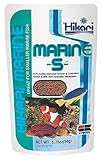
- High protein levels; consistent with the foods your fish would eat on the reef
- Soft and sponge-like, a texture your marine fish are instinctively accustomed to
- Shrimp Meal for excellent, natural color enhancing benefits
- Ideal for all smaller marine carnivores or omnivores
- Stabilized vitamin C to support immune system health
Habitat and depth
Plankton communities differ between coastal water, the open ocean, reefs and deeper layers. Light, nutrient supply, fronts and currents concentrate different prey in different places, so a fish feeds on what its habitat supplies.
Season and local availability
Phytoplankton blooms can increase zooplankton later, while currents and seasonal conditions can move or deplete a prey patch. Fish often switch among available plankton rather than follow a fixed menu year-round.
Does “plankton-eating” mean a fish is a strict specialist?
No. A planktivore is an animal that eats plankton, but planktivores range from very small fish to very large filter-feeding animals. Some fish feed almost entirely on zooplankton for part of their lives; others add benthic invertebrates or small fish when they grow. “Plankton-eating” describes an important feeding strategy, not a universal diet or a guarantee that the fish eats phytoplankton directly.
What this means for a particular saltwater fish
To identify its diet accurately, specify the species, age or size, location and season. “Saltwater fish” covers larvae in nearshore nursery water, reef fish, open-ocean schoolers and predators with very different feeding equipment. Without those details, the safest general answer is that the fish most likely eats zooplankton—especially copepods and other small drifting animals—or obtains plankton-derived energy through smaller prey.
What’s actually slowing this PC down?
Pick the symptom - the matching free tool is one click away.
Quick Recap
Product prices and availability are accurate as of the date/time indicated and are subject to change. Any price and availability information displayed on Amazon at the time of purchase will apply.




