PC Slower Than It Used to Be?
A free scan shows the junk files, broken settings and background clutter dragging Windows down - then fixes them in one click.Free scan · Windows 10 & 11Crashes, No Sound, or Screen Glitches?
Random freezes, missing sound and display glitches usually trace back to one bad driver. Find and replace yours safely.Free scan · under a minuteSpaying is permanent surgical sterilization of a female dog. The traditional operation, called an ovariohysterectomy or OHE, removes the ovaries and uterus. Some veterinarians instead perform an ovariectomy, or OVE, which removes the ovaries but leaves the uterus in place. Both are performed under general anesthesia, and laparoscopic techniques may be available.
Spaying prevents pregnancy and future heat cycles and can prevent pyometra in a removed uterus. It may also reduce mammary-tumor risk, although the ideal age is not identical for every dog. Breed, projected adult size, health, lifestyle, accidental-mating risk, and the owner’s ability to manage an intact female all matter. Discuss the procedure type, timing, alternatives, anesthesia plan, and long-term trade-offs with your veterinarian.
Important: This is a general veterinary-health guide for U.S. dog owners, not a diagnosis or a substitute for an examination. A dog that may have pyometra, pregnancy complications, or another reproductive emergency needs prompt veterinary care.
What does spaying mean?
Spay is the everyday term for surgically sterilizing a female dog. It does not always identify exactly which reproductive organs were removed, so ask the veterinarian to name the procedure and describe the anatomy that will remain.
The Tool Desk
Outbyte Driver Updater FREEFix the driver behind crashes, sound loss and screen glitchesFind Drivers →Outbyte PC Repair FREERepair Windows errors before they cause bigger problemsFix Now →#1 Best Overall

- Leave the Cones Behind: Swap out uncomfortable cones of shame for a cozy surgery suit for dogs. This dog surgery suit is made with soft cotton and lycra, which promotes better airflow than nylon spandex suits. It even has an inner layer pocket for ice packs and pads.
- Supercharge Your Pet’s Recovery: Our dog body suits after surgery keeps your fur babies from scratching, licking, or biting their wounds. This dog cone alternative also shields sutures, incisions, or cuts from dirt, dust, or external elements.
- From Ruff to Relaxation: Designed with elastic bands around the neck, tail, and legs, and a snap closure, this dog recovery suit provides a snug fit that can help ease your pup’s restlessness. Our dog post surgery suit also features a clip-up system for easy walks and potty breaks.
- The Suit that Won’t Quit: Perfect for busy fur parents, our dog recovery suit is machine washable and reusable for easy maintenance. It can withstand repeated washing without losing its sturdiness.
- The Way to a Happy Recovery: At Suitical, we collaborated with veterinarians, professionals, and pet owners to develop premium pet products that help improve the wellness of your beloved furry friends!
A female dog’s reproductive tract includes the ovaries, which produce eggs and reproductive hormones; the uterus, where pregnancy develops; the cervix; and the vagina. The main procedures are:
- Ovariohysterectomy (OHE): The ovaries and uterus are removed. This is the traditional operation commonly meant by the word spay.
- Ovariectomy (OVE): The ovaries are removed, but the uterus remains. Removing the ovaries removes the main source of reproductive hormones and prevents pregnancy. In an otherwise healthy uterus, the American College of Veterinary Surgeons reports no long-term outcome difference between OVE and OHE in appropriate patients.
- Subtotal ovariohysterectomy: The ovaries and only part of the uterus are removed. Because uterine tissue remains, the terminology should accurately describe what was left behind; this is not interchangeable with a complete OHE.
- Laparoscopic spay: The surgeon works through two or three small abdominal ports using a camera and specialized instruments. Laparoscopy describes the surgical approach, not a separate reproductive outcome.
- Hysterectomy with the ovaries preserved: The uterus is removed while the ovaries remain. This can prevent pregnancy and uterine disease while preserving ovarian hormones, but it is different from a traditional spay. Heat-related hormonal behavior may continue, and availability, long-term evidence, and suitability vary.
OHE and OVE are permanent forms of sterilization. A routine elective spay is usually performed on a healthy dog, but removal of reproductive organs may also be treatment for pyometra, difficult birth, reproductive-tract disease, or selected ovarian, uterine, or vaginal tumors. The operation and risk level can be very different when a dog is sick.
Why do people spay female dogs?
To prevent pregnancy and heat cycles
Spaying permanently prevents pregnancy and eliminates future estrous cycles. That means no future heat-related bleeding, fertility, or need to separate the dog from males during every cycle. It also removes the possibility of an accidental litter, an important consideration in homes where reliable separation is difficult.
Surgery is not the only possible way to prevent pregnancy in every individual situation. A highly responsible owner may be able to manage an intact female, and specialized surgical or hormonal options exist in some settings. Nevertheless, permanent surgical sterilization remains the most widely used approach in the United States.
Do these 3 things before closing this tab:
1Scan for outdated or missing drivers - takes under a minute2Clear out junk files and repair common Windows errors3Fix the driver behind crashes, sound loss and screen glitchesTo prevent pyometra
Pyometra is a potentially life-threatening infection of the uterus, most often affecting intact female dogs after a heat cycle. Signs may include lethargy, depression, poor appetite, increased thirst or urination, vomiting, pale gums, fever, abdominal enlargement, or vaginal discharge. A discharge can be absent when the cervix is closed, so a clean-looking vulva does not rule out pyometra.
According to the ACVS overview of pyometra, prompt surgery after stabilization is generally the treatment of choice. Pyometra surgery is not the same as a simple puppy spay: the patient may be dehydrated, septic, anemic, or otherwise unstable, and the infected uterus can be enlarged and fragile. It is often more urgent, complex, and medically risky than elective surgery.
Removing the uterus prevents pyometra from developing in that uterus. Unusual complications can occur when ovarian tissue remains or when a portion of the reproductive tract is left behind. Residual ovarian tissue and remaining uterine tissue can, in specific circumstances, contribute to problems such as stump pyometra. Ask the surgeon which tissues will be removed.
To reduce mammary-tumor risk
Much of the established veterinary literature associates early spaying with a lower risk of mammary tumors, with risk generally increasing after additional heat cycles. This is an important potential benefit, but it should not be turned into a precise prediction for every dog. Breed, genetics, age, tumor type, study population, and study design matter.
You may hear the often-repeated figures of 0.5%, 8%, and 26% for mammary-tumor risk at different points in a dog’s reproductive history. Those figures come from older studies and veterinary teaching materials; they are not universal percentages for every individual dog. A 2025 systematic review concluded that the available evidence was not strong enough to establish one evidence-based optimal age for prepubertal spaying specifically to prevent mammary tumors.
The careful conclusion is that early spaying may reduce mammary-tumor risk according to much of the veterinary literature, while the size of that benefit and the ideal timing remain debated. This benefit must be weighed against the dog’s breed-specific orthopedic, urinary, cancer, and reproductive risks.
To treat reproductive or hormone-related disease
A veterinarian may recommend spaying or another reproductive surgery to treat:
- Pyometra or other uterine infection.
- Selected ovarian, uterine, cervical, vaginal, or reproductive-tract tumors.
- Some reproductive emergencies, including difficult birth, also called dystocia.
- Recurrent or severe pseudopregnancy.
- Progesterone-related complications in selected dogs.
When disease is present, the goal is treatment rather than simply preventing future litters. The veterinarian may recommend removing the uterus even when an OVE would otherwise be reasonable.
Rank #2

- Signature 4-Way Stretch: Experience the ultimate in canine comfort with Spark Paws' signature 4-way stretch fabric, designed exclusively for dogs.
- Hug-Like Comfort: Our calming fleece interior creates a soothing, hugging sensation, making your dog feel safe and secure.
- Precision Fit: Fit tested on thousands of dogs to ensure the perfect fit for all breeds and sizes, providing unparalleled comfort.
- Effortless Potty Breaks: The deep V cut at the rear section ensures easy and hassle-free potty breaks for your furry friend.
- Durable Design: Crafted with high-quality materials, these pajamas are built to last, keeping your dog cozy night after night.
For population control
Animal shelters and rescue organizations may sterilize dogs before adoption to prevent unwanted litters after placement. Pediatric or early-age sterilization can make sense in that population-control setting, where the organization cannot control the dog’s future breeding environment. That does not automatically mean the same timing is optimal for every privately owned puppy, whose owner may be able to manage heat cycles safely.
What spaying does not guarantee
Spaying removes reproductive hormones and heat cycles; it is not a universal behavior or health cure. It does not guarantee that a dog will become calmer, friendlier, more obedient, or easier to train. It does not cure fear, separation anxiety, poor socialization, reactivity, or aggression, and it may not eliminate learned mounting behavior.
Behavioral outcomes for an individual dog are difficult to predict. The WSAVA reproduction-control guideline advises that significant behavior problems should be assessed by a veterinarian and, when appropriate, a veterinary behavior professional before an irreversible gonadectomy is recommended.
Spaying also does not prevent every type of cancer, guarantee a healthy body weight, or remove the need for exercise, training, preventive care, weight management, or mammary examinations when medically indicated.
Recommended Free Tools
When should a female dog be spayed?
There is no universally correct age for every female dog. Timing is a risk-benefit decision involving projected adult size, breed or mixed-breed risk profile, expected first heat, accidental-mating risk, lifestyle, health, and the owner’s ability to manage an intact female. A recommendation for a five-month-old small-breed puppy should not automatically be applied to a giant-breed puppy or a working dog.
How major guidelines differ
| Guidance | General framework | What it means for owners |
|---|---|---|
| AAHA, United States | For females expected to weigh under 45 pounds as adults, spaying before the anticipated first heat, commonly around 5–6 months, is generally favored. For females expected to weigh 45 pounds or more, timing is individualized within roughly 5–15 months. | Earlier surgery may reduce unwanted-litter risk and mammary-tumor risk. In larger dogs, delaying may be considered because of possible orthopedic, cancer, or urinary-sphincter trade-offs. |
| AVMA, United States | Does not endorse one universal age for all dogs. Its guidance emphasizes breed, age, physical condition, personality, intended role, home environment, and health status. | Use the dog’s actual circumstances rather than treating six months as a rule. |
| WSAVA, global, 2024 | Places more emphasis on individualized reproductive control. A healthy female may remain intact when a responsible owner can manage mating and reproductive-disease risks. When gonadectomy is chosen for an owned female, the guideline says surgery should ideally occur after the first or second heat in many situations. | Early surgery is not presented as mandatory for every dog. Ovary-sparing and temporary options may be discussed where available. |
| Shelter or rescue setting | Early sterilization may be used before adoption because preventing future breeding is a central population-control objective. | The shelter context is different from an owned dog whose heat cycles can be reliably managed. |
These are frameworks, not prescriptions. AAHA’s current owner-facing guidance, updated February 5, 2026, continues to direct owners toward an individualized discussion. The more detailed AAHA canine life-stage guidelines specifically caution that associations in spay-neuter studies do not prove cause and effect and that findings in one breed should not automatically be applied to another.
The AVMA’s owner brochure likewise rejects a one-size-fits-all age. The 2024 WSAVA global guidelines are not an instruction that dogs should never be spayed. They recognize that responsible owners may keep a female intact or choose an alternative, while also recognizing situations in which sterilization is appropriate. WSAVA published an erratum on March 17, 2025, including clarification of a figure-caption error and noting that its committees do not have complete consensus on portions of the ethics chapter.
Factors that should influence the timing decision
- Projected adult size and growth: Large and giant breeds may have different orthopedic and urinary considerations than small breeds.
- Breed and mixed-breed risk: Some risks vary substantially among breeds, and a mixed-breed dog may not fit a simple size-only rule.
- Expected first heat: A veterinarian can estimate when it may occur, but individual timing varies.
- Accidental-pregnancy risk: Consider intact male dogs in the home, fencing, dog-care arrangements, and how reliably the household can separate dogs during heat.
- Health history: Urinary problems, orthopedic disease, cancer risk, reproductive disease, heart or respiratory disease, diabetes, kidney or liver disease, and current medications can change the recommendation.
- Lifestyle and intended role: Sport, working, service, breeding, and performance plans may make growth and hormone timing especially relevant.
- Body condition: Obesity can complicate surgery and anesthesia and increases the importance of a post-surgery nutrition plan.
- Another planned procedure: Combining sterilization with another anesthetized procedure may be reasonable in some cases, but the veterinarian must weigh added surgical time and risk.
- Follow-up capacity: The owner must be able to provide confinement, medication, incision monitoring, and follow-up care.
What are the health trade-offs and risks?
Surgical and anesthetic risks
Routine spaying generally has an excellent prognosis in healthy dogs, but it is still abdominal surgery under general anesthesia. Possible complications include pain, bruising, swelling, infection, bleeding or hemorrhage, anesthetic complications, urinary obstruction, incision breakdown, and, less commonly, serious or life-threatening events. Larger or obese dogs may be more difficult to operate on and may have more complications.
Free tools Windows power users keep installed
One-click scans. No signup required.
Risk is not determined by the anesthetic drug alone. It depends on preoperative assessment, the dog’s condition, the surgical technique, pain control, monitoring, temperature support, and recovery supervision.
Urinary incontinence
Acquired urinary incontinence is associated with spaying in some female dogs. The risk varies by breed, body weight, age, urinary history, and other factors and is more clinically important in some larger dogs. A 2024 ACVIM consensus statement recommends delaying OHE or OVE until at least after the first heat in breeds at increased risk of urinary incontinence, or in prepubertal females already showing urinary problems.
For context, one U.S. retrospective study of 566 spayed dogs reported urinary incontinence in 5.12% and found that dogs weighing at least 15 kilograms were approximately seven times as likely to be affected as smaller dogs in that study. Those are study-specific results, not a universal rate for every spayed dog. Read the Forsee et al. study in that context.
Orthopedic disease
Some observational research associates early gonadectomy with certain orthopedic disorders in some breeds, particularly larger dogs. The relationship is not uniform, and an association does not prove that spaying directly caused a condition in an individual dog. Breed-specific research, including the UC Davis study of 35 breeds, is one reason veterinarians may recommend different timing for different dogs. A 2025 systematic review and meta-analysis concerning cranial cruciate ligament disease adds to the evidence base but does not create a universal age rule.
Rank #3
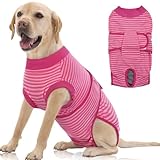
- SIZE GUIDE: X-Small (Back:8.3-11.4in,Chest:12.6-15.7in, Weight:4-7 LB), Small (Back:11.4-13.4in,Chest:15.7-19.3in, Weight:7-15 LB), Medium (Back:13.4-16.1in,Chest:19.3-23.2in, Weight:14-25 LB), Large (Back:16.1-20.1in,Chest:23.2-27.6in, Weight:23-48 LB), X-Large (Back:20.1-24.8in,Chest:27.6-32.3in, Weight:42-75 LB), XX-Large (Back:24.8-29.5in,Chest:32.3-39.3in, Weight:70+ LB)
- [PRACTICAL DESIGN]: FUAMEY dog onesie conforms to the dog's body structure, is easy to wear and take off. dog bodysuit is more flexible and lighter than collars, so that the dog will not be angry and depressed when defecation and eating, and prevent the dog from licking the wound.
- [MULTI-PURPOSE]: Our recovery suit is suitable for post-operative care such as neuter and childbirth.✔Can be used as postpartum care for female dogs to prevent dogs from catching cold.Postpartum use as weaning gown . ✔Can be used as a protective spay suit for pet neutering or post-caesarean section .✔Use with diapers to prevent male dogs from urinating .✔can also be used as a favorite home clothes with complete freedom of movement.
- [KEEP TIDY]: Our recovery suit is suitable for indoor or outdoor activities. It can effectively isolate dust and dirt, keeping your dog clean and tidy.
- [BREATHABLE FABRIC]: Our dog recovery suit is made of 95% cotton and 5% spandex. The recovery shirt is highly elastic and breathable, allowing the dog to feel comfortable and move freely after wearing it. No deformation after machine wash.
Cancer associations
Spaying is associated with lower mammary-tumor risk, especially when performed early according to much of the veterinary literature. At the same time, some breed-specific studies report associations between gonadectomy and certain other cancers at particular ages. These findings vary by breed, sex, tumor type, age, and study design.
It is therefore inaccurate to say either that spaying prevents cancer generally or that spaying causes cancer generally. A relative increase in a condition can also sound alarming when the underlying absolute risk is low. Ask the veterinarian which diseases are relevant to your dog’s breed and how important each risk is in practical terms.
Weight gain and metabolic changes
Sterilized dogs may be more prone to weight gain, particularly during the first two years after surgery, according to AAHA’s review of the literature. After spaying, reassess calorie intake, treats, food portions, body condition, and exercise with the veterinary team. Do not assume that the pre-surgery feeding amount will remain appropriate.
Behavior changes
Heat cycles and mating-related behavior may stop, but broader behavior changes are unpredictable. Spaying is not a replacement for behavior modification, enrichment, safe management, or professional treatment of anxiety, fear, aggression, or reactivity.
Quick wins for a faster PC:
Clear out junk files and repair common Windows errorsFree Scan →Fix the driver behind crashes, sound loss and screen glitchesFind Drivers →Repair Windows errors before they cause bigger problemsFix Now →How is a spay performed?
The exact sequence varies with the dog, procedure, and hospital, but a typical operation follows these stages:
- Examination and planning: The veterinarian reviews the history, performs a physical examination, confirms the reproductive status when relevant, and discusses the planned operation.
- Pre-anesthetic assessment: Testing is selected according to age, health, examination findings, and clinic protocol. A young healthy dog may need less testing than an older or medically complex patient. Bloodwork, urinalysis, imaging, or additional cardiac or medical evaluation may be recommended.
- General anesthesia and pain control: The dog is anesthetized, usually receives intravenous access and pain medication, and has an endotracheal tube to protect the airway and deliver anesthetic oxygen.
- Open surgery: The veterinarian makes an abdominal incision, identifies the reproductive tissues, seals or ties the blood vessels supplying the ovaries, removes the planned organs, and closes the body wall and skin in layers.
- Laparoscopic surgery: The surgeon makes two or three small incisions for a camera and instruments. Ovarian vessels and tissues may be secured with clips, sutures, or a vessel-sealing device. The approach requires specialized equipment and training.
- Recovery: The dog remains under observation through anesthetic recovery. Discharge is appropriate only when the veterinary team considers recovery adequate and provides home-care instructions.
AAHA describes anesthesia safety as a continuum that includes preparation, induction, surgery, monitoring, recovery, and return home. Ask whether the dog will have a dedicated trained monitor, IV catheter, endotracheal tube, oxygen and respiratory monitoring, blood-pressure monitoring, ECG or other cardiovascular monitoring, temperature support, pain control, and supervised recovery.
Ovariectomy versus ovariohysterectomy
| Feature | Ovariectomy, OVE | Ovariohysterectomy, OHE |
|---|---|---|
| Removed | Ovaries only | Ovaries and uterus |
| Hormone source | Removed | Removed |
| Pregnancy | Prevented | Prevented |
| Uterus | Remains | Removed |
| When it may be considered | When the uterus is healthy and gonadectomy is chosen | When uterine disease is present, suspected, or otherwise requires removal |
The WSAVA executive summary favors OVE when gonadectomy is chosen and there is no uterine pathology, while OHE is indicated when the uterus is diseased. The ACVS notes that available literature has not found a long-term outcome difference between OVE and OHE in appropriate patients. The surgeon’s experience, equipment, the dog’s anatomy and reproductive history, and the reason for surgery all matter.
Do not choose based only on which word appears on an estimate. Ask which organs will be removed and why. If your dog has pyometra, a uterine mass, pregnancy complications, or another uterine abnormality, leaving the uterus in place may not be appropriate.
Open spay versus laparoscopic spay
| Consideration | Open spay | Laparoscopic spay |
|---|---|---|
| Availability | Widely available | Limited to practices with suitable equipment and training |
| Incision | Usually one abdominal midline incision | Usually two or three small port incisions |
| Visualization | Direct surgical exposure | Magnified camera visualization |
| Pain and wound complications | Effective, but may involve more tissue handling | May reduce postoperative pain and wound complications in appropriate cases |
| Cost | Usually lower | Often higher |
| Suitability | Broadly applicable, including many dogs with uterine disease | Depends on the patient, anatomy, disease, surgeon, and equipment |
Laparoscopy is not automatically better. Its potential advantages must be balanced against availability, cost, experience, and whether the dog needs a procedure that is not well suited to small ports, such as surgery for substantial uterine disease. The ACVS discussion of ovariohysterectomy explains the conventional and laparoscopic approaches.
How to prepare your dog for surgery
The operating clinic’s instructions take priority because fasting and medication rules vary with age, health, and anesthesia protocol. Before the appointment:
- Ask exactly when food and water should be withheld. Do not improvise fasting instructions, especially for puppies, diabetic dogs, or dogs with other medical conditions.
- Tell the veterinarian about every medication and supplement, previous anesthetic reaction, recent illness, coughing, vomiting, diarrhea, urinary abnormality, possible pregnancy, or recent heat.
- Ask whether pre-anesthetic bloodwork is recommended and whether an older or medically complex dog needs urinalysis, imaging, or additional evaluation.
- Confirm arrival and pickup times, identification requirements, vaccination policies, and how your dog should be transported.
- Prepare a quiet indoor recovery area before the operation. Plan for leash-only toilet trips and someone to observe the dog after returning home.
- Ask about IV access, intubation, blood-pressure and oxygen monitoring, ECG, temperature support, pain control, and supervised recovery. The AAHA anesthesia guidelines provide a useful checklist for this conversation.
- Do not independently give human pain medication. Some common human drugs can seriously poison dogs.
Recovery after spaying
Follow the surgeon’s written instructions even if they differ from general advice. A typical recovery includes:
The first 24 hours
Mild sleepiness, reduced appetite, temporary disorientation, and slower movement can occur after anesthesia and should improve. Offer food and water exactly as directed by the clinic. Keep the dog indoors, warm but not overheated, and separated from other pets and children if excitement could lead to jumping or rough play.
Rank #4

- Protective Recovery Suit: The professional surgical recovery suit can protect your little pet from licking wound and help dog recover sooner after operation. It can avoid animal suffer from skin disease when exposing to outer environment and keep little animal calm down when it gets anxious.
- Important Tip for Male Dogs: Trim the pre-marked crotch circle before use to ensure a comfortable fit without tightness.
- Easy to Use: Designed with convenience in mind, this recovery suit is easy to put on and take off, making the process stress-free for both pets and owners.
- Calming Effect: The snug fit of the suit provides a sense of security, helping to reduce anxiety and promote calmness during the recovery period
- The snap is designed for daily wear and normal adjustments, withstanding 2-3kg vertical force
Activity and incision care
- Use quiet indoor confinement and leash walks only for elimination.
- Do not allow running, jumping, rough play, swimming, bathing, or off-leash activity during the restriction period.
- Activity restrictions commonly range from about 7–10 days in some high-volume clinic protocols to two weeks in surgical-specialty guidance. The operating veterinarian’s timeline controls.
- Keep the incision clean and dry. Check it at least once or twice daily, or as instructed.
- Prevent licking or chewing with an Elizabethan collar or veterinarian-approved recovery garment. A dog can damage an incision quickly even when it seems comfortable.
- Give only prescribed medication, at the prescribed dose and schedule.
- Return for a recheck or suture removal if the clinic requests one. Some incisions use absorbable buried sutures, while others require removal.
A normal early incision is generally closed and clean, with mild bruising or slight swelling that does not progressively worsen. The ACVS postoperative-care guide and ASPCA after-surgery instructions explain what owners should monitor.
Call the veterinarian promptly for
- Pale gums, collapse, severe weakness, or labored breathing.
- Persistent vomiting or diarrhea.
- Uncontrolled pain, severe lethargy, or failure to improve.
- Increasing redness, heat, swelling, discharge, odor, or bleeding at the incision.
- An incision that opens or tissue that protrudes.
- Inability to urinate or defecate.
- Loss of appetite or water intake that persists beyond the period the clinic said to expect.
Some signs, such as pale gums, collapse, breathing difficulty, heavy bleeding, or an open incision, warrant emergency advice rather than waiting for the next business day.
Special situations
What if the dog is in heat?
Some clinics will spay a dog during heat, while others prefer to wait because reproductive tissues may be more vascular and the operation can be more difficult. It is not an absolute rule in either direction. Call the operating veterinarian and disclose the heat before the appointment; do not assume the surgery will proceed or be postponed.
What if the dog may be pregnant?
Pregnancy does not automatically make surgery impossible, but the decision depends on the dog’s health, stage of pregnancy, owner’s goals, and surgeon’s judgment. The operation may be larger or more complicated. Tell the veterinarian about any possible mating before anesthesia.
What’s actually slowing this PC down?
Pick the symptom - the matching free tool is one click away.
What if the dog is nursing?
A nursing mother may need to wait until the litter is weaned. One ASPCA community-medicine clinic advises that waiting about one month after weaning is ideal, although health and circumstances may justify a different plan. Ask the veterinarian how to care for the mother and puppies around anesthesia and separation.
What if she has already had one or more heats?
It is not too late to spay. Surgery can still prevent pregnancy and future pyometra even when a dog is no longer a puppy. The possible mammary-tumor risk reduction may be smaller than it would have been before the first heat, but sterilization may still provide substantial health and management benefits. Timing should account for age, breed, existing disease, and anesthesia risk.
What if she is older?
Advanced age alone is not necessarily a reason to reject anesthesia. Older dogs need an individualized examination and may need bloodwork, urinalysis, imaging, or other testing before an elective operation. The AAHA senior-care guidance discusses these anesthetic and surgical considerations.
What if she is obese or has another illness?
Body condition, heart or respiratory disease, diabetes, kidney or liver disease, infection, and other conditions can alter anesthesia and surgical planning. The veterinarian may recommend weight management, stabilization, additional testing, or treatment of the illness before elective spaying.
What’s actually slowing this PC down?
Pick the symptom - the matching free tool is one click away.
What if she has possible pyometra?
An intact female with lethargy, poor appetite, increased thirst or urination, vomiting, abdominal enlargement, fever, pale gums, or vaginal discharge after a heat cycle needs prompt veterinary assessment. Because closed pyometra may have no discharge and can progress rapidly, do not wait for symptoms to become dramatic.
Alternatives to traditional spaying
The best option depends on what you are trying to prevent: pregnancy, heat-related behavior, uterine disease, ovarian hormone exposure, or unwanted litters. Alternatives may be unavailable, less established, temporary, or unsuitable for a particular dog.
- Ovariectomy: A permanent surgical option that removes the ovaries while preserving the uterus. It prevents pregnancy and ovarian hormone cycles but is not appropriate when the uterus is diseased.
- Hysterectomy with ovaries preserved: Removes the uterus and prevents pregnancy while preserving ovarian hormones. It may avoid pregnancy and uterine disease but may not eliminate heat behaviors or other effects of ovarian hormones. Availability and long-term evidence are limited in many regions.
- Temporary hormonal suppression: Products such as deslorelin or other hormonal methods may be available in some countries and situations. Labeling, duration, adverse effects, cost, and availability vary by geography, so this requires veterinary supervision.
- Remaining intact with strict management: A responsible owner may choose to keep the dog intact if they can reliably prevent mating, manage heat cycles, monitor mammary glands, and recognize reproductive disease early. This does not remove the risk of pyometra or other reproductive conditions.
- Laparoscopic sterilization: This is a different surgical approach, not a nonsurgical alternative. It may reduce incision-related discomfort in suitable cases but still involves anesthesia and removal or alteration of reproductive tissues.
The WSAVA guidelines specifically recognize ovary-sparing surgery, temporary methods, and responsible management of an intact female as options in selected circumstances. That does not mean every alternative is equally available or equally appropriate in the United States.
A practical decision matrix
| Situation | Key question | Discussion that may follow |
|---|---|---|
| Small-breed puppy in a home where accidental mating is difficult to prevent | Can she be reliably kept away from males until surgery? | Early spay before the first heat may be favored under the AAHA U.S. framework. |
| Large- or giant-breed puppy | Which breed-specific orthopedic, urinary, and cancer risks matter? | Delaying surgery may be considered, but the dog must be managed safely through heat cycles. |
| Sport, service, or working dog | Could growth and hormone timing affect performance or orthopedic risk? | Individual timing is more important than a blanket six-month rule. |
| Responsible owner able to manage an intact female | Can heat, pregnancy risk, mammary checks, and reproductive-disease monitoring be handled reliably? | Remaining intact or choosing an ovary-sparing option may be discussed under WSAVA guidance. |
| Dog with uterine disease or pyometra | Is the uterus abnormal or infected? | OHE is generally favored when uterine disease requires removal. |
| Dog with urinary incontinence or a high-risk breed | Could gonadectomy worsen the problem? | Discuss delaying until after the first heat and evaluating other causes. |
| Dog currently in heat, pregnant, or nursing | Is surgery elective, urgent, or medically necessary? | Timing and procedure require case-specific veterinary judgment. |
| Older intact dog | How does future pyometra risk compare with anesthesia and surgical risk? | Preoperative evaluation and individualized risk assessment are essential. |
| Shelter or rescue dog | Is preventing breeding before adoption the overriding objective? | Pediatric or early-age sterilization may be used despite different considerations for privately owned dogs. |
Questions to ask your veterinarian
- Which procedure do you recommend: OHE, OVE, subtotal OHE, hysterectomy, or another option?
- Exactly which organs and tissues will be removed, and which will remain?
- Why is this timing appropriate for my dog’s breed, projected adult size, health, and lifestyle?
- Should we wait for a heat cycle, or would waiting create greater pregnancy or disease risk?
- What are my dog’s urinary, orthopedic, cancer, reproductive, and weight-related risk factors?
- What pre-anesthetic tests do you recommend?
- Will my dog have an IV catheter and endotracheal tube?
- How will oxygenation, breathing, blood pressure, heart rhythm, temperature, pain, and recovery be monitored?
- What pain-control plan will my dog receive at the hospital and at home?
- Is laparoscopic surgery available, and would it be appropriate for this dog?
- How long should activity be restricted?
- What incision changes are normal, and what should prompt an emergency call?
- If my dog is in heat, pregnant, or nursing, should surgery be postponed?
- If I keep her intact for now, how should I prevent mating and monitor for pyometra or other disease?
The bottom line on spaying
Spaying is a common and usually successful operation, but it is not risk-free and it is not one identical procedure for every dog. OHE removes the ovaries and uterus; OVE removes the ovaries only; laparoscopic surgery changes the approach; and ovary-sparing alternatives may be considered in selected situations.
For a U.S. owner, the most useful question is not simply whether a dog should be spayed at six months. It is: Which reproductive option best balances this dog’s pregnancy, pyometra, mammary-tumor, urinary, orthopedic, cancer, behavioral, anesthesia, and lifestyle risks? Take the dog’s breed or mix, projected adult size, health history, living arrangements, and your ability to manage heat cycles to a veterinarian, then make a documented plan for timing, procedure type, monitoring, and aftercare.
The Bottom Line
Spaying permanently prevents pregnancy and ovarian heat cycles, but the right timing and operation depend on the individual dog. Ask whether OHE or OVE is appropriate, how breed and adult size affect the decision, what alternatives are realistic, and how the clinic will manage anesthesia and recovery. If an intact female shows lethargy, vomiting, increased thirst or urination, abdominal enlargement, pale gums, or vaginal discharge after heat, seek veterinary care promptly because pyometra can be life-threatening.
Quick Recap
Product prices and availability are accurate as of the date/time indicated and are subject to change. Any price and availability information displayed on Amazon at the time of purchase will apply.




