What’s actually slowing this PC down?
Pick the symptom - the matching free tool is one click away.
No fish is a reliable no-filter choice for a normal home aquarium. The RSPCA states: “No fish should be kept in tanks without a well set up and maintained filter.” A filterless planted aquarium can work only as a specialized, very lightly stocked method managed by an experienced aquarist; it is not a species-level exemption and it is not the same as a neglected decorative bowl.
Why fish need filtration
Fish waste and uneaten food add ammonia to the water. As a tank matures, beneficial bacteria convert ammonia to nitrite and then to less harmful nitrate. OATA identifies ammonia and nitrite as highly toxic; the biological media in a functioning filter provides the main home for those bacteria.
Filtration also helps remove suspended waste, maintain oxygen exchange and keep water chemistry more stable between maintenance sessions. Still water can look clear while containing dangerous ammonia or nitrite, so appearance is not a safety test.
Do bettas, goldfish or labyrinth fish get an exemption?
Bettas
Bettas can struggle with strong currents, but low flow is not the same as no filtration. A gently adjusted sponge filter can provide biological filtration without buffeting the fish. The cited RSPCA and Singapore Animal and Veterinary Service guidance provides no betta exemption from filtration or water-quality management.
#1 Best Overall
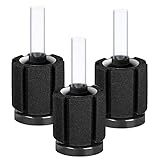
- Sponge filter provide both mechanical and bio filtration, also, the air infusion chamber produces minute bubbles which increase the oxygen solubility
- Safe for fish: soft sponge material, traps floating debris and won't suck up your fish
- Easy to set up & clean: simply install an airline into the unit and turn on the air pump, simply rinse and squeeze sponge in tank water
- Recommend tank size: up to 10 gallon, excellent for small size fish like betta, dwarf cichlid, guppy, killifish etc., or for hatcheries, maternity tanks, nano tanks and fry tanks, as the filter produces minimal current and has almost no way to suck the fish through the filter
- Includes: 3 pcs of sponge filter. Dimension: 2.0"D X 4.75"H
Goldfish
Goldfish produce substantial waste and are especially unsuitable for bowls without filtration. AVS gives a small goldfish example of at least a 10-gallon tank; that is a source-specific care example, not a universal stocking rule. Goldfish still require cycling, testing, oxygenation and regular partial water changes.
Other fish
Danios, corydoras, barbs, livebearers and other commonly sold fish also need a cycled aquarium and controlled ammonia, nitrite and oxygen levels. Species that tolerate calm water still need clean, oxygenated water.
Rank #2
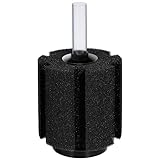
- Sponge filter provide both mechanical and bio filtration, also, the air infusion chamber produces minute bubbles which increase the oxygen solubility
- Safe for fish: soft sponge material, traps floating debris and won't suck up your fish
- Easy to set up & clean: simply install an airline into the unit and turn on the air pump, simply rinse and squeeze sponge in tank water
- Recommend tank size: 40 to 60 gallon, excellent for small size fish like betta, dwarf cichlid, guppy, killifish etc., or for hatcheries, maternity tanks, nano tanks and fry tanks, as the filter produces minimal current and has almost no way to suck the fish through the filter
- Includes: 1 PC of Sponge Filter. Dimension: 4.5"D X 8.0"H
What “filterless” can mean in practice
There are two very different situations:
| Setup | What it involves | Reliability for a typical owner |
|---|---|---|
| Ordinary unfiltered bowl or tank | No biological filter, often little water volume and inconsistent maintenance | Unsafe and difficult to keep stable |
| Specialized planted system | Extremely low fish-to-plant ratio, mature and actively growing plants, careful feeding, top-offs, testing and scheduled water changes | Possible only as an advanced method; not a general welfare recommendation |
| Low-flow filtered aquarium | Sponge or other gentle filter, cycled media and restrained circulation | Safer way to meet filtration needs while avoiding strong current |
Practical Fishkeeping describes filtration-free operation as dependent on an extremely low fish-to-plant ratio and healthy, established, growing plants. Tank Logic describes a specialized planted bowl of at least 15–20 litres with very light stocking, heavy planting, top-offs and periodic water changes. Those figures are hobbyist guidance, not guarantees or scientific minimums. Plants lower the nutrient burden but do not make a filterless setup risk-free.
How to choose a low-maintenance fish setup responsibly
Decide on the aquarium and maintenance routine before buying a fish. CDC guidance recommends researching tank size, plants, lighting, filters, pumps, water treatment and maintenance in advance. Compare these factors:
Quick wins for a faster PC:
Repair Windows errors before they cause bigger problemsFix Now →Scan for outdated or missing drivers - takes under a minuteDriver Scan →Clear out junk files and repair common Windows errorsFree Scan →Rank #3

- 【Dual Filtration Technology】Combining sponge and ceramic filter media for powerful filtration and aeration.High density microporous biochemical cotton filtration with honeycomb structure breaks down harmful waste for a cleaner and healthier living environment.
- 【Bubble Diffuser Design】The aquarium filter adopts air power and water circulation. The Air stones creates tiny bubbles, smooth water flow, and reduced noise, creating a quiet and comfortable environment for your aquatic pet.
- 【Wide Application】Fish filter is suitable for shrimp tank,fighting fish pond, fresh water. Fit all kinds of ornamental fish feeding, breeding, brood cultivation.Large filters are suitable for tanks of 100-120 gallons.
- 【Easy to Clean And Reusable】The filter can be easily detached for cleaning the dirt. Recommended wash once every 2-4 weeks with aquarium water. Avoid washing it in tap water!Filter sponge and bio ceramic media balls are replaceable and reusable.
- 【Accessories Included】Come with Bio Ceramic Media Balls,2 sponge filter, 8 ft airline tubing, 4 suction cups, 2 check valve , 2 non-return check valve.(Note: The air pump is not included of your fish tank).Easy to Install,you don't need any tools.
- Adult size and waste production: a larger or messier fish needs more water volume and stronger waste processing.
- Minimum tank volume: small volumes change chemistry quickly. AVS publishes a source-specific guideline of at least 1.5 litres of water per 1 cm of tropical-fish length; it should not be treated as a guarantee of suitability.
- Temperature and flow: match heating and circulation to the species; use a pre-filter sponge or flow control when gentle movement is needed.
- Oxygen demand: warm water holds less oxygen, and still surfaces can reduce gas exchange.
- Compatibility and feeding load: overstocking and excess food can overwhelm biological capacity even in a filtered tank.
- Time for testing and water changes: a system that cannot be checked and maintained consistently is not a low-maintenance system.
Aqueon’s species-care guide library can help compare bettas, danios, corydoras, barbs and other commonly sold fish before purchase.
The safer low-flow solution: a sponge filter
If your concern is current, use filtration designed for gentle circulation rather than removing filtration. An air-powered sponge filter provides biological media and surface movement; an adjustable air valve can reduce flow, and plants or hardscape can diffuse the outlet. Choose a model rated for the aquarium, protect delicate fins with an intake sponge where appropriate, and keep the media biologically active.
Rank #4

- Efficient Filtration: The high-density and unique structure of the sponge provide exceptional mechanical filtration. It effectively captures and removes impurities, suspended particles, and waste from the water, maintaining a clear and stable aquatic environment for the well-being of your aquatic organisms.
- Premium Material: Manufactured from high-quality sponge material, this product ensures durability and long-term stability. The sponge is resistant to deformation, decomposition, and dissolution, maintaining its filtration efficiency and longevity.
- Easy Installation: Users can accurately cut it to the desired size and easily place it into the filtration system.
- Reusable: This Sponge is easy to clean and maintain. It can be washed and reused multiple times, allowing you to restore its filtration performance regularly and prolong its lifespan, offering an economical and eco-friendly filtration solution for aquarium enthusiasts.
- Size: 20x20x1 inch, 20PPI
Minimum routine for any fish aquarium
- Set up an appropriately sized tank. Do not use a decorative bowl as a substitute for an aquarium.
- Dechlorinate tap water. Use a tap-water conditioner that neutralizes chlorine or chloramine before water enters the tank.
- Cycle the aquarium before stocking. Establish beneficial bacteria and confirm that ammonia and nitrite remain at zero on tests.
- Install and run the filter continuously. Do not switch it off overnight; uninterrupted flow supports the biological colony and oxygen exchange.
- Stock lightly and feed sparingly. Add fish gradually so the biological capacity can keep pace with waste production.
- Test and change water regularly. Check ammonia and nitrite, remove uneaten food and perform partial water changes on a schedule suited to the results and stocking.
Warning signs that a no-filter setup is failing
- Ammonia or nitrite is detectable on a reliable test.
- Fish gasp at the surface, breathe rapidly, clamp their fins or become unusually lethargic.
- Water develops a persistent foul smell, cloudiness or an oily surface.
- Readings rise after feeding or stocking changes.
If these signs occur, stop feeding temporarily, increase aeration, perform a properly conditioned partial water change and move fish to a cycled, adequately filtered aquarium if safe to do so. Do not solve a water-quality emergency by adding more fish or relying on plants alone.
Bottom line for shoppers
There is no dependable “fish that requires no filtration” for an ordinary home aquarium. Choose a correctly sized, cycled tank with a maintained filter—often a gentle sponge filter if flow is the concern—and plan for dechlorination, testing and regular partial water changes. Treat a filterless planted system as an advanced experiment with very light stocking, not as permission to keep a fish in an unmaintained bowl.
Outdated Drivers Are Slowing You Down
One free scan finds every outdated or missing driver and matches the right update for your exact hardware.Free scan · exact hardware matchWindows Errors? Fix Them Before They Spread
Repair common Windows errors and clear accumulated junk for a smoother, more stable PC - no reinstall needed.Free scan · no reinstallQuick Recap
Best Value

- Sponge filter provide both mechanical and bio filtration, also, the air infusion chamber produces minute bubbles which increase the oxygen solubility
- Easy to set up& clean: simply install an airline into the unit and turn on the air pump, simply rinse and squeeze sponge in tank water
- Recommend tank size: up to 60 gallon, excellent for small size fish like dwarf cichlid, guppy, killifish etc., or for hatcheries, maternity tanks, and fry tanks, as the filter produces minimal current and has almost no way to suck the fish through the filter
- Dimension: 4.5"D X 8.0"H
- Includes: 4 pcs of sponge filter
Product prices and availability are accurate as of the date/time indicated and are subject to change. Any price and availability information displayed on Amazon at the time of purchase will apply.




