Free tools Windows power users keep installed
One-click scans. No signup required.
White fins on a betta are a sign, not a diagnosis. Separate white spots, cottony growth, ragged edges, and a flat patch of pale color can point to different problems—from ich or tissue damage to a pigment change. Check the pattern, whether it is spreading, your water conditions, and your fish’s behavior; don’t choose medication based on color alone.
What might be turning your betta’s fins white?
Look closely at the shape and texture of the change. These patterns can help narrow the possibilities, but they cannot confirm a cause; similar-looking conditions sometimes need veterinary testing to distinguish.
| What you see | Possible explanation | What else to notice |
|---|---|---|
| Distinct, salt-like white dots on fins or skin | Ich, a parasitic white spot disease | Rubbing against objects, clamped fins, lethargy, or changes in breathing. Gill involvement can occur without visible spots. |
| Raised, fluffy, cotton-like pale patches | Water-mold growth, often called a fungal infection, or another condition that resembles it | Growth may appear on injured or stressed tissue. Similar-looking bacterial disease or damaged tissue can be confusing. |
| Frayed, ragged, or receding fin edges | Fin damage or fin/tail rot | Reddening or darkening near the base may occur. Snags, aggression, and poor water conditions can contribute to injury or secondary problems. |
| A localized pale mark without distinct dots or fuzz | Pigment change, inflammation, or an underlying lesion | A veterinary case linked betta fin discoloration with a deep bacterial infection and chronic inflammation, illustrating why color alone cannot identify the cause. |
Ich affects skin, fins, or gills. The Merck Veterinary Manual notes that visible spots may be absent when only the gills are involved, and diagnosis can require microscopic examination of skin mucus, fin, and gill samples. It advises prompt, thorough treatment when ich is diagnosed. Merck Veterinary Manual: Parasitic Diseases of Fish
Fish “fungal” infections are often caused by water molds—fungus-like organisms—and may look white, tan, or pale yellow. Their appearance is not definitive, because other problems can resemble them. PetMD: Fish Fungal Infections
#1 Best Overall
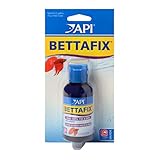
- Contains one (1) API BETTAFIX Antibacterial & Antifungal Betta Fish Infection and Fungus Remedy 1.7-Ounce Bottle
- Heals bacterial infections, repairing damaged fins, ulcers, and open wounds and promotes regrowth of fins
- Treats newly introduced fish to reduce risk of disease outbreak and heal wounds and tissue damage
- Contains healing melaleuca, a variety of tea tree
- Use daily for a week when treating infections and for three days as a preventive when adding new fish
Fin discoloration also does not automatically mean fin rot. A University of Illinois Veterinary Teaching Hospital case documented a betta whose fin discoloration was associated with a deep bacterial infection and chronic inflammation after veterinary testing. University of Illinois: Francisco the Fish Visits the Vet
What to check first
Observe the pattern and your fish
Photograph the fins under consistent lighting and note whether the finding is one spot, several separate dots, raised fuzz, or a fin edge that is fraying or disappearing. Record whether it spreads and whether your betta is eating, swimming, and breathing normally, or rubbing against objects. These notes help track change and explain it to a veterinarian; they do not diagnose the problem.
Rank #2
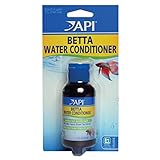
- Contains one (1) API BETTA WATER CONDITIONER Betta Fish Freshwater Aquarium Water Conditioner 1.7-Ounce Bottle
- Neutralizes chlorine, chloramines, ammonia and other chemicals to make tap water safe for betta fish
- Prevents tap water chemicals from causing gill destruction, tissue irritation and fish death
- Formulated with aloe vera to and green tea extract to reduce inflammation and help heal fish
- Use when starting a new Betta bowl or aquarium and when changing water
Test the water and check the temperature
Measure ammonia, nitrite, nitrate, and pH, and check temperature with a thermometer. PetMD recommends weekly water testing for bettas, conditioning new tap water, and a temperature range of 76–81°F. Avoid abrupt temperature changes based on a generic treatment suggestion. PetMD: Betta Fish Care Sheet
Review recent changes and possible injuries
Consider recent water changes, filter or tank maintenance, new fish or objects, aggression, and décor that could snag a fin. Water quality and temperature can affect a fish’s health and susceptibility to disease; smooth, fin-safe décor and reduced stress are sensible husbandry measures. University of Illinois: Francisco the Fish Visits the Vet
Rank #3

- WATER CONDITIONER: Makes tap water safe for bettas and other ornamental fish.
- REDUCES STRESS: Neutralizes harmful chlorine, chloramines, ammonia and heavy metals in aquarium water.
- FAST-ACTING: Works in seconds.
- COMPLETE FORMULA: Use when setting up a new aquarium, with monthly partial water changes and evaporation replacement.
- USAGE: Use monthly for maintenance.
What to do—and when to seek veterinary help
- Record what you see. Take a clear photo and note the pattern, spread, behavior, and water-test results.
- Check the aquarium conditions. Test the water, verify the temperature, and review maintenance and possible sources of stress or fin injury.
- Don’t medicate by color alone. Ich, bacterial disease, water-mold growth, and tissue damage can call for different approaches. Some treatments require careful dosing and repetition; a white fin by itself does not tell you which is appropriate.
- Contact a fish-experienced veterinarian if signs worsen or your betta acts unwell. Seek advice for worsening lesions, lethargy, loss of appetite, rapid or abnormal breathing, abnormal swimming, or buoyancy difficulty. A veterinarian can assess whether examination or diagnostic testing is needed.
Dr. Krista Keller, a veterinarian and board-certified specialist in zoological medicine at the University of Illinois Veterinary Teaching Hospital, advises seeking veterinary input for abnormal behavior, changes in buoyancy or appetite, skin lesions, or an enlarged belly. University of Illinois: Francisco the Fish Visits the Vet
Independent reader supportYour contribution helps us test, update, and keep practical guides available for everyone.Why a visual check may not settle the cause
Several conditions can produce pale or damaged-looking fins, and even a familiar-looking pattern may not be conclusive. Merck describes microscopic examination of skin mucus, fin, and gill samples as part of diagnosing ich; the University of Illinois betta case involved veterinary testing to identify infection and inflammation. If symptoms progress or your fish’s behavior changes, a fish-experienced veterinarian can help distinguish among causes rather than guessing from color.
Quick Recap
Best Value

- REPLICATES NATURAL HABITAT FOR VIBRANT COLORS Specially formulated to recreate a Betta's natural water conditions. By adding essential trace minerals and electrolytes to soft or RO water, it significantly reduces stress and enhances your Betta's natural, vibrant colors and daily activity.
- SCIENTIFICALLY BALANCED HEALTH SUPPORT Enriched with a precise ratio of vital minerals, including Calcium, Magnesium, Potassium, and Sodium. This advanced, yet easy-to-use formula supports your fish's protective slime coat and immune system, promoting long-term health and vitality.
- SAFE FOR THE ENTIRE AQUARIUM ECOSYSTEM Not just for Betta fish! This premium water mineralizer creates a thriving environment for all aquatic life in your tank. It is 100% safe and highly beneficial for live aquarium plants, freshwater shrimps, and snails.
- HIGHLY CONCENTRATED & EXTREME VALUE A little goes a very long way. Just 1-2 drops per 1 Liter (1 quart) weekly is all you need for perfect water chemistry. One 4.2 Oz (125ml) bottle treats 1,875 Liters (500 gallons).
- NO-MESS DOSING FOR ANY SETUP Designed with a convenient, built-in drop cap for precise application without the mess (approx. 15 drops = 1 ml, 1 capful = 7 ml). Perfectly suitable for all freshwater environments.
Rank #4
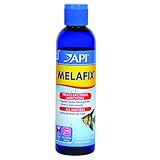
- Contains one (1) API MELAFIX Freshwater Fish Bacterial Infection Remedy 4-Ounce Bottle
- Heals bacterial infections and repairs damaged fins, ulcers and open wounds
- Contains natural, botanical tea tree extract to quickly and rapidly help fish
- Helps treat newly-introduced fish to reduce risk of disease outbreak in freshwater aquariums
- Use daily for a week when treating infections and for 3 days as a preventive when adding new fish
Product prices and availability are accurate as of the date/time indicated and are subject to change. Any price and availability information displayed on Amazon at the time of purchase will apply.




