The Tool Desk
Outbyte PC Repair FREEClear out junk files and repair common Windows errorsFree Scan →Outbyte Driver Updater FREEFix the driver behind crashes, sound loss and screen glitchesFind Drivers →The Mi-Ki is a tiny American companion dog known for its silky coat, expressive face, and strong attachment to its family. It is usually written with a hyphen—Mi-Ki—although “Miki dog” is a common search spelling.
This is a rare, relatively young breed, and some popular descriptions are more definite than the evidence allows. Its exact foundation breeding is not fully documented, registry standards differ, and reliable breed-wide health statistics are limited. Here is what prospective owners can reasonably expect.
Mi-Ki at a glance
| Characteristic | Mi-Ki |
|---|---|
| Origin | United States |
| Breed type | Toy companion dog |
| Ideal height | 7–9 inches at the withers under the UKC standard |
| Maximum height | 10 inches |
| Maximum mature weight | 10 pounds |
| Coat | Single, long, silky, and sometimes slightly wavy |
| Colors | All colors and markings except merle and albino |
| Exercise needs | Low to moderate, with daily play and activity |
| Typical temperament | Affectionate, adaptable, intelligent, and people-oriented |
| UKC recognition | Recognized January 1, 2016; Companion Dog Group |
Mi-Kis can suit apartment living and quiet households, but their small size requires careful handling. They are not a good choice for people who want an independent dog that can be left alone for most of the day.
Mi-Ki history and origin
The Mi-Ki was developed in the United States and established as a distinct breed in 1992, according to the American Mi-Ki Club. The breed’s development is associated with Maureen van Wormer and a small foundation population influenced by breeds including the Shih Tzu, Maltese, Papillon, Japanese Chin, Tibetan Spaniel, and Yorkshire Terrier.
Free tools Windows power users keep installed
One-click scans. No signup required.
#1 Best Overall

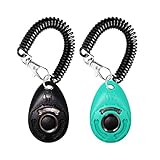
- New communication tool about you and your puppy.
- Pet Dog Training Clickers for Puppy, Cat, Potty, Bird, Horse, Pet, Trainer Training Tools, Behavior Aids
- Just press to mark desired behavior, then reward for faster learning.
- The spring wrist length : 16cm/6.3inches and can strength to 25cm/9.84inches.
- Package include : Black + Blue,each color 1 pcs.
However, the exact foundation mixture cannot be confirmed with complete confidence. Early written breeding records were not retained, and pedigree and registration information was reportedly lost in a fire in 1995. The United Kennel Club also acknowledges that the precise mixture is unknown because accurate early records were not kept.
That makes it more accurate to say that the Mi-Ki was developed from several small companion and toy breeds than to present a definitive breed formula. The missing records are also one reason buyers should examine current pedigrees and health documentation carefully rather than relying on a colorful origin story.
Recognition and registry status
The United Kennel Club recognized the Mi-Ki on January 1, 2016. Its current standard, revised January 2, 2024, places the breed in the Companion Dog Group and describes a long-coated Mi-Ki.
The Mi-Ki is not currently listed as an AKC-recognized breed, and it does not appear on the AKC Foundation Stock Service list. A Mi-Ki therefore cannot be registered as an AKC breed under the current AKC listings.
Quick wins for a faster PC:
Scan for outdated or missing drivers - takes under a minuteDriver Scan →Repair Windows errors before they cause bigger problemsFix Now →Fix the driver behind crashes, sound loss and screen glitchesFind Drivers →Several Mi-Ki clubs and registries use their own standards. This matters if you plan to show or breed the dog. For example, the American Mi-Ki Club recognizes both a long coat with furnishings and a smooth-face variety, while the current UKC standard describes the long-coated form. Before buying a puppy, ask which registry issued the pedigree and which standard the breeder is following.
Registration is evidence of enrollment in a registry—not proof of health, temperament, correct structure, or responsible breeding. Even a recognized pedigree should be checked against veterinary and parent-health records.
Size and appearance
The Mi-Ki is a very small, fine- to medium-boned dog. Under the UKC standard, the ideal mature height is 7–9 inches at the withers, with a maximum height of 10 inches and a maximum mature weight of 10 pounds. The American Mi-Ki Club gives an ideal weight of approximately 4–8 pounds while also setting the mature maximum below 10 pounds.
The body is usually slightly longer than tall, although a square outline is acceptable under the UKC standard. The tail is high-set, heavily plumed, and carried in a gentle curve over the back. Movement should be light, smooth, free-flowing, and straight-moving.
What’s actually slowing this PC down?
Pick the symptom - the matching free tool is one click away.
A dog sold as a Mi-Ki may exceed the published height or weight limits, particularly where different registries or breeding programs are involved. That does not automatically tell you whether the dog is healthy or unhealthy, but it does mean the dog may not conform to the standard being advertised.
Coat types and colors
The Mi-Ki is generally described as single-coated and without an undercoat. The coat is long, silky, and may have a slight wave.
Rank #2

- ▼Come in 4 pack button clickers with wrist strap in 4 different colors:Black, Green, Orange, Yellow, each color 1 PCS
- ▼Can be used to train the dog basic obedience, small trick, and correct the bad behavior; Scientific method of training your pet safely and easily.
- ▼Stop barking and dog obdeience. Train your dog quiqly just by simply pressing the clicker and command.
- ▼Well constructed and durable, metal clicker will not rust or break.
- ▼Big button for easy clicking and loud sound. Easy to use in any position.
Long coat with furnishings
This presentation has facial hair, including a beard and mustache, unless the face is trimmed or shaved. The body, legs, ears, and tail carry noticeable feathering, and the tail should be fully plumed.
Smooth face
The smooth-face variety has no beard or mustache, shorter facial hair, and less feathering on the body and legs. It still has a fully plumed tail. The American Mi-Ki Club describes the smooth-face trait as recessive, meaning a puppy generally receives a copy of the relevant recessive trait from each parent.
Do these 3 things before closing this tab:
1Fix the driver behind crashes, sound loss and screen glitches2Clear out junk files and repair common Windows errors3Scan for outdated or missing drivers - takes under a minuteThese varieties are not treated identically by every registry. A smooth-face puppy may be accepted by one organization but not fit the current UKC presentation in the same way. Get this point in writing if show eligibility matters to you.
All colors and markings are allowed under the UKC and American Mi-Ki Club standards except merle and albino. Possible colors and patterns include cream, red, silver, black, white, blue, apricot, sable, gold, brown, beige, tan, chocolate, brindle, fawn, and mahogany. A puppy’s coat may lighten or change shade as it matures.
Mi-Ki temperament
A well-bred and well-socialized Mi-Ki is typically affectionate, trusting, adaptable, and interested in staying close to its people. The UKC standard describes the breed as intelligent and sweet-natured. The American Mi-Ki Club calls for a happy, affectionate temperament that is not excessively vocal.
Many Mi-Kis are calm in the home, but “quiet” does not mean silent. They may bark to alert their owners, become vocal when excited, or react to unfamiliar people and situations. Early socialization can help prevent a tiny dog from feeling responsible for warning the entire household.
Individual temperament depends on genetics, early handling, training, health, and environment. A breed standard is not a guarantee that every Mi-Ki will be outgoing or comfortable with children. Children should always be supervised around a dog this small, particularly because an accidental fall or rough grab can cause serious injury.
Training and exercise
Mi-Kis usually need less physical exercise than an active sporting or herding breed, but they still need a daily routine. Their intelligence and eagerness to please can make reward-based training productive.
A practical routine may include:
- One or two short, age-appropriate walks;
- Supervised indoor play;
- Brief training sessions using small treats;
- Puzzle toys or simple scent games;
- Practice with handling, grooming, nail care, and dental care.
Keep sessions short and upbeat. Toy dogs can lose focus quickly, and using large treats can add a surprising amount of calories to a dog weighing under 10 pounds.
Manage stairs, balconies, beds, sofas, and play with larger dogs. A Mi-Ki can be injured by jumping from furniture or being stepped on. Teach the puppy to use a ramp or pet steps where appropriate, but do not assume a ramp removes every fall risk.
Rank #3
- EASY TO USE - Simple push button with distinct clicking sound.
- Comes with an elastic wrist band so you can leave it on your wrist or clip it to the leash or your pants.
- Not only train the dog but also the cat, bird, chicken, sheep a new behaviors like sit, fetch, roll over, lie down.
- For effective pet training ALWAYS reward with a treat after clicking.
- Can be used to train the dog basic obedience, small trick, and correct the bad behavior; Scientific method of training your pet safely and easily.
Grooming requirements
A long-coated Mi-Ki needs regular brushing and combing to prevent mats. Pay particular attention to the ears, legs, tail, armpits, and facial furnishings, where fine hair tangles easily. A sanitary trim may be used, but the UKC standard does not permit grooming products or accessories that disguise the coat’s natural texture in the show ring.
The smooth-face variety generally has less facial and body hair and may require less coat work. It still needs routine bathing as needed, nail trims, ear checks, and dental care. “Low maintenance” should not be interpreted as “no maintenance.”
Dental care deserves special attention in any very small dog. Ask your veterinarian to show you how to introduce tooth brushing gradually and how often the dog should receive professional dental evaluation.
Is the Mi-Ki hypoallergenic?
The American Mi-Ki Club describes the breed as hypoallergenic and low- to non-shedding. The safer interpretation is that Mi-Kis may shed less visibly than many breeds and may be easier for some allergy sufferers to tolerate.
No dog is completely or 100% hypoallergenic. Allergens come from dander and other biological materials, not only from loose hair. Two people may react very differently to the same dog, and an individual Mi-Ki cannot be guaranteed allergy-safe.
If allergies are a concern, spend several extended visits with adult Mi-Kis before committing. Do not rely solely on a breed label or a puppy’s coat.
Mi-Ki health
There is limited reliable population-level information about disease prevalence in Mi-Kis. The breed is relatively young, its historical founder population was small, and the American Mi-Ki Club has raised concerns about early inbreeding and genetic management.
The club’s health information identifies liver problems, autoimmune disorders, and seizures as issues requiring attention. This means they should be discussed with breeders and veterinarians; it does not establish that these conditions are common, inevitable, or unique to the breed.
Other sources mention patellar luxation, dental problems, eye disease, progressive retinal atrophy, bleeding disorders, spinal problems, and hypoglycemia. Current authoritative prevalence data for the breed are not available in the reviewed sources, so these should be treated as questions for a veterinary conversation—not a prediction of what every Mi-Ki will develop.
Before purchasing, request actual records for both parents. Look for:
Rank #4

- MANUAL AUDIBLE TRAINING CLICKER: Produces one consistent click sound that can be used as a marker cue when paired with rewards. The clicker does NOT provide commands or instructions to the dog and contains no electronic functions.
- ONE CLICK SOUND – FOUR VOLUME LEVELS: The clicker does NOT produce four different sounds. Three built-in baffle holes provide four volume levels. Cover or uncover the baffle holes until the desired click volume is reached.
- COMPACT PLASTIC CLICKER: This is a small handheld clicker constructed from plastic. Review the product images and compact design before purchase to confirm the size and construction meet your expectations.
- 5-INCH VELCRO FINGER STRAP: Includes an approximately 5-inch adjustable Velcro strap designed to position the clicker on the user's finger or hand for access during training. The strap is worn by the user, NOT the pet.
- INDIVIDUAL RESPONSE TO SOUND MAY VARY: Begin with fewer baffle holes open for a lower click level and adjust gradually. Individual dogs and other animals may respond differently to audible cues. Reduce the volume or discontinue use if the animal shows discomfort or fear.
- The parents’ registered names and identification numbers;
- The specific test performed and the date;
- The laboratory, veterinary practice, or screening organization involved;
- Results that can be independently verified;
- A written explanation of any abnormal result or family history.
The Orthopedic Foundation for Animals database can help prospective owners research breeds and potential parents. An OFA or CHIC record documents particular screening information; it is not a guarantee that a dog is free from every inherited disease or suitable for every breeding decision.
Living with a Mi-Ki
Mi-Kis are bred primarily for close human companionship. They can adapt to apartments and small homes, provided they receive daily interaction, safe exercise, play, and training. They may enjoy traveling with their owners, but their size makes secure transport essential.
Crashes, No Sound, or Screen Glitches?
Random freezes, missing sound and display glitches usually trace back to one bad driver. Find and replace yours safely.Free scan · under a minuteWindows Errors? Fix Them Before They Spread
Repair common Windows errors and clear accumulated junk for a smoother, more stable PC - no reinstall needed.Free scan · no reinstallThey are less suitable for households that want a dog comfortable with long periods of isolation. A companion breed that receives little attention may become anxious, bored, or noisy. Ask a breeder how adult dogs behave when briefly separated, rather than assuming every Mi-Ki has the same level of independence.
Because the breed is so small, monitor body condition carefully. A pound of excess weight is significant in a dog weighing 6 or 8 pounds. Use your veterinarian’s assessment rather than judging weight by appearance beneath a long coat.
How to choose a responsible Mi-Ki breeder
Rarity is not a substitute for quality. A responsible breeder should be willing to explain the registry, parentage, coat variety, health screening, and socialization plan without pressuring you to make a quick deposit.
Ask for:
- The registry and registration status of the sire, dam, and litter;
- Verifiable health-testing records for both parents;
- Veterinary records covering examinations, vaccinations, parasite control, and microchipping;
- A written contract with health terms, ownership conditions, and a return policy;
- A clear description of whether the puppy is long-coated or smooth-face;
- Information about the puppy’s exposure to people, household sounds, grooming, and handling;
- A commitment to take the dog back or help rehome it if you can no longer keep it.
Visit the breeding environment when possible, or arrange a live video call that shows the puppies, their mother, and where they are raised. Be cautious if the breeder will not show the mother, offers many unrelated toy breeds, has no verifiable records, or promises that the puppy is guaranteed to be completely healthy and allergy-safe.
Club breeder lists can be useful starting points, but listing is not the same as an independent health endorsement. Verify everything yourself.
Independent reader supportYour contribution helps us test, update, and keep practical guides available for everyone.Who is the Mi-Ki best for?
A Mi-Ki may be a good fit for someone who wants a small, affectionate house companion and is prepared to provide regular grooming, close supervision, and daily interaction. The breed can work well in an apartment or quieter home.
It may be a poor fit if you want a rugged hiking partner, a dog that can safely play unsupervised with large dogs, or a pet that will tolerate being alone all day. It is also not the right choice for someone seeking a guaranteed non-shedding or allergy-proof dog.
FAQ
Is the Mi-Ki an AKC breed?
No. The Mi-Ki is recognized by the United Kennel Club, but it is not currently listed among AKC-recognized breeds or on the AKC Foundation Stock Service list.
Recommended Free Tools
Best Value

- Stronger Bark Control with 3X Ultrasonic Emitters: Unlike single-emitter devices, our upgraded dog bark deterrent features three synchronized ultrasonic heads—delivering 3X the coverage to quickly stop barking, biting, and jumping behaviors. Ideal for anti barking training, safer than bark collar, more effective than a dog whistle, offers a humane, high-performance dog training solution
- 6-in-1 Safe & Humane Training Modes:Our dog bark deterrent device features dual ultrasonic frequencies (fixed 25kHz and variable 20-30kHz), combining 4 ultrasonic modes plus an audible beep and LED flashlight for versatile training. Whether for daily training or stubborn, persistent barking, this anti bark device adapts to different dogs providing effective bark control without causing pain or distress. Perfect for training at home or to stop neighbors dog bark that disturbs your peace
- 23 FT Extended Range & Night Safety: Bark Control Anytime, Anywhere: Stop barking and bad behavior from up to 23 feet away with our powerful dog bark deterrent device — perfect for your yard, neighbor’s yard, outdoor walks, and off-leash areas. Whether you're relaxing at home or out for a stroll, enjoy safe, long-distance control to correct disruptions quickly. The built-in LED flashlight adds safety for evening walks, and low-light training
- Fast Charge & Long Battery Life – Always Ready for Training:With a Type-C fast charging port, our dog bark deterrent device reaches a full charge in just 2 hours and provides up to 30 days of regular use on a single charge, along with 180 days of standby time. Whether you're correcting anti barking behavior or training your dog in public places, you’ll always be prepared for any situation. Forget the hassle of frequent charging and enjoy reliable, long-term barks no more support
- Ultra-Compact Design for Everyday Convenience:50% smaller than standard dog bark deterrent devices, our anti barking device is ultra-compact and lightweight, fitting effortlessly into your pocket, bag, or hand. Whether you're on daily walks, outdoor adventures, or dealing with unexpected situations in public places, this portable design helps you stop barking and encourage good behavior anywhere, anytime. Say goodbye to constant noise and enjoy a barks no more experience with your dog
How big does a Mi-Ki get?
The current UKC standard gives an ideal mature height of 7–9 inches, a maximum height of 10 inches, and a maximum mature weight of 10 pounds. The American Mi-Ki Club lists an ideal weight of about 4–8 pounds.
Are Mi-Kis good family dogs?
They can be affectionate family companions, but their tiny bodies are easily injured. Children need close supervision, and young dogs should be protected from rough handling and play with larger pets.
Do Mi-Kis bark a lot?
Mi-Kis are often described as relatively calm and quiet, but they can bark as alerts, when excited, or when uncomfortable with unfamiliar situations. Training and socialization influence the individual dog.
Do Mi-Kis shed?
They are generally considered low-shedding, particularly compared with heavily shedding breeds. However, no dog is completely hypoallergenic, and individual allergy reactions vary.
Recommended Free Tools
What is the difference between a long-face and smooth-face Mi-Ki?
The long-coated variety has facial furnishings such as a beard and mustache and more body feathering. The smooth-face variety has shorter facial hair and less body and leg feathering. The American Mi-Ki Club recognizes both, while registry treatment can differ.
Are Mi-Kis healthy dogs?
There is not enough reliable breed-wide data to assign a definitive health profile or disease prevalence. Ask breeders for verifiable parent-health records and discuss concerns such as seizures, liver problems, autoimmune disease, dental disease, patellar luxation, and eye problems with your veterinarian.
How much exercise does a Mi-Ki need?
Most need modest daily activity rather than strenuous exercise. Short walks, supervised play, brief training, and enrichment are appropriate, with extra care around stairs, furniture, falls, and larger dogs.
The Bottom Line
The Mi-Ki is a rare, affectionate toy companion with a silky single coat, modest exercise needs, and a strong preference for being near its family. Its small size makes safety, weight control, dental care, and careful supervision especially important.
Buyers should look beyond the breed’s appealing “hypoallergenic” and “healthy” claims. Check which registry and standard apply, remember that the early foundation history is incomplete, and insist on verifiable health records for both parents. With realistic expectations and responsible breeding, a Mi-Ki can be a charming close-in companion—but it is not a maintenance-free, allergy-proof, or universally predictable dog.
Quick Recap
Product prices and availability are accurate as of the date/time indicated and are subject to change. Any price and availability information displayed on Amazon at the time of purchase will apply.




