A friendly pet bird is not guaranteed by species. Individual temperament, early socialization, health, training, housing, and the way people handle the bird all matter. A budgie may become an affectionate companion, while another may prefer limited contact. Even a hand-raised cockatoo can bite, scream, or become territorial.
The 12 birds below are reasonable candidates for a people-oriented companion, but they are not all beginner pets. Large parrots may need decades of care, extensive daily interaction, specialist veterinary treatment, substantial enrichment, and a home that can tolerate loud calls. Choose for the bird’s long-term needs—not just its talking ability or reputation for cuddling.
Friendly pet birds at a glance
| Species | Typical interaction | Noise compared with larger parrots | Approximate lifespan |
|---|---|---|---|
| Budgerigar (budgie) | Social, trainable, often people-oriented | Usually quieter | 5–10 years |
| Cockatiel | Often enjoys perching on people and step-up training | Relatively quiet | Up to 20 years |
| Lovebird | Affectionate when socialized; may bond closely with another bird | Generally not among the loudest | Up to 20 years |
| Parrotlet | Small but bold and interactive | Relatively quiet | Up to 20 years |
| Green-cheek conure | Playful and commonly people-oriented | Quieter than larger conures, but not silent | Up to 25 years |
| Caique | Highly playful and engaging | Varies by individual | 20–30 years |
| Pionus parrot | Often gentle and social | Generally quieter than Amazons | 25–30 years |
| Senegal parrot | Playful and people-oriented when trained | Generally quieter than many large parrots | Varies by species within the Poicephalus group |
| Eclectus parrot | Social and interactive; talking ability varies | Less prone to screaming than macaws and cockatoos | 20–50 years |
| Amazon parrot | Expressive, bonded, and often an excellent talker | Loud | 40–50 years |
| African grey parrot | Very intelligent and responsive to training | Usually not a constant screamer, but vocal | 30–50 years |
| Cockatoo | May seek intense handling and attention | Extremely loud screams are possible | 25–50 years, depending on species |
These are broad profiles, not promises. Lifespan estimates vary with species, genetics, diet, veterinary care, and living conditions.
12 friendly pet bird species
1. Budgerigar (budgie)
Budgies are small, lively parrots that can make engaging companions in the right home. Many learn to step onto a finger, interact with people, and imitate words. They are usually quieter than medium and large parrots, making them more practical for some apartments—although they still make regular contact and alarm calls.
#1 Best Overall

- Four-Door Safety Design: This spacious bird cage features 0.4-inch bar spacing to ensure your pet's safety. The 4 front access doors allow easy feeding and cleaning, while 2 side doors enable close interaction. Bird-safe materials and secure latches prevent escapes while maintaining ventilation
- Convenient Detachable Components: The removable tray and detachable mesh grate make cleaning effortless. The top carry handle provides portability for travel or outdoor use. Easy assembly with no tools required - simply snap the parts together in minutes
- Entertainment-Focused Interior: Includes 3 wooden perches, 3 hanging accessories, and a play bridge to keep your birds active. The spacious interior (17.3×13.8×62.2 inches) provides ample room for 2-3 small/medium birds like parakeets, cockatiels, or lovebirds to play and rest comfortably
- Mobility & Storage Solution: 4 smooth-rolling 360° wheels with locks allow easy relocation. The bottom storage shelf offers organized space for bird supplies. Sturdy construction with reinforced corners ensures stability during movement
- Ideal Living Space: The open-top design promotes air circulation while the powder-coated finish resists rust. Gives your feathered friends a safe, comfortable habitat that's simple to maintain daily
Merck Veterinary Manual gives an average lifespan of approximately 5–10 years. Their small size does not make them maintenance-free: a budgie still needs appropriate nutrition, enrichment, exercise or safe flight time, cleaning, and access to an avian veterinarian.
2. Cockatiel
Cockatiels are social, expressive birds that often suit someone who wants an interactive companion without macaw- or cockatoo-level volume. Many enjoy perching on a person and can learn step-up training with patient, reward-based handling. Some are cuddly; others prefer sitting nearby or accepting only brief contact.
They can live up to 20 years. When choosing one, assess health and breeding history rather than selecting solely for an unusual color mutation. Some rare mutations may be more fragile.
3. Lovebird
Lovebirds are energetic small parrots with relatively sweet voices. A well-socialized individual may become strongly attached to its caregiver and enjoy training and supervised interaction. They can also form an especially close bond with another lovebird, which may reduce their interest in people.
Recommended Free Tools
Lovebirds can live up to 20 years. They may become moody or territorial during breeding periods, so a small body should not be mistaken for an uncomplicated temperament. Respect boundaries and avoid forcing handling when the bird is signaling discomfort.
4. Parrotlet
Parrotlets are tiny parrots with remarkably bold personalities. Their size can make their movements and housing easier to manage than those of a large parrot, and young, well-socialized birds can be relatively easy to tame. But they are not automatically gentle. A parrotlet may be assertive, possessive, or willing to bite if handled roughly or ignored.
They can live up to 20 years. Daily social interaction, training, enrichment, safe exercise, and a properly equipped cage remain essential.
Rank #2

- Spacious Bird Cage for Small/Medium Birds: With dimensions of 24"L x 12"W x 46"H and 1/2″ bar spacing, this upgraded encrypted parakeet cage is expertly crafted from sturdy powder-coated metal with hammered paint finish, ensuring enhanced strength, durability and excellent water resistance, making this bird cages a secure and cozy home for parakeets, parrot, lovebirds, cockatiels, cockatoo, conure, canary, budgerigar, finches, myna, pigeon and other feathered friend.
- Detachable Design For Easy Cleaning:VISCOO bird cage is equipped with a plastic slide-out tray at the bottom of this parrot cage that can be removed for easy cleaning, and with removable panels for better convenience, so as to keep a clean and tidy environment. Our birdcage can also be easily assembled with our hammer but no other tools required. Spend less time scrubbing or assemble, but more time interacting with your pets.
- Easy to Move as a Whole Smoothly: 6pcs universal 360-degree caster wheels with locks are equipped, so you can effortlessly relocate the cockatiel cage quickly and safely, it provides portability for outdoor use for fresh air and sunshine.
- Thoughtful Accessories Included: Our bird cage includes 4 wooden perches, 1 plastic food box and 1 water bottle which can be fixed outside the parakeet cage, so you can add the food without disturbing your bird friends, especially for shy or sensitive birds. Provide a cozy home where your birds can perch, snack, and play.
- Ideal for Bird Lovers: Designed for small to medium-sized birds, the flight cage with 2 doors enable close interaction and door locks prevent escapign while maintaining ventilation. Its spacious design and convenient features make it an ideal choice for home, pet stores and pet hospitals. This bird cages for parakeets provides a comfortable and secure living environment.
5. Green-cheek conure
Green-cheek conures are often chosen for their playful, people-oriented nature. They may enjoy climbing on their caregiver, learning tricks, and participating in supervised play. Individual variation is substantial, so meet the specific bird and observe how it responds to people before making a decision.
The Tool Desk
Outbyte PC Repair FREERepair Windows errors before they cause bigger problemsFix Now →Outbyte Driver Updater FREEFix the driver behind crashes, sound loss and screen glitchesFind Drivers →Small Pyrrhura conures are relatively quiet compared with larger conures, but “quiet conure” does not mean silent. Sharp contact calls, alarm calls, and attention calls can still be disruptive. Merck lists small conures at up to 25 years of life.
6. Caique
Caiques are active, entertaining parrots known for hopping, climbing, and clownish play. They can be highly engaging with people when given structured training, safe play opportunities, and enough enrichment to occupy their busy minds.
Their energy and strong personalities can overwhelm someone looking for a calm bird that sits quietly on a shoulder. Noise varies between individuals, and caiques should not be marketed as silent or universally suitable for apartment living. Their lifespan is about 20–30 years.
7. Pionus parrot
Pionus parrots are medium-sized companions often described as comparatively gentle. They may suit an owner who wants a social parrot without the intensity or volume associated with some Amazons and cockatoos.
What’s actually slowing this PC down?
Pick the symptom - the matching free tool is one click away.
Pionus parrots are generally quieter than Amazon parrots, but they still need daily interaction, exercise, foraging opportunities, enrichment, and a suitably large cage. Merck lists a lifespan of approximately 25–30 years.
8. Senegal parrot
Senegal parrots are small-to-medium Poicephalus parrots with distinctive coloring and engaging personalities. A socialized bird may enjoy games, training, and time with its caregiver. Consistent, respectful interaction is particularly important because Senegal parrots can become possessive or bite when their boundaries are ignored.
Rank #3

- 2 Extra Birdcage Covers -Keep Clean & Protect Birds: Black birdcage cover blocks 90% sunlight & UV rays, creating a dark, cozy rest space for parakeets, cockatiels, and parrots
- Parrot-Proof Lock-No Escape, Even for Smart Birds: Glossy secure lock specially designed for parakeets, cockatiels, and parrots - smarter than traditional latches! No way to open it, ensuring your feathered friends stay safe inside
- Slide-Out Tray & Wrought Iron Wire-1-Minute Cleanup: Large slide-out tray catches bird droppings and food scraps - just pull, dump, and wipe! Durable wrought iron wire resists rust and stains, no more scrubbing hard-to-reach corners.
- For 2-3 Birds: Extra-large flight space for budgies, parakeets, lovebirds, cockatiels, or small parrots to stretch wings! Ample room for perches, and feeders-happy birds-quieter, less destructive pets
- 360° Swivel Wheels + Storage Rack-Move & Organize Effortlessly: 4 universal wheels glide smoothly on any floor-relocate your bird cage in seconds! Built-in storage rack holds bird food, and supplies-no more cluttered pet space
Do not assign one universal lifespan to every Poicephalus parrot. Merck gives a broad range for the group extending from approximately 2 to 25 years, depending on species. Ask an avian veterinarian or an experienced rescue about the particular bird’s likely care needs and history.
9. Eclectus parrot
Eclectus parrots are striking medium-to-large parrots. Males are predominantly green, while females are predominantly red with blue or purple coloring. They can be social and interactive, and some become capable talkers, although talking ability varies by individual.
PC Slower Than It Used to Be?
A free scan shows the junk files, broken settings and background clutter dragging Windows down - then fixes them in one click.Free scan · Windows 10 & 11Outdated Drivers Are Slowing You Down
One free scan finds every outdated or missing driver and matches the right update for your exact hardware.Free scan · exact hardware matchThey are not as prone to screaming as cockatoos and macaws, according to Merck, but they are still substantial parrots. Their diet, housing, enrichment, exercise, and social needs require serious planning. Their reported lifespan is 20–50 years, so ownership may extend across several decades.
10. Amazon parrot
Amazon parrots are expressive, talkative, and often talented singers and mimics. Many form close relationships with their caregivers and enjoy training. Their volume is the major practical limitation: their calls can be loud enough to create problems in apartments, attached housing, or homes with nearby neighbors.
Amazons can be moody and may bond particularly closely with one person. Without adequate attention and enrichment, their intelligence and social needs can contribute to screaming, territorial behavior, or other problems. Merck lists a lifespan of approximately 40–50 years.
11. African grey parrot
African greys are exceptionally intelligent and often outstanding mimics. They may form strong bonds with their caregivers and enjoy problem-solving, target training, and other mentally demanding activities. Their intelligence is not evidence that they are easy pets.
Merck notes that African greys generally do not scream like some parrots, but they can growl and make other vocalizations. They are also associated with behavior problems when their substantial needs for time, attention, and enrichment are not met. Their lifespan is commonly listed as 30–50 years.
Rank #4

- Open-Top Design for Extra Freedom: This parakeet cage's roof can be opened and securely locked, creating an additional perch for your birds to enjoy an open-air experience. When it's time to rest, simply close the roof to provide a safe enclosed home
- Spacious Home for Small to Medium Birds: The 18"L × 14"W × 36.5"H cage interior plus 0.4'' bar spacing provides a safe and comfortable living environment for small to medium-sized birds such as parakeets, lovebirds, finches and canaries. The overall dimension including the stand and open top is 18"L × 14"W × 64"H
- Easy Clean Design with Slide Out Tray: Constructed with waterproof metal framing, this cockatiel cage features a slide-out bottom tray for simple cleaning. A bottom grate separates birds from the tray to maintain a tidy cage interior
- Detachable Rolling Stand with Storage Shelf: This budgie cage comes with a 27'' tall detachable rolling stand with 360-degree swivel casters, supporting smooth movement indoors and outdoors. The upper cage can be removed from the stand for tabletop placement or transport
- Smart Storage & Feeding Convenience: The four feeding doors of this cockatiel cage allow for quick seed and water refills, while the extra storage shelf on the stand keeps bird seeds, toys, and cleaning tools neatly organized and within reach
12. Cockatoo
Cockatoos can be intensely affectionate with preferred people and may seek extensive handling, cuddling, and attention. That same intensity makes them one of the most demanding choices on this list. Their screams can be extremely loud, and boredom or an unstable routine can quickly become a welfare and behavior concern.
Inappropriate touching, excessive attention, and inadequate enrichment can contribute to hormonal and behavioral problems. Cockatoos are not automatically suitable for inexperienced owners. Depending on the species, Merck lists lifespans of approximately 25–50 years.
What makes a pet bird friendly?
Species gives you a starting point, not a guarantee. A bird is more likely to become comfortable with people when it has been properly socialized, receives predictable care, and is allowed to approach interaction voluntarily. Health matters too: pain or illness can make a normally sociable bird withdrawn or defensive.
Daily interaction does not have to mean constant cuddling. Training, foraging, target work, safe play, talking, and voluntary step-up practice are all useful forms of social enrichment. Forcing a bird to remain on a hand or accepting unwanted petting can damage trust.
For parrots, restrict routine stroking to the head and neck unless an avian professional advises otherwise. Stroking the back or body can stimulate sexual behavior and hormonal problems, particularly in cockatoos.
Independent reader supportYour contribution helps us test, update, and keep practical guides available for everyone.Birds that are better for watching than cuddling
Canaries and finches can be excellent pets for people who enjoy song, movement, and observation, but they are usually not hands-on companion birds. Merck states that canaries and finches generally do not enjoy being held. Canaries may prefer living alone or as a mated pair, while finches are commonly kept in groups and generally do not interact closely with humans.
Doves can be quiet and attractive, but they are less demonstrative than parrots. They should not automatically be presented as affectionate, hand-tame substitutes for a parrot.
Free tools Windows power users keep installed
One-click scans. No signup required.
Best Value
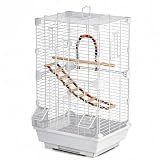
- This Bird cage is equipped with a ladder, a horizontal bar, two feeders, and a swing that can be freely suspended inside the cage. It can serve as both a cozy home for your adorable bird and a fun playground.
- Crafted with a blend of painted metal (rugged, chew-resistant for birds that love to gnaw), PP plastic (lightweight, easy to wipe clean, and BPA-free), and wood (natural texture for perching comfort), this cage combines durability with pet-safe materials. All edges are smoothly polished, and paint is non-toxic, ensuring no harm to your bird’s beak or claws.
- The cage features a removable tray (under the wire floor) for quick waste cleanup—simply slide it out, dispose of debris, and wipe clean. The metal wires are spaced ≤0.5” to prevent escapes (especially for tiny birds like finches) while allowing proper airflow. The elevated hanging design keeps your pet safe from floor drafts and other pets (like cats).
- Blending functionality with aesthetics, the cage’s clean metal frame, warm wood accents, and neutral tones fit seamlessly into living rooms, bedrooms, or aviaries. Whether you’re a first-time bird owner or a seasoned enthusiast, this cage balances practicality (easy to assemble, maintain) with charm, making it the perfect “happy home” for your small bird—and a lovely decor piece for your space!
- Measuring 24.8”L x 14.6”W x 11”H, this cage offers ample space for small birds like Zebra Finches, Canaries, Pacific Parakeets, Java Finches, Lovebirds, and more to stretch, hop, and play comfortably. The balanced length-width ratio ensures natural movement, avoiding cramped “skinny” designs, so your feathered friends thrive in a roomy home.
Before bringing home a friendly bird
- Check the noise level. Listen to the species in person if possible. “Quieter” means quieter than another parrot, not silent.
- Plan for the lifespan. A cockatiel may live up to 20 years; an Amazon, African grey, Eclectus, or cockatoo may remain your responsibility for 20–50 years.
- Budget for proper care. Include a spacious cage, safe perches, toys, enrichment, quality nutrition, cleaning supplies, and routine and emergency avian-veterinary care.
- Provide exercise and choice. Flight is natural behavior and provides exercise. Wing trimming does not guarantee that a bird cannot fly, including outdoors in windy conditions, and improper trimming can injure a bird.
- Meet the individual bird. Watch whether it approaches people, retreats, freezes, lunges, or accepts food calmly. Ask about its history, health, diet, and handling.
- Consider adoption. Bird sanctuaries and shelters may have parrots needing suitable homes. Adoption can also give you a clearer picture of an adult bird’s established temperament.
Birds often conceal illness. A change in appetite, behavior, posture, activity, droppings, or feather condition deserves prompt advice from an avian veterinarian rather than being dismissed as a mood change.
Common mistakes about friendly pet birds
- “The friendliest species will always be cuddly.” No species guarantees a cuddly temperament.
- “Small parrots are easy starter pets.” Budgies, lovebirds, parrotlets, and conures still need training, cleaning, enrichment, exercise, and veterinary care.
- “Quiet means silent.” Even relatively quiet birds make contact, alarm, and attention calls.
- “A talking bird is friendly.” Mimicry and affection are separate traits. A good talker may still be nervous, territorial, or selective about people.
- “Wing clipping makes a bird safe.” It does not guarantee flight prevention and is not a substitute for secure doors, windows, and supervised exercise.
- “A bonded pair will be friendlier to people.” Two birds may bond more strongly with each other and show less interest in human interaction.
For further guidance, see the Merck Veterinary Manual’s advice on choosing a pet bird, its guidance on bird management and flight, and the ASPCA’s position on birds as pets.
FAQ
What is the friendliest pet bird for a beginner?
There is no guaranteed friendliest species. Budgies and cockatiels are often considered more manageable than large parrots, but both still need daily care, exercise, enrichment, training, and avian-veterinary care. The individual bird’s temperament and history matter as much as its species.
Which friendly pet birds are the quietest?
Budgies, cockatiels, lovebirds, parrotlets, and green-cheek conures are generally quieter than large parrots, while Pionus and Senegal parrots are often quieter than Amazons. None is silent; contact, alarm, and attention calls are normal bird behavior.
Quick wins for a faster PC:
Scan for outdated or missing drivers - takes under a minuteDriver Scan →Clear out junk files and repair common Windows errorsFree Scan →Do friendly pet birds like to be held?
Some individuals enjoy step-up training or short periods of handling, while others prefer perching nearby. Interaction should be voluntary. Do not force a bird to remain on your hand or routinely stroke its back or body, as this can damage trust and encourage hormonal behavior.
Should I get one bird or a bonded pair?
A pair may provide companionship, but the birds can bond more strongly with each other and become less interested in people. A single bird requires substantial daily social interaction from its caregiver. The best choice depends on the species, the individual birds, your schedule, and the advice of an avian professional or reputable rescue.
The Bottom Line
The best friendly pet bird is the individual whose temperament, noise level, lifespan, and care requirements fit your household. Budgies and cockatiels may be more manageable starting points than large parrots, but no bird is maintenance-free. Larger species such as Amazons, African greys, Eclectus parrots, and cockatoos can be affectionate and rewarding while also demanding decades of specialized care. Meet the bird, plan for its full welfare needs, and treat trust—not forced cuddling—as the goal.
Quick Recap
Product prices and availability are accurate as of the date/time indicated and are subject to change. Any price and availability information displayed on Amazon at the time of purchase will apply.
Do these 3 things before closing this tab:
1Fix the driver behind crashes, sound loss and screen glitches2Clear out junk files and repair common Windows errors3Scan for outdated or missing drivers - takes under a minute



