Do these 3 things before closing this tab:
1Scan for outdated or missing drivers - takes under a minute2Clear out junk files and repair common Windows errors3Fix the driver behind crashes, sound loss and screen glitchesA pet disaster plan has four parts: a destination that accepts your animal, a go-kit with at least two weeks of food, water and any prescribed medication, identification that still works if you are separated, and a carrier your pet already accepts. CDC’s pet kit guidance adds one month of flea, tick and heartworm preventive to the kit. Everything below explains how to build each part and how to test it before you need it.
Plan where your pet will go before you need to leave
CDC warns that pets left behind in a disaster may be lost, injured or worse, so your household evacuation plan has to include the animal from the start. Do not assume that a general evacuation shelter will take pets. CDC notes that many evacuation centers, including some Red Cross centers, do not allow pets and other animals, so verify the policy of the specific site you would use.
Plan at least two destinations so that one blocked road or full shelter does not leave you without an option. The table compares the usual choices and what to confirm for each.
| Option | What to confirm before you rely on it | Main limitation |
|---|---|---|
| Pet-accepting public shelter | That it accepts your species and your specific animal, and what documents it requires | Acceptance is set by the local event; national guidance cannot confirm a particular site will accept your animal |
| Pet-friendly hotel on your likely route | Its current pet policy, and whether it has a limit on animal size or number | Availability can disappear quickly during a regional evacuation |
| Friends or relatives outside the hazard area | That they agree in advance and can house your animal for an unknown period | Depends on their own location and their willingness to take animals |
| Veterinary clinic or boarding facility | Whether it is open during the incident and whether it will board animals you did not bring in before the event | Clinics and boarding facilities may be closed or at capacity |
| Trusted neighbor as backup caregiver | That they can collect the animal, know where your kit is, and can get into your home if you are absent | Only useful if they are reachable and not also evacuating |
Contact your local emergency management office to ask which accommodations and transportation options are available in your area. Local arrangements vary, and you should follow the directions of local officials during an incident. CDC’s overview page is a good starting point: CDC, “Be Prepared: Pet Safety in Emergencies”.
PC Slower Than It Used to Be?
A free scan shows the junk files, broken settings and background clutter dragging Windows down - then fixes them in one click.Free scan · Windows 10 & 11Outdated Drivers Are Slowing You Down
One free scan finds every outdated or missing driver and matches the right update for your exact hardware.Free scan · exact hardware match#1 Best Overall

- ENSURE PET SAFETY ON THE GO with our dog travel accessories, dog must haves in pet travel. Our comprehensive pet first aid kit for dogs is your companion for worry-free journeys.
- VET ENDORSED: Our Dog & Cat first aid kit, vet-reviewed for precision, is expertly crafted in a medical facility, providing superior quality emergency dog essentials for peace of mind.
- PET EMERGENCY ESSENTIALS: In addition to comprehensive pet first aid supplies, we include dog muzzle, tick kit, emergency flashlight, and a handy mini first aid kit pouch.
- Pet Care Guide: A comprehensive first aid manual with essential instructions for treating everything from snake bites to minor injuries, making it dog must haves for your pet’s hiking and camping gear
- GEAR UP FOR OUTDOOR FUN! This first aid kit is your first line of defense during activities like hiking, jogging, or camping, designed for dog camping gear and hunting dog adventures.
If you end up in a shared evacuation center
CDC’s guidance on evacuation centers describes real health and safety concerns in shared spaces. Stressed animals can be more likely to bite or scratch, and close contact can carry risks of illness or injury. Keep your animal under control at all times, use a leash, carrier or crate as appropriate, and follow the shelter’s hygiene procedures. Source: CDC, “Pets in Evacuation Centers” (dated January 30, 2025).
Assemble the pet go-kit
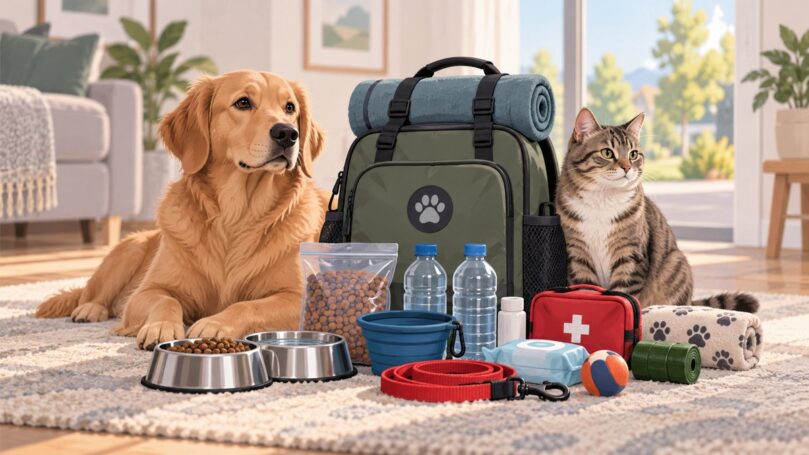
CDC recommends asking your veterinarian to help you assemble the kit. Keep it packed and ready to take, store food in waterproof containers, and check and rotate supplies on a regular schedule. The items below come from CDC’s pet kit checklist, dated April 9, 2024: CDC, “Build a Pet Disaster Preparedness Kit”.
Rank #2

- PREPARED HERO PEACE OF MIND - Pets are pets. They get into things, especially when you're not looking. Be ready when your pet accidentally eats something toxic. Keep PawMergency in your kitchen, car, or travel bag—instant protection for those critical moments at home, the beach, or anywhere life takes you.
- GET THE RIGHT AMOUNT FOR YOUR PET - One tube covers dogs & cats up to 30 lbs. Dog weighs 31-60 lbs? Get 2 tubes. Dog weighs 61-90 lbs? Get 3 tubes. Dog weighs 91-120 lbs? Get 4 tubes. Dog weighs more than 121 lbs? Get 5 tubes. We recommend giving at least 1cc/1lb of body weight. Less than the required amount won't fully absorb the toxin — make sure you have enough based on your pet's weight.
- BROAD SPECTRUM ABSORPTION - PawMergency absorbs most common household items such as chocolate, grapes, raisins, onions, garlic, and many more. It works by binding toxins in your pet's digestive tract before they can be absorbed, allowing them to be eliminated through normal bowel movements. A must have for your pet's first aid kit!
- SUPERIOR MANUFACTURING - PawMergency is proudly made in the USA by a National Animal Supplement Council (NASC) preferred supplier. It’s produced following strict Good Manufacturing Practices (GMP) and tested by third-party labs to ensure quality, purity, and potency.
- 2 YEAR SHELF LIFE - After each use, simply put the cap back on the end of the tube and store for up to 2 years in a cool, dry place.
Documents and identification
- Photocopies of veterinary records, including the rabies certificate, vaccination history, medical summary, prescriptions and relevant test results
- Proof of ownership or adoption
- A written description: name, breed, sex, color and weight
- Recent photographs of the animal
- Microchip number and the registry’s contact information
- Owner and alternate-contact details, plus boarding instructions
- All of the above in a waterproof document container
Put owner and pet contact details on the carrier itself. Keep digital copies as a backup, but keep a paper set as well, because phone power or service may not be available when you need the information.
Food, water and medication
- A two-week supply of each animal’s food, in waterproof storage
- A two-week supply of water
- Non-spill bowls
- A manual can opener, if any of the food is canned
- Written feeding instructions
- A two-week supply of any prescribed medication, with written instructions
- One month of flea, tick and heartworm preventive
The two-week figure appears in both CDC’s pet kit checklist (April 9, 2024) and its guidance for chemical emergencies, “Pets: Preparing for a Chemical Emergency” (dated June 10, 2026). Those are checklist recommendations rather than measured figures for any particular event. Do not change a prescribed treatment based on a checklist. Ask your veterinarian how to handle medication storage, refills and missed doses for your animal.
Quick wins for a faster PC:
Repair Windows errors before they cause bigger problemsFix Now →Scan for outdated or missing drivers - takes under a minuteDriver Scan →Clear out junk files and repair common Windows errorsFree Scan →Rank #3

- Comprehensive Pet Emergency Kit: Designed to care for dogs during disasters with food, water, shelter, first aid, sanitation, and comfort items included.
- Food & Hydration Essentials: Contains an 8 oz pack of emergency dog food, 6 water pouches, and 10 water purification tablets to keep your pet nourished and hydrated.
- Pet-Specific Tools & Safety Gear: Includes a double-sided dog bowl, reflective collar & leash, metal stake with tie-down leash, dog toy, and waste bags for control and comfort.
- First Aid & Utility Supplies: Comes with a 107-piece first aid kit, can opener, 50 ft nylon rope, 3 pack of pet waste bags, and safety gear for managing emergencies.
- Light, Warmth & Shelter: Includes an emergency bright stick, body warmer, and mylar blanket to keep your pet safe and comfortable in low-light or cold conditions.
Transport, comfort and cleanup
- Leash, collar with current identification, and harness
- An appropriately sized carrier or crate, with familiar bedding, a blanket or a towel
- Toys that your pet already uses, to reduce stress
- A pet first-aid book and a pet first-aid kit
- Paper towels, plastic bags and disinfectant
- For cats: litter and a litterbox. The chemical-emergency guidance mentions a scoopable litter and disposable pans as possible substitutes.
- For dogs: waste bags
Choose equipment for your species and your animal’s size. A carrier that fits a small cat is not suitable for a medium dog, and the reverse is also true.
Train your pet to use the carrier before an emergency
CDC’s chemical-emergency guidance gives a direct instruction: “Get a carrier or crate for your pet and train your pet to travel and sleep in it.” (CDC, “Pets: Preparing for a Chemical Emergency” (2026).) A carrier that the animal already accepts is far easier to use in a crisis than one it has never seen.
Rank #4

- 1. BE PREPARED FOR ANY PET EMERGENCY – Vet-approved dog & cat first aid kit with pet-safe medical supplies, perfect for home, car, and outdoor adventures. Designed for fast, effective emergency care.
- 2. MORE THAN JUST BANDAGES – Includes vet-wrap, tick remover, first aid pads, saline wash, styptic pencil, slip leash & thermal blanket—real pet essentials, not just human first aid items.
- 3. BUILT FOR TRAVEL & ADVENTURE – Water resistant, hard-sided case protects supplies in your car, backpack, or RV. Ideal for hiking, road trips, camping, and disaster preparedness.
- 4. STEP-BY-STEP PET FIRST AID GUIDE – Easy-to-follow vet-reviewed manual for treating wounds, bites, bleeding, and emergencies—so you’ll always know what to do.
- 5. PET-SAFE & NON-TOXIC MATERIALS – Every item is vet-reviewed and made with pet-safe, non-toxic materials. Trusted by pet sitters, trainers, groomers, and adventurers—your pet deserves the best care!
- Set the carrier out in a room your pet uses every day, with the door open and familiar bedding inside.
- Feed meals near it, then inside it, and gradually close the door for short periods while you stay in the room.
- Practice carrying the animal to the vehicle, placing it in the seat or cargo area you plan to use, and securing the carrier.
- Take short drives to a destination on your evacuation route, then lengthen the trips.
- Run a household drill: everyone should know who collects the animal, where the kit is stored, and which destination you are heading to.
- Identify where your frightened animal tends to hide, and plan how you would safely catch and contain it.
- Check the kit every few months, replace expired items, and rotate food and medication so nothing is out of date when you need it.
Keep identification working if you are separated
A collar with a tag showing current contact details should stay on the animal at all times. Register its microchip with the manufacturer and update the contact information whenever you move or change phone numbers. A microchip helps only if the registry has current owner details. CDC notes that shelters can scan a found pet and use the registered information to contact its owner. Keep the chip number with the kit records, and keep recent photographs on your phone as well as in the document pack.
Adjust the plan for your species and your individual animal
CDC’s kit list specifically refers to dogs and cats, and its chemical-emergency guidance says it is mostly about dogs and cats. If you own birds, reptiles, horses, livestock, rodents or other animals, do not assume that the dog and cat carrier, food and shelter advice transfers directly. Seek species-specific advice from your veterinarian and from relevant animal-response authorities in your area.
Best Value

- Premium Kit: (6) 5" x 5" Pet Alert Static Clings, (3) Pet Care Wallet Cards, and (1) Pet Home Alone Key Tag
- Bright and recognizable symbol to notify firefighters and other emergency responders to rescue pets inside your home. Offer you a peace of mind when unfortunate events happen at home.
- No Adhesive & Reusable: stick the decal to the inside of a window, facing out. Easy remove and reapply, Leave no sticky residue.
- UV Protection: Heavy duty material is waterproof & UV resistant, Colors remain bright and vibrant even when placed in direct sunlight.
- Bonus: Pets Care wallet cards & key tag alert individuals who find you sick or injured that you have pets who need care.
Even for dogs and cats, tailor the list to the individual. Ask your veterinarian about medical records, long-term medications and any special needs the animal has, such as mobility limits, anxiety or a condition that requires a particular diet. Record those needs on the written description in the document pack so a shelter or caregiver can read them without you present.