Most well-cared-for indoor pet rabbits live 8–12 years. Some live beyond that, occasionally reaching 14–16 years, but those ages are exceptional. A rabbit is a long-term commitment comparable to a cat or dog—not a short-lived starter pet.
Lifespan varies with genetics, breed and size, housing, diet, exercise, reproductive status, and veterinary care, according to Rabbit.org.
How long do rabbits live indoors?
Rabbit.org estimates that indoor house rabbits commonly live about 8–14 years, with 8–12 years a sensible expectation for most pets. Ten years is a useful midpoint, not a guarantee: some rabbits die younger despite good care, while others remain healthy well into their teens.
Indoor living improves the odds because it protects rabbits from predators, severe heat and cold, parasites, contaminated surroundings, injuries, and many outdoor hazards. An indoor rabbit still needs a properly prepared environment. Chewed electrical cords can cause fatal electrocution, while swallowed carpet fibers, bedding, or other materials can contribute to intestinal blockage.
#1 Best Overall

- 【 BREATHABLE 360° VIEW FOR SMALL PETS 】:Designed with breathable mesh panels on every side, this small animal playpen promotes airflow while giving you a clear view of your pet during playtime. The enclosed space is ideal for rabbits, guinea pigs, hamsters, hedgehogs, chicks, kittens and other gentle small animals, helping them explore, rest and play comfortably under supervision.
- 【 WATER-RESISTANT BASE & ZIPPERED COVER 】:The durable 190T polyester taffeta bottom helps reduce water and urine from reaching your floor during short-term use. A dual-zippered mesh top allows easy feeding, cleaning and interaction while helping prevent curious pets from climbing out. Wipe dry after use before folding for storage.
- 【 POP-UP DESIGN FOR QUICK SETUP 】:The flexible spring frame instantly pops open without tools or assembly and folds flat within seconds into the included carrying bag for convenient storage and travel. Always open carefully and keep away from your face and children because of the spring-loaded frame.
- 【 LIGHTWEIGHT & EASY TO TAKE ANYWHERE 】:Opening to approximately 52" × 15", this portable exercise pen offers a roomy temporary play area while folding down to only 11" × 11". Three included ground stakes help secure the playpen on soft soil during short outdoor use.
- 【 MADE FOR SAFE, SUPERVISED PLAYTIME 】:Perfect as a temporary rabbit playpen, guinea pig playpen or brooder enclosure for gentle small pets. Designed for supervised indoor or outdoor use only and not intended for large animals, aggressive chewers, escape artists, high jumpers or extended unsupervised confinement.
Do outdoor rabbits live as long?
Outdoor domestic rabbits often have shorter estimated lifespans. Rabbit.org gives estimates of roughly 3–5 years to 3–6 years for rabbits kept in outdoor hutches. These are broad estimates, not a fixed expiration date. An individual outdoor rabbit may live longer, but outdoor housing exposes it to more risks than a protected indoor setup.
| Rabbit’s living situation | Approximate lifespan | Why the estimate differs |
|---|---|---|
| Indoor pet rabbit | About 8–12 years; sometimes 14–16 | Lower exposure to predators, weather, injury, and disease |
| Outdoor domestic rabbit | About 3–5 or 3–6 years in Rabbit.org estimates | Greater exposure to temperature extremes, parasites, predators, and infectious disease |
Wild-rabbit lifespan figures should not be used to estimate a pet rabbit’s life. Wild rabbits face different predators, food supplies, weather conditions, and disease pressures, so they are not a useful comparison with a cared-for domestic rabbit.
What helps a rabbit live a longer life?
1. Feed a high-fiber diet
Fresh hay should be available every day, along with clean water and appropriate rabbit food. Suitable vegetables can form part of the diet, but hay is central to healthy digestion and normal tooth wear. Too little fiber increases the risk of serious gastrointestinal problems.
A rabbit’s diet should not be built around sugary treats, large amounts of pellets, or foods that are unsafe for rabbits. Sudden dietary changes can also cause digestive upset, so introduce new foods cautiously.
Recommended Free Tools
2. Provide daily exercise
Rabbits need supervised exercise and play every day, not just occasional time outside a small hutch. Give the rabbit enough space to move, stretch, hop, and explore. Exercise supports physical health and provides important mental stimulation.
Before allowing free-roaming time, protect electrical cables, houseplants, baseboards, carpet, and other tempting hazards. A rabbit-proofed pen or room is safer than relying on constant interruption when the rabbit finds something to chew.
Rank #2

- Extra-Small 24-inch exercise play pen (single door) for dogs up to 16 inches tall or for other small pets
- 8 connected panels with thumb clips for connecting the ends together; 2 locking slide-bolt door latches; 8 ground anchors for secure placement outdoors; made of durable iron wire with a rustproof finish
- Can be easily configured into multiple stand-alone shapes (round, square, rectangle) for playtime or be used to block off a room
- Sets up in seconds; simply unfold, shape, and connect (no tools needed); folds flat for easy transport and storage
- Note: Do not leave pets unattended outdoors
3. Spay or neuter at the appropriate time
Spaying prevents unwanted litters and substantially reduces the risk of uterine cancer, which is common and often fatal in older intact female rabbits. Neutering males can reduce urine spraying, aggression, and breeding behavior.
Ask a rabbit-experienced veterinarian when surgery is appropriate for your rabbit’s age, health, and size. Plan the operation and recovery with a clinician familiar with rabbit anesthesia and pain control.
4. Arrange regular veterinary examinations
The Merck Veterinary Manual recommends an examination when a rabbit is first obtained and then once a year. The visit should include an assessment of the teeth, because dental problems can develop beneath the gumline or at the back of the mouth where owners cannot easily see them.
Choose a veterinarian who treats rabbits routinely. Rabbit digestive, dental, and medication needs differ from those of dogs and cats, and not every general pet clinic has the same level of rabbit experience.
5. Give appropriate companionship and stimulation
Rabbits are social animals. Daily interaction, toys, opportunities to forage, exercise, and mental challenges support good welfare. Many rabbits benefit from a compatible rabbit companion, but introductions should be handled carefully: rabbits should be properly bonded rather than placed together without supervision.
Health problems that can shorten a rabbit’s life
Serious conditions that commonly affect rabbits include:
What’s actually slowing this PC down?
Pick the symptom - the matching free tool is one click away.
Rank #3

- 16 ft² Spacious Space: Provides 16 square feet of living area for small animal. Ideal extension of our rabbit cage or independent use. Give small pets freedom to frolic indoors or outdoors
- Safety Playpen: 1.3" grid size of iron mesh will not trap small animals. Cable ties reinforce the cage for added security. Ideal as c&c cage for guinea pigs, ferret, rat, hamster, hedgehogs, Little duck and little chicken
- Leakproof PVC Liner: The cage liner is made of PVC waterproof trap, thicker and more wear-resistant than the canvas liner. Prevent droppings on floor or pee on the wall
- Detachable Bottom: The bottom of the pet playpen can be removed when use at outdoors. The removable bottom can be used as a sunshade cover on the top of the cage to provide additional sun protection
- Easy No Tools Required Setup: Convenient to disassemble and store or clean when required! Note: Package is playpen only. Rabbit hutch not included
- Gastrointestinal disease and gut slowdown
- Dental disease
- Respiratory infections
- Reproductive cancers, especially in unspayed females
- Injuries and mobility problems
Rabbits often hide illness. A rabbit can appear nearly normal until a condition has become advanced, so changes in eating, droppings, energy, weight, breathing, or movement deserve attention.
When is a rabbit emergency?
Contact a veterinarian immediately if your rabbit:
- Stops eating or produces no droppings for more than 12 hours
- Has diarrhea
- Has difficulty breathing
- Becomes markedly lethargic
- Loses weight
- Moves abnormally or cannot use a limb normally
- Shows obvious pain
Do not wait several days to see whether appetite returns. Rabbits can deteriorate quickly. Never give leftover dog or cat medication, antibiotics, or flea treatment without veterinary instructions. Several antibiotics—including oral clindamycin, lincomycin, erythromycin, ampicillin, amoxicillin/clavulanate, and cephalosporins—can dangerously disrupt a rabbit’s intestinal bacteria. Fipronil flea products can also be poisonous to rabbits.
RHDV2 prevention in the United States
Rabbit hemorrhagic disease virus type 2 (RHDV2) is a highly contagious and often fatal disease affecting domestic and wild rabbits in the United States. The U.S. Department of Agriculture’s Animal and Plant Health Inspection Service (USDA APHIS) reports that outbreaks are ongoing and that it has issued a conditional license for a domestically produced RHDV2 vaccine. Imported RHDV vaccines are no longer being imported.
Vaccine availability and recommended administration can vary by location. Ask a rabbit-experienced veterinarian whether vaccination is available and appropriate for your rabbit, and discuss other ways to reduce exposure to the virus. See USDA APHIS’s RHDV2 information.
Quick wins for a faster PC:
Fix the driver behind crashes, sound loss and screen glitchesFind Drivers →Clear out junk files and repair common Windows errorsFree Scan →Scan for outdated or missing drivers - takes under a minuteDriver Scan →How to think about a rabbit’s lifespan
The most useful expectation is not “every rabbit will live exactly 10 years.” Instead, plan for a decade or more of daily care. A rabbit’s chances improve when it lives indoors, eats plenty of hay, exercises every day, is spayed or neutered when appropriate, receives annual examinations, and gets prompt treatment when something changes.
That care cannot guarantee a particular age. Genetics, previous health, breed and size, and illnesses outside an owner’s control all matter. It can, however, prevent many avoidable risks and make the rabbit’s later years healthier and more comfortable.
Rank #4
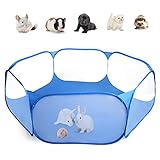
- 【PERFECT SIZE - PLENTY OF ROOM】 [Tips: Item under spring pressure, keep item away from children and face when opening!] Length, width and height after expansion: 47" x 39.4" x 15" (120cm x 100cm x 38cm). Nice size play space for small animals. Play area suitable for hamster, chinchillas, hedgehog, gerbils, ferrets, squirrel, bunny, dog, kitty, mouse, rat, lizard, bearded dragon, small reptile etc.
- 【AUTOMATIC OPENING】 No need for complex splicing, built in frame pops open in seconds. Folds back flat when not in use for easy carrying and storing. When it is opened under spring pressure, it should be away from children and face.
- 【LIGHTWEIGHT & PORTABLE】 Easy to carry, suitable for both outdoor and indoor. Weight 300g/0.66lb, is equal to the weight of an apple. Foldable into a round shape, 8.6" x 8.6"(22cm x 22cm). You don't need to carry a huge cage when you take your pet out. It can limit the range of pet activities.Very lightweight yet extra strong makes traveling and mobility very easy.
- 【HIGH QUALITY MATERIAL】 We use durable Polyester fabric and high-strength memory steel holder surrounded by nets, you could watch your pets at all times, as well as ensure the ventilation of the playpen and eliminate odors. Keep your pets safe and secure both indoors and outdoors.
- 【EASY TO SET UP & STORE & CLEAN】 This playpen is easy to set up and store, and can be rinsed directly with water. A storage bag is attached, the color of the storage bag may different from the color of the playpen.
Sources: Rabbit.org, Rabbit.org on indoor living, Merck Veterinary Manual, and USDA APHIS.
The Bottom Line
Plan on 8–12 years for an indoor pet rabbit, with a possibility of longer. Indoor housing, an unlimited supply of appropriate hay, daily exercise, spaying or neutering, annual rabbit-experienced veterinary examinations, companionship, and rapid treatment of illness all support a longer and healthier life.
The Tool Desk
Outbyte Driver Updater FREEFix the driver behind crashes, sound loss and screen glitchesFind Drivers →Outbyte PC Repair FREEClear out junk files and repair common Windows errorsFree Scan →FAQ
Do pet rabbits live longer than wild rabbits?
Usually, yes. A protected indoor pet rabbit commonly lives 8–12 years, while wild rabbits face very different risks. Wild-rabbit lifespan figures should not be used to predict the life of a domestic pet.
Can a rabbit live for 10 years?
Yes. Ten years is a reasonable midpoint for many well-cared-for indoor rabbits. Some live only part of that time, while exceptional rabbits reach 14–16 years.
Are indoor rabbits healthier than outdoor rabbits?
Indoor rabbits generally have better protection from predators, extreme temperatures, parasites, injuries, and contaminated environments. Rabbit.org outdoor domestic rabbit estimates are around 3–5 or 3–6 years, although individual results vary.
What should I do if my rabbit stops eating?
Treat it as an urgent veterinary problem, especially if the rabbit also stops producing droppings. Rabbits can become seriously ill quickly. Contact a veterinarian experienced with rabbits rather than giving human, dog, or cat medication.
Quick Recap
Product prices and availability are accurate as of the date/time indicated and are subject to change. Any price and availability information displayed on Amazon at the time of purchase will apply.




