Corn snakes can suit first-time keepers, but they need a secure, well-ventilated enclosure, a thermostatically controlled heat gradient, clean water, suitable dead prey, and regular observation. Set up the habitat before bringing a snake home, measure temperatures at both ends, and consult a reptile specialist veterinarian about health concerns.
The RSPCA advises an enclosure in which a snake can fully stretch, at least two snug hides, secure climbing opportunities, and housing one snake per enclosure. Its temperature, humidity, feeding, and handling figures below are husbandry guidance, not universal rules; recommendations can differ by source.
Are corn snakes good pets for beginners?
Corn snakes (Pantherophis guttatus) are a popular pet snake, but they are not social animals that need frequent handling. Before acquiring one, be sure you can provide appropriate housing, feed dead rodents, maintain and check heating equipment, and arrange veterinary care when needed.
A corn snake may not be a good fit if you cannot tolerate feeding rodents or cannot access a reptile specialist veterinarian. Individuals vary in temperament, and a snake may hide or react defensively when disturbed.
What’s actually slowing this PC down?
Pick the symptom - the matching free tool is one click away.
#1 Best Overall

- 【Versatile Reptile Habitat】 Our innovative enclosure serves as a gecko tank, bearded dragon tank, snake tank, and turtle tank all in one. With precision sealing technology, it caters to various habitats, creating a dynamic and captivating reptile terrarium.
- 【360° Unobstructed Viewing Experience】 Crafted from high-transparency PC material, this vivarium tank ensures a panoramic view of your reptile's world, be it a gecko, snake, or lizard. Enhance your observation with an enclosure that brings the captivating reptilian habitat closer to you.
- 【Durable PC Glass Construction】 The tank's robust PC glass material sets it apart from standard reptile tanks. It is tailored for the bearded dragon, offering exceptional load-bearing capacity and resistance to breakage, providing a secure and long-lasting home for your pet.
- 【Convenient Feeding Port】 Featuring a powerful magnetic feeding port, this reptile tank simplifies the feeding process for your gecko, snake, or lizard. No need to lift the lid – a gentle push closes the port automatically, ensuring both ease of use and the freshness of your pet's food.
- 【Top Mesh with High-Temperature Resistance】 Specifically designed for reptile comfort, the top mesh of our lizard tank is heat-resistant. Whether you need to place a heating lamp for your snake or turtle, this enclosure ensures a cozy environment, making it an ideal reptile terrarium kit for diverse reptilian companions.
Corn snake care at a glance
| Care point | Guidance |
|---|---|
| Housing | Secure, well-ventilated enclosure; allow the snake to fully stretch |
| Temperature | RSPCA: 28–30°C basking zone and 20–24°C cool end; RVC care PDF: 32°C basking spot |
| Humidity | RSPCA recommends around 40–50% |
| Heat control | Thermostat on every heat source; check both ends daily with digital thermometers |
| Hides and enrichment | At least two snug hides and secure climbing branches or peg boards |
| Water | Clean, fresh water, replaced at least daily |
| Food | Appropriately sized dead mice; prey should be slightly wider than the snake’s widest body point |
| Handling after feeding | Wait 48 hours, following RSPCA guidance |
| Social housing | House corn snakes alone |
These are source-specific recommendations. The RSPCA care guide gives a basking zone of 28–30°C, while the Royal Veterinary College care PDF gives a 32°C basking spot. The supplied sources do not explain the difference, so measure your setup and seek advice from a reptile specialist veterinarian rather than treating either figure as a universal consensus.
Choose and set up an enclosure
The enclosure must be secure, well ventilated, easy to clean, and able to retain heat. The snake should be able to fully stretch. The RSPCA gives an example minimum of 150 × 50 × 50 cm for a snake that is 150 cm long; attribute this example to the RSPCA rather than treating it as a universal formula. The RSPCA also notes that a hatchling may be stressed in a large, open vivarium. A smaller enclosure or a larger enclosure furnished with many confined spaces can help provide security.
Check doors, lids, ventilation openings, and cable ports for escape gaps. Revisit enclosure size as the snake grows. Make sure the snake can move between a warmer basking area and a cooler end.
Heating and temperature checks
Heat one end of the enclosure and leave the opposite end cooler, so the snake can choose where to rest. The RSPCA recommends a heat lamp for the basking zone, guarded so the snake cannot touch it; it suggests a thermostatically controlled heat mat for a smaller hatchling enclosure.
Rank #2

- VERSATILE CLIMBING PATHS - Interlocking triple-ring ball python tank accessories design allows snakes to weave through 6+ directional paths, promoting natural muscle exercise and curiosity stimulation.
- SAFE 360° EDGES - Rounded ABS plastic snake climbing accessories rings (4.6" diameter) with reinforced joint connectors prevent scale abrasion during intensive climbing sessions.
- MULTI-SPECIES APPROVED - Perfectly sized for Ball Pythons (Up To 5ft), Corn Snakes, Bearded Dragon, Chameleon, Iguana, Gecko, Lizard, Parrot. and Juvenile Boa Constrictors - ideal for breeders and exhibitors.
- CUSTOMIZABLE CLIMBING CHALLENGES - Snake enrichment toy interlock two modular rings to create extended 28" climbing tunnels, allowing ball pythons to build muscle strength through adjustable difficulty levels in bioactive enclosures.
- EASY TERRARIUM INTEGRATION - Snake enclosure accessories includes hooks to secure on mesh lids without damaging enclosure seals.
- Fit a thermostat to every heat source, following the heater and thermostat instructions.
- Use digital thermometers to check the warm and cool ends daily.
- Use an infrared thermometer to check temperatures at resting surfaces if needed.
- Secure heaters and guards so the snake cannot contact a hot surface or move equipment out of place.
A thermostat dial is not a substitute for measuring the temperatures the snake experiences. Do not use an unregulated heat source.
Humidity, lighting, and water
The RSPCA recommends around 40–50% humidity and notes that excessive humidity can indicate a need for more ventilation. Measure humidity rather than relying on appearance. A humid hide with moistened moss can offer a localized humid area without making the whole enclosure damp.
The RSPCA recommends low-output 2–7% reptile UVB tubing as part of a light gradient. Follow the lamp manufacturer’s placement guidance for the particular fixture and enclosure, and provide shaded areas and hides. These specifications are the RSPCA’s husbandry advice, not a universal prescription for every lamp arrangement.
Provide a dish of clean, fresh water at the cool end. The bowl should be large enough for bathing, and the water should be replaced at least daily. The RSPCA advises keeping the bowl clean.
Quick wins for a faster PC:
Clear out junk files and repair common Windows errorsFree Scan →Fix the driver behind crashes, sound loss and screen glitchesFind Drivers →Rank #3
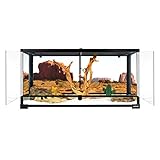
- [Patent Design] Size of RK0119:36" x 18" x 18"(Only include the mesh sides, not include the glass sides). A tough screen top provides ventilation and allows UVB and infrared penetration.
- Raised bottom frame in order to fit a substrate heater; Waterproof bottom makes this tank can be used both as a desert terrarium and rainforest tank.
- Front doors can open separately, easy to feed your pet and prevent escape.
- Window ventilation on the left and right, on top and right, have closable inlets for wires and tubing.
- Easy to install or knock down in 5 minutes with step-by-step instructions; Our glass terrariums are carefully packaged with tough cardboard and thickened reinforced foam for transportation. Should you have any questions when receive it, please reach out to us. A replacement service is provided for damaged parts.
Hides and enrichment
Provide at least two snug hides, one at each end of the enclosure, so the snake can choose between warmer and cooler conditions without giving up security. A third humid hide is optional. Add secure climbing branches or peg boards and arrange furnishings so the snake can move between protected areas.
The RSPCA advises sterilizing natural branches with boiling water before adding them. Ensure branches and other furnishings are stable and cannot fall or injure the snake. Corn snakes should be housed alone; they do not need another snake for company.
Feeding a corn snake
The RSPCA recommends feeding dead mice and offering prey with tongs. Start hatchlings with pinky mice and move to larger prey as the snake grows. A prey item should be slightly wider than the snake’s widest body point. The RSPCA’s guidance is one pinky every five to six days for hatchlings, moving up to one adult mouse every seven to 14 days as the snake grows.
These are RSPCA feeding intervals, not a rigid schedule for every snake. Weigh the snake regularly and monitor body condition. Discuss growth, weight, appetite, or other health concerns with a reptile specialist veterinarian.
Do these 3 things before closing this tab:
1Fix the driver behind crashes, sound loss and screen glitches2Repair Windows errors before they cause bigger problems3Scan for outdated or missing drivers - takes under a minuteRank #4

- Effortless and Efficient Feeding Experience: As a snake hobbyist, you may often face troubles during the feeding process, such as insufficient grip strength and unstable gripping. Our snake feeder tongs have a serrated design that provides a better grip and reduces hand pressure during feeding, allowing you to complete feeding tasks easily and efficiently.
- Safe and Reliable Length Design: Safety is crucial when feeding snake animals. With a total length of 15 inches, our snake feeding tongs are long enough to ensure that you have enough distance between you and the snake to reduce the risk of accidental bites. This design allows you to feel more secure and at ease during the feeding process.
- Comfortable Non-Slip Handle Design: In order to provide a better using experience, we especially use a silicone sleeve on the handle of the snake feeder pliers to make sure that you can have a firm grip on it and not easy to slide when you use it. In this way, you will be able to carry out the feeding operation with more confidence and avoid accidents caused by hand sliding.
- Durable and Rustproof Material: Our snake feeding tongs are made of high quality stainless steel material with excellent rust resistance and durability. This means that even after prolonged use, it will still maintain its good quality and be able to cope with the challenges posed by the aquarium environment.
- Suitable for Many Applications: In addition to reptile tank feeding tasks, our snake feeding tongs are also suitable for other scenarios such as aquarium cleaning, picking up debris, and various other scenarios.
Offering dead prey
- Choose prey appropriate to the snake’s size.
- Thaw and prepare the prey safely according to the supplier’s instructions.
- Offer it with feeding tongs.
- Remove uneaten prey and clean the feeding area as appropriate.
- Record the meal and continue monitoring the snake’s weight and condition.
Handling and settling in
Give a new snake time to settle in its enclosure. Scoop it up rather than grabbing it, and support its body near both the head and tail. Avoid handling around shedding. The RSPCA says that roughly 10–15 minutes outside the vivarium is usually safe depending on room temperature, and cautions against letting the snake’s core temperature drop.
Wait 48 hours after feeding before handling, following RSPCA guidance. Handle calmly and support the whole body. If you are uncertain how to handle the snake safely, ask a reptile specialist veterinarian or experienced keeper to demonstrate.
Independent reader supportYour contribution helps us test, update, and keep practical guides available for everyone.Shedding and health observation
Observe the snake’s skin, eyes, appetite, and behavior. The RSPCA lists frequent tongue flicking, bright clear eyes, and smooth skin among signs to look for. Blisters may indicate that an animal has been kept damp. A humid hide with moistened moss can provide a choice during shedding.
If shed remains over the eyes after a shed, contact a reptile specialist veterinarian for guidance on addressing it safely. Do not pull at retained skin or eye coverings. Consult a reptile specialist veterinarian if you notice changes in skin, eyes, appetite, or behavior, or if you are concerned about the snake’s health.
Free tools Windows power users keep installed
One-click scans. No signup required.
Best Value

- 【Spacious & Secure】Size: 30" (W) x 12" (D) x 12" (H). The 20 gallon reptile cage offer ample room for your pet. Full view transparent glass, which is convenient observation and interaction.
- 【Top Opening Doors】Dual sliding doors for easy access, the top contains wire inlets for installing heating pads, heating cables, sensors, etc.
- 【Dual-Cover Design】Reptile terrarium boast has double screen covers, one side for daily opening, the other side for placing reptile lamp or other accessories. Metal mesh cover ensures adequate ventilation, allows full spectrum, UVB, and IR light penetration.
- 【Easy Feeding】The top of the cage includes specially designed feeding ports for easy feeding and to prevent escapes.
- 【PVC Tray】The knock-down reptile habitat comes with a transparent PVC tray for holding water and substrate, easily cleaning. Perfect for reptiles small animals pets as bearded dragon, lizard, snake, ball python, hamster, hedgehog, tortoise etc.
Frequently Asked Questions
How large should a corn snake’s enclosure be?
The snake should be able to fully stretch. The RSPCA gives 150 × 50 × 50 cm as a minimum example for a 150 cm snake. Revisit the enclosure as the snake grows, and provide enough cover for it to feel secure.
What temperatures does a corn snake need?
Recommendations differ. The RSPCA gives a 28–30°C basking zone and a 20–24°C cool end. The RVC care PDF gives a 32°C basking spot. Use a thermostat on every heat source and check both ends daily with digital thermometers.
How humid should a corn snake’s enclosure be?
The RSPCA recommends around 40–50% humidity and says excessive humidity can indicate a need for more ventilation. A humid hide with moistened moss can offer a localized humid area.
How often should I feed a corn snake?
The RSPCA recommends a pinky every five to six days for hatchlings, moving up to one adult mouse every seven to 14 days as the snake grows. Choose prey slightly wider than the snake’s widest body point and monitor its weight regularly.
Recommended Free Tools
Can corn snakes live together?
No. The RSPCA advises housing corn snakes alone.
When can I handle my snake after feeding?
Wait 48 hours, following the RSPCA’s guidance. Avoid handling around shedding and support the snake’s body when you pick it up.
Quick Recap
Sources
Product prices and availability are accurate as of the date/time indicated and are subject to change. Any price and availability information displayed on Amazon at the time of purchase will apply.




