The Tool Desk
Outbyte Driver Updater FREEScan for outdated or missing drivers - takes under a minuteDriver Scan →Outbyte PC Repair FREERepair Windows errors before they cause bigger problemsFix Now →Baby Yingliang is a real dinosaur embryo fossil, but it was recovered in Ganzhou, Jiangxi Province, China—not Missouri. The peer-reviewed study identifies it as an oviraptorid embryo inside a fossilized egg and compares its posture with a pre-hatching posture in modern birds; that comparison is a research proposal, not proof that all dinosaurs hatched like birds.
Baby Yingliang: the fossil inside the egg
The specimen is catalogued as YLSNHM01266 and housed at the Yingliang Stone Nature History Museum in Nan’an, China. It is an oviraptorid oviraptorosaur embryo preserved inside an elongatoolithid egg.
The peer-reviewed iScience study reports an egg about 16.7 centimeters long and 7.6 centimeters wide, and a preserved skeleton approximately 23.5 centimeters long. The University of Birmingham’s research release rounds the egg length to 17 centimeters and gives an embryo length estimate of 27 centimeters. These are measurements reported by different sources and should not be treated as identical measures.
The specimen is scientifically notable because its preserved posture can be compared with pre-hatching postures in modern birds. Researchers suggest that aspects of pre-hatching tucking behavior may have evolved among non-avian theropods, but say that more embryo discoveries are needed to investigate the idea.
#1 Best Overall

- Utahraptor was a large theropod dinosaur that lived during the Early Cretaceous period, known for its sharp claws and hunting abilities
- This replica is based on a real Utahraptor fossil discovered in Utah, accurately capturing the shape and detail of the original claw
- The Utahraptor’s curved claw was used for gripping and slashing, making it a key tool for hunting prey
- Cast in durable resin, this 5.5-inch replica offers museum-quality detail and texture
- Made in the USA, this fossil reproduction is perfect for collectors, educators, and dinosaur enthusiasts
Where was the dinosaur embryo found?
The published locality for Baby Yingliang is the Hekou Formation at Shahe Industrial Park, Ganzhou City, Jiangxi Province, China. The primary study and the University of Birmingham release identify the site as southern China. The Missouri attribution does not match the published locality for this specimen.
How old is Baby Yingliang?
The University of Birmingham research release describes the embryo as 72 to 66 million years old, during the Late Cretaceous. The title’s “70-million-year-old” phrasing is a rounded approximation, not an exact point age.
When was Baby Yingliang discovered?
The fossil was acquired around 2000 as a suspected dinosaur-egg fossil. During construction of the Yingliang museum in the 2010s, staff sorted stored specimens, and preparation eventually revealed the embryo inside the egg, according to the University of Birmingham release.
Rank #2
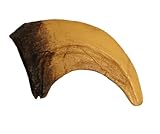
- Material:Fossil cast replicas made from durable resin, capturing the fine details of the original fossils.
- Size: Measuring approximately 2.2 inches,easily in the palm of your hand.
- Detailed Design :Crafted to capture the sharp, curved nature of the velociraptor deadly claw.
- Package includes: 1 piece replica dinosaur claws.
- Wide Applications: Ideal for classrooms, museums, and home displays.Helps bring prehistoric lessons to life for kids and adults alike. It can also be a gift for family or friends.
The specimen was formally described in a study published online on December 21, 2021. The PubMed record confirms the paper’s publication details. It was not a new 2025 discovery.
What does the embryo’s posture show?
In the fossil, the head lies beneath the body, the flexed hindlimbs lie to either side, and the back curls toward the blunt end of the egg. Researchers compare this arrangement with an avian-like pre-tucking posture in modern bird embryos.
The original authors propose that aspects of pre-hatching tucking behavior may have evolved among non-avian theropods. The evidence is limited: articulated dinosaur embryos are remarkably rare, and the authors note that further discoveries are needed to investigate the proposal. The fossil does not establish the complete hatching behavior of all dinosaurs.
Rank #3

- MUSEUM-INSPIRED SABER TOOTH TIGER SKULL REPLICA: Closely modeled after the iconic Smilodon fatalis skull, this large-scale replica captures the fearsome detail of one of prehistory's greatest predators - from the elongated canine fangs to the textured bone structure. Impressive enough to anchor any shelf, desk, or display.
- PREMIUM CONSTRUCTION - A SKULL BUILT TO DISPLAY: Made from high-quality material that replicates the natural texture of fossilized bone. Durable, and fade-resistant so it looks great for years. - no setup required.
- A CONVERSATION PIECE THAT COMMANDS ATTENTION: Whether it's a man cave, home office, library, bar, or trophy room - this Smilodon skull stops people in their tracks. Saber Tooth Tigers roamed the Americas for over 2 million years and remain one of the most recognized symbols of prehistoric power. Now you can own a piece of that history.
- THE PERFECT GIFT FOR HISTORY & FOSSIL ENTHUSIASTS: An unforgettable gift for paleontology fans, natural history lovers, collectors, and anyone fascinated by prehistoric predators. Arrives ready to display straight out of the box - ideal for birthdays, Father's Day, Christmas, and graduation gifts.
- DETAILED ENOUGH FOR SKULL COLLECTORS, BOLD ENOUGH FOR DECOR: Designed with the fossil enthusiast in mind but striking enough for anyone who wants something genuinely unique on their shelf. Far more interesting than another generic sculpture - and a fraction of what a professional museum cast would cost.
What kind of dinosaur was it?
The study identifies Baby Yingliang as an oviraptorid oviraptorosaur. It does not assign the specimen to a particular genus or species. “Baby Yingliang” is the specimen’s nickname, not the scientific name of a newly identified species.
Why are dinosaur embryos inside eggs so rare?
The iScience study notes that articulated dinosaur embryos are remarkably rare. Baby Yingliang is informative because its preserved posture retains relationships between parts of the embryo and the egg, while the rarity of comparable fossils means conclusions about behavior remain tentative.
What’s actually slowing this PC down?
Pick the symptom - the matching free tool is one click away.
Common claims checked
| Claim | What the evidence supports |
|---|---|
| “It was found in Missouri.” | Incorrect for Baby Yingliang. The published locality is Ganzhou, Jiangxi Province, China. |
| “It was discovered in 2025.” | Incorrect. It was acquired around 2000, revealed during museum work in the 2010s, and formally described in 2021. |
| “It is exactly 70 million years old.” | The University of Birmingham release gives an age range of 72 to 66 million years; 70 million is a rounded shorthand. |
| “It proves dinosaurs hatched exactly like birds.” | Too strong. Researchers compare its posture with modern bird embryos and propose that some related behavior may have evolved among non-avian theropods. |
The accurate takeaway
Baby Yingliang is a real oviraptorid embryo fossil from Ganzhou, China, preserved inside an egg from the Late Cretaceous. Its posture resembles a pre-hatching posture in modern birds, supporting a hypothesis about the origins of some bird-like behavior among non-avian theropods. The evidence does not establish that all dinosaurs hatched like birds.
Rank #4

- Realistic Fossil Replica: Museum-quality cast of an Early Eocene bat skeleton from the Lower Green River Formation, Lincoln County, Wyoming
- Historic Specimen: Represents one of the earliest known mammals, offering a glimpse into life approximately 50 million years ago
- Great Gift for Fossil Lovers: Appropriate for fossil collectors, educators, and anyone fascinated by prehistoric life and natural history
FAQ
Was the dinosaur embryo found in Missouri?
No. The published locality for Baby Yingliang is near Ganzhou City in Jiangxi Province, China.
Is the 70-million-year-old dinosaur embryo real?
Yes. Baby Yingliang is a real oviraptorid embryo fossil. The University of Birmingham release describes it as 72 to 66 million years old, so “70 million” is a rounded approximation.
When was Baby Yingliang discovered?
It was acquired around 2000 and revealed during museum work in the 2010s. The study formally describing it was published in 2021.
Do these 3 things before closing this tab:
1Scan for outdated or missing drivers - takes under a minute2Clear out junk files and repair common Windows errors3Fix the driver behind crashes, sound loss and screen glitchesBest Value

- LIFELIKE DETAIL: Museum-quality resin replica captures real-looking texture, serrations, and fossil-like coloring
- ECO-FRIENDLY: Made from durable, non-toxic polyurethane resin—a sustainable alternative to real fossil harvesting
- PERFECT SIZE: 3.5“ Substantial and weighty design makes it ideal for display on desks, bookshelves, or in classrooms
- DURABLE CONSTRUCTION: Unlike real fossil or bone, this replica is crack-resistant and built to last for years
- VERSATILE USE: Great for pirate treasure displays, Shark Week props, educational demonstrations, or collection curio
What kind of dinosaur embryo was it?
The peer-reviewed study identifies it as an oviraptorid oviraptorosaur embryo. It does not name a particular genus or species.
What does Baby Yingliang show about dinosaurs and birds?
Its posture resembles a pre-hatching posture in modern bird embryos. Researchers propose that aspects of this behavior may have evolved among non-avian theropods, while noting that more fossil embryos are needed to investigate the idea.
Quick Recap
Product prices and availability are accurate as of the date/time indicated and are subject to change. Any price and availability information displayed on Amazon at the time of purchase will apply.




