Early vision loss in dogs may look like hesitation, anxiety, or slower navigation—not just bumping into things. These behaviors can have other causes, so they are clues to discuss with a veterinarian, not proof of blindness. Contact a veterinarian promptly for sudden vision loss, a red or squinting eye, or difficulty navigating safely.
Dogs can compensate with memory, hearing, and smell, which may make changes harder to notice at home. Pay attention to when the behavior occurs, especially in dim light or unfamiliar places, and whether it began suddenly or gradually.
Key takeaways: How to Tell If Your Dog Is Going Blind
- Early clues can include anxiety or clinginess in new places, hesitation on stairs or jumps, slower walks or play, startling easily, or reduced eye contact.
- Bumping into objects and difficulty finding food or toys may appear as vision loss advances, but no home observation confirms blindness.
- Gradual difficulty seeing at night can be an early sign of progressive retinal atrophy (PRA); sudden vision loss over days can occur with SARDS and other conditions.
- Sudden vision loss needs prompt veterinary assessment. Redness or squinting can be subtle early signs of glaucoma, which can threaten sight without treatment.
- A veterinarian may assess visual reflexes, the retina, and the optic pathway. An ophthalmologist may use electroretinography, and additional neurologic testing may be needed.
- Dogs with declining vision can adapt. Keep pathways predictable, reduce hazards, and help the dog avoid injury.
How can I tell if my dog is going blind?
Look for changes in confidence, navigation, and behavior. A dog with reduced vision may become anxious or clingy in unfamiliar places, hesitate on stairs or before jumping, walk or play more slowly, startle easily, or make less eye contact. More obvious clues can include bumping into furniture or struggling to locate food and toys.
These changes can also have causes other than vision loss. Dogs use memory, hearing, and smell to manage familiar surroundings, so a dog may seem comfortable at home yet struggle in a new place or in dim light. Note when the behavior occurs and whether it affects one or both eyes as far as you can tell; do not delay veterinary care to test the dog’s vision at home.
The Tool Desk
Outbyte PC Repair FREEClear out junk files and repair common Windows errorsFree Scan →Outbyte Driver Updater FREEFix the driver behind crashes, sound loss and screen glitchesFind Drivers →#1 Best Overall

- CONFIDENCE FOR BLIND DOGS – Being blind is tough, but bumping into walls is worse. Our comfy blind dog harness helps guide your pup safely—no blind dog halo ring needed! It’s like turning your dog into a four-legged GPS (with way more cuddles). Perfect help for blind dogs finding their way indoors or outside.
- SNUG, COMFY, AND ESCAPE-PROOF – This isn’t some itchy strap that your dog will Houdini out of. With adjustable straps and a no-escape design, this dog harness fits like their favorite PJs. Great for small dog harness, medium sized dogs, and even dog harness for large dogs (aka furry tanks).
- REFLECTIVE & READY FOR NIGHT WALKS – Whether you're headed out for a midnight potty mission or a sunset stroll, the reflective trim keeps your pup visible and safe. It’s stylish blind dog accessories meets smart safety.
- EASY HANDLE = HUMAN SUPERPOWER – Got stairs? Uneven sidewalks? Surprise holes? Our top handle helps you guide, lift, and assist like a superhero sidekick. Works better than a gentle leader for dogs when your blind buddy needs support.
- GREAT FOR SERVICE & TRAINING DOGS TOO – Whether you need a service dog vest, dog training support, or just a super comfy fit for daily walks, this harness handles it all. Works for everything from a halo harness for small blind dog to a dependable no pull dog harness. One harness to rule them all!
What are the first signs of blindness in dogs?
| What you notice | What it may suggest | What it does not prove |
|---|---|---|
| Anxiety or clinginess in new places; startling easily | Uncertainty when the dog cannot rely on familiar visual cues | That vision loss is the cause; other conditions can change behavior |
| Hesitating on stairs, jumps, or unfamiliar surfaces | Difficulty judging obstacles or navigating confidently | That the problem is definitely visual |
| Slower walks or play, or reduced eye contact | A possible change in visual confidence or awareness | The cause or severity of a vision problem |
| Bumping into objects or difficulty finding food and toys | More noticeable difficulty using vision | Complete blindness or a particular eye disease |
| More difficulty in darkness or dim light | A low-light vision problem; this can be an early pattern in PRA | That the dog has PRA |
| Redness or squinting | A possible eye problem, including glaucoma | That the change is a routine aging sign or safe to ignore |
| Cloudiness or an apparently normal-looking eye with sudden vision loss | Several possible eye or optic-pathway conditions | A diagnosis based on appearance alone |
Record when the change began, whether it is getting worse, which situations reveal it, whether the eye looks different, and what medications the dog takes. This history can help the veterinarian assess the problem.
When should I contact a veterinarian?
Contact a veterinarian promptly if vision loss appears sudden, an eye is red or the dog is squinting, or the dog is struggling to navigate safely. Redness and squinting can be subtle early signs of glaucoma. Elevated eye pressure can damage the optic nerve, and rapid treatment may save sight.
Keep the dog away from stairs and other hazards while arranging care. Do not wait to conduct home vision tests or rely on pupil appearance or a normal-looking eye to rule out a serious problem.
Rank #2
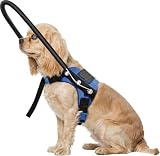
- Proper Fit Guidance: Measure your dog’s chest girth and nose distance before selecting size. Elastic rear strap offers flexible adjustment.
- Navigation Assistance Aid: Designed to help blind dogs detect obstacles earlier during everyday movement.
- Head & Face Protection: Halo structure surrounds the head area to help reduce accidental bumps into walls or furniture.
- Breathable Padded Material: Soft cushioned fabric supports comfort and helps minimize rubbing during movement.
- Secure Vest Construction: Adjustable harness design distributes pressure evenly while keeping the halo securely in place.
Can dogs go blind suddenly?
Yes. Sudden vision loss can develop over days with SARDS or result from other problems affecting the eye, retina, or optic pathways. The timing and appearance can help guide an examination, but they do not identify the cause on their own.
With SARDS, the back of the eye may initially look relatively normal, and pupils may be dilated or respond poorly. Those signs do not confirm SARDS: a veterinary ophthalmologist uses electroretinography for a definitive diagnosis. Merck Veterinary Manual reports that no effective treatment has been described for SARDS.
Call your veterinarian promptly. Note when the dog was last seen acting normally, whether one or both eyes seem affected, which situations reveal the change, and the dog’s medications. Do not delay an examination to perform home tests.
Rank #3
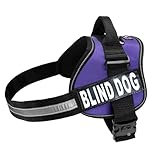
- CONFIDENCE FOR BLIND DOGS – Being blind is tough, but bumping into walls is worse. Our comfy blind dog harness helps guide your pup safely—no blind dog halo ring needed! It’s like turning your dog into a four-legged GPS (with way more cuddles). Perfect help for blind dogs finding their way indoors or outside.
- SNUG, COMFY, AND ESCAPE-PROOF – This isn’t some itchy strap that your dog will Houdini out of. With adjustable straps and a no-escape design, this dog harness fits like their favorite PJs. Great for small dog harness, medium sized dogs, and even dog harness for large dogs (aka furry tanks).
- REFLECTIVE & READY FOR NIGHT WALKS – Whether you're headed out for a midnight potty mission or a sunset stroll, the reflective trim keeps your pup visible and safe. It’s stylish blind dog accessories meets smart safety.
- EASY HANDLE = HUMAN SUPERPOWER – Got stairs? Uneven sidewalks? Surprise holes? Our top handle helps you guide, lift, and assist like a superhero sidekick. Works better than a gentle leader for dogs when your blind buddy needs support.
- GREAT FOR SERVICE & TRAINING DOGS TOO – Whether you need a service dog vest, dog training support, or just a super comfy fit for daily walks, this harness handles it all. Works for everything from a halo harness for small blind dog to a dependable no pull dog harness. One harness to rule them all!
Does a cloudy eye mean my dog is blind?
No. A cloudy appearance can have different causes, and it does not reveal by itself how much sight remains. Cataracts are a lens opacity that can cause impairment ranging from mild to blindness. A veterinarian needs to examine the eye to assess vision and identify whether another condition is present.
| Possible explanation | Pattern or appearance | Why an examination matters |
|---|---|---|
| Cataracts | Cloudy or opaque lens; vision impairment varies | Appearance alone cannot show how much sight remains or whether another disease is present |
| Glaucoma | Redness or squinting may be early signs; other changes may occur | Elevated pressure can damage the optic nerve and threaten sight |
| Other eye or optic-pathway conditions | May cause cloudiness or sudden vision loss with an eye that appears relatively normal | Testing helps locate the problem and guide next steps |
What conditions can cause vision loss in dogs?
| Condition | Typical onset or lighting pattern | Eye appearance and pain |
|---|---|---|
| Progressive retinal atrophy (PRA) | Usually gradual; difficulty seeing at night or in dim light may appear early | Generally non-painful; appearance alone does not confirm PRA |
| SARDS | Can cause rapid blindness, often over several days | The back of the eye may initially look normal; diagnosis requires electroretinography by an ophthalmologist |
| Glaucoma | Can threaten sight quickly | Redness or squinting may be subtle early signs; prompt assessment matters |
| Cataracts | Vision impairment varies | Lens opacity; cloudiness alone does not establish how much vision remains |
| Other eye, retinal, or optic-pathway conditions | Can be sudden or follow another pattern | Appearance varies; a normal-looking eye does not rule out a problem |
These patterns help describe what you observe, but they cannot substitute for an eye examination. More than one condition may need to be considered.
Recommended Free Tools
How does a veterinarian test whether a dog is losing vision?
A veterinarian considers the history and examines visual responses, the eyes, and, when needed, the optic pathway. The tests depend on the suspected cause; a home obstacle test cannot establish the diagnosis.
Rank #4

- Measure Before Ordering:Check chest girth and nose length to ensure the best fit. Proper sizing improves comfort and stability.
- Smart Halo Design: The innovative halo structure creates a safe buffer zone around your puppy’s head, absorbing the shock of accidental bumps and keeping fragile eyes and noses out of harm's way.
- Anti-Collision Halo Structure: The lightweight yet sturdy halo protects your dog's head from accidental bumps without interfering with daily activities. Your pet can eat, drink, play, and sleep comfortably while wearing it.
- Comfort Materials: Crafted with soft, cushioned, and breathable fabric that supports long-wear comfort while minimizing skin rubbing and chafing during continuous movement.
- Proactive Obstacle Detection: Engineered specifically to help blind or visually impaired dogs sense their surroundings earlier, giving them the confidence to navigate everyday environments safely.
- History: The veterinarian may ask when the change began, whether it is progressing, what happens in dim light, and what medications the dog takes.
- Visual responses: The veterinarian can assess visual reflexes as part of the examination.
- Eye and retina examination: The retina is examined for signs that help explain the vision loss.
- Electroretinography: A veterinary ophthalmologist may use this test to assess retinal function; it is required for a definitive SARDS diagnosis.
- Optic-pathway and neurologic assessment: Further evaluation may be needed depending on retinal findings and the suspected cause.
If the dog appears blind but the retina looks normal, a referral to a veterinary ophthalmologist and electroretinography may be appropriate. Further neurologic assessment can follow depending on retinal function.
Independent reader supportYour contribution helps us test, update, and keep practical guides available for everyone.What should I do if my dog suddenly cannot see?
- Contact a veterinarian promptly. Explain that the vision change is sudden and mention redness, squinting, cloudiness, or difficulty navigating.
- Prevent injury. Keep the dog away from stairs and other hazards while arranging care.
- Share useful details. Note when the change began, whether one or both eyes seem affected, the situations in which it is noticeable, and the dog’s medications.
- Follow the veterinarian’s advice. A veterinary ophthalmologist may be needed for specialized examination, including electroretinography.
How can I help a dog with declining vision get around?
Keep the dog’s environment safe and predictable, and help them avoid injury. Consistent pathways and familiar cues can make it easier for a dog to feel secure as vision declines.
- Keep pathways predictable and avoid unnecessary changes to familiar spaces.
- Reduce avoidable hazards, supervise stairs, and take extra care in unfamiliar places.
- Use your voice before touching the dog so they are not startled.
- Discuss a blind-dog halo harness with your veterinarian as an optional mobility aid. The available research does not establish that a specific device is effective or suitable for every dog.
Frequently Asked Questions
What are early signs that my dog may be losing vision?
Early clues can include anxiety or clinginess in new places, hesitation on stairs or jumps, slower walks or play, startling easily, and reduced eye contact. These signs can have other causes, so discuss them with a veterinarian rather than treating them as proof of blindness.
What’s actually slowing this PC down?
Pick the symptom - the matching free tool is one click away.
Best Value

- Custom Fit Sizing: Designed with multiple size options to ensure a comfortable and secure fit for dogs of different breeds.XXS for 13"-19",XS for 18"-22",S for 22"-26"
- Impact Prevention Halo: The halo ring gently contacts obstacles first, guiding dogs away from hazards.
- All-Day Comfort: Lightweight and soft materials allow long-time wear without irritation or pressure.
- Secure Vest Harness: Dual-buckle vest evenly distributes pressure and keeps the halo stable during movement.
- Daily Safety Support: Reduces risk of injury by guiding dogs safely around furniture and obstacles.
Can progressive retinal atrophy cause night blindness?
Yes. PRA often first reduces night vision and typically progresses gradually. Difficulty in dim light is a clue, not a diagnosis.
Can a dog go blind even if the eye looks normal?
Yes. Some causes affect the retina or optic pathways and may not be obvious from the eye’s surface. A veterinarian may examine the retina and optic pathway; an ophthalmologist may use electroretinography.
Is a red or squinting eye urgent?
Contact a veterinarian promptly. Redness and squinting can be subtle early signs of glaucoma, which can threaten sight without treatment.
Can a halo harness help a dog with poor vision?
A blind-dog halo harness may be discussed as an optional mobility aid, but the reviewed research does not establish the effectiveness of a specific device or show that every dog needs one.
Quick Recap
Product prices and availability are accurate as of the date/time indicated and are subject to change. Any price and availability information displayed on Amazon at the time of purchase will apply.




