To raise tilapia at home, use a managed tank or aquaponics system with filtration or water treatment, reliable aeration, temperature control when needed, and routine water monitoring. Tilapia need warm water, but safe stocking, feeding, harvest timing, and legal requirements depend on the fish, system, and location.
A tank-only setup focuses on fish production; aquaponics also grows plants but adds plumbing, root, and nutrient-management tasks. Neither system removes the need to monitor water conditions, plan for equipment failures, and check local rules before acquiring or moving fish.
Key takeaways
- USDA Natural Resources Conservation Service guidance gives 82–86°F as a preferred water-temperature range for tilapia and pH 6.5–9; treat these as general guidance, not a guarantee for every strain or system.
- Plan for dependable aeration. Oklahoma State University Extension says warm-water fish and plants commonly prefer dissolved oxygen of 6–7 ppm.
- Monitor temperature, pH, and oxygen; systems using biofiltration also need appropriate nitrogen-cycle monitoring.
- Use formulated aquaculture feed suited to tilapia and their life stage. Do not use a fixed ration without considering fish biomass and system conditions.
- There is no supported universal beginner stocking count or tank size. Base stocking on system design and your ability to monitor and maintain it.
- Check state and local rules before buying, transporting, raising outdoors, discharging water, or selling tilapia.
Which home system should you choose?
A standalone tank is a fish-focused option; aquaponics combines fish production with plant growing. Compare systems by their filtration and water treatment, temperature and energy needs, oxygenation and backup planning, containment and discharge, ongoing labor, and applicable local rules. There is no universal cost or performance comparison.
| Decision | Standalone tank | Aquaponics |
|---|---|---|
| Primary goal | Fish production | Fish and plant production together |
| Water treatment | Filtration or other treatment appropriate to the system | Fish-system treatment plus plant and nutrient management |
| Management focus | Fish, water conditions, feed, and equipment | Fish, plants, plumbing, roots, nutrients, and water conditions |
| Temperature and oxygen | Manage for fish and system conditions | Manage for fish, plants, and system conditions |
| Containment and discharge | Plan for containment and lawful water management | Plan for containment and lawful water management |
| Best fit | A grower focused on fish | A grower who also wants plants and accepts added management |
USDA Natural Resources Conservation Service describes tilapia as well suited to aquaponics because of their environmental adaptability and hardiness. That does not make system management optional: filtration, aeration, monitoring, and appropriate water treatment remain important.
The Tool Desk
Outbyte Driver Updater FREEScan for outdated or missing drivers - takes under a minuteDriver Scan →Outbyte PC Repair FREERepair Windows errors before they cause bigger problemsFix Now →#1 Best Overall

- QUIET AQUARIUM FILTER: The Tetra Whisper IQ Power Filter with Stay Clean technology contains a sound shield for quiet filtration less than 40 dB.
- SELF PRIMING: Submerged motor starts up with no priming required.
- CAPACITY: The Tetra Whisper IQ 20 Power Filter works in filters up to 20 gallons (130 GPH).
- STAY CLEAN TECHNOLOGY: By maintaining healthy pH levels, creates easier maintenance for healthier fish.
- CARTRIDGE REFILLS: Change cartridges monthly; uses large-sized Tetra Whisper Bio-Bag Filter Cartridges (refills sold separately).
What equipment do you need to raise tilapia fish at home?
Plan the system around adequate water volume, filtration or aquaponics treatment, aeration, temperature control where needed, and a way to monitor water conditions. Equipment capacity must match the fish load and system design; a tank’s shape alone does not establish safe stocking.
- Tank: Choose a suitable fish-rearing tank and a location where temperature, power, and containment can be managed.
- Filtration or aquaponics treatment: Provide treatment appropriate to the system and its waste load.
- Water pump and plumbing: If the design uses recirculation, maintain reliable flow through the treatment system.
- Air pump and diffuser: Plan for dependable aeration, especially in warm or heavily stocked systems.
- Temperature monitoring and control: Use a thermometer and provide heating or other temperature control if needed for local conditions.
- Testing supplies: Be able to monitor temperature, pH, and dissolved oxygen. If using biofiltration, monitor the nitrogen cycle as appropriate.
- Maintenance tools: Keep tools suited to removing solids and carrying out routine maintenance.
- Feed: Use formulated aquaculture feed appropriate to tilapia and their size or life stage.
- Emergency plan: Consider backup aeration or power based on local outage risk and the system’s fish load; test the backup equipment.
Oklahoma State University Extension gives 35% crude protein as an example for some omnivorous fish such as tilapia and catfish. This is an example, not a universal feed prescription; select feed for the fish and life stage.
What size tank do tilapia need?
There is no supported universal tank size or “fish per gallon” rule for a beginner home system. Appropriate capacity depends on the system design, fish size, treatment and aeration, maintenance, and the grower’s ability to monitor and respond to changing conditions.
Start conservatively rather than filling a tank to a claimed maximum. Add fish gradually and increase the load only when the system is operating reliably and monitoring results remain suitable for the fish. A tank that appears to have physical space may still exceed the capacity of its treatment or aeration.
Think in terms of fish biomass as well as fish count. Small fingerlings and large fish impose different demands. Weighing a representative sample and estimating total biomass can help you reassess feed and system capacity as fish grow.
How warm should tilapia water be?
Tilapia need warm water. USDA Natural Resources Conservation Service’s 2024 engineering handbook gives 82–86°F as a preferred temperature range and says minimum water temperatures should be at least 55°F. These are handbook guidelines, not a guarantee for every strain or home system; cold-climate systems need close temperature monitoring.
Rank #2

- QUIET AQUARIUM FILTER: The Tetra Whisper IQ Power Filter with Stay Clean technology contains a sound shield for quiet filtration less than 40 dB.
- SELF PRIMING: Submerged motor starts up with no priming required.
- CAPACITY: The Tetra Whisper IQ 45 Power Filter works in tanks up to 45 gallons (215 GPH).
- STAY CLEAN TECHNOLOGY: By maintaining healthy pH levels, creates easier maintenance for healthier fish.
- CARTRIDGE REFILLS: Change cartridges monthly; uses large-sized Tetra Whisper Bio-Bag Filter Cartridges (refills sold separately).
| Condition | Research guidance | Practical decision |
|---|---|---|
| 82–86°F | Preferred temperature range in USDA Natural Resources Conservation Service guidance (2024) | Use as general guidance, considering your fish and system. |
| At least 55°F | Minimum water temperature stated in the USDA handbook (2024) | Do not treat this minimum as an ideal growth target; monitor closely in cold conditions. |
Measure the water rather than relying on room temperature. If heating is needed, use appropriate temperature control and avoid abrupt changes. Temperature affects oxygen availability, so dependable aeration is important in warm water.
Do tilapia need an air pump and biofilter?
Plan for reliable aeration and appropriate filtration or water treatment. Oklahoma State University Extension says warm-water fish and plants commonly prefer dissolved oxygen of 6–7 ppm and suggests considering air stones below 6 ppm. Temperature and elevation affect available oxygen; do not treat survival at low oxygen as a husbandry target.
Recommended Free Tools
Systems using biofiltration need an established biological filtration process and nitrogen-cycle monitoring. Do not assume a system is ready for a full fish load just because its water looks clear. Add fish gradually and watch how the system responds.
Which water-quality parameters should you test?
Monitor temperature, pH, and dissolved oxygen. If the system uses biofiltration, monitor nitrogen-cycle parameters as appropriate. Clear-looking water is not a substitute for testing, and a reading must be interpreted in the context of your fish and system.
| Parameter | Why it matters |
|---|---|
| Temperature | Affects fish conditions and oxygen availability; monitor especially closely in cold climates. |
| pH | USDA Natural Resources Conservation Service guidance gives pH 6.5–9 for tilapia (2024); monitor for changes in your system. |
| Dissolved oxygen | Oklahoma State University Extension says warm-water fish and plants commonly prefer 6–7 ppm; temperature and elevation affect available oxygen. |
| Nitrogen-cycle parameters | Monitor as appropriate where the system uses biofiltration, particularly during startup or after changes to the fish load or filtration. |
Check more frequently during startup, after adding fish, after a change to filtration, and when fish behavior or equipment suggests a problem. Have a response plan for low oxygen or unexpected water readings.
How do you cycle a tilapia tank before adding fish?
For a system using biofiltration, establish the biological filtration process before adding a full fish load. Monitor water conditions during startup and add fish gradually rather than assuming clear water means the system can support its maximum load.
Rank #3
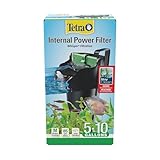
- INTERNAL POWER FILTER: Tetra Whisper Internal Power Filter for 5- to 10-gallon aquariums uses medium Whisper BioBag filter cartridges that are easy to change.
- QUIET 85 GPH MOTOR: The internal pump efficiently filters up to 85 gallons per hour.
- POWERFUL FILTRATION: Water flows through the cartridge floss, trapping debris and fish waste, while Ultra-activated carbon helps remove odor and discoloration.
- SPACE-SAVING DESIGN: Your aquarium can be 1” from the wall with the internal filter designed to clip directly on your aquarium wall and be hidden by décor.
- EASILY ADJUSTABLE: Adjustable clip allows for a variety of setups to easily adjust to high or low water levels.
- Assemble the system. Install the tank, treatment or filtration, circulation if used, aeration, and temperature monitoring or control as needed.
- Run and check equipment. Confirm that pumps and aeration operate reliably and that the system is contained.
- Establish biological filtration. Allow the biofilter to develop before treating the system as ready for a full fish load.
- Monitor during startup. Check temperature, pH, oxygen, and nitrogen-cycle parameters appropriate to the system.
- Add fish in stages. Begin conservatively, observe the system’s response, and increase the load only when conditions remain suitable.
- Reassess feeding and capacity. Match feed to fish size and biomass and to what the system can manage.
Which tilapia should you buy?
Buy fish from a source permitted or otherwise approved for your location, and verify the species and any conditions on purchase or transport before acquiring them. Rules can differ by species, containment, personal use, sale, and escape or discharge risk.
Ask the supplier what fish are being sold, their size or life stage, and whether they are appropriate for your system. Do not move fish between systems or release them outdoors without checking applicable rules.
How many tilapia can you put in a tank?
There is no supported universal beginner stocking count. Stock according to the system’s design, treatment, aeration, monitoring, and maintenance capacity, and start conservatively.
Oklahoma State University Extension discusses a critical standing crop of up to 0.50 pound per gallon for aquaponic systems. This is system guidance, not a beginner recommendation for an ordinary home tank; do not use it as a default stocking target.
As fish grow, reassess biomass, feeding, and system capacity. If you cannot maintain suitable conditions or respond reliably to equipment problems, do not add more fish.
How often and how much should you feed tilapia?
Use formulated aquaculture feed suited to tilapia and their life stage. The appropriate amount depends on fish biomass, size, and system conditions; the dossier does not establish a universal daily ration for home systems.
Rank #4

- Powerful Pump: 300 GPH water pump effectively filters 55-150 gallons; ideal for large aquariums, turtle tanks, and ponds.
- Enhanced Aeration: Equipped with an adjustable valve to increase oxygen levels, promoting healthier, more active fish and turtles.
- Double Deep Filtration: Dual-stage black biochemical sponge removes odors and impurities; keeps water clear and fresh.
- Dynamic Water Flow: Boosts wave size and surface movement; improves circulation for a healthier aquatic environment.
- Adjustable Body: The aquarium filter features a detachable design. For tanks under 15 inches tall, you can lay the filter flat or remove the lower half of the filter sponge for a better fit.
| Feed decision | Guidance | Management note |
|---|---|---|
| Feed type | Formulated aquaculture feed appropriate to tilapia and their life stage | Do not rely on kitchen scraps as a complete diet. |
| Feed composition | Oklahoma State University Extension gives 35% crude protein as an example for some omnivorous fish, including tilapia and catfish | This is an example, not a universal target. |
| Ration | Set according to fish biomass, size, and system conditions | Do not apply a fixed amount without those details. |
Reassess the ration as fish grow and monitor the system’s response to feeding. Uneaten feed or deteriorating water conditions are reasons to review the amount and system load.
How long does it take tilapia to reach eating size?
USDA Natural Resources Conservation Service guidance says tilapia generally mature between 6 and 9 months. This is a broad estimate, not a household harvest guarantee: maturation depends on temperature, feed allotments, and desired final size.
Do these 3 things before closing this tab:
1Fix the driver behind crashes, sound loss and screen glitches2Repair Windows errors before they cause bigger problems3Scan for outdated or missing drivers - takes under a minuteCan you raise tilapia outdoors anywhere in the United States?
No. Outdoor tilapia culture is not automatically safe or lawful throughout the United States. Rules can depend on species, indoor or outdoor containment, personal use or sale, transport, escape risk, and discharge.
Before using a pond or outdoor system, check current state and local requirements for possession, culture, containment, transport, discharge, and sale. Never release tilapia into the wild.
Independent reader supportYour contribution helps us test, update, and keep practical guides available for everyone.What should you do when a home tilapia system fails?
Address immediate oxygen or containment problems first, then investigate the cause. The right response depends on the system and local requirements.
| Problem | Response |
|---|---|
| Low oxygen or aeration failure | Restore aeration promptly, use tested backup equipment if needed, and monitor dissolved oxygen. |
| Temperature problem | Check the water temperature, restore appropriate temperature control, and avoid abrupt changes. |
| Unexpected water readings | Retest, review feeding and system operation, and follow a cautious plan appropriate to the system. |
| Power or pump failure | Start the tested backup aeration or power plan and check whether circulation and treatment have been affected. |
| Escape or discharge risk | Contain the fish and water, and check applicable local reporting and discharge requirements. |
Is raising tilapia at home legal?
Raising tilapia may be allowed, restricted, or require authorization depending on location, species, system, and activity. Check with the relevant agencies before buying, importing, transporting, raising outdoors, discharging water, or selling fish.
Best Value

- WITH ROTATING BIO-WHEEL: Patented Bio-Wheel technology provides excellent wet/dry biological filtration.
- MULTI-STAGE FILTRATION: Delivers mechanical, chemical and biological aquarium filtration to maintain a clean aquatic environment.
- MARINELAND FILTRATION PRODUCTS: Count on Marineland brand for the most reliable, technically advanced aquariums and accessories on the market.
- COMPATIBILITY: Use with Marineland Rite-Size Filter Cartridges (see individual filter for sizing recommendations).
- FIVE SIZES: Available in 75 GPH, 100 GPH, 150 GPH, 200 GPH and 350 GPH sizes.
- Utah: Utah guidance describes a qualifying noncommercial aquaponics facility that can operate without a Certificate of Registration if listed requirements, including closed-loop isolation, are met. It also says fish cannot be transferred to another aquaponics facility or released into the wild.
- Oregon: Oregon’s controlled-fish rule describes indoor personal-consumption raising without a fish-propagation license, while sale, barter, or exchange requires an approved propagation license. Outdoor propagation must use ponds or tanks with protective nets or screens. Verify the current rule with Oregon authorities.
- Texas: A Texas Parks and Wildlife Department release from November 12, 2020 described changes allowing specified tilapia in noncommercial recirculating systems under restrictions. Because that release is dated, check current TPWD rules rather than relying on it as current legal advice.
- Wastewater: EPA explains that NPDES permit applicability depends on facility type and production and feeding criteria. A small home system should not infer its legal status from commercial thresholds; check applicable state and local authorities.
These examples are not a nationwide checklist. Check current rules with the agencies responsible for wildlife, agriculture, aquaculture, and wastewater in your area. Do not release tilapia into natural waters or transfer them where prohibited.
How do you start a home tilapia system safely?
- Check the rules first. Verify requirements for possession, purchase, transport, outdoor containment, discharge, and sale where applicable.
- Choose a system. Decide whether a fish-focused tank or aquaponics system fits your goals and maintenance capacity.
- Plan for water management. Provide appropriate treatment or filtration, aeration, and a way to monitor water conditions.
- Plan for temperature and oxygen. Monitor water temperature and make reliable aeration a priority; consider backup power based on local outage risk and fish load.
- Start conservatively. Establish biofiltration if used, add fish gradually, and increase the load only when the system can support it.
- Choose suitable feed. Use formulated aquaculture feed appropriate to the fish and life stage, adjusting to biomass and system conditions.
- Monitor routinely. Check fish behavior, equipment, and water conditions, with extra attention during startup and after system changes.
- Test the emergency plan. Confirm backup aeration or power equipment works before an outage occurs.
Raising tilapia at home is an actively managed aquaculture project. Warm water, dependable oxygen, appropriate treatment, conservative stocking, suitable feed, monitoring, containment, and local compliance all matter.
FAQ
Can you raise tilapia without an aquaponics system?
Yes. A standalone tank can raise tilapia without plants, provided the system has suitable water treatment, aeration, monitoring, and maintenance.
Do tilapia need warm water?
Yes. USDA Natural Resources Conservation Service guidance gives 82–86°F as a preferred range and says minimum water temperatures should be at least 55°F. These are general handbook values, not a guarantee for every strain or system.
PC Slower Than It Used to Be?
A free scan shows the junk files, broken settings and background clutter dragging Windows down - then fixes them in one click.Free scan · Windows 10 & 11Crashes, No Sound, or Screen Glitches?
Random freezes, missing sound and display glitches usually trace back to one bad driver. Find and replace yours safely.Free scan · under a minuteHow many tilapia can I keep in a home tank?
There is no supported universal beginner stocking count. Base the load on system design, treatment, aeration, and your ability to monitor and maintain conditions.
Can I sell tilapia I raise at home?
That depends on your jurisdiction and may require authorization. Check current state and local rules before selling or exchanging fish.
The Bottom Line
Home tilapia raising requires a managed tank or aquaponics system, warm water, dependable aeration, suitable treatment, measured feeding, and routine monitoring. Start conservatively, plan for equipment problems, and check current local rules before acquiring, moving, or selling live fish.
Quick Recap
Product prices and availability are accurate as of the date/time indicated and are subject to change. Any price and availability information displayed on Amazon at the time of purchase will apply.
Free tools Windows power users keep installed
One-click scans. No signup required.




