The Tool Desk
Outbyte Driver Updater FREEScan for outdated or missing drivers - takes under a minuteDriver Scan →Outbyte PC Repair FREEClear out junk files and repair common Windows errorsFree Scan →Tarpon are not exclusively freshwater or saltwater fish: they tolerate a wide range of salinity and use both. They are primarily associated with coastal waters and estuaries; juveniles are commonly found in freshwater, while adults spawn offshore.
In Florida, tarpon fishing is generally catch-and-release only, with specific rules for handling and gear. Regulations vary by location, so check the current rules where you fish.
Key takeaways
- Tarpon use coastal, estuarine, open marine, and some freshwater habitats.
- Juveniles are commonly found in freshwater; adults spawn offshore.
- Tarpon tolerate a wide range of salinity and can gulp air at the surface in low-oxygen habitat.
- Florida fishing rules are location-specific and should not be treated as universal regulations.
Are tarpon freshwater or saltwater fish?
Tarpon use both freshwater and saltwater habitats. The Florida Fish and Wildlife Conservation Commission (FWC) describes them as primarily associated with shallow coastal waters and estuaries, while also recording them in open marine waters, around coral reefs, and in some freshwater lakes and rivers. FWC’s Tarpon Facts page summarizes this range.
Rather than classifying tarpon as exclusively freshwater or saltwater fish, it is more useful to consider habitat and life stage. Tarpon tolerate a wide range of salinity; juveniles are commonly found in freshwater, while adults spawn offshore.
What’s actually slowing this PC down?
Pick the symptom - the matching free tool is one click away.
#1 Best Overall
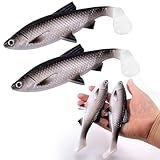
- HIGHLY IMITATIVE DESIGN: These fishing soft plastic lures feature realistic 3D eyes, vibrant colors and ultra-realistic detailed patterns. Soft and flexible, they highly mimic the swimming movement of real injured escaped fish when when retrieved. Tips: Detailed usage has been added in the pictures. Please refer to the recommendations for use with Texas Rig, Weighted Hook and Jig Head.
- PREMIUM MATERIAL: Our swimbaits are made of high-quality PVC material, which can withstand harsh conditions and multiple fierce bites from prey. The surface is covered with natural grease to maximize the reproduction of real fish visually. Durable and not easily deformed.
- LONG CASTING AND PADDLE TAIL: Enough weight to support making long distance casting. The 3D paddle tail design has a strong wiggle flex and provides a lively kicking action when retrieved, making soft plastic bait look like a real wounded fish and attracting fish to attack effectively, regardless of speed.
- LARGE SIZE DESIGN: Our lures are larger than ordinary soft lures and are highly effective against giant largemouth predators in river, lake and ocean, such as Pike, Catfish, Musky, Bass, Tarpon, Halibut, Salmon, Grouper, Mackerel, even Tuna, Wahoo, Mahi Mahi, etc.
- PRODUCT SPECIFICATIONS: 2PCS LARGE SIZE soft plastic swim bait. Five colors for you to choose from. Length: 6.1in/15.5cm; Width: 1.1in/2.9cm; Weight: 1.23oz/35g.
| Habitat | Tarpon use | Life-stage context |
|---|---|---|
| Coastal waters and estuaries | Commonly used habitat | Tarpon are primarily associated with these waters. |
| Freshwater lakes and rivers | Tarpon are recorded in some | Juveniles are commonly found in freshwater. |
| Open marine waters and coral reefs | Tarpon are also recorded here | Adults spawn offshore. |
How can tarpon live in freshwater or low-oxygen water?
Tarpon tolerate a wide range of salinity, which helps explain why they use both fresh and salt water. FWC also describes their ability to gulp air at the surface when a habitat does not provide enough oxygen. FWC’s Tarpon Facts page describes this adaptation.
This does not mean every freshwater body is suitable. The available sources establish that tarpon use some freshwater habitats, but do not establish detailed freshwater nursery locations or a universal pattern of movement among specific inland waters.
Where do tarpon live during their life cycle?
Habitat use changes with life stage. FWC reports that juveniles are commonly found in freshwater and that adults spawn offshore. The agency gives a May-to-September spawning period. FWC’s Tarpon Facts page describes tarpon habitat and life-history facts.
Rank #2
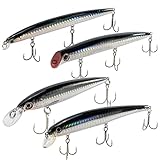
- Holographic silver painting mimic real sea bait fish and create flashing reflection under water, maxmize their attraction in dark sea water
- 2 of them comes with Mustad treble hooks to offer secured hold for huge saltwater species
- Different styles of saltwater baits including poppers and jerkbaits allows you to target different saltwater species in different condition. Covers almost all water column
- Streamlined lure body creates a wobbling swimming action to mimic wounded bait fish. Works like a charm for hungry, fierce sea predators
- Built-in weight chamber increases casting distance. Works for different techniques like surf fishing or offshore boat fishing. Targets species like striper, tarpon, barracuda, snapper and more
FWC reports that female tarpon may lay more than 12 million eggs; the source page does not state a publication year. Tarpon larvae are transparent and ribbon-like, according to FWC.
Do these 3 things before closing this tab:
1Repair Windows errors before they cause bigger problems2Scan for outdated or missing drivers - takes under a minute3Clear out junk files and repair common Windows errorsWhat bait or lure is best for tarpon?
No single bait or lure is best for every situation. FWC lists flies, streamers, floating and diving lures, jigs, live bait, and dead bait as options. Tackle choice depends on bait, location, and fish size. FWC’s tarpon profile provides fishing tips.
FWC recommends a long, heavy monofilament leader to help protect line from the tarpon’s gill plate or tail. Select tackle for the fish and conditions, and check local regulations before fishing.
Rank #3

- Soft fishing lures:You will get 3pcs soft crab baits, each soft lure weights 1.05oz/30g, 0.67oz/19g, which can meet your daily fishing needs.
- Soft and durable: The crab lures are made of high quality plastic material, which is flexible and durable enough to withstand multiple bites and is not easily damaged.
- Unique design: Realistic crab shape with bright colors, sharp claws and super soft body that can hover or move in the water like a real crab. More attractive for predators to bite fishing lures.
- Sharp hooks: Each crab soft bait comes with a built-in hook with two sharp hooks on it. When the crab is thrown into the water, the fish easily fall into the trap and it is difficult to escape from the hook. The lead head design helps the bait sink naturally and keeps its travel in the water stable.
- Widely use: This fishing lures kit is good for freshwater and saltwater, very suitable for the lake,river fishing,ocean boat fishing and so on. Can be widely used for fishing bass, trout, walleye, etc.
How should anglers handle and release tarpon?
For Florida fishing, plan to release tarpon and follow the applicable in-water handling requirements. FWC provides guidance on fish handling and dehooking. Read FWC’s fish-handling guidance before fishing.
Do tarpon have to be released in Florida?
Florida tarpon fishing is hook-and-line only and catch-and-release only, with an exception for retaining a single fish in pursuit of a state or world record using a tarpon tag. Tarpon over 40 inches must remain in the water under the stated rules. Boca Grande Pass has additional gear restrictions. Check the current FWC tarpon regulations before fishing; these are Florida rules, not universal regulations.
| Florida rule | What it means |
|---|---|
| Hook-and-line only | Use only methods allowed under current FWC rules. |
| Catch-and-release only, with a narrow record-tag exception | Retention is limited to the stated record pursuit and tarpon-tag requirements. |
| Fish over 40 inches must remain in the water | Plan for an in-water release. |
| Additional Boca Grande Pass gear restrictions | Check the current rules for permitted tackle and arrangements. |
Can tarpon live in freshwater?
Yes. FWC reports tarpon in some freshwater lakes and rivers and says juveniles are commonly found in freshwater. Tarpon also use coastal and marine habitats, and adults spawn offshore, so freshwater presence does not make them exclusively freshwater fish.
Rank #4

- SAVAGE GEAR MULLET FISHING LURES: Based on 3D scans of a mullet with high-quality, hand-painted details, the Pulse Tail RTF Mullet delivers unparalleled realism to attract large fish in pressured waters.
- LIFELIKE ACTION: This fish bait utilizes a unique active pulse tail design to create motion and vibration that mimics the surge of a fleeing forage fish at any retrieve speed.
- BUILT-IN RATTLE: Featuring a built-in rattle, Pulse Tail Mullet soft plastic fishing lures are perfect for piquing the interest of predatory species.
- HEAVY DUTY HOOK: This fishing lure is equipped with a sturdy jig hook that improves your hook-up ratio – helping you win every fight and land every bite.
- PRODUCT SPECIFICATIONS: Lure Size: 2/3 oz, 4 in. Color: Silver. Swimming Depth: 3’-6’ | 0.9m-1.8m. Available in a variety of ultra-realistic, lifelike colors.
Bottom line
Tarpon use both freshwater and saltwater habitats and tolerate a wide range of salinity. They are primarily associated with coastal waters and estuaries; juveniles are commonly found in freshwater, while adults spawn offshore. Florida anglers should check the current FWC regulations and follow the rules for release and gear.
FAQ
Can tarpon live in freshwater?
Yes. FWC records tarpon in some freshwater lakes and rivers and says juveniles are commonly found in freshwater.
Are tarpon saltwater fish?
Tarpon use saltwater and freshwater habitats. FWC describes them as primarily associated with shallow coastal waters and estuaries, while also recording them in open marine waters, reefs, and some freshwater systems.
Quick wins for a faster PC:
Scan for outdated or missing drivers - takes under a minuteDriver Scan →Clear out junk files and repair common Windows errorsFree Scan →Fix the driver behind crashes, sound loss and screen glitchesFind Drivers →Best Value
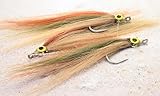
- Choose a preferred color - Black and White and Chartreuse & White our most popular and catch a lot of fish. But try them all, it only takes a minor difference to get that selective fish to eat.
- Fish approved fly pattern – This fly catches Tarpon, Snook, Redfish, Flounder, Trout. One of our most popular baitfish patterns.
- Durable Flies – Flies are tied by expert fly tiers with years of experience. Quality thread and fibers make this a very durable fly. Thick UV is used to glue in the head.
- Premium materials – Quality Mustad Heritage fly hooks and hand selected materials ensures consistency and durability.
- Region Fishing Guarantee – If you are unhappy about the quality or durability contact us and we will make it right.
Do tarpon spawn in freshwater?
FWC says adults spawn offshore. Juveniles are commonly found in freshwater.
What are Florida’s tarpon fishing rules?
Florida rules specify hook-and-line-only fishing and catch-and-release, with a narrow record-tag exception. Tarpon over 40 inches must remain in the water, and additional gear restrictions apply in Boca Grande Pass. Check the current FWC regulations before fishing.
Quick Recap
Product prices and availability are accurate as of the date/time indicated and are subject to change. Any price and availability information displayed on Amazon at the time of purchase will apply.




