Chronic wasting disease (CWD) is spreading among deer and related animals, but no human CWD infections have been reported. Whether people can become infected remains unknown; current evidence supports caution, not claims that CWD has crossed into humans. The CDC identifies eating meat from an infected animal as a potential concern, so hunters should check local guidance, consider testing harvested animals, and avoid eating meat from an animal that tests positive.
CWD is a fatal prion disease of cervids, including deer, elk, moose, and reindeer. It spreads among animals through bodily fluids and contaminated environments. For people who hunt or eat venison, practical precautions include wearing gloves while field dressing, avoiding the brain and spinal tissue, and asking processors to keep each animal’s meat separate.
Key takeaways
- CWD is a fatal prion disease affecting deer, elk, moose, reindeer, and related cervids.
- The CDC reported CWD in at least 36 U.S. states and five Canadian provinces as of August 2025. This is a dated distribution figure, not a measure of human infection risk.
- No human CWD infections have been reported. Whether people can become infected is unknown.
- The CDC recommends checking local guidance, considering testing harvested animals before eating the meat, and not eating meat from an animal that tests positive.
- A 2025 study detected CWD prions in raw and cooked meat from one CWD-positive elk. Detection does not show that a person became infected, and cooking should not be relied on to make positive meat safe.
What is chronic wasting disease?
Chronic wasting disease is a fatal neurological illness caused by prions, abnormal forms of proteins. It affects cervids—the deer family—including deer, elk, moose, reindeer, and related species. CWD is not a virus or bacterium.
Infected animals may appear healthy for a time before signs develop. CWD is fatal in affected animals, and there is no established cure. Appearance alone cannot reliably determine whether an animal has CWD; post-mortem laboratory testing is used to detect it.
Recommended Free Tools
#1 Best Overall

- Adequate Field dressing gloves set: Each package includes 20 pairs field dressing gloves (10 pairs long gutting gloves, 10 pairs short cleaning gloves) and 20pcs yellow rubber bands. Sufficient quantity for you to use and replace during hunting season.
- Convenient neck hanging design: Our field dressing gloves are disposable, very suitable for outdoor places. So You don't have to wash these gloves after using, just throw them away. Which perfectly helps you get rid of the trouble of outdoor cleaning. Unlike other field dressing gloves, our gloves feature an extra long hanging neck design, which can prevent gloves from falling off and causing pollution during use·
- Size for most hunters: The long gutting gloves are 39” in length, 12.2" in width, the length enough to hang around the neck. The short cleaning gloves are 8.7" in length, 4.7" in width. The elastic design is suitable for most people. In addition, the yellow rubber band helps to secure the gloves, allowing them to fit well with your hands and arms, facilitating your work.
- High quality material: These extra Long gutting gloves are made of thick PE material and short cleaning glove are made of premium nitrile material, which are soft and resilient, sturdy and not easy to tear.
- Wide applications: These field dressing gloves kit can not only be applied for outdoors hunting and cleaning the guts of animalssuch as deer, bears, pigs etc, but also can keep your clothes clean when you are cleaning, hairdressing, painting, and cooking indoors. You can use them as breeding gloves, veterinary gloves, artificial insemination gloves, cattle gloves, film gloves, gut mitten and so on.
How does CWD spread among deer?
CWD spreads among cervids through infectious prions in bodily fluids and through contaminated environments. USDA Animal and Plant Health Inspection Service guidance describes exposure through direct contact and through contaminated surroundings.
| Transmission setting | What is known | Why it matters |
|---|---|---|
| Direct contact | Infected bodily fluids can expose other cervids. | Transmission is not limited to a bite or a single type of encounter. |
| Shared surroundings | Contaminated environments can expose animals even after an infected animal has left. | Wildlife agencies may use surveillance and local management measures to address ongoing exposure. |
| Environmental persistence | Prions can persist in the environment. | Persistence does not mean every contaminated place has the same level of risk. |
These animal-to-animal transmission findings do not establish that CWD infects people.
How far has CWD spread?
The CDC reported CWD in at least 36 U.S. states and five Canadian provinces as of August 2025. The CDC also notes that CWD may be present in places where it has not yet been detected.
This is a dated geographic count, not a count of infected animals or an estimate of any person’s chance of infection. Detection can vary with surveillance, species, and location. Hunters should check current rules and maps for the specific area where they plan to hunt.
Can chronic wasting disease spread to humans?
No human CWD infections have been reported. The CDC says, “The disease hasn’t been shown to infect people,” and notes that scientists continue to study whether contact with or eating meat from infected animals could affect people.
Rank #2
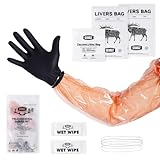
- ALL IN ONE SET: There is a pair of full-shoulder-length PE gloves, a pair of wrist-length nitrile gloves, 4 rubber band, 2 wet wipe, 2 livers bag for freezer storage, and 1 zip-seal litter bag in a set of essential field dressing supplies. With 10 sets in a pack, there's an ample quantity to use and replace throughout the big game hunting season. Each pack contains 3 hunting license holders & 3 zip ties, ensuring that your tag is well protective and your trophy remains completely legal
- PREMIUM QUALITY: The full-shoulder-length PE gloves are crafted from durable, disposable PE material, ensuring they are resistant to deformation, tearing, or breaking. Meanwhile, the wrist-length gloves are made from resilient and comfortable nitrile, offering a snug fit for both hands and arms, enhancing your overall user experience. Moreover, the PE liver bag is specifically designed for freezer storage, providing a convenient solution for separating and preserving the heart and liver
- SIZE FOR MOST HUNTERS: The full-shoulder-length gloves measure 35"x10.6" (88.5x27 CM), while the wrist-length gloves measure 9.3"x4" (23.5x10 CM). Featuring an elastic design, these gloves are suitable for most people and can effectively fit both the hand and arm. The GearOZ deer gutting gloves set is designed to accommodate different hand sizes and is suitable for most hunters. Additionally, the extra included rubber bands provide added convenience by helping to secure the gloves in place
- PROTECTIVE BARRIER: GearOZ disposable field dressing gloves offer easy application and removal, providing a protective barrier against direct contact with blood and potential contaminants. This ensures your clothes remain clean and scent-free during game gutting, making the process safer and more convenient. NOTE: Please remember to dispose of the used gloves properly after each use to maintain hygiene and safety standards
- WIDELY APPLICATIONS: GearOZ field dressing gloves set is versatile and suitable for various applications. They are ideal for cleaning the guts of big game such as deer, elk, bears, hogs, as well as small game like waterfowl, fish, and turkey. Additionally, they can be used for other purposes such as breeding gloves, gut mittens, veterinary gloves, cattle gloves, film gloves, artificial insemination gloves, and more
Animal studies have not resolved the question. Some monkey studies suggest susceptibility after exposure to infected deer or elk meat or brain tissue, while results from macaque feeding studies have conflicted. These findings justify continued research and precaution, but they are not evidence of human infection.
Other prion diseases show that a species barrier can sometimes be crossed, but that does not establish that CWD crosses from cervids to people. There is no established individual risk percentage for contracting CWD from venison.
| Claim | What the evidence supports | What it does not establish |
|---|---|---|
| “CWD is spreading in deer.” | CWD has been detected across a growing range of cervids. | It does not mean CWD is spreading among people. |
| “CWD has infected humans.” | No human CWD infections have been reported. | That does not prove human infection is impossible. |
| “Eating infected venison is a concern.” | The CDC advises against eating meat from an animal that tests positive. | It does not show that eating venison causes human prion disease. |
Can you get CWD from touching a deer?
No human CWD infection from touching a deer has been reported, and whether people can become infected remains unknown. The CDC recommends gloves during field dressing and avoiding internal organs, especially the brain and spinal tissue. Do not shoot, handle, or eat an animal that looks sick or acts strangely, and do not touch or eat an animal found dead.
Quick wins for a faster PC:
Fix the driver behind crashes, sound loss and screen glitchesFind Drivers →Repair Windows errors before they cause bigger problemsFix Now →Is it safe to eat venison from a deer in a CWD area?
A deer harvested in a CWD area is not necessarily infected. The CDC recommends checking local guidance, strongly considering testing harvested deer or elk before eating the meat, and not eating meat from an animal that tests positive. Testing availability and rules differ by location.
| Situation | What to do | Why |
|---|---|---|
| The animal tests positive for CWD | Do not eat its meat. | The CDC advises against eating meat from a positive animal. |
| The animal looks sick, acts strangely, or was found dead | Do not shoot, handle, or eat it; follow local reporting guidance. | Appearance cannot diagnose CWD, but the CDC recommends avoiding these animals. |
| The animal was harvested in an affected area | Check local wildlife and health guidance and consider testing before eating. | Testing availability and requirements vary by state and area. |
| A commercial processor will handle the animal | Consider asking for the animal to be processed individually. | Keeping animals separate can reduce the chance of mixing meat. |
If you have eaten venison from an animal later found to be CWD-positive, that does not mean you have a confirmed infection. The evidence does not establish that the person will become infected. Contact a healthcare professional for personal medical advice and follow local public-health guidance.
Rank #3

- ESSENTIAL GEAR FOR HUNTERS & OUTDOOR WORK - Klarny Outdoors animal handling gloves are a must-have for hunting, fishing, farming, or veterinary work. Stay clean, stay safe, and handle wild game with confidence; whether field dressing deer or processing fish.
- DURABLE & ELASTIC MATERIALS - The shoulder-length gloves are made from 2 mil thick poly, while the black nitrile gloves offer stretch and grip for handling tools or animal hides. Fits most hand sizes comfortably with good dexterity for outdoor tasks.
- DISPOSABLE & EASY TO USE - Designed for single-use convenience in the field. While these gloves can be rinsed and reused in a pinch, we recommend disposing after each use for maximum hygiene and cleanliness when handling game or animals.
- SHOULDER LENGTH PROTECTION - Our shoulder-length gloves are made from durable polyethylene with built-in elastic cuffs to keep blood, dirt, or mess off your skin and clothes. Perfect for field dressing deer, turkey hunting, or animal handling jobs that require extra coverage.
- 20 TOTAL GLOVES FOR FIELD DRESSING - Each pack includes 10 pairs of animal handling gloves with shoulder-length protective sleeves and black nitrile gloves. Designed for hunters, fishermen, or anyone processing wild game or working with animals outdoors.
How should hunters field-dress a deer in a CWD area?
The CDC’s precautions reduce avoidable contact and the chance of mixing meat from different animals. They do not guarantee that exposure can be eliminated. Local rules should guide testing, carcass handling, and disposal.
- Check local guidance before hunting. Review the state wildlife and health department information for the hunting area, including whether testing is recommended or required.
- Avoid sick or dead animals. Do not shoot, handle, or eat animals that look sick or act strangely, or animals found dead.
- Wear gloves while field dressing. The CDC recommends latex or rubber gloves when handling deer or elk meat.
- Avoid internal organs, especially the brain and spinal tissue. Follow local instructions for handling and disposing of tissues and carcass parts.
- Keep field-dressing tools separate from kitchen tools. The CDC advises keeping knives and tools used for field dressing separate from kitchen tools.
- Consider testing before eating the meat. Follow local instructions for testing and do not eat meat from an animal that tests positive.
- Ask a commercial processor to keep the animal separate. Individual processing can reduce the chance of mixing meat from different animals.
Can a meat grinder spread CWD contamination?
A 2025 CDC study found that venison-processing surfaces can become contaminated with CWD prions and that cross-contamination of CWD-negative meat can occur under the study conditions when equipment has been used on positive venison. The study supports careful handling and processing animals separately; it does not show that a person contracted CWD or developed a human prion disease.
Ask a commercial processor whether animals are processed individually. At home, keep field-dressing knives and tools separate from kitchen tools and follow applicable local guidance. Do not treat cleaning equipment as a way to make meat from a CWD-positive animal safe to eat.
Does cooking, freezing, or ordinary cleaning kill CWD prions?
Do not rely on cooking to make meat from a CWD-positive animal safe. A 2025 study detected CWD prions in raw and cooked meat prepared from one CWD-positive elk. This was a finding about prion detection under the study conditions; it did not demonstrate human illness or quantify the risk to people.
A separate 2025 study examined contamination and decontamination on venison-processing surfaces. Its findings apply to the tested surfaces and conditions, not to every household item or cleaning method. Follow relevant wildlife or public-health guidance rather than assuming ordinary cooking or cleaning eliminates prions.
Rank #4

- Field dressing gloves kit: You will receive 15 pairs long gutting gloves, 15 pairs short cleaning gloves and 15pcs yellow rubber bands. Different sizes for you to choose and enough quantity to meet your daily needs
- Convenient: Our field dressing gloves are disposable, so you just throw it away after use. which perfectly helps you get rid of the trouble of outdoor cleaning
- One size fits most people: The long gutting gloves are 35.4” in length, 10.6" in width. The short cleaning gloves are 9.8" in length, 3.9" in width. The elastic design is suitable for most people and can also fit the hand and arm well, which is convenient for your work
- Premium material: These long gutting gloves are made of thick PE material and short cleaning glove are made of premium nitrile material, which are soft and resilient, sturdy and not easy to tear
- Wide applications: These field dressing gloves not only can be applied to clean the guts of animals such as deer, bears, pigs etc, but also can keep your clothes clean when you are cleaning, hairdressing, painting, and cooking indoors. You can use them as breeding gloves, veterinary gloves, artificial insemination gloves, cattle gloves, film gloves, gut mitten and so on
How do you know whether a deer has CWD?
You cannot reliably tell whether a deer has CWD by looking at the animal or meat. The CDC recommends checking local guidance and considering testing harvested animals before eating. Testing availability and rules vary by state and location, so use the official instructions for the area where the animal was harvested.
Crashes, No Sound, or Screen Glitches?
Random freezes, missing sound and display glitches usually trace back to one bad driver. Find and replace yours safely.Free scan · under a minuteWindows Errors? Fix Them Before They Spread
Repair common Windows errors and clear accumulated junk for a smoother, more stable PC - no reinstall needed.Free scan · no reinstallWhat is being done to track and manage CWD?
Wildlife and agricultural agencies use surveillance, testing, management measures, and research to track CWD and address its spread among cervids. Research continues into animal transmission, environmental persistence, and whether people can become infected.
The evidence is clearest that CWD is a serious, fatal cervid disease and spreads among animals. Human susceptibility remains unknown, which is why agencies recommend precautions for hunters and venison handlers.
What should people remember?
CWD is spreading among deer and related cervids, but no human CWD infections have been reported. Whether people can become infected remains unknown. Hunters and venison eaters can take practical precautions: check local rules, consider testing harvested animals, avoid meat from positive or visibly sick animals, wear gloves, avoid brain and spinal tissue, and ask processors to keep animals separate.
FAQ
Can humans get chronic wasting disease from eating deer meat?
No human CWD infections have been reported, and whether people can become infected is unknown. The CDC recommends not eating meat from an animal that tests positive and advises hunters to check local guidance and consider testing harvested animals.
Best Value

- SUPERIOR STRENGTH AND FLEXIBILITY - Crafted from nitrile, these wrist-length gloves offer superior strength and flexibility, providing reliable protection against tearing and stretching during field dressing, butchering, and other messy activities
- PERFECT FIT WRIST BANDS - The wrist bands of these gloves are designed not to stretch out, ensuring a perfect fit and allowing hunters to maintain optimal dexterity and control while performing tasks in the field
- CONVENIENT 10-PACK - Each purchase includes a convenient 10-pack of gloves, equivalent to 5 pairs, providing hunters with an ample supply for multiple uses and ensuring they are always prepared for messy outdoor activities
- SIZE LARGE - These gloves are available in size large, offering a comfortable and accommodating fit for most users, allowing them to focus on their tasks without worrying about discomfort or restriction
- TRUSTED BRAND - Manufactured by Hunters Specialties, a renowned brand in the hunting industry, these gloves are part of a range of high-quality hunting accessories designed to meet the diverse needs of outdoor enthusiasts worldwide
Is it safe to eat venison if deer have CWD in the area?
A deer from an affected area is not necessarily infected. Follow local wildlife and health guidance, consider testing before eating, and do not eat meat from an animal that tests positive.
Does cooking kill chronic wasting disease?
Do not rely on cooking to make meat from a CWD-positive animal safe. A 2025 study detected CWD prions in both raw and cooked meat from one positive elk; that finding does not establish human illness.
Can you get CWD from touching a deer?
No human infection from touching a deer has been reported, but human susceptibility is unknown. The CDC recommends wearing gloves while field dressing and avoiding internal organs, especially the brain and spinal tissue.
How do I know whether my deer has chronic wasting disease?
Appearance cannot reliably show whether a deer has CWD. Check local guidance about testing harvested animals, since testing availability and requirements vary by location.
The Bottom Line
Bottom line: CWD is spreading among deer and related cervids, but no human infections have been reported and human susceptibility remains unknown. Check local rules, consider testing harvested animals before eating, avoid meat from positive animals, wear gloves, avoid brain and spinal tissue, and ask processors to keep animals separate.
Quick Recap
Product prices and availability are accurate as of the date/time indicated and are subject to change. Any price and availability information displayed on Amazon at the time of purchase will apply.




