Do these 3 things before closing this tab:
1Repair Windows errors before they cause bigger problems2Scan for outdated or missing drivers - takes under a minute3Clear out junk files and repair common Windows errorsShort answer: The Beauceron can be an exceptionally loyal, capable companion for an active, experienced owner, but it is rarely an effortless pet. This large French working breed needs purposeful daily activity, ongoing reward-based training, careful socialization, and an owner who can safely manage 70 to 110 pounds of athletic, intelligent dog.
A well-raised Beauceron is not inherently aggressive. The official breed standard describes a self-assured, frank, gentle, and fearless dog. However, the breed is watchful, physically powerful, independent, and sometimes reserved with strangers. Without clear guidance and an appropriate outlet, its energy may show up as jumping, mouthing, destructive behavior, nuisance barking, or self-appointed guarding.
Beauceron at a glance
| Characteristic | What to expect |
|---|---|
| Other names | Berger de Beauce, Beauce Sheep Dog, and Bas Rouge |
| Origin | France |
| Adult height | Males: 25.5–27.5 inches; females: 24–26.5 inches at the shoulder |
| Typical weight | Approximately 70–110 pounds |
| Life expectancy | Approximately 10–12 years |
| Coat | Short, dense, weather-resistant double coat |
| Common colors | Black and rust, gray-black-and-tan, and harlequin |
| Best suited to | Active households that enjoy training and can provide consistent structure |
| Usually a poor fit for | People seeking a low-energy dog or a breed that can be left unstimulated for long periods |
Beaucerons are substantial dogs, not just tall ones. Their size, strength, speed, and confidence affect every part of ownership, from leash handling and visitor management to vehicle space and veterinary costs.
History and purpose
The Beauceron is an old French herding breed developed for demanding farm work. It helped manage and protect livestock and later served in guarding and other working roles. The name Berger de Beauce refers to the Beauce region of France, while the FCI standard identifies the breed as the Beauce Sheep Dog.
Quick wins for a faster PC:
Repair Windows errors before they cause bigger problemsFix Now →Fix the driver behind crashes, sound loss and screen glitchesFind Drivers →#1 Best Overall

- SAVE MONEY: Reduce expensive trips to the groomer. Our dog shedding brush works great as a dog brush for short haired dogs & dog brush for long haired dogs. It is an absolute essential for pet supplies, dog supplies, and a dog grooming kit.
- ALL HAIR & FUR TYPES: Our dog brushes for grooming safely removes loose hair without irritation. SleekEZ dog hair brush works great as a pet hair remover / dog hair remover for pets of all fur types and hair lengths.
- EASY AND FAST CLEANUP: SleekEZ also works great as a carpet rake, pet hair rake, & dog fur remover tool. It removes hair & fur from couches, cars, blankets, beds & more! Its innovative design ensures that hair is easily gathered and removed.
- PAINLESS AND ENJOYABLE: SleekEZ's patented design helps grab at the tips of the hair to extract from the skin without painful tugging. It is the perfect undercoat brush for dogs and deshedding dog brush. Works on all coat types and animal breeds!
- GREAT GIFT: A must have metal dog comb for any pet grooming kit. The perfect pet grooming metal comb for dogs & dog deshedding brush. Worlds best grooming brushes / dog grooming brush. Voted #1 dog brushes for shedding & deshedder brush for dogs.
The nickname Bas Rouge, meaning red stockings, comes from the rust-colored markings commonly seen on the lower legs. The breed’s working history helps explain its modern temperament: a Beauceron was expected to think independently, notice changes in its surroundings, move livestock, and work closely with a person without requiring constant direction.
Appearance, size, and coat
The Beauceron is a large, solid, well-proportioned dog. Its ears naturally hang rather than standing erect, and the breed has distinctive additional rear dewclaws. Those rear double dewclaws are part of the characteristic breed structure and should be kept neatly trimmed and monitored for snagging or discomfort.
The coat is short, dense, and double-layered. It is designed for outdoor work and changing weather, not for elaborate styling. Commonly recognized patterns include:
- Black and rust: a predominantly black coat with rust markings.
- Gray-black-and-tan: a blended gray and black appearance with tan markings.
- Harlequin: a mottled pattern with black, gray, and tan coloring.
The Beauceron is not a low-shedding breed. The short hair can be easy to remove from the dog but plentiful in the home, especially when the undercoat is shed seasonally.
PC Slower Than It Used to Be?
A free scan shows the junk files, broken settings and background clutter dragging Windows down - then fixes them in one click.Free scan · Windows 10 & 11Crashes, No Sound, or Screen Glitches?
Random freezes, missing sound and display glitches usually trace back to one bad driver. Find and replace yours safely.Free scan · under a minuteBeauceron temperament and personality
A typical Beauceron is loyal, devoted, intelligent, watchful, and ready to work. Many form a close bond with their household and are happiest when included in activities rather than isolated in a yard. They can be versatile dogs, but versatility does not mean they require little from their owners.
The official standard calls for a frank, self-assured temperament without meanness, timidity, or worry. In everyday life, that can look like a dog that calmly evaluates unfamiliar people rather than greeting everyone enthusiastically. Individual Beaucerons vary: some are openly social, while others are reserved with strangers. Early socialization and thoughtful management matter because a large, observant dog can make poor decisions consequential.
Adolescence may be particularly demanding. Beaucerons are intelligent and physically capable before they are fully mature, and breed-specific guidance describes them as slow to mature. A young dog may understand a cue one day and test its boundaries the next. That is a reason to continue training, not to abandon it or respond with harsh physical correction.
Are Beaucerons aggressive?
They should not be described as inherently aggressive. The breed standard specifically rejects meanness as a desired temperament. However, Beaucerons can be protective, watchful, physically exuberant, and reserved with unfamiliar people. A dog that has not been socialized or taught how to behave around visitors may become difficult to control even if it is not malicious.
The practical question is whether the owner can guide a powerful dog that notices its environment and learns quickly. Reward-based obedience, impulse-control exercises, calm visitor routines, and carefully planned exposure to people, dogs, surfaces, sounds, handling, livestock, and everyday environments are essential.
Rank #2

- 【Easy Desheding Brush】: THe self cleaning dog brush for long haired dogs and short haired dogs with release bottom helps effortlessly reduce shedding. It's the one cat brush for indoor cats you must have, cat brush for shedding, slicker brush for dogs and horses.
- 【Skin Friendly】: Soft and protective plastic round head bristles won't scratch you lovely pet while deshedding. No irrataion puppy brush for small dogs, dog brush for shedding and grooming.
- 【Sturdy & Durable】: Made of premium stainless steel metal and comfortable rubber, this dog brush cat brush ensure the sturdiness and durability for long term use.
- 【Ergonomic Design】: Easy cleaning press button and high-quality & lightweight TPR handle make your deshedding job done a breeze.
- 【Efficient to Remove Loose Fur】: This Pet grooming brush is efficient to remove loose fur, suitable for dogs, cat with long and short hair, perfect for your lovely pet like horses, golden retriever, rabbit, kitten, bunny, yokie and more.
Beaucerons in family homes
A Beauceron may live successfully with children and other animals, but no breed label guarantees compatibility. The dog’s size and adolescent exuberance create real management requirements. Supervise interactions, prevent chasing or rough physical play, teach the dog to settle, and give both the dog and children a place to disengage.
With other dogs, livestock, cats, or small animals, introduce carefully and assess the individual dog. Do not assume that a Beauceron will automatically understand how to behave around every animal because it has a herding background. Visitors should have a predictable routine, such as the dog going to a mat, crate, or separate area until calm behavior is established.
Exercise and enrichment needs
Beaucerons need substantial physical and mental stimulation. A brief walk may be part of the day, but it is unlikely to meet the needs of a healthy adult on its own. The strongest routine combines different types of work rather than repeating one exhausting activity.
What’s actually slowing this PC down?
Pick the symptom - the matching free tool is one click away.
A suitable adult plan can include:
- Controlled aerobic exercise such as walking, hiking, or another veterinarian-approved activity.
- Leash skills, recall practice, and short obedience sessions.
- Sniffing opportunities and scent games.
- Problem-solving tasks, food searches, or a large dog puzzle toy.
- Retrieve or tug games with clear start, stop, and release rules.
- Appropriate rest and the ability to settle indoors.
Many Beaucerons enjoy hiking, obedience, herding, agility, scent work, carting, mushing, or skijoring. Protection-sport training can be appropriate for some teams only under qualified instruction that prioritizes control, stable temperament, and humane methods. It should never be used to encourage indiscriminate suspicion or aggression.
Enrichment is useful, but a toy supplements rather than replaces exercise, training, social contact, and rest. A dog that is physically exhausted but has never learned to relax may still be difficult to live with.
Exercise for Beauceron puppies
Puppies need activity, but they should not be conditioned like adult athletes. Rapidly growing large and giant breeds can develop developmental orthopedic problems, including osteochondritis dissecans. The American Beauceron Club health statement recommends appropriate nutrition and controlled exercise during growth.
For a puppy, emphasize:
- Short, positive training sessions.
- Free movement on safe, appropriate surfaces.
- Sniffing and simple problem-solving.
- Gradual exposure to new places and sounds.
- Plenty of sleep and recovery time.
Avoid forced running, repetitive jumping, high-impact conditioning, and long exercise sessions chosen to make a puppy tired. Ask your veterinarian how to adjust activity as the puppy grows, particularly if the dog develops limping, reluctance to move, or pain.
Free tools Windows power users keep installed
One-click scans. No signup required.
Training and socialization
Begin training as soon as the puppy comes home and continue through adolescence and adulthood. The goal is not merely obedience in a quiet room; it is reliable behavior around visitors, other dogs, wildlife, livestock, distractions, and handling.
Useful early priorities
- Name response and attention to the handler.
- Recall foundations, practiced safely before off-leash freedom.
- Loose-leash walking and calm door behavior.
- Four paws on the floor for greetings.
- Settle or mat behavior.
- Leave-it, drop-it, and an appropriate toy or chew outlet.
- Crate or other confinement skills.
- Cooperative brushing, nail care, ear checks, and veterinary handling.
- Calm transitions between play, activity, rest, and separation.
Use clear cues, consistent boundaries, and rewards for the behavior you want. Durable dog training treats can make frequent practice easier, but include treat calories in the daily food allowance and consider small pieces rather than automatically adding extra food.
Rank #3

- 【Easy Desheding】: Swihauk self cleaning dog brush for long haired dogs with release bottom helps effortlessly reduce shedding. A must have dog brush for short haired dogs, cat brush for indoor cats, cat brush for shedding, slicker brush for dogs.
- 【Safe Design】: Soft and protective plastic round head bristles creating a comfortable feeling while deshedding without hurting your pet. Ideal puppy brush for small dogs, dog brush for shedding and grooming.
- 【Sturdy & Durable】: Premium stainless steel metal and compact design make our product sturdy and durable for long term use.
- 【Ergonomic Design】: Press bottom for easy cleaning, high-quality & lightweight TPR handle make your grooming effortlessly.
- 【Effective to Remove Loose Fur】: Swihauk pet grooming brush is effective to remove loose fur, suitable for dogs, cat with long and short hair, perfect for your lovely pet like puppies, golden retriever, rabbit, kitten, bunny, yokie and more.
Beaucerons generally respond best to firm, fair, consistent instruction rather than intimidation. The American Kennel Club specifically cautions against harsh physical correction. Physical punishment can damage trust, increase conflict, and leave the owner with a stronger dog that is less willing to communicate or cooperate.
Many owners benefit from Beauceron training classes or a qualified private trainer, especially for puppy socialization, recall, impulse control, visitor routines, and working-dog activities. Look for humane, reward-based methods, relevant experience with large working breeds, clear credentials or references, and an ability to assess the individual dog rather than applying a one-size-fits-all program.
Grooming and routine care
Beauceron grooming is moderate in technique but substantial in shedding. Weekly brushing is a practical baseline, with more frequent or even daily brushing during seasonal coat changes. A dog grooming brush for short hair can help remove loose coat; a medium-bristle brush, rubber grooming mitt, or hound glove may also be suitable. Tool preference varies by dog, so introduce grooming gradually and stop before the dog becomes distressed.
A rubber grooming mitt is a useful alternative for owners whose dogs dislike a conventional brush. It should be treated as a handling aid, not as a promise that shedding will disappear. Brush outdoors or in an easy-to-clean area during heavy shedding if practical.
Routine care should include:
- Checking and trimming nails regularly, including the rear double dewclaws.
- Inspecting ears and asking a veterinarian about discharge, odor, redness, or persistent scratching.
- Brushing teeth frequently with a dog-appropriate product.
- Handling paws, ears, mouth, tail, and body calmly from puppyhood.
- Checking the coat and skin after hikes, outdoor work, or time around brush and tall grass.
A large dog nail trimmer may be appropriate for owners who have learned safe technique, but an inexperienced owner should ask a groomer or veterinary professional for instruction. Overgrown nails and dewclaws can affect comfort and movement, and cutting too far can cause pain and bleeding.
Feeding and weight management
Beaucerons generally can do well on a complete, high-quality commercial diet or a home-prepared diet formulated with veterinary supervision. Choose food appropriate for the dog’s life stage. A working or unusually active adult may need more energy than a companion with a quieter routine, but the correct amount depends on body condition, workload, metabolism, and veterinary guidance.
The Tool Desk
Outbyte PC Repair FREEClear out junk files and repair common Windows errorsFree Scan →Outbyte Driver Updater FREEScan for outdated or missing drivers - takes under a minuteDriver Scan →Measure meals and monitor body condition rather than relying only on the number on a food bag. Working dogs may have higher energy needs, but portions depend on the individual dog; ask your veterinarian about diet, weight, or home-prepared food. Fresh water should always be available.
Because GDV prevention evidence is not definitive, feeding practices should not be treated as guarantees against bloat. PetMD discusses offering multiple meals rather than one, avoiding exercise around meals, and considering a slow feeder for a dog that eats quickly. Ask your veterinarian what is appropriate for your dog.
Growing puppies deserve particular care. Discuss a large-breed puppy diet and feeding amount with your veterinarian. Do not independently add calcium, high-calorie supplements, or extra food to accelerate growth; rapid growth can increase developmental orthopedic risk. Food puzzles can be filled with part of the dog’s normal daily ration instead of adding uncounted calories.
Rank #4

- 🐾【 3 In1 Dog Brushes for Grooming】2 Pet grooming tools selected by dog lovers, which can meet daily all the grooming needs of pets. Let you, as the groomer, personally give your furry friend a shiny and healthy coat. This is a must-have beauty product set for pet lovers! It is also the best gift for your pet!
- 🐾【Double Sided Dog Hair Brush】The stainless steel pin brush removes pet hair effectively while the air-cushioned design massages the skin, promoting circulation without causing harm. The nylon brush side adds shine and health to the coat. Ergonomic handle for comfortable use.
- 🐾【Dog Bath Brush】With a User Friendly Design, the dog shampoo brush comes with a perfect adjustable ring handle, which can adapt to different sizes of hands, easy to hold .It can effectively remove pet hair while bathing or massaging.Let your pet fall in love with bathing and enjoy bath time!
- 🐾【Gentle and Effective】2PCS dog brushes are made of high-quality food-grade silicone and TPR rubber and other materials, which are soft, safe and durable. Make your pet grooming easy, safe and effective.
- 🐾【2-Year Warranty】We are a professional pet products company, committed to bringing the safest, practical and affordable pet products to pets and owners. We promise to solve it for you at any time if there is any quality within 2 years. We provide 7*24 hours after-sales service, if you have any questions, please feel free to contact us.
Beauceron health: what owners should know
The American Beauceron Club describes the breed as fairly healthy overall, but no breed is free from inherited or acquired disease. Health discussions should include hip dysplasia, eye disease, cardiac disease, documented dilated cardiomyopathy, hypothyroidism, gastric dilatation-volvulus, osteochondritis dissecans, and allergies.
Current breed-club and AKC guidance recommends asking about documented screening for:
- Hips: OFA hip certification.
- Eyes: examination by a veterinary ophthalmologist.
- Heart: OFA cardiac evaluation with echocardiogram.
- Additional tests: elbow and thyroid testing are encouraged by the American Beauceron Club.
Ask to see the actual registry results for both parents, not just a verbal statement that they are healthy. Also ask about the health history and longevity of parents, siblings, grandparents, and other close relatives. Screening lowers uncertainty and improves transparency; it cannot guarantee that an individual puppy will never develop disease.
What CHIC certification does—and does not—mean
The Orthopedic Foundation for Animals explains that a CHIC certification is issued when the breed-specific recommended screenings have been completed and publicly recorded. That makes CHIC status useful evidence that a breeder has made required results available for review. It is not a guarantee that every result is normal, nor does it rule out every future disease.
Recognizing bloat and GDV
Because the Beauceron is large and deep-chested, owners should know the warning signs of gastric dilatation-volvulus, commonly called GDV or bloat. This is a rapidly life-threatening emergency.
Recommended Free Tools
Possible signs include:
- Abdominal distension or a suddenly enlarged abdomen.
- Restlessness, anxiety, or inability to get comfortable.
- Excessive drooling.
- Repeated unproductive retching or attempts to vomit.
- Weakness, pale gums, rapid breathing, or collapse.
If GDV is suspected, contact a veterinary emergency clinic and go immediately. Do not wait to see whether the dog improves and do not attempt to monitor suspected GDV at home.
Deep, narrow chest conformation is associated with increased GDV risk, but no routine test reliably identifies which individual dog will develop it. Common online claims about a guaranteed feeding schedule, bowl, supplement, or anti-bloat product should be treated cautiously because prevention evidence is uncertain or conflicting. The most dependable preparation is knowing the signs, identifying the nearest emergency facility in advance, and discussing the dog’s individual risk with a veterinarian.
Financial preparation also deserves attention. Prospective owners may compare pet insurance for large dogs or create a dedicated emergency fund, checking exclusions, waiting periods, deductibles, reimbursement limits, and coverage for hereditary or developmental conditions. Insurance does not prevent or treat GDV; it is only one way to plan for potentially expensive care.
Independent reader supportYour contribution helps us test, update, and keep practical guides available for everyone.Is a Beauceron right for you?
| A Beauceron may suit you if you… | Reconsider if you… |
|---|---|
| Enjoy daily activity, training, and learning with a dog. | Want a low-energy companion whose needs end with a short walk. |
| Can manage a strong 70–110-pound dog safely. | Would struggle with pulling, jumping, mouthing, or an exuberant adolescent. |
| Will socialize and train consistently for years. | Expect a puppy to mature into a reliable dog without ongoing work. |
| Can provide varied physical and mental outlets. | Plan to leave the dog unstimulated or isolated for long periods. |
| Are comfortable managing visitors, other animals, and protective behavior. | Want a dog that automatically welcomes every person and animal. |
| Can budget for large-dog food, training, routine care, and emergency veterinary treatment. | Have no plan for the costs or logistics of a large working breed. |
A home does not need to be judged by square footage alone. The more important questions are whether the household can provide reliable activity, training, supervision, safe confinement, and calm structure. Access to appropriate outdoor locations and local veterinary and emergency resources is also important.
Best Value
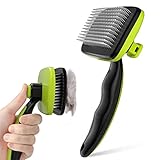
- 1-CLICK SELF-CLEANING GAME-CHANGER: Features an instant hair-ejection button. One swipe after brushing and the loose fur falls off effortlessly. This professional slicker brush is perfect for pet owners seeking a low-effort grooming solution with minimal cleanup—no more tedious manual hair pulling from your traditional pet brushes!
- IDEAL FOR DOUBLE COATS & WHITE FUR: Specially engineered as an essential cat brush and heavy-shedding dog tool. It works wonders for short to medium-haired cats and double-coated dogs (Labs, Goldens, Huskies). Extremely effective on white-coated pets, easily capturing undercoat, dander, and dirt during peak shedding season.
- GENTLE ON SKIN, LOVED BY RESISTANT PETS: The ultimate cat brush for indoor cats and sensitive pups who dread grooming. Designed with fine 135° stainless steel bristles capped with protective massage particles, it stimulates skin circulation without pulling. Even pets that usually resist will love the soothing massage experience!
- ERGONOMIC & COMFORTABLE FOR FREQUENT USE: Weighing only 89g (3.1 oz), this lightweight dog brush with a non-slip TPR handle eliminates wrist fatigue. As a dedicated dog brush for shedding, it's perfect for frequent sessions (2-3 times per week) to eliminate loose undercoat before it ends up on your furniture and floors.
- PREMIUM VALUE & DURABLE DESIGN: Professional-grade grooming results without the salon expense! Built with high-quality TPR, this heavy-duty slicker brush offers exceptional value and long-lasting performance. It is perfectly optimized for standard small to medium pets, removing trapped fur with ease. (Note: Not ideal for tightly curly coats like Poodles).
Buying or adopting responsibly
Evaluate lifestyle fit before focusing on coat pattern, size, or appearance. The American Kennel Club identifies the American Beauceron Club as the national breed club and provides breed-club and rescue resources. A rescue or breeder should help you understand the individual dog’s temperament, exercise needs, medical history, and behavior around people and animals.
Questions for a breeder
- Can you provide publicly verifiable hip, eye, and cardiac results for both parents?
- Have elbows and thyroid function been evaluated, as recommended by the parent club?
- What health conditions have appeared in parents, siblings, grandparents, and previous offspring?
- How are puppies socialized to handling, household sounds, surfaces, people, and appropriate novelty?
- What food and growth plan do you recommend for the puppy?
- How do you evaluate temperament and match puppies with homes?
- What support is available during adolescence?
- Will you take the dog back or help rehome it if the owner can no longer keep it?
Actual registry results are more useful than a claim that the parents are health-tested. Even excellent screening is not a promise that a puppy will remain disease-free. A responsible breeder should be willing to discuss uncertainty, family history, temperament, and a return-to-breeder provision rather than presenting a health guarantee as the only evidence of care.
Questions for an adoption organization
Ask about the dog’s behavior around adults, children, dogs, cats, livestock, visitors, handling, confinement, and being left alone. Find out what exercise and training the dog currently receives, whether it has shown guarding or resource concerns, and what support is available after adoption. A foster-based assessment can provide valuable information, but behavior can still change as the dog settles into a new home.
A practical first-year plan
- Before arrival: Arrange a veterinary appointment, identify an emergency clinic, prepare secure confinement and transport, and choose a reward-based training plan.
- First weeks: Establish sleep, feeding, toilet, handling, and calm-settle routines. Keep new experiences gradual and positive.
- During puppyhood: Prioritize safe socialization, name response, recall foundations, loose-leash walking, bite inhibition, grooming cooperation, and appropriate chewing.
- During adolescence: Expect temporary regression, increase consistency rather than punishment, and prevent rehearsal of jumping, chasing, door rushing, or visitor guarding.
- Throughout adulthood: Maintain varied exercise, mental work, routine grooming, body-condition monitoring, and periodic veterinary care.
The objective is not to create a dog that is constantly busy. It is to develop a dog that can work, learn, and then settle safely at home.
Frequently Asked Questions
Is the Beauceron a good first dog?
It is usually better suited to an active, experienced owner than to someone seeking an easy first dog. A committed first-time owner may succeed with qualified guidance, but the breed’s size, strength, independence, slow maturity, and need for socialization make professional support especially valuable.
How much exercise does a Beauceron need?
The breed needs substantial daily physical and mental stimulation, not just a brief walk. Combine controlled aerobic activity with training, sniffing, problem-solving, and rest. Puppies need age-appropriate activity and should not be forced to run, jump repetitively, or undergo high-impact conditioning.
Do Beaucerons shed a lot?
They have a short, dense double coat and can shed heavily during seasonal coat changes. Weekly brushing is a useful baseline, with more frequent or daily brushing during heavier shedding.
Can a Beauceron live with children or other pets?
Some can, but compatibility depends on the individual dog, early socialization, training, and household management. Because Beaucerons are large and can be exuberant, interactions with children should be supervised, and introductions to dogs, cats, livestock, or small animals should be gradual and carefully assessed.
The Tool Desk
Outbyte PC Repair FREERepair Windows errors before they cause bigger problemsFix Now →Outbyte Driver Updater FREEScan for outdated or missing drivers - takes under a minuteDriver Scan →What health tests should a Beauceron breeder provide?
Ask for publicly verifiable hip certification, a veterinary ophthalmologist eye examination, and an OFA cardiac evaluation with echocardiogram for both parents. The American Beauceron Club also encourages elbow and thyroid testing. CHIC status indicates that recommended screenings were completed and recorded; it is not a guarantee of normal results or future health.
What should I do if I think my Beauceron has bloat?
Treat abdominal distension, restlessness, repeated unproductive retching, excessive drooling, weakness, pale gums, rapid breathing, or collapse as an emergency. Contact a veterinary emergency clinic and go immediately. Do not wait to monitor suspected GDV at home.
The Bottom Line
The Beauceron is best understood as a serious working partner in a companion-dog setting. Its loyalty, intelligence, athleticism, and versatility are rewarding when paired with daily structure and humane training. Its size, shedding, adolescent exuberance, health-planning needs, and potential for protective behavior make it a poor match for an unprepared or frequently absent household. Choose the breed for the work and relationship it requires—not simply for its striking appearance.
Quick Recap
Product prices and availability are accurate as of the date/time indicated and are subject to change. Any price and availability information displayed on Amazon at the time of purchase will apply.
Recommended Free Tools




