The Tool Desk
Outbyte PC Repair FREEClear out junk files and repair common Windows errorsFree Scan →Outbyte Driver Updater FREEFix the driver behind crashes, sound loss and screen glitchesFind Drivers →Most water-breathing fish have a closed, single-circuit circulatory system: blood travels from the heart to the gills, then to the body, and back to the heart. The atrium receives returning blood, and the ventricle pumps it toward the gills, where gas exchange re-oxygenates it. Blood then continues to the body without first returning to the heart for a second circuit.
The fish circulatory system at a glance
The circulatory system transports materials throughout a fish’s body. It carries oxygen and nutrients to cells, moves carbon dioxide and wastes away, and transports hormones and immune factors.
In the typical circulation pattern of a water-breathing fish, blood passes through the heart once during each complete trip around the body. This is called single circulation. Blood remains inside vessels as it travels, so the system is also described as closed.
Body tissues → returning veins → heart → gills → body tissues
#1 Best Overall

- QUIET AQUARIUM FILTER: The Tetra Whisper IQ Power Filter with Stay Clean technology contains a sound shield for quiet filtration less than 40 dB.
- SELF PRIMING: Submerged motor starts up with no priming required.
- CAPACITY: The Tetra Whisper IQ 20 Power Filter works in filters up to 20 gallons (130 GPH).
- STAY CLEAN TECHNOLOGY: By maintaining healthy pH levels, creates easier maintenance for healthier fish.
- CARTRIDGE REFILLS: Change cartridges monthly; uses large-sized Tetra Whisper Bio-Bag Filter Cartridges (refills sold separately).
This is the common pattern, not a claim that every fish has identical anatomy. Air-breathing fish can have more complicated circulatory systems.
For a general introduction to circulatory systems, see OpenStax’s overview of the circulatory system.
Why fish have single circulation
In most water-breathing fish, the heart, gill vessels, and body vessels form one connected loop. The heart receives blood returning from the body and pumps it toward the gills. After gas exchange at the gills, blood flows to the body tissues and eventually returns to the heart.
- Blood returns from the body through veins.
- The atrium receives the returning blood and passes it to the ventricle.
- The ventricle pumps blood toward the gills.
- Blood exchanges gases at the gills and is re-oxygenated.
- Blood flows to body tissues, then returns to the heart.
Unlike mammals, which have separate pulmonary and systemic routes, a typical water-breathing fish completes this pathway as one circuit.
Free tools Windows power users keep installed
One-click scans. No signup required.
How many chambers does a fish heart have?
A fish heart is commonly described as two-chambered because the introductory account counts its two primary chambers:
Rank #2

- QUIET AQUARIUM FILTER: The Tetra Whisper IQ Power Filter with Stay Clean technology contains a sound shield for quiet filtration less than 40 dB.
- SELF PRIMING: Submerged motor starts up with no priming required.
- CAPACITY: The Tetra Whisper IQ 45 Power Filter works in tanks up to 45 gallons (215 GPH).
- STAY CLEAN TECHNOLOGY: By maintaining healthy pH levels, creates easier maintenance for healthier fish.
- CARTRIDGE REFILLS: Change cartridges monthly; uses large-sized Tetra Whisper Bio-Bag Filter Cartridges (refills sold separately).
- Atrium: receives blood returning from the body.
- Ventricle: pumps blood toward the gills.
A more anatomically detailed description includes four regions arranged in series: sinus venosus → atrium → ventricle → bulbous arteriosus. The sinus venosus lies before the atrium, and the bulbous arteriosus follows the ventricle. These additional regions do not mean that fish have four chambers equivalent to the four chambers of a mammalian heart.
For a specialist account of fish heart anatomy, see the chapter abstract “Control of the heart in fish”.
Fish blood flow, step by step
1. Blood returns from the body
After circulating through body tissues, blood returns toward the heart through veins.
Do these 3 things before closing this tab:
1Scan for outdated or missing drivers - takes under a minute2Clear out junk files and repair common Windows errors3Fix the driver behind crashes, sound loss and screen glitches2. The heart receives and pumps the blood
The atrium receives returning blood and passes it to the ventricle. The ventricle pumps it toward the gills.
3. Blood exchanges gases at the gills
At the gills, blood takes up oxygen from the water and releases carbon dioxide. It is re-oxygenated before continuing to the body.
Rank #3

- WITH ROTATING BIO-WHEEL: Patented Bio-Wheel technology provides excellent wet/dry biological filtration.
- MULTI-STAGE FILTRATION: Delivers mechanical, chemical and biological aquarium filtration to maintain a clean aquatic environment.
- MARINELAND FILTRATION PRODUCTS: Count on Marineland brand for the most reliable, technically advanced aquariums and accessories on the market.
- COMPATIBILITY: Use with Marineland Rite-Size Filter Cartridges (see individual filter for sizing recommendations).
- FIVE SIZES: Available in 75 GPH, 100 GPH, 150 GPH, 200 GPH and 350 GPH sizes.
4. Blood flows to the body and returns
Blood leaving the gills travels through vessels to body tissues, where it supplies materials and collects substances to be carried away. It then returns to the heart, completing the loop.
How fish gills work with circulation
Gills are the respiratory gas-exchange region in most water-breathing fish. Blood passes through the gills, where oxygen enters the blood from the water and carbon dioxide leaves the blood. The re-oxygenated blood then continues into the body circulation.
Outdated Drivers Are Slowing You Down
One free scan finds every outdated or missing driver and matches the right update for your exact hardware.Free scan · exact hardware matchWindows Errors? Fix Them Before They Spread
Repair common Windows errors and clear accumulated junk for a smoother, more stable PC - no reinstall needed.Free scan · no reinstallWhy does a fish’s heart receive oxygen-poor blood?
In the typical water-breathing fish pathway, the heart receives blood returning from the body, before that blood passes through the gills. The ventricle sends it to the gills for gas exchange. The heart therefore pumps returning blood toward the gills; it does not receive freshly oxygenated blood from a separate lung circuit before sending it around the body.
Fish circulation compared with human circulation
| Feature | Typical water-breathing fish | Human |
|---|---|---|
| Circulation pattern | One circuit: heart → gills → body → heart | Separate pulmonary and systemic routes |
| Gas-exchange organ | Gills | Lungs |
| Introductory heart-chamber description | One atrium and one ventricle | Two atria and two ventricles |
The key difference is the circuit architecture. A typical water-breathing fish sends blood from the heart to the gills and then to the body. Humans have separate routes to the lungs and the body.
What does fish blood transport?
Oxygen is only one of the materials transported by fish blood. Circulation also carries:
Rank #4
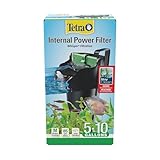
- INTERNAL POWER FILTER: Tetra Whisper Internal Power Filter for 5- to 10-gallon aquariums uses medium Whisper BioBag filter cartridges that are easy to change.
- QUIET 85 GPH MOTOR: The internal pump efficiently filters up to 85 gallons per hour.
- POWERFUL FILTRATION: Water flows through the cartridge floss, trapping debris and fish waste, while Ultra-activated carbon helps remove odor and discoloration.
- SPACE-SAVING DESIGN: Your aquarium can be 1” from the wall with the internal filter designed to clip directly on your aquarium wall and be hidden by décor.
- EASILY ADJUSTABLE: Adjustable clip allows for a variety of setups to easily adjust to high or low water levels.
- Carbon dioxide
- Nutrients
- Metabolic wastes
- Hormones
- Immune factors
The American Fisheries Society’s “Cardiovascular System” chapter discusses these functions and the common circulation pattern in water-breathing fish.
Quick wins for a faster PC:
Scan for outdated or missing drivers - takes under a minuteDriver Scan →Repair Windows errors before they cause bigger problemsFix Now →Do all fish have the same circulatory system?
No. Most water-breathing fish have a closed, single-circuit system, but air-breathing fish can have more complicated circulatory systems. The body-to-heart-to-gills-to-body summary describes the common water-breathing pattern, not every fish species or respiratory adaptation.
Independent reader supportYour contribution helps us test, update, and keep practical guides available for everyone.A simple way to remember the pathway
Use this sequence:
Heart → gills → body → heart
The atrium receives blood returning from the body, and the ventricle pumps it toward the gills. After gas exchange, blood flows to the body and returns to the heart.
Further study
The American Fisheries Society’s Methods for Fish Biology, 2nd edition, includes a specialist chapter on the cardiovascular system. Check current availability before seeking out the book.
FAQ
Is a fish’s circulatory system open or closed?
Most water-breathing fish have a closed system: blood travels through vessels in a loop between the heart, gills, and body.
Recommended Free Tools
Best Value

- UNASSEMBLED REPLACEMENT CARBON FILTER Keeps aquarium water crystal clear – removes odors and discoloration
- CATCHES DEBRIS Dense dual-sided mesh filters debris and fish waste
- FITS TETRA WHISPER WATER FILTERS Color coded to make it simple to remember which replacement cartridge size to purchase
- CONVENIENT Easy to assemble and easy to replace
- USAGE Change monthly or sooner if needed
Does a fish have a two-chambered heart?
The introductory description counts one atrium and one ventricle as the two primary chambers. A more detailed account also names the sinus venosus and bulbous arteriosus as regions arranged in series.
How does blood flow through a fish?
Blood returns from the body to the heart, is pumped to the gills for gas exchange, then flows to body tissues and returns to the heart.
How do a fish’s heart and gills work together?
The heart pumps returning blood toward the gills. At the gills, blood exchanges gases with the water; it then flows to the body before returning to the heart.
Do all fish have the same circulation pattern?
No. The single-circuit description applies to most water-breathing fish. Air-breathing fish can have more complicated circulatory systems.
Quick Recap
Product prices and availability are accurate as of the date/time indicated and are subject to change. Any price and availability information displayed on Amazon at the time of purchase will apply.




