Quick wins for a faster PC:
Scan for outdated or missing drivers - takes under a minuteDriver Scan →Clear out junk files and repair common Windows errorsFree Scan →Complete cat care means providing life-stage-appropriate food, clean water and litter, preventive veterinary care, enrichment, grooming, safe transport, and daily attention to changes in behavior or elimination. For a newly adopted cat, arrange a veterinary assessment, review its health history and prevention needs, and keep it apart from resident cats until assessed if its health history is unknown.
Build a dependable routine around your individual cat: provide an appropriate amount of nutritionally complete food, keep litter facilities accessible and clean, support scratching and play, and notice changes from the cat’s usual pattern. A veterinarian can tailor advice about vaccines, parasites, diet, and health concerns to the cat’s age, history, lifestyle, and location.
Call a veterinarian now for these warning signs
Seek immediate veterinary help for inability to urinate or repeated straining with little or no urine, severe breathing difficulty, collapse, major trauma, suspected poisoning, uncontrolled bleeding, or sudden severe illness. A blocked urethra is a true emergency and a cat can deteriorate rapidly. Do not give human medication or delay professional care while trying home treatment.
What cats need at every life stage
Feline-veterinary guidance divides a cat’s needs into changing life stages rather than treating every cat as though it needs the same care forever. Exact age boundaries vary, and a veterinarian should interpret them alongside the cat’s health, body condition, lifestyle, and history.
Free tools Windows power users keep installed
One-click scans. No signup required.
#1 Best Overall

- Pet Carrier: 17.5” L x 11” W x 11” H, Recommended max load of 16 lbs cats small dogs. Please do not choose your carrier based on weight--please reference your pet's length and height in selecting a pet carrier size.
- Fits for under-seat dimensions of most airlines. Every airline has a specific set of rules and regulations, please contact with airline before flying with your cats small dogs.
- Mesh windows for ventilation, top and side entry with locking zippers for safety. Carrying handles, adjustable shoulder strap which can also be used as seatbelt, and back strap can fasten the pet carrier to your luggage.
- Pet carrier comes with a removable base insert, which creates a solid surface for your pet to stand on, along with a removable & hand washable cozy fleece pet bed, which offers a cozy sleeping space for your traveling cats small dogs.
- "Toys for pets, of textile materials". Mostly used as a Toy of Fabric Pet Home for pets playing and relaxing.
| Life stage | Main care priorities |
|---|---|
| Kitten | Establish veterinary care, discuss vaccines and parasite prevention, provide life-stage-appropriate food, build positive handling and carrier habits, and teach safe litter, scratching, and play routines. |
| Young adult | Maintain preventive examinations, appropriate weight, sterilization planning if needed, enrichment, dental observation, identification, and a safe indoor or outdoor lifestyle plan. |
| Mature adult | Watch body weight, appetite, oral health, litter-box habits, grooming, mobility, and behavior. Discuss small changes from the established baseline rather than dismissing them as normal aging. |
| Senior | Ask whether examinations should be more frequent. Make food, water, resting areas, stairs, scratching surfaces, and litter boxes easy to reach, and report changes in mobility, elimination, appetite, grooming, or behavior. |
| End-of-life care | Plan comfort-focused care with a veterinarian before a crisis when possible. Discuss pain and symptom control, eating and drinking, toileting, mobility, hospice options where available, and how quality-of-life decisions will be made. |
At every stage, your most useful tool is a reliable baseline. Know how your cat normally eats, drinks, plays, rests, grooms, uses the litter box, moves, and interacts. A change does not identify a particular disease, but it gives your veterinarian important information.
The first-week cat-care checklist
A calm, prepared first week makes future care easier. Whether the cat is adopted, rehomed, or returning from a shelter or breeder, start with manageable routines rather than overwhelming access to the entire home.
- Arrange a veterinary assessment. Cornell recommends an examination soon after a new cat comes home. Gather adoption, vaccination, medication, and medical records, and ask about health history, nutrition, grooming, vaccines, and parasite control. If the cat’s health history is unknown, keep it apart from resident cats until assessed. Ask the veterinarian whether any testing, such as FeLV or FIV testing, is indicated; this is not a universal protocol.
- Choose a safe starting area. Set up food, water, a litter box, a resting place, hiding options, and a scratching surface in a quiet, secure space. Keep food and water dishes separate from the litter box. Expand access gradually as the cat settles.
- Prepare a transport plan. Keep the carrier accessible before the first appointment instead of bringing it out only when the cat must leave.
- Record a baseline. Note normal appetite, food and water routine, litter-box output, sleep, activity, coat condition, and behavior. A short video of normal walking or breathing can help you recognize a later change, but it is not a diagnostic test.
- Introduce handling slowly. Pair brief touches of paws, ears, mouth, and coat with food or another positive experience. Stop before the cat becomes distressed.
- Set household rules. Everyone should know not to use hands or feet as toys, how to approach the cat, where medications and hazardous substances are stored, and who handles litter cleaning.
- Build predictable routines. Consistent feeding, cleaning, play, rest, and bedtime patterns can make the home easier for a new cat to understand.
A practical cat care starter kit usually includes a secure carrier, clean food and water dishes, complete food suited to the cat’s life stage, litter-box supplies, a stable scratching surface, enrichment toys, bedding or a resting area, a brush suited to the coat, and nail-care tools. Buy for the individual cat’s size, preferences, and health needs rather than assuming a single kit is appropriate for every household.
Feeding: complete-and-balanced food, portions, and water
Choose complete food for the right life stage
Feed an appropriate amount of nutritionally complete food formulated for the cat’s life stage. In the United States, look for a nutritional adequacy statement indicating that the food is complete and balanced for the relevant life stage. The FDA explains that such a food is intended to serve as a cat’s sole diet when it meets an AAFCO nutrient profile or has passed an AAFCO feeding trial. Treats and supplements are generally not designed to be a cat’s sole diet. Ask a veterinarian before adding supplements, especially if the cat takes medication or has a chronic condition.
Recommended Free Tools
Choose portions deliberately
Use feeding directions as a starting point, then adjust with veterinary guidance and the cat’s body condition, activity, age, and health. Work with a veterinarian to determine an appropriate weight and diet adjustments. Measure portions rather than free-pouring food without regard to weight or body condition. Obesity is a common nutrition-related problem; if weight reduction is needed, ask for a specific plan instead of abruptly restricting food.
Understand therapeutic diets
A urinary, kidney, diabetic, weight-loss, allergy, or other disease-directed formula is not a general-purpose recommendation. Use a therapeutic diet under veterinary direction, with the veterinarian deciding whether the diet, amount, and duration fit the cat.
Offer clean water in locations the cat can comfortably access. Some cats prefer a particular bowl material, shape, or water location. If water intake changes noticeably, or drinking changes occur with appetite, urination, vomiting, lethargy, or weight changes, contact a veterinarian rather than trying to interpret the change from a consumer product or water fountain alone.
There is no universally correct choice between wet, dry, or mixed feeding for every healthy cat. The important questions are whether the main diet is nutritionally adequate for the life stage, whether portions support a healthy body condition, whether the cat will reliably eat it, and whether a medical condition requires a veterinary diet.
Rank #2
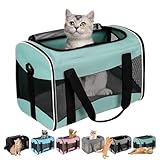
- [PRODUCT DIMENSIONS] Pet travel carrier size : 17x11x11 inches, recommended up to 15 lb pets, it is suitable for large, medium cats and small dogs. Please don't choose your airline cat carrying case based on weight, please refer to your pet's length and height when choosing a pet carrier size.
- [AIRLINE APPROVED] This cat carrier is designed with airline approved, it can fit comfortably under most flight seats, we can take our pets wherever we want. Dog travel carrier offers two attachment loop handles that can be used as a dual harness or as a luggage strap for balanced carry and secure transport.
- [EXCELLENT MATERIAL] Collapsible cat carrier is made of polyester fabric, supported by a steel ring, washable, wear-resistant and durable. The three sides and the top of this pet carrier are nylon mesh, scratch-resistant and not easy to damage, it can not only check your pet in real time, but also ensure enough air circulation.
- [SAFE AND COMFORTABLE] Dog travel bag has metal zippers on the top and side entrances, durable and not easy to deform, it allows your pets to enter and exit easily. The cat carrying case is equipped with an anti-escape safety buckle, which can effectively prevent pets from accidentally falling. It is suitable for car rides and vet rides.
- [PORTABLE AND FOLDABLE] Pet travel carrier comes with a detachable and hand washable wool pet bed, it can provide a comfortable sleeping space for your traveling pet. The cat travel case comes with an adjustable shoulder strap and handle for easy portability. When not in use, you can fold it up for storage.
Veterinary visits, vaccines, parasites, and identification
Routine veterinary care should generally occur at least annually. Cats with chronic disease, age-related concerns, medication needs, or other risks may need examinations more often. A cat that lives indoors still needs preventive care; indoor living may change exposure risk, but it does not eliminate health, dental, parasite, behavior, or emergency needs.
Use this veterinary discussion checklist
- Which vaccines are appropriate for this cat’s age, health, history, exposure, travel plans, and location?
- What is the recommended timing for rabies and core vaccines in this jurisdiction and for this individual cat?
- Which parasites are relevant given the cat’s lifestyle, other animals, travel, and geography, including if the cat lives indoors?
- Should the cat be microchipped or otherwise identified, and how should registration information be kept current?
- Is sterilization recommended, and what timing is appropriate?
- What food, portion, feeding frequency, and body-condition target are appropriate?
- What does the veterinarian see on examination of the mouth and teeth, and what home oral-care routine is realistic?
- Are litter-box habits, urine volume, stool, or accidents changing?
- Are there signs of pain, reduced mobility, excessive grooming, poor grooming, or difficulty reaching food, water, resting places, or the litter box?
- Have there been changes in sleep, vocalization, sociability, aggression, hiding, play, or other behavior?
There is no single vaccine or parasite schedule that fits every cat. Age, previous records, health status, outdoor access, contact with other animals, travel, and local disease risk all matter. Discuss prevention with a veterinarian rather than applying a schedule from a general guide.
If you do not yet have a regular clinic, ask a local shelter, rescue, experienced pet owner, or veterinary association for help to find a veterinarian who can provide routine care. Keep the clinic’s number and the location of the nearest emergency facility where every household member can find them.
Litter-box setup and daily monitoring
The litter box is both a toileting facility and a daily health-observation tool. A cat that suddenly avoids it, uses it more often, produces less urine, has accidents, strains, vocalizes, or changes stool habits may have a medical, behavioral, or environmental problem. Do not assume an accident is defiance.
Windows Errors? Fix Them Before They Spread
Repair common Windows errors and clear accumulated junk for a smoother, more stable PC - no reinstall needed.Free scan · no reinstallOutdated Drivers Are Slowing You Down
One free scan finds every outdated or missing driver and matches the right update for your exact hardware.Free scan · exact hardware matchBuild a usable litter area
- Use an appropriately sized box. The cat should be able to enter, turn, squat, and leave without feeling confined. Simple boxes without hoods may suit many cats. Kittens and older cats with arthritis may need low sides.
- Choose an accessible location. The area should be calm and easy to reach, including for cats with arthritis or reduced mobility. Keep it separate from food and water dishes.
- Respect litter preference. Many cats prefer unscented, fine-textured litter, but preferences vary. If a change is necessary, make it gradually where possible and provide an acceptable alternative.
- Provide enough facilities. Cornell’s general recommendation is as many litter boxes as cats, plus one. Household layout and individual cat preferences also matter.
- Keep it clean. Remove waste daily and clean the box regularly. CDC recommends washing hands after contact with cat feces.
- Provide reliable access. In a multi-cat home, make sure one cat cannot guard the only route or box.
- Observe rather than merely scoop. Notice frequency, urine volume, stool appearance, straining, blood, vocalization, and whether the cat enters and leaves without eliminating.
Know the urinary emergency signs
Repeated attempts to urinate, straining with little or no urine, blood in the urine, vocalizing in the box, or sudden distress require immediate veterinary contact. Complete urethral obstruction is especially dangerous and can worsen quickly.
A litter box supplies setup can make daily cleaning simpler, but no litter, scoop, additive, or box can diagnose or treat urinary disease. If elimination changes, preserve the normal routine as much as possible and contact the veterinarian.
Scratching, play, climbing, and enrichment
Scratching is normal feline behavior. It helps cats maintain their claws, stretch, mark familiar areas, and express arousal. The goal is not to stop scratching; it is to provide appropriate surfaces and make them more rewarding than furniture.
Set up scratching options
ASPCA recommends a sturdy scratching post at least three feet high, stable enough not to wobble, and covered with a rough material such as sisal, burlap, or tree bark. Some cats prefer a horizontal scratching pad. A useful setup may include more than one orientation and material, especially near a favorite resting place or an area where the cat already scratches.
Rank #3

- High Quality Design:Sturdy steel cage structure and wooden support board maintain good spatial stability and shape. Breathable mesh windows on four sides,which can ensure good air circulation and views,make pets have a comfortable and safe travel.It can also be easy for you to check on your pets.There is a front pocket to store pet toys,treats,etc.
- Dimension and Weight:Made of durable tear-resistant fabric.Four easy entrances for pets. Dimensions: 17 inch x 11 inch x 11 inch (L*W*H), suitable for pets up to 16 lbs.Please don't choose your carrier based on weight only,consider your pet's length and height when choosing a carrier.
- Airline Approved & Safty:Can be placed under the seats of most airplanes(Four non-slip feet on the bottom to prevent movement), and comfortably on the seat next to you in a car or bus.It has a adjustable shoulder strap.Can also be fastened to the car seat with a safety belt or shoulder strap to keep your pet safe.
- Easy to Clean :You can clean the stains and dirt on the surface with a soft cloth.Soft mat inside the pet carrier is removable and washable.You can take it out and wash it easily to solve all stains.
- Easy to Collapsible & Lightweight:When not in use,fold it into a flat,space saving and easy to store.Only 2.2lbs,it's easier to carry around.It can also used as a toy of pet house,allowing pets to play in a safe space to relax and rest.
Reward the cat for using the approved surface. Do not punish normal scratching or force the paws onto a post. If furniture scratching begins suddenly or increases sharply, consider stress, environmental change, insufficient options, and possible discomfort, and discuss persistent behavior changes with a veterinarian.
Support play and social interaction
Enrichment should offer opportunities to climb, hide, rest, stalk, chase, catch, and play. Provide resources such as litter boxes, food, water, sleeping areas, toys, scratching posts, resting places, and play opportunities. Enrichment is not a substitute for veterinary care when health or behavior changes arise.
- Schedule predictable interactive play sessions that match the cat’s age and energy.
- Offer vertical space, secure perches, hiding places, and undisturbed resting areas.
- Rotate toys so familiar items remain interesting.
- Use food puzzles only when the cat can use them without frustration and portions remain controlled.
- Supervise toys that could be swallowed or become tangled, and remove damaged items.
- Never use hands or feet as toys. Redirect biting or pouncing to an appropriate toy and reinforce calm behavior.
Positive reinforcement is more useful than punishment. Reward desired behavior promptly, keep training sessions short, and give the cat a way to retreat. A sudden behavior change, aggression, hiding, or loss of interest in play can have medical as well as environmental causes.
Grooming, claws, and oral health
Brush according to the coat and the cat
Grooming needs vary with coat length, density, shedding, age, health, and how effectively the cat grooms itself. A short-haired cat may need less brushing than a long-haired cat, while a senior or painful cat may need help more often. Use a brush or comb that suits the coat, begin with brief sessions, and pair handling with calm rewards.
Look for mats, skin changes, parasites, excessive licking, bald areas, discharge, or a sudden decline in grooming. Do not cut tight mats close to the skin with household scissors; ask a veterinary professional or qualified groomer for help.
Trim claws carefully
ASPCA gives two to three weeks as a general nail-trimming interval, but individual nails and cats vary. Trim only what you can clearly identify as the tip, stop if the cat is distressed, and ask a veterinary professional to demonstrate safe clipping if you are unsure. Scratching surfaces remain important even when claws are trimmed.
Make dental care a veterinary conversation
Include the mouth and teeth in routine examinations. Ask about eating-related pain, bad breath, visible tartar, drooling, dropping food, chewing changes, and a realistic home oral-care routine. A consumer dental product may support a hygiene routine, but it should not be presented as preventing or treating dental disease by itself. Do not delay an examination because a product appears to improve breath or chewing.
Choosing and acclimating a cat carrier
A carrier is needed for routine examinations, illness, evacuation, and other situations when a cat must be moved safely. The right cat carrier should have secure closures, good ventilation, a size that allows the cat to stand, turn, and rest as appropriate, washable surfaces, and an opening that makes calm loading easier. Choose the design around the individual cat and the transport situation; no carrier eliminates anxiety or suits every cat.
Rank #4
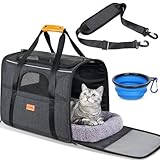
- 【 Spacious & Comfortable Cat Carrier 】The large cat carrier provides ample space for your feline friend to move, turn, and stretch during travel. Measuring 17.3 x 12.2 x 13.4 inches, it is wider and taller than most cat carriers, ensuring your pet feels comfortable and at ease while on the go.
- 【Balanced Mesh Design】Unlike other cat carrier hard, our cat carrier soft strikes the perfect balance with 40% mesh surface area. This ensures your pet can observe the surroundings and breathe easily while feeling safe and secure at the same time. The cat carrier large is suitable for pets in all kinds of situations.
- 【Built-in Dual-Sided Cushion】The detachable pad offers two distinct comforts: a cool side for summer and a super-soft, warm side for winter. You can easily flip it to match the season, providing the perfect temperature for your pet in any weather.
- 【Includes Foldable Bowl】Designed for on-the-go use, our foldable bowl carries 410g of food or 20oz of water. After use, simply collapse it and attach it directly to your pet's collar or leash, perfect for keeping your pet fueled and hydrated anywhere.
- 【Safe & Durable】Safety is our top priority, and the pet carrier for cat is equipped with a secure buckle to prevent your pet from escaping. The cat carrier soft is made of reinforced snow silk fabric and hard mesh material, ensuring durability and preventing any tearing during long-distance travel.
Teach the carrier before the appointment
- Leave the carrier in a quiet, familiar area with the door secured open or removed if the design allows it.
- Add familiar bedding or another safe-smelling item.
- Let the cat investigate voluntarily. Place treats or part of a normal meal near the entrance, then farther inside if the cat remains comfortable.
- Reward calm investigation. Do not force the cat into the carrier during training.
- Once the cat is comfortable entering, briefly close the door, reward calm behavior, and gradually increase the duration.
- Practice short, calm movements before the first necessary trip.
Keep the carrier clean and ready, not stored where retrieving it becomes a last-minute struggle. For an emergency, secure the cat inside the carrier and contact the veterinary facility for instructions. Airline, public-transport, and destination requirements vary; verify those requirements for the exact carrier and trip rather than assuming a general product claim applies.
Independent reader supportYour contribution helps us test, update, and keep practical guides available for everyone.Household hygiene and safety
Wash hands after handling cats, litter, or cat feces. Clean litter facilities regularly and remove feces daily. Teach young children to wash their hands under adult supervision, and do not allow children to handle litter unsupervised.
Store human medicines, veterinary medicines, cleaning products, pesticides, toxic plants, and other potentially hazardous substances where cats cannot reach them. Never give a cat medication that has not been prescribed by a veterinarian. If poisoning is suspected, contact a veterinarian or an appropriate animal poison-control service immediately and follow professional instructions.
When to seek prompt or emergency veterinary care
Emergency: do not wait for a routine appointment
- The cat cannot urinate, repeatedly strains, or produces little or no urine.
- The cat has severe difficulty breathing.
- The cat collapses, is unresponsive, or suddenly becomes profoundly weak.
- The cat has major trauma or uncontrolled bleeding.
- The cat may have been poisoned or received a human medication.
- The cat develops sudden severe illness or distress.
Call the veterinarian or emergency hospital while preparing to transport the cat. Keep the cat contained in a secure carrier, avoid improvised treatment, and follow the facility’s instructions. First aid and transport planning are not substitutes for veterinary treatment.
Do these 3 things before closing this tab:
1Scan for outdated or missing drivers - takes under a minute2Clear out junk files and repair common Windows errors3Fix the driver behind crashes, sound loss and screen glitchesChanges that deserve prompt discussion
Contact the veterinarian promptly for persistent appetite or drinking changes, weight change, vomiting or diarrhea, new accidents, altered urine or stool, blood, pain, limping, reduced grooming, excessive grooming, persistent hiding, unusual vocalization, aggression, confusion, or loss of normal activity. These signs have many possible causes. They should not be used to diagnose a condition from an article or consumer product.
Daily, weekly, and annual cat-care checklist
Daily
- Provide the cat’s measured food portions and fresh water.
- Observe appetite, energy, breathing, posture, grooming, and behavior against the normal baseline.
- Clean the litter area and check urine volume, stool, straining, blood, accidents, or avoidance.
- Offer interactive play and access to scratching, climbing, hiding, and resting areas.
- Check that doors, windows, carriers, medications, toxic substances, and other hazards remain secure.
- Give extra attention to cats who are ill, elderly, mobility-limited, or receiving medication according to the veterinary plan.
Weekly
- Wash food and water dishes and refresh bedding or frequently used resting surfaces.
- Inspect litter boxes, scratching surfaces, toys, and carrier closures for damage or cleanliness.
- Brush as appropriate for the cat’s coat and tolerance.
- Check the coat, skin, paws, claws, mouth, and movement without forcing handling.
- Rotate safe enrichment and confirm that the cat can reach food, water, rest areas, vertical spaces, and litter boxes easily.
- Replenish food and cleaning supplies before they run out.
Every two to three weeks, as appropriate
- Assess whether claw tips need trimming. Use the interval as a guide, not an obligation, and seek instruction if needed.
At least annually, and more often when advised
- Schedule a veterinary examination.
- Review vaccines and their timing with the veterinarian.
- Review parasite risks based on lifestyle, travel, other animals, and geography, including for indoor cats.
- Update microchip or identification information.
- Discuss sterilization, nutrition, portions, weight, oral health, litter habits, mobility, grooming, and behavior.
- Review medications, therapeutic diets, chronic conditions, and the emergency plan.
- For senior or medically fragile cats, ask whether more frequent examinations or changes to the home routine are warranted.
Preparing for illness, evacuation, and end-of-life decisions
Keep the veterinarian’s phone number, emergency hospital information, medication list, medical records, and carrier in an accessible place. A simple transport plan should identify who can drive, how the cat will be secured, and where to go after hours. For evacuation, keep identification current and make sure the cat can be safely moved in the carrier.
For a cat with a progressive or life-limiting condition, discuss comfort before an emergency if possible. Ask the veterinarian how to recognize pain or distress, how to support eating and drinking, what mobility or toileting assistance may be needed, which symptoms require an urgent call, and what hospice or euthanasia options are available in your area. The goal is not to follow a generic timetable; it is to make an informed, compassionate plan based on the cat’s comfort and veterinary assessment.
Sources and scope
This guide draws on care principles described by Cornell University College of Veterinary Medicine’s Cornell Feline Health Center, ASPCA, FelineVMA, and FDA guidance on pet food. Vaccine schedules, parasite prevention, food availability, emergency services, and legal or transport requirements vary by location and change over time. A veterinarian should adapt this general guide to the individual cat.
Best Value
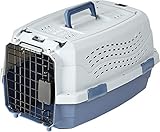
- Hard sided pet carrier with 2 doors for front and top entry; suitable for cat or extra-small dog breeds, such as chihuahuas and toy poodles (up to 11 pounds)
- Durable plastic construction with steel wire front door; screws keep the top and bottom sections securely connected
- Top door can swing open to the left or right for easy access and convenience
- Plenty of ventilation on sides, top, and back of the carrier
- Note: Be sure to measure the size of the pet when choosing carrier size
FAQ
What should I do when I bring home a newly adopted cat?
Arrange a veterinary assessment soon after the cat comes home and gather its health and vaccination records. If its health history is unknown, keep it apart from resident cats until it has been assessed, and ask the veterinarian whether testing is indicated.
How many litter boxes should I have?
Cornell’s general recommendation is as many litter boxes as cats, plus one. Make the boxes accessible, keep them clean, and consider the cats’ individual preferences and the layout of your home.
Do indoor cats still need veterinary care and parasite prevention?
Yes. Indoor living may change exposure risk, but it does not remove the need for veterinary assessment and preventive-care discussions. Ask the veterinarian to tailor vaccine and parasite recommendations to the cat’s lifestyle, history, and location.
When is a litter-box problem an emergency?
Repeated attempts to urinate, straining with little or no urine, blood in the urine, vocalizing in the litter box, or sudden distress require immediate veterinary contact. Complete urethral obstruction is a true emergency and can worsen rapidly.
The Tool Desk
Outbyte Driver Updater FREEFix the driver behind crashes, sound loss and screen glitchesFind Drivers →Outbyte PC Repair FREEClear out junk files and repair common Windows errorsFree Scan →What does complete and balanced cat food mean?
Look for a nutritional adequacy statement saying the food is complete and balanced for the relevant life stage. In the United States, FDA guidance recognizes food that meets an AAFCO nutrient profile or passes an AAFCO feeding trial as intended to serve as a sole diet. Treats and supplements generally are not sole diets.
How can I make my cat more comfortable with a carrier?
Leave the carrier open in a familiar area, add familiar bedding, reward voluntary investigation with treats or calm experiences, and gradually practice closing the door and moving the carrier. Start well before the appointment and stop training if the cat becomes distressed.
How often should a cat’s nails be trimmed?
ASPCA gives two to three weeks as a general interval, but individual nails and cats vary. Ask a veterinary professional to demonstrate safe clipping if you are unsure.
The Bottom Line
Bottom line: The most dependable cat-care routine combines life-stage-appropriate food, measured portions, clean water and litter, daily observation, normal outlets for scratching and play, gentle grooming, safe transport, and regular veterinary care. Treat sudden elimination, breathing, collapse, trauma, poisoning, bleeding, or severe-illness signs as emergencies—not as problems to solve with a product at home.
What’s actually slowing this PC down?
Pick the symptom - the matching free tool is one click away.
Quick Recap
Product prices and availability are accurate as of the date/time indicated and are subject to change. Any price and availability information displayed on Amazon at the time of purchase will apply.




