No, peacocks cannot shoot lasers. A 2025 study found laser emission from male Indian peafowl tail-feather samples after repeated rhodamine 6G dye treatment and excitation with high-intensity pulsed 532 nm light. The reported 583 nm emission came from prepared samples in a laboratory, not living birds or untreated feathers.
What the researchers discovered
The study, published in Scientific Reports, reports laser emission from multiple structural-color regions of dye-doped peafowl tail-feather eyespots. The researchers used male Indian peafowl (Pavo cristatus) feathers, not live birds producing light naturally.
In the authors’ words, “The eyespot of a dye-doped peafowl tail feather was found to emit laser light from multiple structural color regions.” This is a finding about prepared biological samples under laboratory excitation, not a natural ability of peacocks.
How the experiment worked
Researchers repeatedly wetted feather eyespots with rhodamine 6G dye solution and allowed them to dry. Multiple wetting and drying cycles were needed before the reported emission appeared. They then illuminated the samples with high-intensity pulsed 532 nm light and measured the emitted spectrum.
What’s actually slowing this PC down?
Pick the symptom - the matching free tool is one click away.
#1 Best Overall

- 7 in 1 Modes: Scroll the gear to pick 5 red patterns(dots, smiles, mouse, stars, butterflies). The variety of patterns sparks pet's interest, enhancing your and cats' interaction. 3 lighting modes can be adjusted, red for cat playing, purple for checking cat skin health /money, white for mini flashlight
- USB Direct Charging: No dry batteries needed! Unplug the back cover and plug into USB port (adapter/computer/car) to charge, about 20mins fully charged.
- Portable Design: With metal clip and anti-lost rope, compact size(4.25in long) make cat toy easily put into pockets. Play with your cat at any moment for indoor.
- Interactive Cat Toy: Interactive play not only helps cats release energy through chasing, but also exercise the pet's body and agility.
- Ideal Gift: Stainless steel casing, 5 patterns, keep lonely cats happy and bond through daily play! It's the best gift for pets and feline friends.
| Wavelength | Role in the experiment |
|---|---|
| 532 nm | External pump light used to excite the treated feather sample |
| 583 nm | Reported laser-emission line, found in green, brown, and yellow eyespot areas |
The green region produced the strongest laser intensity relative to its broad emission background. The 532 nm pump and 583 nm emission are different parts of the experiment and should not be confused.
How the feather regions behaved
The paper reports a recurring 583 nm laser line in green, brown, and yellow areas of the eyespot, despite differences in their visible coloration. The researchers also found emission in locations where visible reflection bands lay outside the dye’s gain region. The emitted wavelengths therefore did not simply follow the feather’s visible colors.
What may have produced the laser feedback?
Peacock feather colors are structural: microscopic organization in the feather affects how light is reflected and creates iridescent color. The authors say the observed laser feedback was not caused by the color-region-specific photonic-crystal structures responsible for those colors, and was inconsistent with random laser emission.
Instead, the authors attribute the feedback to small mesoscale structures in the barbules. This is their interpretation of the experiment, not proof that feathers generally are lasers or that the proposed structures have a natural laser function.
Windows Errors? Fix Them Before They Spread
Repair common Windows errors and clear accumulated junk for a smoother, more stable PC - no reinstall needed.Free scan · no reinstallCrashes, No Sound, or Screen Glitches?
Random freezes, missing sound and display glitches usually trace back to one bad driver. Find and replace yours safely.Free scan · under a minuteRank #2
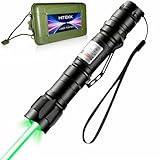
- LONG RANGE VISIBILITY: HiTekk's high-intensity green laser beam is visible across the night sky, making it ideal for stargazing, astronomy, outdoor activities, nighttime use, presentations, and pointing at distant objects. Designed for clarity and precision, the powerful beam helps you communicate, guide, and highlight with confidence
- RECHARGEABLE BATTERY: Enjoy reliable, long-lasting performance with a rechargeable battery that eliminates the need for constant battery replacements. Quickly recharge using the included USB charger to ensure your laser pointer is always powered for travel, professional use, outdoor adventures, and extended sessions without interruption or added expense
- PORTABLE CARRYING CASE: Transport and store your laser pointer securely with the included protective carrying case designed for convenience and durability. Perfect for travel, hiking, camping, work, and everyday carry, the compact case keeps your device protected from scratches, dust, and accidental damage while keeping accessories organized
- DURABLE: Built with a rugged cemented carbide body for enhanced strength, impact resistance, and long-term reliability. Engineered for frequent use and demanding environments, this laser pointer withstands daily handling, outdoor conditions, and extended operation while maintaining a premium feel and consistent performance.
- WATER RESISTANT: Designed for dependable outdoor use, the water-resistant construction helps protect internal components from light moisture and environmental exposure. Ideal for camping, hiking, stargazing, and unpredictable weather conditions, allowing you to use your laser pointer with greater confidence in various settings.
What the result does—and does not—mean
The experiment demonstrates laser emission from dye-treated feather samples under external optical pumping. It does not show that a peacock can aim or fire a beam, that untreated feathers emit laser light, or that laser emission serves a biological function.
- Peacocks do not naturally shoot lasers from their tails.
- A normal feather does not power a laser by itself.
- Buying a feather or applying dye once is not a validated way to reproduce the result.
- The study does not establish a consumer device or safe home experiment.
Could a pet peacock hurt another animal with a laser feather?
No. The study provides no reason to think that peacocks or ordinary feathers pose a laser-related risk to pets or people. The reported effect required dye treatment and an external laboratory pump. As with other feathers, keep decorative specimens away from pets that might chew or swallow them.
Can you buy the feathers used in the experiment?
Natural peacock tail feathers may be useful as educational specimens or craft materials, but buying feathers alone will not reproduce the study. The research used repeated dye treatment and specialized optical equipment. Natural peacock feathers are for observation or craft use, not ready-made laser components.
Independent reader supportYour contribution helps us test, update, and keep practical guides available for everyone.Why the result matters to science
The study suggests that optical measurements may reveal resonant behavior associated with small structures in a complex biological material. The proposed mesoscale feedback mechanism is the authors’ interpretation and may motivate further research; the paper does not demonstrate a practical product or a natural laser function in peacocks.
Quick wins for a faster PC:
Repair Windows errors before they cause bigger problemsFix Now →Scan for outdated or missing drivers - takes under a minuteDriver Scan →Rank #3

- 【Multi-Mode Bird Toy】This indoor bird toy offers three functional modes: the first mode (red) serves as an interactive toy for birds and cats to chase and play, and can also be used for training; the third mode (white) is ideal for daily use, especially during nighttime emergencies.
- 【USB Rechargeable】Equipped with USB charging, it is compatible with phone chargers, power banks, car chargers, and other USB devices—say goodbye to low battery anxiety, about 20mins fully charged.
- 【15-Min Rapid Charge for Endless Fun】Power up via any USB device (chargers, power banks, or cars). A mere 15-minute charge delivers 3 hours of continuous playtime. With multiple patterns to switch from, it’s the perfect interactive toy to keep your cats and dogs active and entertained without the wait.
- 【Durable & Portable Design】Built with a stainless steel housing, anti-peel coating, and a metal clasp, this laser toy measures just 4.52×0.67×0.67 inches. Its compact size allows for easy portability—take it anywhere in your pocket or bag for fun on the go.
- 【Quality Commitment】Each laser pointer is rigorously tested for quality and performance. We fully stand behind our products and guarantee your satisfaction.
Frequently Asked Questions
Can peacocks shoot lasers?
No. Researchers induced laser emission in dye-treated feather samples using external pulsed 532 nm light. There is no evidence that living peacocks naturally emit or aim laser beams.
What did 532 nm and 583 nm refer to?
532 nm was the pump wavelength used to excite the sample. The study reported a 583 nm laser-emission line in green, brown, and yellow eyespot areas.
Were the feathers treated before they emitted laser light?
Yes. The researchers repeatedly wetted the eyespots with rhodamine 6G dye solution and let them dry. Multiple cycles were needed before the reported emission appeared.
Can I recreate the experiment at home?
The study describes a specialized pulsed optical setup and does not establish a safe home protocol. An untreated feather or a single dye application will not reproduce the reported result.
Quick Recap
Product prices and availability are accurate as of the date/time indicated and are subject to change. Any price and availability information displayed on Amazon at the time of purchase will apply.




