Where to go bird-watching in North America depends on the season, habitat, and birds you hope to see. For spring migration, consider Point Pelee in Ontario; for fall, compare Cape May, Hawk Ridge, and the Great Salt Lake area. There is no single best destination for every season, and recent sightings and access conditions can change your plans.
These are representative hotspots, not a ranked list of every good birding region. Migration can occur across broad fronts, so a famous stopover is a useful place to look—not proof that birds are absent elsewhere.
At a glance: choose by season and birds
| Destination | Season and timing | Birding focus | Habitat or planning note |
|---|---|---|---|
| Point Pelee National Park, Ontario | Spring, especially May; also fall | Songbirds and other migrants; waterfowl and birds of prey at different times | Peninsula on a major inland migration route; migration varies day to day |
| Beausoleil Island, Ontario | Spring | Migrants moving through island forests | Check current park access and conditions |
| Cape May, New Jersey | Fall, July through November | Shorebirds, songbirds, and raptors | Visible hawk flights depend on weather and wind |
| Great Salt Lake and Bear River Refuge, Utah | Fall | Shorebirds, phalaropes, grebes, ducks, and swans | Published bird-concentration estimates are historical, not a current forecast |
| Hawk Ridge, Duluth, Minnesota | Fall, September through November | Raptor migration | Different species peak at different times |
| Izembek Lagoon, Alaska | Fall | Brant, other geese, and shorebirds | Remote-area access and conditions need fresh confirmation |
| Gulf Islands National Park Reserve, British Columbia | Spring and fall | Resident and migratory birds | Marine and terrestrial habitats; consider access logistics |
| Waterton Lakes National Park, Alberta | May and June; late fall for waterfowl | Warblers, hummingbirds, grouse, jays, and migrating waterfowl | Prairie, mountain, and lake habitats |
| Point Reyes National Seashore, California | Multiple seasons | Migrants and varied coastal birdlife | Coastline, forest, wetlands, fields, and a peninsula that concentrates migrants |
Spring: songbirds and migration
Point Pelee National Park, Ontario
Point Pelee is one of the strongest choices for inland spring migration. Parks Canada says spring migration peaks in May, with songbirds moving through particularly during the first three weeks of the month. Waterfowl begin returning in March; September brings the greatest diversity of birds of prey, and large numbers of waterfowl return from November into December.
Parks Canada reports more than 390 recorded bird species in the Point Pelee Birding Area and says more than 200 neotropical migrant species stop there during spring and fall migration. These are published totals, not a promise of what you will see on a particular visit. Weather and migration timing can change daily results.
#1 Best Overall

- 【HIGH-POWERED LARGE EYEPIECE BINOCULARS】 This binoculars for adults has 12x magnification, 25mm objective lens and wide field of view, 273ft/1000yds, letting you look farther and see wider. Coating with FMC Broadband coating and premium BAK4 prism, it ensure imaging verisimilar.
- 【ADJUSTABLE EYE CUPS FIT EYEGLASS WEARERS OR NOT】The binocs can be pull down the rubber eyepieces and more fit the glasses wearer, getting close to lens and see easily. The long eye relief combined with large eyepiece give you a comfortable viewing while wearing sunglasses or eye glasses. For those who do not wear glasses, will gain more focused slight and feel more easeful through rising eye cups. The compact binoculars has 15mm large eyepieces, can see more clear image than other travel binoculars.
- 【FMC BROADBAND COATING TECHNOLOGY】The lightweight cruise binoculars is cover with BAK4 prism texture. The objective lens use optical FMC multilayer broadband green film, and the eyepiece-optical is made of blue FMC coating. All design ensure to provide a good image and make you have a amazing experience.
- 【PORTABLE, COMPACT AND SMALL BINOCULARS DESIGN】 One hand can be mastered when you use the birding watching binoculars for opera,bird watching camping, traveling,wildlife watching,football games,cruise or other outside activity, the low light night vision goggles(Not for completely dark night) is more convenient for using and carrying.
- 【LIFE WATERPROOF, COMFORTABLE TOUCH】 The kids binoculars are made of ABS plastic and it also come with a cruise binocular strap, you can use this item in different situations. And rubber armor is made for secure grip.The pocket size binoculars is not only suitable for men and women,but also suitable for kids.It is wonderful to give your Father or Children.
Beausoleil Island, Georgian Bay, Ontario
Beausoleil Island is another spring option for watching migrants move through island forests. Parks Canada cautions that migration changes from day to day. Check the park’s current information before planning around access or a particular sighting.
Fall: shorebirds, songbirds, and raptors
Cape May, New Jersey
Cape May offers several fall migration windows. Audubon’s 2009 guide describes shorebirds gathering on meadows and mudflats in July and August, warblers and other warm-weather songbirds peaking in September, and temperate-zone songbirds appearing in October and November. Northwest winds can bring hawk flights; the guide highlights merlins and peregrine falcons in October.
Because weather affects visible migration, treat these periods as planning guidance rather than guarantees. Audubon identifies Cape May Bird Observatory as a local resource; check current information before arranging a visit or activity.
Rank #2
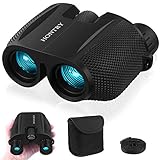
- An ideal choice magnification: A 10x magnification strikes the balance between zooming in on your target and maintaining a steady image, making it an ideal choice for everyday use.
- Equipped with Bak-4 prisms: These prisms deliver images with 3D depth and rich detail. Even under low-light conditions, you’ll still enjoy bright, sharp views.
- Compact design: About the size of your palm and weighing only 0.6 pounds - makes it easy to carry around wherever you go. With these features, your binoculars become a reliable companion for everyday adventures rather than a tool reserved only for special occasions.
- Wide range IPD: With an adjustable interpupillary distance ranging from 60mm to 75mm, they comfortably fit both kids and most adults. This means everyone in the family can share the excitement of discovering new sights together.
- Your one-stop solution: these binoculars absolutely for bird watching, cruising, hiking, and traveling, but they’re not just for the outdoors—catch every thrilling moment at sporting events, concerts, plays, and more. What's more? Don’t forget the simple pleasures: Keep them handy in the car glove box, use them during a layover at the airport, or explore your own backyard. Wherever your imagination takes you, Hontry binoculars are ready to follow.
Great Salt Lake and Bear River Refuge, Utah
Audubon’s fall guide describes the Great Salt Lake as a major seasonal destination for phalaropes and eared grebes, and recommends Bear River Refuge for shorebirds and ducks, as well as November swan flights. Its published estimates—up to 500,000 Wilson’s phalaropes and 1.5 million eared grebes at the Great Salt Lake—are historical figures from 2009, not current annual counts or forecasts.
Quick wins for a faster PC:
Repair Windows errors before they cause bigger problemsFix Now →Fix the driver behind crashes, sound loss and screen glitchesFind Drivers →Hawk Ridge, Duluth, Minnesota
Hawk Ridge is a fall option for visible raptor migration along Lake Superior’s north shore. Audubon’s 2009 guide places broad-winged hawk peaks in September, sharp-shinned hawks in September and October, red-tailed hawks in October and November, and bald eagles in November. The same historical guide reports an average of more than 94,000 birds per autumn; annual totals vary.
Izembek Lagoon, Alaska
Izembek Lagoon is a fall staging area for brant, other geese, and shorebirds before long overwater migrations. Audubon’s 2009 feature gives a historical estimate that at least 90 percent of the western population of brant—up to 150,000 birds—gathers there in fall. Confirm current access and conditions before considering this remote destination.
Rank #3

- UPGRADED HIGH-POWER BINOCULARS - These premium binoculars feature a high-magnification 20x zoom eyepiece and offer a 168-yard field of view at 1000 yards. This allows you to observe and focus on intricate details of distant targets up to 1000 yards away, delivering exceptionally broad and clear long-distance vision. Ideal for adults engaged in bird watching, hunting, camping, climbing, hiking, safari, travel, opera, concerts, sports events, and stargazing. They are essential gear for camping, hunting, travel, and cruises.
- OPTIMIZED EYEPIECE DESIGN - The 26mm eyepiece is ergonomically designed to comfortably fit the eye structure of users, providing a wider and clearer field of view for birdwatching and other outdoor activities. The large eyepiece design helps maintain visual stability, reducing the risk of dizziness and eye fatigue during prolonged use. These binoculars make an ideal gift for men, dads, Father’s Day, Christmas, and birthdays.
- SUPERIOR IMAGE CLARITY - Multilayer-coated aspherical lens elements ensure superior light transmission with minimal distortion, enhancing image brightness, contrast, and overall quality. The BAK4 Porro prism, with its high refractive index, achieves 99.8% light transmission for improved color accuracy. The green FMC (Full Multi-Coating) anti-reflective coating on the objective lens reduces reflected light, further boosting light transmission, image brightness, and sharpness for an exceptional viewing experience.
- EASY AND PRECISE FOCUSING - These binoculars are designed for effortless operation: simply adjust the barrels to align with your eyes, then rotate the sensitive, non-slip center focus wheel with one finger to achieve a sharp, single image without double vision. The focus wheel is covered with soft rubber for comfortable, long-term use without finger fatigue.
- RUGGED AND WATERPROOF CONSTRUCTION - The binoculars feature a daily waterproof body with a rubber coating that provides impact resistance and a firm, comfortable grip. Built with high-quality materials, they are suitable for various outdoor conditions, including harsh environments (note: please do not immerse the binoculars in water). The unique non-slip ergonomic handles on both sides are made of eco-friendly rubber with a textured surface, ensuring a secure and comfortable hold that prevents slipping.
Destinations with varied habitats
Gulf Islands National Park Reserve, British Columbia
The Gulf Islands combine terrestrial and marine habitats in a Pacific Flyway setting. Parks Canada describes resident and migratory birdlife and identifies spring and fall as migration seasons. Check current park information for access, transportation, and operating details.
Waterton Lakes National Park, Alberta
Waterton Lakes brings prairie, mountain, and lake habitats together. Parks Canada notes that May and June can offer a mix of warblers, hummingbirds, grouse, jays, and other birds; late fall is noted for migrating waterfowl. A range of habitats can make a destination rewarding across different seasons, but sightings still depend on conditions.
Point Reyes National Seashore, California
Point Reyes combines coastline, forest, wetlands, and fields. Its peninsula can concentrate migrants, while its varied habitats offer birding possibilities beyond migration periods. Audubon reports an eBird-derived total of 444 recorded species in its destination article; verify counts before using them as a current ranking or a prediction for an individual trip.
Rank #4

- 🐧【𝟏𝟓𝐱 𝐇𝐢𝐠𝐡-𝐏𝐨𝐰𝐞𝐫𝐞𝐝 𝐁𝐢𝐧𝐨𝐜𝐮𝐥𝐚𝐫𝐬: 𝐃𝐢𝐬𝐜𝐨𝐯𝐞𝐫 𝐍𝐚𝐭𝐮𝐫𝐞'𝐬 𝐒𝐦𝐚𝐥𝐥𝐞𝐬𝐭 𝐃𝐞𝐭𝐚𝐢𝐥𝐬】Elevate your viewing experience with these 15x high-powered binoculars designed for adults. Crafted for observing extremely long distances, these professional high-powered binoculars provide a razor-sharp view of the smallest details even at longer ranges. Unlock the smallest secrets of nature and immerse yourself in crisp, razor-sharp visuals that traditional 12x magnification binoculars cannot match.
- 🐧【𝟐𝟐𝐦𝐦 𝐋𝐚𝐫𝐠𝐞 𝐄𝐲𝐞𝐩𝐢𝐞𝐜𝐞 𝐁𝐢𝐧𝐨𝐜𝐮𝐥𝐚𝐫𝐬: 𝐋𝐚𝐫𝐠𝐞𝐫 𝐈𝐦𝐚𝐠𝐞, 𝐂𝐥𝐞𝐚𝐫𝐞𝐫 𝐃𝐞𝐭𝐚𝐢𝐥𝐬】Thanks to the expanded 22mm large eyepiece performance, you can enjoy exceptionally detailed insights into the natural world. These binoculars provide a wider field of view, 1.5 times larger than the image size of 16mm eyepieces (e.g., ordinary 10x42, 12x42 binoculars) and 1.2 times that of 20mm eyepieces (e.g., 12x50 binoculars). Large eyepiece binoculars fully utilize the 15x magnification, delivering a larger image and ensuring clearer details.
- 🐧【𝟐𝟎𝟐𝟔 𝐔𝐩𝐠𝐫𝐚𝐝𝐞𝐝 𝐏𝐡𝐨𝐧𝐞 𝐀𝐝𝐚𝐩𝐭𝐞𝐫 𝐟𝐨𝐫 𝐁𝐢𝐧𝐨𝐜𝐮𝐥𝐚𝐫 𝐏𝐡𝐨𝐭𝐨𝐠𝐫𝐚𝐩𝐡𝐲】The universal upgraded smartphone adapter enables you to capture outstanding photos. It's easy to set up and align quickly. The soft anti-slip rubber on the surface, along with a sturdier structural design and screw locks, firmly secure your phone, ensuring stable and clear images when taking photos or videos. This adapter is suitable for all kinds of smartphones, with or without phone cases.
- 🐧【𝐂𝐥𝐞𝐚𝐫 𝐋𝐨𝐰-𝐋𝐢𝐠𝐡𝐭 𝐕𝐢𝐬𝐢𝐨𝐧 𝐁𝐢𝐧𝐨𝐜𝐮𝐥𝐚𝐫𝐬 𝐟𝐨𝐫 𝐇𝐮𝐧𝐭𝐢𝐧𝐠】The 15x52 model allows you to experience an entirely new dimension of hunting in low-light conditions. Equipped with a 52mm objective lens, 18mm BAK4 dielectric-coated prisms, and high-transmission specialized glass, these binoculars deliver the best possible performance in low-light scenarios for observation. Overcast days, dense tree canopies, daybreak, and the last light of the day are the specific situations in which these binoculars were designed to excel.
- 🐧【𝐇𝐢𝐠𝐡-𝐂𝐨𝐧𝐭𝐫𝐚𝐬𝐭 𝐚𝐧𝐝 𝐓𝐫𝐮𝐞-𝐭𝐨-𝐋𝐢𝐟𝐞 𝐁𝐢𝐧𝐨𝐜𝐮𝐥𝐚𝐫𝐬 𝐟𝐨𝐫 𝐁𝐢𝐫𝐝 𝐖𝐚𝐭𝐜𝐡𝐢𝐧𝐠】Experience high color fidelity binoculars for bird watching that ensure no details are lost, even in the deepest twilight. These advanced birding binoculars are equipped with fully multi-coated lenses and high-resolution phase-corrected BAK4 roof prisms, guaranteeing high-contrast images with incredible color fidelity. You can discern every detail for quick and easy identification in any bird-watching scenario you encounter.
Summer and winter: find a regional route
The research for this guide does not establish a single best summer or winter destination across North America. For summer, Audubon’s U.S. birding-trail index can help identify a regional route. For winter, use Audubon’s winter-trail resources as a starting point, then check local hotspots and the needs of the species you hope to find.
Bird Migration Explorer, from the National Audubon Society, covers 458 migratory bird species that regularly breed in the United States and Canada. The figure describes the Explorer’s coverage, not the number of species a visitor should expect at one site.
How to find birding hotspots and plan a trip
- Choose a target. Decide whether you are looking for songbirds, shorebirds, waterfowl, raptors, or another group, and pick a season that matches their migration or local habitat.
- Compare habitat and timing. A coastal mudflat, island forest, lake, and mountain landscape offer different opportunities. Migration windows are useful planning guides, not guarantees.
- Explore eBird hotspots. eBird Explore Hotspots lets you find shared birding locations, regional species lists, and recent visits. Hotspots are collaborative locations proposed by users and shared for community checklists; recent sightings are leads, not promises.
- Confirm current access. Check official park or refuge information shortly before departure for closures, hours, permits, transportation, and seasonal arrangements. This guide does not verify current schedules or access restrictions.
- Bring binoculars and follow site guidance. Audubon recommends binoculars for fall birding. Keep a respectful distance from birds and follow posted guidance, including birding and photography ethics at Point Pelee.
- Stay flexible. Weather, habitat, and migration timing affect what is visible. At Cape May, for example, weather can influence hawk flights; Parks Canada notes that migration at Beausoleil Island changes day to day.
Frequently Asked Questions
Where should I go bird-watching in spring?
Point Pelee National Park in Ontario is a strong choice for spring migration, especially in May. Beausoleil Island is another Ontario option for migrants moving through island forests. Check current conditions and remember that migration can change from day to day.
Free tools Windows power users keep installed
One-click scans. No signup required.
Best Value

- A full-size binocular with 1x magnification and 42mm objective lenses, the Triumph HD delivers excellent image quality, ergonomics, and durability for its class. It is a perfect companion for your next hunt or hike.
- With an HD optical system and fully multi-coated lenses, these binos feature optimized glass elements that deliver exceptional resolution, cut chromatic aberration, and provide outstanding color fidelity, edge-to-edge sharpness, and light transmission.
- Nitrogen purged, the Triumph is both waterproof and fog proof. The polycarbonate chassis with full rubber armor not only makes the Triumph shockproof for more durability but also provides the user with a better grip.
- Tripod adaptable, with adjustable rubber eyecups and an adjustable diopter, the Triumph allows users to easily find their most comfortable viewing settings.
- The Triumph ships with a neck strap and an adjustable GlassPak harness for fast access and easy carry wherever outdoor adventure takes you.
What are good places to see fall migration?
Consider Cape May for shorebirds, songbirds, and weather-dependent raptor flights; Hawk Ridge for raptor migration; or the Great Salt Lake and Bear River Refuge for fall waterbirds. The best timing differs by location and bird group.
Where can I see birds in winter?
The available research does not support naming one best winter destination for all of North America. Use Audubon’s winter birding-trail resources to identify a regional route, then check local hotspots and recent sightings for your target birds.
What is the best month to visit Point Pelee for bird migration?
Parks Canada identifies May as the peak of spring migration, with songbirds moving through particularly in the first three weeks. March is notable for returning waterfowl, while fall brings another migration period.
How do I find birding hotspots near where I’m traveling?
Use eBird Explore Hotspots to find shared locations, regional species lists, and recent visits. Confirm access with the official park or refuge, and treat sightings as clues rather than guarantees.
Do these 3 things before closing this tab:
1Scan for outdated or missing drivers - takes under a minute2Clear out junk files and repair common Windows errors3Fix the driver behind crashes, sound loss and screen glitchesBottom line
For spring, start with Point Pelee; for fall, compare Cape May, Hawk Ridge, the Great Salt Lake area, and other sites according to the birds you want to see. Use official destination information and eBird hotspots to refine your plan, and stay flexible: migration, weather, and access can all change the experience.
Quick Recap
Product prices and availability are accurate as of the date/time indicated and are subject to change. Any price and availability information displayed on Amazon at the time of purchase will apply.




