Do these 3 things before closing this tab:
1Clear out junk files and repair common Windows errors2Fix the driver behind crashes, sound loss and screen glitches3Repair Windows errors before they cause bigger problemsThe Ocellaris clownfish (Amphiprion ocellaris) is an orange-and-white Indo-Pacific reef fish with three white bars and a size-based social hierarchy. It resembles the Percula clownfish, but dorsal-spine counts are a more dependable identification clue than color alone. In aquariums it does not need a host anemone; it does need a mature, filtered saltwater system, stable conditions, and routine water testing.
Amphiprion ocellaris is also called the common clownfish, clown anemonefish, or false clown anemonefish. “False percula” is another common name for Ocellaris; it does not mean the fish is the related species Amphiprion percula.
Ocellaris clownfish live in structured social groups, associate with sea anemones in the wild, change sex as part of their social system, and show attentive male care of eggs. Captive-bred fish are common in the aquarium trade, but they still require responsible marine-fish care.
Ocellaris clownfish at a glance
| Characteristic | Details |
|---|---|
| Scientific name | Amphiprion ocellaris |
| Family | Pomacentridae, the damselfish family |
| Common names | Ocellaris clownfish, common clownfish, clown anemonefish, false clown anemonefish, and false percula clownfish |
| Reported maximum size | Approximately 9–11 cm (about 3.5–4.3 in); USGS reports 90 mm, while FishBase reports 11 cm |
| Native region | Indo-West Pacific, including parts of the eastern Indian Ocean and western Pacific |
| Typical habitat | Shallow reefs associated with host sea anemones |
| Reported depth | Roughly 1–15 m, depending on source |
| Diet | Omnivorous |
| Social system | Dominant female, breeding male, and smaller subordinate fish |
What does an ocellaris clownfish look like?
The typical Ocellaris has an orange body and three white bars, often narrowly edged in black. The middle bar broadens or projects forward toward the head. Regional variation and captive-bred color forms mean that color alone is not always a reliable guide to identity.
Outdated Drivers Are Slowing You Down
One free scan finds every outdated or missing driver and matches the right update for your exact hardware.Free scan · exact hardware matchPC Slower Than It Used to Be?
A free scan shows the junk files, broken settings and background clutter dragging Windows down - then fixes them in one click.Free scan · Windows 10 & 11#1 Best Overall

- QUIET AQUARIUM FILTER: The Tetra Whisper IQ Power Filter with Stay Clean technology contains a sound shield for quiet filtration less than 40 dB.
- SELF PRIMING: Submerged motor starts up with no priming required.
- CAPACITY: The Tetra Whisper IQ 20 Power Filter works in filters up to 20 gallons (130 GPH).
- STAY CLEAN TECHNOLOGY: By maintaining healthy pH levels, creates easier maintenance for healthier fish.
- CARTRIDGE REFILLS: Change cartridges monthly; uses large-sized Tetra Whisper Bio-Bag Filter Cartridges (refills sold separately).
Ocellaris clownfish vs. Percula clownfish
Amphiprion ocellaris and Amphiprion percula are close visual matches. Both commonly have orange-and-white bars, and selectively bred forms make appearance still less conclusive. The U.S. Geological Survey gives a more useful distinguishing feature: Ocellaris has 11 dorsal spines, compared with 10, rarely 9, in Percula. FishBase reports 10–11 dorsal spines for Ocellaris, so close identification may require an informed look at the whole fish.
| Feature | Ocellaris | Percula |
|---|---|---|
| Dorsal spines | USGS reports 11; FishBase reports a range of 10–11 | USGS reports 10, rarely 9 |
| Color and bars | Typically orange with three white bars | Often similar; color alone is not a dependable distinction |
| Reported size | USGS reports 90 mm; FishBase reports 11 cm | OATA says the smaller common and Percula clownfish are unlikely to exceed 10 cm |
| Pair-tank guidance | OATA includes it among smaller clownfish for its 60-litre pair guidance | OATA includes it among smaller clownfish for its 60-litre pair guidance |
Size and care figures in this table come from different sources and are not universal measurements or guarantees. If identification matters, ask for the scientific name and consult a knowledgeable source rather than relying on a retail label or photograph alone.
Where do ocellaris clownfish live?
Ocellaris clownfish occur in the Indo-West Pacific, including parts of the eastern Indian Ocean and areas extending through Southeast Asia and Indonesia toward the Philippines, Taiwan, and the Ryukyu Islands. USGS, FishBase, and Aquarium of the Pacific describe the fish as reef-associated and found in shallow water; reported depth ranges vary by source.
In the wild, Ocellaris clownfish live among the tentacles of host sea anemones. FishBase lists Heteractis magnifica, Stichodactyla gigantea, and S. mertensii among associated hosts; Aquarium of the Pacific also lists H. crispa. These are documented associations, not a promise that an individual aquarium fish will accept a particular anemone.
The clownfish-and-anemone relationship
The anemone provides shelter, while clownfish activity and territorial behavior may help protect it from some predators. Ocellaris clownfish tolerate anemone tentacles in part through a mucus barrier; describing them as simply immune to stings oversimplifies the relationship.
Rank #2

- QUIET AQUARIUM FILTER: The Tetra Whisper IQ Power Filter with Stay Clean technology contains a sound shield for quiet filtration less than 40 dB.
- SELF PRIMING: Submerged motor starts up with no priming required.
- CAPACITY: The Tetra Whisper IQ 45 Power Filter works in tanks up to 45 gallons (215 GPH).
- STAY CLEAN TECHNOLOGY: By maintaining healthy pH levels, creates easier maintenance for healthier fish.
- CARTRIDGE REFILLS: Change cartridges monthly; uses large-sized Tetra Whisper Bio-Bag Filter Cartridges (refills sold separately).
Does an ocellaris clownfish need an anemone in an aquarium?
No. The Ornamental Aquatic Trade Association (OATA) says clownfish can be kept successfully without anemones. Anemones have their own husbandry requirements and should not be added casually. Rockwork can provide shelter, and a fish may choose to associate with another object or part of the aquarium.
Social behavior and sex change
Ocellaris clownfish live in groups with a size-based hierarchy:
- The largest, dominant fish is female.
- The next fish is the breeding male.
- Smaller fish are subordinate non-breeders.
The species is protandrous: individuals begin life as males and can later change sex. If the female disappears, the breeding male changes sex, and a subordinate fish can mature into the breeding-male role.
Quick wins for a faster PC:
Scan for outdated or missing drivers - takes under a minuteDriver Scan →Repair Windows errors before they cause bigger problemsFix Now →Ocellaris clownfish can be territorial. In an aquarium, observe pairs for bullying or injury, especially as they pair and mature. OATA recommends pairs for smaller clownfish species and cautions that groups can lead to bullying; provide appropriate space and plan compatible tankmates.
Breeding, eggs, and parental care
Pairs are described as monogamous. The female lays eggs on a substrate near the host, and the male guards and aerates them. OATA says eggs hatch after about seven or eight days, but timing is not guaranteed for every spawn. The larvae need specialized live foods and a separate rearing setup to survive, so successful spawning does not by itself mean the young will be raised successfully.
Rank #3
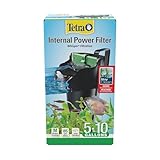
- INTERNAL POWER FILTER: Tetra Whisper Internal Power Filter for 5- to 10-gallon aquariums uses medium Whisper BioBag filter cartridges that are easy to change.
- QUIET 85 GPH MOTOR: The internal pump efficiently filters up to 85 gallons per hour.
- POWERFUL FILTRATION: Water flows through the cartridge floss, trapping debris and fish waste, while Ultra-activated carbon helps remove odor and discoloration.
- SPACE-SAVING DESIGN: Your aquarium can be 1” from the wall with the internal filter designed to clip directly on your aquarium wall and be hidden by décor.
- EASILY ADJUSTABLE: Adjustable clip allows for a variety of setups to easily adjust to high or low water levels.
What do ocellaris clownfish eat?
Ocellaris clownfish are omnivores. In nature, their food includes algae, zooplankton, and other small prey. OATA recommends a good-quality flake or pellet as a dietary base, supplemented with frozen mysis shrimp, enriched brine shrimp, or red plankton.
Feed only what the fish can eat within a few minutes. OATA suggests feeding twice daily to limit uneaten food and waste. A marine fish food for clownfish may be relevant, but no single commercial formula should be described as universally best without independent testing.
What’s actually slowing this PC down?
Pick the symptom - the matching free tool is one click away.
Keeping ocellaris clownfish in a saltwater aquarium
Ocellaris clownfish are popular, but “hardy” does not mean suitable for an uncycled aquarium or poorly maintained saltwater system. A mature, filtered tank, stable temperature and salinity, routine testing, and an appropriate diet are central to care.
Tank size and water guidance
OATA recommends at least 60 litres for a pair of smaller clownfish species such as the common clownfish, with more room for tankmates and an appropriate mature setup. Its water figures are general clownfish guidance, not a substitute for advice tailored to the species and system. Reef tanks with sensitive cohabitants may need different conditions.
| Parameter | OATA general clownfish guidance |
|---|---|
| Minimum volume for a pair of smaller species | At least 60 litres |
| Temperature | 24–26°C |
| Specific gravity | 1.020–1.025 |
| pH | 7.9–8.3 |
| Ammonia and nitrite | 0 mg/L each |
| Nitrate | No more than 50 mg/L |
| Carbonate hardness | 8–12 dKH |
Equipment and maintenance
OATA recommends a filter, moderate water flow, a heater to maintain temperature, and rockwork for shelter. It recommends weekly testing of ammonia, nitrite, nitrate, pH, and carbonate hardness. “Water quality test kits are a necessity not an optional extra,” according to OATA’s clownfish care sheet.
Rank #4

- Powerful Pump: 300 GPH water pump effectively filters 55-150 gallons; ideal for large aquariums, turtle tanks, and ponds.
- Enhanced Aeration: Equipped with an adjustable valve to increase oxygen levels, promoting healthier, more active fish and turtles.
- Double Deep Filtration: Dual-stage black biochemical sponge removes odors and impurities; keeps water clear and fresh.
- Dynamic Water Flow: Boosts wave size and surface movement; improves circulation for a healthier aquatic environment.
- Adjustable Body: The aquarium filter features a detachable design. For tanks under 15 inches tall, you can lay the filter flat or remove the lower half of the filter sponge for a better fit.
OATA also recommends a weekly partial water change of 25%, topping off evaporation with reverse-osmosis water, and maintaining filter media without rinsing biological media under chlorinated tap water. Add livestock gradually so biological filtration can keep pace. A marine aquarium salt mix is used to prepare saltwater, but mixing salt alone does not make an aquarium ready.
Recommended Free Tools
A saltwater aquarium test kit can help monitor water quality, and salinity should be measured with an instrument suitable for marine systems. A saltwater aquarium heater may be needed to maintain stable temperature; choose equipment for the aquarium and its conditions, not just the fish’s name.
Choosing fish and acclimation
Before adding fish, OATA advises checking that ammonia and nitrite are zero and adding livestock gradually. Look for clear eyes, intact fins and scales, steady breathing, and normal swimming. Ask the seller what the fish eats and what salinity it has been kept at. OATA discusses floating-bag and drip acclimation and suggests quarantine in a separate aquarium for at least a week when possible. Retailer water may contain copper, which is toxic to invertebrates, so minimize its transfer into a reef aquarium.
Captive-bred or wild-collected?
OATA says most clownfish in the trade are tank-bred, and USGS describes captive culture as common. That does not mean every specimen in every market is captive-bred. Ask the seller about the fish’s source and current diet, and buy only when the aquarium is mature and ready. Captive-bred availability does not remove the need to assess the individual fish or seller’s practices.
Independent reader supportYour contribution helps us test, update, and keep practical guides available for everyone.Conservation status
Ocellaris clownfish are popular in the aquarium trade, and captive culture is common, according to USGS. Choosing captive-bred fish where available and buying from responsible sources are practical considerations; they do not guarantee that all local populations or reef habitats are free from pressure.
Best Value

- WITH ROTATING BIO-WHEEL: Patented Bio-Wheel technology provides excellent wet/dry biological filtration.
- MULTI-STAGE FILTRATION: Delivers mechanical, chemical and biological aquarium filtration to maintain a clean aquatic environment.
- MARINELAND FILTRATION PRODUCTS: Count on Marineland brand for the most reliable, technically advanced aquariums and accessories on the market.
- COMPATIBILITY: Use with Marineland Rite-Size Filter Cartridges (see individual filter for sizing recommendations).
- FIVE SIZES: Available in 75 GPH, 100 GPH, 150 GPH, 200 GPH and 350 GPH sizes.
Common misconceptions
- “It is a freshwater fish because it is sold as a beginner fish.” Ocellaris clownfish are marine fish and need a properly prepared saltwater aquarium.
- “Every orange clownfish is Ocellaris.” Percula clownfish look similar; dorsal-spine counts are a stronger distinction than color alone.
- “A clownfish must have an anemone.” OATA says clownfish can be kept successfully without one.
- “A group will always get along.” Ocellaris clownfish have a hierarchy, and OATA cautions that groups can lead to bullying.
Is the ocellaris clownfish right for you?
It may suit a keeper prepared to maintain a mature marine aquarium, test water regularly, provide a varied diet, and plan for territorial behavior. Its small size and availability in the trade do not make it a freshwater fish or remove the responsibilities of saltwater care.
FAQ
Can ocellaris clownfish live in freshwater?
No. Ocellaris clownfish are marine fish and require a properly prepared saltwater aquarium.
Does an ocellaris clownfish need a host anemone?
No. OATA says clownfish can be kept successfully without an anemone. Anemones have their own husbandry needs and should not be added casually.
How can you tell an Ocellaris from a Percula clownfish?
Color and bars overlap. USGS reports 11 dorsal spines for Ocellaris and 10, rarely 9, for Percula; FishBase gives Ocellaris a range of 10–11. Ask a knowledgeable source if a close identification matters.
Free tools Windows power users keep installed
One-click scans. No signup required.
How does an ocellaris clownfish change sex?
Ocellaris clownfish are protandrous. The dominant largest fish is female, the next fish is the breeding male, and smaller group members are subordinate non-breeders. If the female disappears, the male changes sex and a subordinate fish can mature into a breeding male.
What aquarium size and water conditions does OATA recommend?
OATA recommends at least 60 litres for a pair of smaller clownfish species such as the common clownfish. Its general clownfish guidance lists 24–26°C, specific gravity of 1.020–1.025, pH 7.9–8.3, zero ammonia and nitrite, nitrate no more than 50 mg/L, and carbonate hardness of 8–12 dKH. Reef systems may need adjusted conditions for sensitive cohabitants.
What do ocellaris clownfish eat?
They are omnivores. OATA recommends a good-quality flake or pellet supplemented with frozen mysis shrimp, enriched brine shrimp, or red plankton. Feed only what they can eat within a few minutes; OATA suggests twice-daily feeding.
The Bottom Line
The Ocellaris clownfish is an Indo-Pacific marine fish with three white bars, a size-based social hierarchy, and a close wild association with anemones. It can be kept in an aquarium without an anemone, but it needs a mature, filtered saltwater system and regular water testing. Use source-attributed care guidance, check fish carefully, and plan for territorial behavior.
Quick Recap
Product prices and availability are accurate as of the date/time indicated and are subject to change. Any price and availability information displayed on Amazon at the time of purchase will apply.




