For most freshwater community aquariums, the best nitrate ppm is about 20 ppm or lower. Lower is preferable for shrimp, sensitive species, juveniles, breeding fish, and other invertebrates. Treat readings above 40–50 ppm as a water-quality warning, and check ammonia and nitrite because nitrate alone cannot prove an aquarium is safe.
Published guidance varies because fish species, age, health, exposure time, plants, invertebrates, and aquarium maintenance all matter. The most useful approach is to set a conservative routine target, understand the test scale, and respond before nitrate keeps accumulating.
Key takeaways
- Aim for roughly 20 ppm nitrate or less in a typical freshwater community aquarium.
- Nitrate above 40–50 ppm is a maintenance warning, not a healthy target, even though nitrate is less acutely toxic than ammonia or nitrite.
- Freshwater shrimp, sensitive species, juveniles, breeding fish, and other invertebrates may need nitrate below 10 ppm.
- Always check whether a test reports nitrate (NO3−) or nitrate-nitrogen (NO3-N), because the numbers are not directly interchangeable.
- Lower high nitrate with testing, partial water changes, siphoning, feeding and stocking changes, and a review of the source water and filtration.
What nitrate ppm is best for freshwater fish?
For most freshwater community aquariums, the best nitrate ppm is about 20 ppm or lower. Lower is preferable for shrimp, sensitive species, juveniles, breeding fish, and other invertebrates. Treat readings above 40–50 ppm as a water-quality warning, and check ammonia and nitrite as well because nitrate alone cannot prove that an aquarium is safe.
There is no single nitrate number that suits every freshwater fish. Species, age, health, exposure time, stocking level, plants, invertebrates, feeding, and the aquarium’s maintenance routine all affect the appropriate target. A conservative target gives ordinary community fish a useful safety margin without pretending that every aquarium must measure exactly 0 ppm.
#1 Best Overall

- Professional Quality Testing Kit: The AAwipes Aquarium test kit (50 strips) is developed by experts for fish enthusiasts. It offers 8-in-1 testing capabilities, made with high-quality fiber paper and non-bleeding colors. The kit measures key parameters like Free Chlorine, Nitrate, Nitrite, Hardness, Sodium Chloride, Total Alkalinity, pH and Ammonia nitrogen. By identifying potential issues, our fish tank testing kit helps prevent hidden water problems and ensures the safety and well-being of your fish.
- Versatile Use for Freshwater and Ponds: This aquarium water test kit is versatile and suitable for both freshwater and saltwater environments. It can be used in various aquariums, fish tanks, ponds, pools, and shrimp tanks, making it easy to monitor water quality and ensure your filter functions properly. Experts recommend testing your aquarium water at least twice a week to maintain optimal water quality.
- Fast and Accurate Results: Get accurate results in minutes with just 3 steps: 1) Dip the test strip into water for 2 seconds for pads 1-7; dip pad 8 (Ammonia nitrogen) separately for 5 seconds. 2) Remove the strip without shaking off excess water. Hold horizontally for 30 seconds for pads 1-7, wait 180 seconds to read Pad 8 (Ammonia nitrogen). 3) Compare the colors to the chart for up to 99% accuracy and take necessary action.
- Extended Shelf Life: The test strips are packaged in a well-sealed bottle to ensure they remain effective over time. This protects the strips from moisture and other environmental factors, ensuring you have reliable testing materials on hand when needed.
- Convenient Use: With this kit, you can test your aquarium water at home without the need to send samples to a lab, saving you both time and money. Enjoy peace of mind knowing your aquarium water is balanced and safe without the stress or extra expense.
Which nitrate level should you target?
For an ordinary freshwater community aquarium, use approximately 20 ppm nitrate or less as a practical working target. The Merck Veterinary Manual’s current routine freshwater reference table lists freshwater nitrate below 20 mg/L, while veterinary guidance summarized by PetMD says most fish tolerate about 20 mg/L but that tolerance varies by species and condition.
| Aquarium situation | Practical nitrate target | How to interpret the result |
|---|---|---|
| Typical freshwater community fish | About 20 ppm or lower | Conservative routine target; lower is preferable when practical. |
| Sensitive fish, juveniles, breeding fish, or stressed fish | Lower than the community target | Reduce chronic exposure and investigate other water-quality problems. |
| Freshwater shrimp and other sensitive invertebrates | Below 10 ppm | A lower target provides more margin for sensitive animals. |
| Planted aquarium prioritizing algae control | Below 10 ppm | Aqueon recommends this level for limiting nuisance algae; plant nutrient needs still vary. |
| 40 ppm | Not a target | A cautionary reading that calls for testing and husbandry review. |
| 50 ppm or higher | Undesirable | Take corrective action rather than treating the reading as normal. |
The thresholds are not contradictory rules. They represent different kinds of advice: a veterinary routine reference range, manufacturer care guidance, a test-chart interpretation, and practical advice for particular animals or goals. Aqueon states that nitrate above 50 ppm is undesirable in freshwater aquaria, while its guidance for nuisance-algae prevention and freshwater shrimp uses below 10 ppm. The Tetra freshwater comparison chart places 0–20 ppm in its lowest band and identifies 40 ppm as a higher cautionary level.
Is 20 ppm nitrate okay in a freshwater tank?
Yes, about 20 ppm nitrate is generally a reasonable upper working target for a typical freshwater community tank, provided ammonia and nitrite are also under control and the fish are behaving normally. A reading of 20 ppm is not a universal ideal for shrimp, sensitive species, breeding projects, or fish already showing signs of illness.
Nitrate is the end product of aerobic biological filtration. As the nitrogen cycle processes fish waste, uneaten food, and other organic material, bacteria convert ammonia to nitrite and then nitrate. Tetra describes nitrate as “the end product of ‘aerobic’ biological filtration.” Nitrate is considerably less acutely toxic than ammonia or nitrite, but nitrate accumulation still indicates that dissolved waste is building up. Long-term elevation may stress fish, affect growth and immune function, and encourage algae.
The Merck Veterinary Manual’s summary of aquarium water-quality tests notes that high nitrate can harm some fish and invertebrates. Nitrate should therefore be managed as a chronic water-quality issue, not treated as harmless simply because an aquarium has no detectable ammonia.
Rank #2

- 𝗛𝗼𝗺𝗲 𝗔𝗾𝘂𝗮𝗿𝗶𝘂𝗺 𝗪𝗮𝘁𝗲𝗿 𝗧𝗲𝘀𝘁 𝗞𝗶𝘁 - Ensure the health of your fish with aquarium water testing kit & ammonia test strips for fish tank. This complete freshwater & saltwater tank test kit provides a reliable water tester for ammonia, pH, iron, chlorine, total hardness (GH), carbonate, nitrate, nitrite, total alkalinity, copper, and temperature, allowing you to have a complete understanding of your aquarium water quality. Trusted by fish enthusiasts, it adapts to your needs, making it an essential tool for aquarium care.
- 𝗔𝗰𝗰𝘂𝗿𝗮𝘁𝗲 & 𝗙𝗮𝘀𝘁 𝗧𝗲𝘀𝘁𝗶𝗻𝗴 𝗥𝗲𝘀𝘂𝗹𝘁𝘀 - Our aquarium water test strips deliver reliable results. Each fish tank water testing kit comes with easy-to-read color charts. This fish tank test strips are highly sensitive, detecting low levels of impurities and foreign substances in aquarium water. Our aquarium water quality tester helps prevent any invisible water problems.
- 𝗜𝗻𝘀𝘁𝗮𝗻𝘁 𝗛𝗼𝗺𝗲 𝗧𝗲𝘀𝘁𝗶𝗻𝗴—𝗡𝗼 𝗧𝗿𝗶𝗽𝘀 𝘁𝗼 𝘁𝗵𝗲 𝗦𝘁𝗼𝗿𝗲 - Testing 11 key parameters in your aquarium is easier than ever with just one kit. Just dip the strip in water and use the provided color chart for instant, reliable results. Say goodbye to frequent trips to pet stores because now you have our home water test kit with the ability to monitor your aquarium's water quality in the comfort of your own home.
- 𝗧𝗲𝘀𝘁 𝗦𝗺𝗮𝗿𝘁𝗲𝗿 𝘄𝗶𝘁𝗵 𝗘𝘅𝘁𝗲𝗻𝗱𝗲𝗱 𝗦𝗵𝗲𝗹𝗳 𝗟𝗶𝗳𝗲 𝗦𝘁𝗿𝗶𝗽𝘀 - Our aquarium test kit contains 150 test strips for aquarium fish tank: 50 strips in a bottle and 100 in a separate bags to maintain freshness. Once opened, it's recommended to use the strips within 3 months for maximum accuracy of the fish water testing kit. These water testing strips allow regular water quality checks without using all water test strips at once.
- 𝗩𝗲𝗿𝘀𝗮t𝗶𝗹𝗲 𝗪𝗮𝘁𝗲𝗿 𝗧𝗲𝘀𝘁𝗶𝗻𝗴 𝗞𝗶𝘁 𝗳𝗼𝗿 𝗔𝗹𝗹 𝗔𝗾𝘂𝗮𝘁𝗶𝗰 𝗡𝗲𝗲𝗱𝘀 - Our Aquarium water quality test kit is designed to cater to a wide range of aquariums including saltwater aquariums, freshwater fish tanks, betta fish tank, and fish ponds. Our hard water test kit can be used to test the water quality effectively, which ensures that you can maintain optimal water conditions in different aquarium setups.
Is 40 or 50 ppm nitrate too high for fish?
Forty ppm is high enough to trigger a maintenance review, and 50 ppm is an undesirable level for a freshwater aquarium. Some fish may survive a short period at these readings without immediate symptoms, but survival is not the same as a good long-term target. Sensitive animals can have less tolerance, and a high reading often signals overfeeding, excess stocking, inadequate filtration, infrequent water changes, decaying material, or nitrate already present in the source water.
A reading of 100 ppm deserves prompt attention, but one test result should be confirmed according to the kit instructions before you make a large change. Test the aquarium and the source water separately. If the aquarium reads high while the source water also contains nitrate, ordinary water changes may lower the concentration less than expected until the replacement-water source is addressed.
What is the difference between nitrate and nitrate-nitrogen?
Nitrate (NO3−) and nitrate-nitrogen (NO3-N) describe related measurements but do not produce the same numerical result. Many aquarium products use ppm and mg/L interchangeably for dilute water, but the chemical basis of the result still matters.
Do these 3 things before closing this tab:
1Scan for outdated or missing drivers - takes under a minute2Clear out junk files and repair common Windows errors3Fix the driver behind crashes, sound loss and screen glitchesMerck notes that aquarium test kits may report nitrate-nitrogen, while Seachem says its MultiTest values are expressed as nitrate rather than nitrogen. Seachem’s product guidance says to convert nitrate to nitrogen by dividing the nitrate result by 4.4. For example, 20 ppm reported as nitrate is approximately 4.5 ppm as nitrate-nitrogen; the two values should not be compared as if they came from the same scale.
| Test label | What the number represents | How to use it |
|---|---|---|
| Nitrate or NO3− | The nitrate ion measurement | Compare with targets stated as nitrate or NO3. |
| Nitrate-nitrogen or NO3-N | Only the nitrogen portion of nitrate | Compare with NO3-N guidance or convert before comparing. |
| ppm or mg/L in dilute aquarium water | Usually numerically equivalent units | Still check whether the test measures NO3 or NO3-N. |
Follow the chart supplied with the test rather than applying a target from another product without checking the label. A result that appears unusually low or high after switching brands may reflect a reporting convention rather than a sudden change in the aquarium.
Rank #3
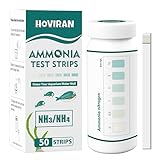
- Easy to Use Ammonia Test Strips:This ammonia aquarium test strips make aquarium water testing effortless. Dip the strips, wait 2 minutes, and compare the colors for precise results. Easy and accurate for all fish pet keepers
How should you test nitrate in a freshwater aquarium?
Test nitrate in both the aquarium and the water used for water changes, and repeat the test according to the product’s instructions when a result does not fit the fish’s condition or the recent maintenance history. An aquarium nitrate test kit is the most direct way to establish whether the aquarium is near 20 ppm, below 10 ppm, or entering the 40–50 ppm warning range.
Test strips are convenient for frequent screening. Tetra documents strip-based testing for nitrate and other aquarium parameters. Liquid tests may provide a more detailed procedure or a lower stated detection capability; Seachem’s MultiTest Nitrite & Nitrate documentation states a nitrate measurement capability of less than 0.2 mg/L. These products are not automatically interchangeable: read the scale, follow the reaction time and mixing instructions, and confirm the reporting basis.
Recommended Free Tools
Do not use a nitrate result as a substitute for ammonia and nitrite testing. In a stable, established aquarium, nitrite should be undetectable according to the cited aquarium-care guidance. In a new, recently disturbed, heavily stocked, or otherwise unstable aquarium, ammonia and nitrite can present a more immediate danger than nitrate.
How do you lower nitrate in a fish tank?
Lower nitrate through measured partial water changes and by removing the sources of accumulating waste. A water conditioner makes replacement tap water safer by treating chlorine or chloramine; a conditioner does not remove nitrate from the aquarium.
- Retest the aquarium. Follow the kit’s instructions carefully, check the expiry or condition of reagents where applicable, and confirm whether the result is NO3 or NO3-N.
- Test the source water. Measure the tap or other replacement water before adding it. Source water that already contains nitrate can make the aquarium difficult to keep low.
- Perform an appropriate partial water change. Use replacement water treated for chlorine and chloramine and matched as closely as practical for temperature and chemistry. The water change physically removes nitrate by removing some nitrate-containing aquarium water.
- Siphon the substrate. A fish tank siphon or gravel vacuum can remove trapped debris and waste from the substrate while the partial water change is in progress. Avoid disrupting the entire biological filter at once.
- Remove decaying material. Check for dead leaves, uneaten food, dead animals, and other organic matter that can feed the nitrogen cycle.
- Review feeding. Feed only what the fish can reasonably consume, and remove persistent leftovers. Excess food becomes additional waste.
- Review stocking and filtration. Consider whether the animal load is appropriate for the aquarium and whether the filter is suitable and maintained without destroying beneficial biological media.
- Continue testing. Recheck nitrate, ammonia, and nitrite after corrective maintenance instead of assuming that one water change solved the underlying cause.
The exact water-change schedule depends on the starting nitrate concentration, fish species, symptoms, replacement-water chemistry, and how quickly the aquarium produces nitrate. Avoid promising that one large change, bottled bacteria, live plants, a filter cartridge, or a water conditioner alone will make an elevated reading safe. The Aqueon explanation of the nitrogen cycle also emphasizes the connection between waste production, biological filtration, and water quality.
Rank #4

- Contains one (1) API AMMONIA TEST STRIPS Freshwater and Saltwater Aquarium Water Test Strips 25-Test Box
- Monitors water quality and prevents invisible water problems that can be harmful to fish
- Dip test strips into aquarium water and check colours for fast and accurate results
- Monitors water quality and prevents invisible water problems that can be harmful to fish
- Dose several times a week when starting a new aquarium then weekly or when problem arise
When is high nitrate an emergency?
High nitrate requires prompt correction when fish are gasping, lethargic, refusing food, losing condition, or developing lesions, but those signs can have causes other than nitrate. Correct the water quality promptly, test ammonia and nitrite, and consider an aquatic veterinarian when symptoms are severe, persistent, or unexplained.
What’s actually slowing this PC down?
Pick the symptom - the matching free tool is one click away.
Do not wait for visible illness before correcting a repeated 40–50 ppm reading. Chronic nitrate elevation can indicate a broader maintenance problem even when fish appear normal. Conversely, a normal nitrate result does not rule out ammonia, nitrite, low oxygen, unsuitable temperature, disease, or other water-quality problems.
What nitrate level is best for planted tanks and shrimp?
For freshwater shrimp and an aquarium prioritizing nuisance-algae prevention, aim below 10 ppm nitrate when practical. A planted aquarium does not necessarily need 0 ppm nitrate because plants can use nitrate as a nutrient, but plant growth, lighting, feeding, and algae control determine the useful balance.
Fish-only community care and planted-tank management are not identical goals. A tank can have detectable nitrate and healthy plants, while a shrimp keeper may choose a substantially lower reading to provide more margin for sensitive invertebrates. The Aqueon guidance on nuisance algae recommends below 10 ppm for algae control, and its shrimp-care guidance also recommends below 10 ppm for freshwater shrimp.
A simple decision rule
| Your nitrate result | Recommended response | Also check |
|---|---|---|
| Below 10 ppm | Generally favorable for shrimp, sensitive animals, and algae-control goals. | Ammonia, nitrite, temperature, and animal behavior. |
| 10–20 ppm | Usually reasonable for a typical freshwater community aquarium. | Species-specific needs and whether the reading is rising between changes. |
| Above 20 ppm but below 40 ppm | Review maintenance and plan corrective action before the concentration continues upward. | Feeding, stocking, filtration, debris, and source-water nitrate. |
| 40–50 ppm | Treat as a warning and perform a properly conditioned partial water change after confirming the result. | Ammonia, nitrite, fish symptoms, and the replacement-water source. |
| Above 50 ppm, including 100 ppm | Correct promptly with careful partial water changes and continued testing. | Species sensitivity, water chemistry, decaying material, and possible illness. |
Bottom line: For most freshwater fish, keep nitrate around 20 ppm or lower; aim below 10 ppm for shrimp and other sensitive animals when practical; and treat 40–50 ppm or more as a reason to investigate and correct the aquarium rather than as an acceptable routine level.
Best Value
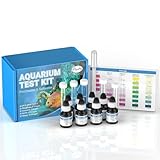
- 5-in-1 Master Test Kit: Monitor all 5 critical water parameters – pH, nitrite, nitrate, ammonia, and phosphate – in one comprehensive aquarium test kit. The rigorous analysis helps you maintain an ideal haven for your aquatic friends
- Freshwater & Saltwater Application: This aquarium water master test kit works perfectly for both freshwater and marine fish tanks. Precise color-matching charts are included – simply compare your water’s hue to the color swatches for instant results
- Enhanced Accuracy: Using professional liquid reagents, the aquarium water test kit delivers high accuracy that far exceeds traditional test strips. Get laboratory-quality results every time, safeguarding a stable and enjoyable fish tank environment
- Regular Testing: Complete with 265 measurements across all parameters – pH (100), nitrite (45), nitrate (50), ammonia (30), phosphate (40). This fish tank water testing kit supports months of consistent monitoring to keep your aquarium perfectly balanced
- Essential Fish Care: Your trusted solution to prevent fish loss from fatal ammonia, nitrite buildup, or pH imbalances! Proper water quality maintenance ensures your aquatic pets stay healthy and your plants thrive in optimal conditions
Frequently Asked Questions
Is 20 ppm nitrate okay in a freshwater tank?
Yes. About 20 ppm nitrate is generally a reasonable upper working target for a typical freshwater community aquarium, as long as ammonia and nitrite are also controlled. Shrimp, sensitive species, juveniles, breeding fish, and stressed animals may need a lower target.
Is 40 or 50 ppm nitrate too high for freshwater fish?
A 40 ppm nitrate reading is high enough to trigger a maintenance review, and 50 ppm is considered undesirable for freshwater aquariums. Confirm the result, test source water, perform an appropriate partial water change, and review feeding, stocking, filtration, and decaying material.
How do I lower nitrate in my fish tank?
Lower nitrate with partial water changes using conditioned replacement water, substrate siphoning, removal of decaying material, reduced overfeeding, and a review of stocking, filtration, and source-water nitrate. Water conditioner treats chlorine and chloramine; it does not remove nitrate.
Do aquarium nitrate tests measure NO3 or nitrate-nitrogen?
Check the test label. Nitrate (NO3−) and nitrate-nitrogen (NO3-N) are different reporting scales, so their numbers cannot be compared directly. Seachem states that converting nitrate to nitrogen requires dividing the nitrate result by 4.4.
PC Slower Than It Used to Be?
A free scan shows the junk files, broken settings and background clutter dragging Windows down - then fixes them in one click.Free scan · Windows 10 & 11Outdated Drivers Are Slowing You Down
One free scan finds every outdated or missing driver and matches the right update for your exact hardware.Free scan · exact hardware matchQuick Recap
Product prices and availability are accurate as of the date/time indicated and are subject to change. Any price and availability information displayed on Amazon at the time of purchase will apply.




