Recommended Free Tools
Pygmy Corydoras (Corydoras pygmaeus) are the best-supported catfish choice for a small freshwater aquarium—provided the tank can accommodate a social group. Aquarium Co-Op recommends 8–12 in an aquarium of at least 10 gallons. A smaller group may fit in a 5-gallon tank, but it may be shy, so five gallons is not the preferred setup.
Best choice: pygmy Corydoras
Pygmy Corydoras grow to about 1 inch (2.5 cm), according to Aquarium Co-Op, but their small size does not make them solitary fish. They are social and use both the lower and middle parts of the aquarium: they forage near the bottom and may hover in midwater.
How much space and how many?
For a larger school, Aquarium Co-Op recommends 8–12 pygmy Corydoras in a 10-gallon-or-larger aquarium. The same guide says a small group could technically fit in a 5-gallon nano tank, but may be shy there. Treat that as a qualified possibility, not a promise that a full school will thrive in five gallons.
Tank volume alone does not determine suitability. Check the aquarium’s footprint, existing inhabitants, whether it is cycled, and whether you can maintain stable water before choosing a group. If your tank is five gallons, do not assume that adding pygmy Corydoras is automatically a good stocking decision.
What’s actually slowing this PC down?
Pick the symptom - the matching free tool is one click away.
#1 Best Overall

- Beautiful addition to an aquarium.
- Active and Playful: These tiny fish explore all levels of the tank but often enjoy swimming in the middle and lower areas, adding liveliness to your aquarium.
- Compact Size: Reaching only about 1 inch in length, Pygmy Corys are perfect for nano tanks or as part of a larger freshwater setup.
- Soft Substrate Recommended: A soft, sandy substrate is best to protect their delicate barbels during foraging.
- Easy to Care For: Pygmy Corys are adaptable to a wide range of water conditions and make an excellent choice for both beginners and experienced aquarists.
Other catfish: when they may or may not fit
| Fish | Small-aquarium fit | What to consider |
|---|---|---|
| Pygmy Corydoras | Best-supported option in the care guidance cited here; 10 gallons or more is recommended for a school of 8–12. | Keep a group, provide cover and peaceful tankmates, and offer suitably small food. They use more than just the bottom of the tank. |
| Otocinclus | Conditional; Chewy’s comparison lists a 10-gallon minimum. | Choose them only for a fully cycled, established planted aquarium with algae and biofilm. They also need supplemental food and stable water. |
| Bristlenose pleco | Poor fit for a very small aquarium; Chewy’s comparison lists a 20-gallon minimum. | They need more room and supplemental feeding; do not assume every pleco stays tiny. |
| Other catfish | Depends on the species; many are unsuitable for small aquariums. | Check the particular species’ adult size, activity, social needs, and aquarium requirements rather than relying on the general name “catfish.” |
Otocinclus are not a quick algae fix
Otocinclus are a possibility for a mature planted aquarium, not a shortcut for a newly set-up tank or an automatic solution to algae. Chewy advises waiting until an aquarium is fully cycled and established. Aquarium Source also describes them as group-oriented and notes the need for supplemental foods such as algae wafers or suitable vegetables.
Set up a suitable home for pygmy Corydoras
Keep water conditions stable
Aquarium Co-Op gives a temperature range of 72–78°F (22–26°C) and pH 6.4–7.5 for pygmy Corydoras. Aquarium Source gives similar guidance, with a temperature range of 72–79°F and pH 6.5–7.5. These are care-guide ranges, not a substitute for stable conditions or checking compatibility with the fish already in your aquarium. Aquarium Co-Op describes moderately soft water as suitable.
Rank #2

- Beautiful addition to an aquarium.
- Active and Playful: These tiny fish explore all levels of the tank but often enjoy swimming in the middle and lower areas, adding liveliness to your aquarium.
- Compact Size: Reaching only about 1 inch in length, Pygmy Corys are perfect for nano tanks or as part of a larger freshwater setup.
- Soft Substrate Recommended: A soft, sandy substrate is best to protect their delicate barbels during foraging.
- Easy to Care For: Pygmy Corys are adaptable to a wide range of water conditions and make an excellent choice for both beginners and experienced aquarists.
Provide cover and a safe substrate
Plants and hardscape can provide cover. Aquarium Source recommends fine sand to help protect the fish’s barbels, and suggests guarding large filter inlets and keeping filter output gentle for small fish.
Feed them appropriately sized food
Pygmy Corydoras have small mouths. Aquarium Co-Op recommends tiny or soft sinking foods, including nano pellets. Do not count on algae or leftover food to meet their needs; make sure appropriately sized food reaches them.
Quick wins for a faster PC:
Fix the driver behind crashes, sound loss and screen glitchesFind Drivers →Repair Windows errors before they cause bigger problemsFix Now →Rank #3

- Beautiful addition to an aquarium.
- Active and Playful: These tiny fish explore all levels of the tank but often enjoy swimming in the middle and lower areas, adding liveliness to your aquarium.
- Compact Size: Reaching only about 1 inch in length, Pygmy Corys are perfect for nano tanks or as part of a larger freshwater setup.
- Soft Substrate Recommended: A soft, sandy substrate is best to protect their delicate barbels during foraging.
- Easy to Care For: Pygmy Corys are adaptable to a wide range of water conditions and make an excellent choice for both beginners and experienced aquarists.
Why small tanks need extra attention
Small water volumes can change more quickly than larger ones. Petco’s nano-tank guidance emphasizes cycling the aquarium, light stocking, regular testing, controlled feeding, and routine maintenance. These basics matter when considering any fish, including a small catfish.
Quick Recap
Best Value

- Adorable Panda Pattern – Panda Corydoras are loved for their unique black-and-white markings and peaceful nature, making them a favorite for community aquariums. Active Bottom Swimmers – These social catfish constantly explore the tank bottom in groups, adding life and movement to the aquarium.
- Care Guide Temperature: 72–78°F (22–26°C) Diet: Sinking pellets, wafers, frozen and live foods Behavior: Peaceful schooling bottom-dweller Recommended: Keep in groups for natural behavior Environment: Soft substrate preferred to protect barbels
Rank #4
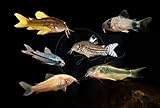
- Important: Please check your local weather before ordering. Even with double insulation and heat/ice packs, extreme temperatures (below 32°F or above 92°F) can impact shipments. Orders placed during such conditions will not qualify for DOA (Dead on arrival) claims.
- Package Includes: 3 Assorted Corydoras Catfish
- Variety: Mix of 2-3 different species including Julii Cory, Pygmy Cory, Sterba's Cory, Gold Lazer Cory, Albino Cory, and Panda Cory
- Suitable for: Freshwater Aquariums
- Benefits: Peaceful community fish, helps keep tank clean, adds variety and interest
- Confirm the actual tank volume and footprint, along with the needs of its current inhabitants.
- Make sure the aquarium is cycled before introducing fish.
- Choose a species and group size that suit the setup, rather than selecting by adult length alone.
- Provide a species-appropriate diet and cover, and monitor water conditions as part of regular care.
How to choose
- If you have a suitable aquarium of at least 10 gallons: pygmy Corydoras are the clearest choice in the care guidance here; plan for a social group and appropriate food and cover.
- If you have a 5-gallon aquarium: do not treat a small pygmy Corydoras group as a guaranteed fit. Aquarium Co-Op notes it may be shy; assess the full setup before deciding.
- If you have a mature, planted aquarium with algae and biofilm: Otocinclus may be an option if you can provide supplemental food and stable conditions.
- If considering a pleco or another catfish: identify the species first and check its adult size and care requirements. A small juvenile or a “small catfish” label does not establish that it will remain suitable for a small tank.
Product prices and availability are accurate as of the date/time indicated and are subject to change. Any price and availability information displayed on Amazon at the time of purchase will apply.




