Do these 3 things before closing this tab:
1Repair Windows errors before they cause bigger problems2Fix the driver behind crashes, sound loss and screen glitches3Clear out junk files and repair common Windows errorsMaro Reef (Koʻanakoʻa) in the Northwestern Hawaiian Islands supports a diverse reef-fish community. Official descriptions specifically report numerous butterflyfish and surgeonfish, giant trevally (ulua), bluefin trevally (omilu), white-tip reef sharks, gray reef sharks, and Galápagos sharks. Because this huge, remote reef has been sampled only in selected habitats and depths, published descriptions are representative rather than a complete species checklist.
Fish and sharks documented at Maro Reef
The clearest Maro-specific records come from Papahānaumokuākea Marine National Monument descriptions and a NOAA environmental-impact statement. They identify the following fish or groups at the reef:

| Fish or group | What the Maro-specific descriptions report |
|---|---|
| Butterflyfish (family Chaetodontidae) | Numerous species occur on the reefs. |
| Surgeonfish and tangs (family Acanthuridae) | Numerous species occur on the reefs. |
| Giant trevally, or ulua (Caranx ignobilis) | Large individuals have been seen in open reef waters. |
| Bluefin trevally, or omilu (Caranx melampygus) | Large individuals have been seen in open reef waters. |
| White-tip reef shark (Triaenodon obesus) | Reported from the reef, including its open waters. |
| Gray reef shark (Carcharhinus amblyrhynchos) | Reported from the reef, including its open waters. |
| Galápagos shark (Carcharhinus galapagensis) | Large schools, with individuals described as six to eight feet long, are reported as a common sight in shallow waters. |
The monument describes Maro Reef as supporting “numerous butterflyfish and surgeonfish species” and notes that large ulua and omilu have been seen in open waters alongside white-tip and gray reef sharks. The Galápagos-shark description refers to reported sightings, not a reef-wide population estimate.
What kinds of reef fish are represented?
Butterflyfish
Butterflyfish are closely associated with coral-reef habitats. NOAA’s regional Hawaiian fish inventory includes longnose, multiband, and ornate butterflyfish among the butterflyfish recorded in Hawaiian waters. Those inventory entries provide regional context; they do not establish that each named species was observed at Maro Reef.
#1 Best Overall
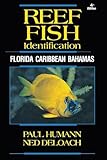
- ENHANCED IDENTIFICATION - Features crystal-clear, full-color photos and detailed descriptions of reef fish, making identification easy and accurate for divers of all levels.
- COMPREHENSIVE COVERAGE - Explore the diverse marine life of Florida, the Caribbean, and the Bahamas with 548 pages of expertly curated content, ensuring you don't miss a single species.
- EXPERT KNOWLEDGE - Authored by renowned marine biologists Paul Humann and Ned DeLoach, providing reliable and up-to-date information on reef fish behavior and habitats.
- DURABLE AND PRACTICAL - Crafted with a water-resistant plastic cover and a convenient 6" x 9" size, this guide is built to withstand the rigors of diving and easy to carry on any dive trip.
- VISUAL LEARNING - Benefit from stunning, full-color illustrations that bring each species to life, aiding in quick recognition and enhancing your understanding of marine ecosystems.
Surgeonfish and tangs
Surgeonfish graze on algae and occupy several reef habitats. The regional inventory lists gold-ring, Achilles, blueline, yellow, orangeband, whitebar, and whitespotted surgeonfish. As with the butterflyfish examples, these are Hawaiian-region records rather than a Maro-specific checklist.
Trevally
Ulua (giant trevally) and omilu (bluefin trevally) are the two trevally specifically named for Maro Reef. The descriptions place large fish in open reef waters, where current, depth, and available prey can differ from conditions on shallow patch reefs or in lagoons.
Other reef-fish groups
NOAA’s Hawaiian inventory also contains parrotfish, goatfish, wrasses, damselfish, triggerfish, jacks, groupers, and angelfish. These groups are plausible regional reef context, but the inventory should not be read as proof that every listed group or species has been documented at Maro Reef.
Why Maro Reef does not have a simple complete fish list
Maro Reef covers approximately 1,934 square kilometres of reef area and is difficult to navigate and study. It is a submerged open atoll with sandy lagoons, steep reef slopes, large coral heads, ocean pinnacles, and patch reefs. Fish communities can change with each of those habitats and with depth.
NOAA monitoring surveys are designed to measure species composition, density, size, and biomass through standardized sampling. Missions in Papahānaumokuākea have included Maro Reef, but a survey samples particular depths, habitats, locations, and dates rather than every part of the reef. A sighting-based description also answers a different question from a density or biomass survey.
Deeper Papahānaumokuākea reefs can contain unusually high proportions of fish species found nowhere else. Consequently, fish seen in shallow water cannot represent the entire Maro Reef community, especially when deeper slopes and pinnacles are not sampled in the same way.
Rank #4

- 500-page reference detailing 1,600 animals with 2,000 photographs
- text focuses on mobile species, highlighting crustaceans, mollusks, worms and echinoderms
How to interpret observations and surveys
When two Maro Reef fish records are compared, the meaningful details are:
- Habitat: lagoon, patch reef, steep slope, pinnacle, or open water.
- Depth: shallow observations and deeper survey results may describe different assemblages.
- Method: visual reports, standardized transects, and other survey methods do not measure abundance in the same way.
- Date: records from different expeditions are not automatically evidence of a trend.
- Measure: presence, relative abundance, density, size, and biomass are distinct findings.
A regional inventory entry should therefore not be compared directly with a Maro-specific observation as though both were equivalent evidence.
Quick wins for a faster PC:
Scan for outdated or missing drivers - takes under a minuteDriver Scan →Clear out junk files and repair common Windows errorsFree Scan →Fix the driver behind crashes, sound loss and screen glitchesFind Drivers →Quick Recap
Best Value

- COMPREHENSIVE CONTENT - Explore three essential guides: Reef Fish, Reef Creature, and Reef Coral Identification, totaling 1248 pages of detailed marine life information.
- EXPERT AUTHORSHIP - Benefit from the knowledge of P. Humann and Ned Deloach, renowned authorities in marine identification, ensuring accuracy and reliability.
- UP-TO-DATE INFO - Access the most current information on reef ecosystems, with detailed species descriptions and behaviors, vital for divers and marine enthusiasts.
- CLEAR EXPLANATIONS - Navigate easily with user-friendly layouts and concise descriptions, making identification straightforward for both novice and experienced divers.
- VISUAL AIDS - Enjoy high-quality photographs and illustrations that enhance species recognition, providing a visual reference for accurate underwater identification.
What the documented record supports
- Maro Reef has numerous butterflyfish and surgeonfish.
- Giant trevally (ulua) and bluefin trevally (omilu) are specifically reported in open waters.
- White-tip reef sharks and gray reef sharks are documented at the reef.
- Galápagos sharks are described as common in shallow waters, with large schools reported.
- Its varied lagoons, patch reefs, slopes, coral heads, and pinnacles support different fish assemblages.
- No published official description cited here should be treated as a complete Maro-Reef species inventory.
Product prices and availability are accurate as of the date/time indicated and are subject to change. Any price and availability information displayed on Amazon at the time of purchase will apply.




