PC Slower Than It Used to Be?
A free scan shows the junk files, broken settings and background clutter dragging Windows down - then fixes them in one click.Free scan · Windows 10 & 11Crashes, No Sound, or Screen Glitches?
Random freezes, missing sound and display glitches usually trace back to one bad driver. Find and replace yours safely.Free scan · under a minuteCats can recognize some human speech sounds, including their own names, and can distinguish familiar human voices. The evidence supports recognition and learned associations—not human-like understanding of conversation, grammar, or sentence meaning. A cat that does not come when called may still have recognized the sound: studies often measured a small ear or head movement rather than whether the cat approached.
What “understanding” means in the cat studies
Researchers have tested whether cats distinguish particular sounds and voices, then observed how they respond. That is different from showing that cats understand words as people do or follow the meaning and grammar of open-ended conversation. The careful terms for the findings are recognize, discriminate, and learn an association.


A cat’s name can become familiar and salient through repeated experiences: it may precede food, petting, or play, or be heard in stressful situations. Recognizing the sound does not require assuming the cat understands the name as a human label.
Can cats recognize their names?
Yes. In a 2019 study, Saito and colleagues tested cats in household settings and a cat café using a habituation-dishabituation procedure. Cats heard a sequence of spoken words; after becoming accustomed to them, researchers played the cat’s name and looked for an increase in response. The study found that cats in household settings could distinguish their names from other words, including when an unfamiliar person spoke them.
#1 Best Overall
The reported sample counts were 16 cats in experiment one, 34 in experiment two, 29 in experiment three, and 33 in experiment four. Some cats took part in more than one experiment, so these figures are experiment counts, not a total of unique cats. (Saito et al., “Domestic cats (Felis catus) discriminate their names from other words,” Scientific Reports, 2019.)
What counted as a response
More than half the cats showed ear or head orientation to the voice stimuli. Fewer than 10% vocalized, moved their tails, or displaced themselves in response. Those less obvious orienting movements count as behavioral responses, even though they are not the same as coming over or communicating with a person.
Do cats recognize their owners’ voices?
A 2013 study by Saito and Shinozuka tested 20 domestic cats by playing voices calling the cats’ names. The cats differentiated their owner’s voice from unfamiliar voices. The University of Tokyo’s summary of the study says the cats responded mainly by orienting their heads or ears, rather than by vocalizing or moving their tails. This supports voice recognition; it does not establish that a cat will approach whenever its owner speaks.
What other speech-related findings add
Names of companion cats and people
A 2022 study reported that cats recognized at least one companion cat’s name. It also suggested that cats may recognize a human family member’s name, while noting limits and the need for further research. These findings concern specific name discrimination in a particular study setting, not general comprehension of human language.
Cat-directed speech
A separate 2022 study tested indoor companion cats’ discrimination between cat-directed and adult-directed speech, including whether the speaker was the owner or a stranger. It provides evidence about sensitivity to speech style in interaction, not proof that cats understand ordinary sentences as humans do.
Independent reader supportYour contribution helps us test, update, and keep practical guides available for everyone.Why a cat may not come when called
These experiments cannot diagnose why an individual cat does not approach when called. They tested responses to recorded sounds and observed behavior; they did not establish the cause of a particular cat’s response in everyday life. Motivation, context, attention, hearing, and the cat’s learning history may all matter, but the cited studies do not determine which explains any one cat’s behavior.
Quick Recap
Best Value
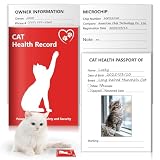
- 1.You’ll Get:When you choose our cat vaccines records tracker, you'll receive one notebook.This 12-page Kitty health journal has 8 dedicated pages for tracking your pup’s health, vet visits, and key details, with 4 blank pages at the end for jotting down extra notes, pet cat-related info, or anything else you want to record.
- 2.Ideal Size for Record Keeping:Each cat vaccine record book measures 5x3.5 inches folded; 5x7 inches unfolded, allowing for easy portability and storage.These handy health records notebook for cats with double sided printing, featuring enough space for all your pets important information,plus, it has dedicated spots for sticking on vaccine stickers and adding cute kitten photos.They offer a stylish and organized approach to pet health documentation, a must have addition to your pet supplies.
- 3.Premium Quality: The cat health record tracker’s cover features 300gsm coated paper with vibrant full-color printing and a protective laminate finish. Inside, 80gsm high-quality offset paper pages are durable and ink-resistant, ensuring no bleeding from pens or markers—so your records stay neat and easy to read.
- 4.Essential for cat owners: This kitten health record book is designed for vet clinics & owners. Track key health info (vaccines, exams, treatments) easily. When you’re away, pet sitters/family can quickly check medical history for seamless care. Kitten record book with photo, vital signs & ID sections, it helps in emergencies—even if your kitten gets lost.
- 5.Effortlessly Track Vaccinations and More:The cat canine health record booklets pages include:owner and cat information,medical history and hospitalizations,vaccination record and sticker,cat service providers,fecal examinations and de-worming,heartworm screening, prevention and treatment etc.This record keeping tool will ensure every important detail is accounted for and make this task easy, organized, and straightforward.Add this essential tool to your pet supplies for a happier, healthier pet.
Rank #4
- No approach does not prove no recognition. A cat may register a name or voice with only a small ear or head movement.
- Recognition is not the same as obeying. The name study tested whether cats distinguished sounds, not whether they would follow a command.
- The evidence is specific. The studies tested names, voices, or speech styles—not open-ended conversation or grammar.
Product prices and availability are accurate as of the date/time indicated and are subject to change. Any price and availability information displayed on Amazon at the time of purchase will apply.




