Do these 3 things before closing this tab:
1Scan for outdated or missing drivers - takes under a minute2Repair Windows errors before they cause bigger problems3Fix the driver behind crashes, sound loss and screen glitchesA Wollemi pine (*Wollemia nobilis*) in a Worcestershire garden reportedly produced both male and female cones, according to a 2025 news story. The structures described as “fruits” in the headline are cones, not edible fruit. The story says the owners hoped to collect and germinate seeds; it does not establish that they later did so or raised seedlings.
What tree is bearing “fruits” in the garden?
The tree is a Wollemi pine, an ancient conifer native to New South Wales, Australia. Despite its common name, it is not a true pine. It is the only known living species in the genus Wollemia, and can grow to more than 40 metres tall, according to the Australian Department of Climate Change, Energy, the Environment and Water (DCCEEW). The government describes it as a “living fossil.” DCCEEW’s Wollemi pine profile
The garden specimen belongs to Pamela and Alistair Thompson in Wichenford, Worcestershire. A 2025 Daily Galaxy article, reproducing reporting it attributes to the Express & Star, says the tree bore male and female cones. Pamela Thompson explained that the long, hanging structures were male cones and the round, spiky ones were female cones. Daily Galaxy’s 2025 report
Is the Wollemi pine bearing fruit?
No—not in the botanical sense meant by the headline. The report uses “fruits” informally for the tree’s reproductive structures, but identifies them as cones. Wollemi pines are conifers: their seeds develop in cones rather than in fleshy fruit. The report’s wording should not be read as meaning the tree produces fruit for people or pets to eat.
#1 Best Overall
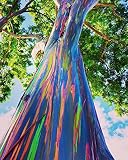
- 50 Seeds of Rainbow Eucalyptus Tree
- Sew 1/2 deep in good organic soil. Keep the seed bed moist while the plants germinate.
- Perfect for outdoor gardens, landscaping, containers, or as a cut-leaf plant for bouquets, wreaths, and crafts.
- Thrives in full sun with well-draining soil. Drought-tolerant once established and suitable for warm climates or patio growing.
Did the couple collect seeds or grow new trees?
The 2025 report quotes Thompson saying the couple hoped to collect and germinate some seeds later that year. It does not confirm that seeds were collected, that they were viable, or that any seedlings grew. Those are distinct steps: a female cone’s presence alone does not establish successful pollination or viable seed.
The couple had written in 2024 that their Wollemi pine had male and female cones and discussed the tree reaching reproductive maturity after 12 years. That earlier account offers context about their specimen, but it does not independently verify the outcome of the seed plan described in the later news report. Pear Tree Cottage Garden’s 2024 account
Rank #2
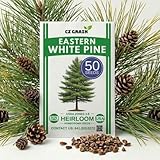
- 50 TREE SEEDS INCLUDED: Provides multiple planting opportunities for growing Eastern White Pine trees from seed. Allows flexibility for spacing, thinning, or selecting the strongest seedlings as they develop.
- MATURE SIZE AND GROWTH: Eastern White Pine can reach 50–80 feet tall or more with a spread of 20–40 feet at maturity. Fast growth in early years makes it suitable for long-term landscape planning and coverage.
- EVERGREEN FOLIAGE: Features soft, flexible needle clusters that remain green year-round. Needles typically grow in bundles and create a full, layered appearance.
- SUNLIGHT REQUIREMENTS: Thrives in full sun but can tolerate partial sun in some conditions. At least 6 hours of direct light supports optimal growth and structure.
- COLD HARDINESS: Suitable for USDA Zones 3–8, making it a reliable option for colder climates. Tolerates winter conditions once established.
What is the world’s rarest tree?
Wollemi pine is exceptionally rare in the wild, but “the world’s rarest tree” is not a settled, timeless ranking. DCCEEW calls it one of the world’s rarest trees. Its profile’s 2021 estimate counted 89 individuals across four naturally occurring stands in New South Wales: 46 mature trees, 32 true juveniles and 11 functionally juvenile individuals. Those dated figures are not a 2026 census.
The superlative has also been applied to other trees. Manaaki Whenua – Landcare Research says *Pennantia baylisiana* was once listed in Guinness as the world’s rarest tree; propagation later produced hundreds of saplings, with more than 200 returned to Ngāti Kuri for planting. The comparison is a reminder that rarity claims depend on what is being counted, where, and when. Manaaki Whenua’s account of *Pennantia baylisiana*
Recommended Free Tools
Rank #3

- Produces delicious and highly prized pine nuts, perfect for culinary use.
- Features a distinctive umbrella-shaped canopy that adds elegance to any landscape.
- Thrives in warm, dry climates and is highly drought-tolerant once established.
- Provides excellent shade with its wide-spreading branches, making it a great addition to gardens and parks.
- Grows into a majestic, long-lived tree that enhances property value and beauty for generations.
What tree survived the dinosaurs?
Wollemi pine is often described as ancient or a “living fossil,” but that phrase does not mean scientists have identified an individual tree that has lived since the age of dinosaurs. It refers to the lineage’s ancient history and the survival of a distinctive conifer genus. The living species is *Wollemia nobilis*, known naturally from a restricted area of Wollemi National Park in New South Wales.
Where does Wollemi pine grow in the wild?
Its natural habitat is warm temperate rainforest in deep sandstone gorges and gullies in Wollemi National Park. DCCEEW’s profile lists both the extent of occurrence and area of occupancy as 4 km². The wild sites are protected; the department warns that unauthorised access risks trampling and introducing soil-borne pathogens. The precise locations should not be sought out or shared.
Rank #4

- Fast Growing Evergreen Ornamental Tree (150 ft) – Great for a Bonsai Project
- Zones: 8 -10 – Grows in Poor Sandy Soils – Drought Tolerant
- Long Graceful Elegant Needles Weep Down from Branches growing from a Straight Trunk – Produces Cones in January to February
- Easy to Grow with High Germination Rates – Start Seeds in Individual Pots and Transplant at 1 to 3 Feet Growth (18 – 24 Weeks)
- Seeds are for the current and following growing seasons. Growing instructions and plant Images are included on the seed envelope. Seeds are stored in environmental conditions that promote seed life (Dark/Dry/Cool)
How is the species threatened—and protected?
DCCEEW identifies several threats to the naturally occurring population:
- Invasive soil-borne water pathogens, including Phytophthora cinnamomi and Phytophthora multivora.
- Severe or frequent fire.
- More frequent extreme drought and fire associated with climate change.
Recovery measures include habitat protection and limiting access, fire management, treating infected individuals with phosphite, seed banking, maintaining genetically diverse living collections, and ex situ propagation and translocation. These efforts aim to reduce risk to the wild population, not simply to increase the number of ornamental trees in gardens.
Free tools Windows power users keep installed
One-click scans. No signup required.
Best Value

- SEED CONTENTS: Includes 20 rose seeds for starting flowering garden plants. The packet quantity refers to the seeds supplied for sowing.
- FLOWER-GARDEN USE: Grow seedlings toward a rose planting in a bed or border. Allow room for the plant to develop before choosing its final spacing.
- LIGHT AND SOIL: Choose a sunny site with good drainage. Prepare a growing medium that holds moisture while allowing excess water to drain away.
- CONTAINER PLANNING: Use a draining container with room for the roots. Check moisture regularly because container soil can dry more quickly than a garden bed.
- SEEDLING DEVELOPMENT: Handle young roots carefully when moving plants. Flower form and appearance develop as the seedlings mature and can vary between plants.
How do wild, translocated and nursery trees differ?
| Category | Where and why | Counted in the 2021 figure of 89 wild individuals? |
|---|---|---|
| Naturally occurring population | Wild stands in Wollemi National Park; the species’ natural population. | Yes. DCCEEW’s 2021 estimate covers this population. |
| Translocated populations | Managed stands established in the park as a conservation measure. DCCEEW says two were established in 2019 with 218 saplings each. After the 2019–20 fires, 64 survived at one site and six at the other; both sites were augmented with 250 saplings each in 2021. | No. DCCEEW lists the three translocated stands separately from the naturally occurring population. |
| Commercial nursery plants | Cultivated plants available through commercial propagation; they can raise awareness of the species. | No. DCCEEW says commercially grown plants are not used for conservation purposes. |
The translocation figures describe managed plantings, not additions to the 89-individual natural-population estimate. A garden specimen’s cones are therefore an interesting report about a cultivated tree, not evidence by themselves that the wild population has grown.
Quick Recap
Product prices and availability are accurate as of the date/time indicated and are subject to change. Any price and availability information displayed on Amazon at the time of purchase will apply.




