Make a workplace more accessible by asking an autistic employee what creates a barrier, agreeing a practical change together, and checking whether it works. There is no single set of adjustments that suits every autistic person. Clear instructions, predictable routines, sensory changes, flexible working and a named contact are common options—but the right choice depends on the person, role and workplace.
The legal and public-support information below is UK-focused. Great Britain and Northern Ireland have different legal references and support routes; readers elsewhere should check local requirements.


Start with the person and the barrier
Ask what part of the work environment, communication or routine is difficult, how it affects the employee’s access to work, and what change they think might help. Keep the conversation specific and focused on the job rather than making assumptions based on an autism diagnosis. The National Autistic Society (NAS) notes that autistic people differ, and an adjustment that helps one person may be unnecessary or unhelpful for another.
Agree how instructions and feedback should be given, who the employee can contact with questions, and when you will review the arrangement. A request can explain the issue, the disadvantage it creates and the adjustment that could reduce it. Record what you agree. If a proposed change is not practical, discuss another option that addresses the same barrier.
Quick wins for a faster PC:
Scan for outdated or missing drivers - takes under a minuteDriver Scan →Clear out junk files and repair common Windows errorsFree Scan →Fix the driver behind crashes, sound loss and screen glitchesFind Drivers →#1 Best Overall
Choose adjustments that match the barrier
Adjustments can change workplace practices or physical features, or provide an auxiliary aid or service. They can be combined—for example, written task instructions alongside a quieter workspace—and may apply during recruitment as well as after someone starts work.
Communication and processing
- Use clear, precise language and provide step-by-step instructions in writing.
- Follow spoken directions with a written summary; give feedback in writing if that suits the employee.
- Break large amounts of information into smaller sections and share presentation materials in advance where possible.
- Agree a communication channel and put important rules and expectations in writing.
- Make social events optional, and name a contact the employee can approach with specific questions.
Avoid relying on irony or sarcasm to communicate important instructions. What matters is agreeing a way to communicate that the employee can reliably use.
Rank #2
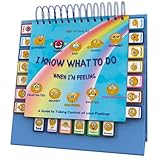
- Understand & Express Everyday Feelings: Visually guides children ages 3–5 to recognize and name their emotions. This flipbook focuses on common feelings kids experience every day and helps build self-awareness and emotional vocabulary—essential skills for communication and healthy social growth.
- Enhance Coping with Emotions and Behavioral Development: Each page pairs a feeling with simple coping ideas that help children calm down, self-regulate, and make positive behavior choices at home or school—building emotional resilience along the way. There’s also space for kids to add their own coping strategies, making it personal and meaningful.
- Easy-to-Use Emotion Tabs for Guidance: Large picture tabs feature the emotion images, so kids can quickly find how they feel from wherever they are in the book. Includes 20 common moods and simple coping strategies for each one.
- Durable Visual Tool for Everyday Use: Built to be both easy and durable for kids to use in any setting. Features a protective hard cover that helps prevent bending or damage, thick laminated 9" x 9" pages, a sturdy stand, large clear text, and picture tabs for frequent use in classrooms, ABA therapy sessions, or calm-down corners.
- Supportive for Neurodiverse Learners: Helps children with autism, ADHD, communication delays, or non-verbal needs identify emotions and learn coping skills through easy-to-understand visuals.
Planning and predictability
- Break larger tasks into smaller components, and use a regular timetable or task-progress tool if helpful.
- Give advance notice of changes where possible.
- Set regular check-ins and make feedback specific and timely.
- Offer a mentor or named colleague who can explain unwritten routines and answer questions.
Sensory environment and location
- Ask whether desk placement, access to a quieter room or adjusted lighting would help.
- Consider flexible start and finish times, or home or hybrid working if the role allows it.
- Plan breaks and routines around the employee’s stated needs.
- Offer noise-cancelling headphones only if the employee wants them and their use is safe and workable for the role. They are one possible aid, not a universal solution.
Recruitment, onboarding and formal processes
Consider adjustments at interview, assessment, job trial, internship, induction and performance-management stages—not only in a permanent job. The NAS gives sharing interview information in advance and providing contact details for HR or the recruiting manager as examples. Onboarding can include a named mentor, written task plans, scheduled check-ins and clear explanations of workplace norms.
Before a formal performance or conduct procedure, Acas advises employers to ensure they have done all they reasonably can to support the employee. For a formal meeting, setting out records clearly may help an autistic employee who finds disorganized information distracting. Support does not excuse misconduct; it helps make the process accessible so concerns can be addressed fairly.
Recommended Free Tools
Assess whether an adjustment is workable
Compare options against the barrier the employee has identified, rather than starting with a product or a standard autism checklist. The NAS describes reasonableness as case-specific and quotes the Equality and Human Rights Commission: “The test of what is reasonable is ultimately an objective test and not simply a matter of what you may personally think is reasonable.”
In practice, consider whether the adjustment is effective, practical and affordable in light of the organization’s size and resources, how disruptive it would be, and any health and safety implications. If one option is not workable, discuss alternatives that could address the same disadvantage.
Rank #4

- 💪 Durable & Reusable: The 1.5" x 1.5" picture communication cards are made from durable plastic for repeated use. Designed as a functional visual communication resource for use by educators, therapists, caregivers, and other communication partners in homes, schools, clinics, and therapy settings.
- 📚Evidence-Based: The communication photo cards aim to equip individuals in the spectrum a quick, self-initiating, and functional communication skill. The system starts with the exchange of simple icons and progresses rapidly to building sentence structures, such as "I want salad," "I see train," and "I smell pizza."
- 📖 Ready to Use: No printing, cutting, or laminating required! Each kit arrives ready to use, neatly organized in its own storage box with the eight most commonly used categories: Food (30 pcs), Prefered Items(31 pcs), School (15 pcs), Places (15 pcs), Home Activities (15 pcs), Signs (15 pcs), Emotions (15 pcs), and Actions (15 pcs). Each card is handcrafted to a standard size 1.5x1.5" inch size, with rounded corners to ensure they’re safe —no scratching or poking.
- ✔️ Systematized Organization: The binder includes a set of five heavy-duty 10-mil poly dividers, each color-coded and labeled for easy reference. Each divider is equipped with three sturdy rough strips that securely hold up to 30 cards on both sides. The binder also features two interior storage pockets for loose materials, is black in color, and come in two measurements small 9x7" or large 11.5" x 8.5", making it easy to carry in your backpack or by hand.
- 💖 172 Pieces!!! Everything You Need;This comprehensive bundle includes:1 storage/gift box,1 sturdy binder, 150 colorful photo cards,1 sentence strip, 5 sturdy divider tabs, 1 easy-to-follow pamphlet explaining the 6 steps of the PCS system, 6 extra cards to expand language and cognitive skills: I see __, I feel __, I hear __, I smell __, I touch __, It is __,5 blank cards for customization,1 bonus reward card (tablet/phone), 1 Sticker. Everything shown in the pictures is included—ready to support learning and cognitive development.
Understand UK legal duties and support routes
In Great Britain, the Equality Act 2010 provides disability protections; in Northern Ireland, the relevant reference is the Disability Discrimination Act 1995. NAS guidance says autism can meet the legal definition of disability, and a formal diagnosis is not necessarily required. The question concerns the effects on the person and the disadvantage in context. An employer’s reasonable-adjustment duty applies when it knows, or could reasonably be expected to know, that a worker meets the definition. This is a practical summary of NAS guidance, not legal advice; check current law and the facts of an individual case.
Eligible people aged 16 or over who live and work in England, Scotland or Wales and are in paid work—or due to start or return within 12 weeks—may be able to apply to Access to Work for disability-related support to do their job or travel to work. NAS lists possible support such as a job coach, travel companion or costs where public transport cannot be used, planning or text-to-speech software, headphones, employer advice and work-related mental-health support. The scheme does not fund reasonable adjustments that remain the employer’s responsibility. Northern Ireland has a separate Access to Work service. Check current eligibility and terms with the relevant official scheme.
Why manager training matters
In an Acas-commissioned YouGov survey of 1,000 employees in Great Britain, fielded 5–11 February 2026, 32% said their employer was effective at training managers to identify and make reasonable adjustments for neurodivergent employees; 35% said their employer was ineffective, and 32% did not know how effective it was. These rounded figures are not autism-specific: the survey question covered neurodivergence including autism, ADHD, dyslexia, dyspraxia and dyscalculia.
Training can help managers discuss needs and put agreed adjustments into practice, but it does not replace asking each employee what they need.
Quick Recap
Product prices and availability are accurate as of the date/time indicated and are subject to change. Any price and availability information displayed on Amazon at the time of purchase will apply.




