Autism-friendly hiring makes expectations clearer and assesses candidates on skills that matter to the job, while offering reasonable adjustments where needed. It does not mean lowering standards or assuming every autistic applicant needs the same support. The difference is chiefly in how employers design recruitment—and whether candidates can show their abilities without unrelated social or sensory demands getting in the way.
What changes in autism-friendly hiring?
Traditional recruitment often follows a familiar pattern: a generic job description, a CV screen, then an in-person interview with unfamiliar people and questions the candidate has not seen in advance. The UK government’s Buckland Review of Autism Employment says this model does not work well for autistic people. Broad prompts such as “tell us about yourself,” hypothetical questions, expectations around eye contact, and judgments about social presentation can disadvantage some candidates even when those traits are not essential to the role.

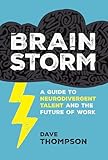


An autism-friendly process makes the job requirements and recruitment stages more explicit, offers accessible ways to participate, and uses consistent, job-related criteria. It aims to remove barriers that are irrelevant to performance—not meaningful assessment of the work.
| Recruitment stage | Traditional approach that may create barriers | More autism-friendly approach |
|---|---|---|
| Job advert | Generic descriptions that leave essential skills or expectations unclear | Plain language that distinguishes essential requirements from preferences and explains the role clearly |
| Application | One required format, often a CV and standard application form | Clear instructions and, where practical, more than one way to apply |
| Adjustments | Little information about how to ask for support; applicants may feel disclosure is required | Explain how to request adjustments, give examples, and invite requests without requiring a diagnosis |
| Interview | Unfamiliar setting, unseen questions, and possible reliance on eye contact or social ease | Explain the format, share questions in advance where possible, use a quiet space, and assess answers against role-related criteria |
| Practical assessment | Unstructured tasks or social exercises that do not reflect the actual job | Use an accessible task tied to real duties, or consider a short paid work trial where appropriate |
| Selection | Impressions can vary between interviewers and candidates | Use consistent questions or tasks, objective scoring, and criteria linked to the work |
How employers can make each stage more accessible
Make the advert and application clear
State the essential skills and duties in concrete language, explain each recruitment stage, and specify what applicants need to submit. Where possible, provide alternative application routes rather than making one format the only way to demonstrate suitability. Tell applicants how to request adjustments and give examples of what may be available. The Acas guidance on making an organisation neuroinclusive recommends explaining adjustment options; proactively offering this information can make support less dependent on an applicant disclosing a diagnosis or personal details.
The Tool Desk
Outbyte Driver Updater FREEScan for outdated or missing drivers - takes under a minuteDriver Scan →Outbyte PC Repair FREEClear out junk files and repair common Windows errorsFree Scan →Structure interviews around the role
Tell candidates what the interview will involve, who will be present, how long it will last, and whether there will be a task. Share questions in advance where possible, and consider a quiet location. Ask consistent questions and score answers against pre-agreed criteria. Interviewers should not treat eye contact, body language, or conversational style as evidence of competence unless a specific skill is genuinely necessary for the job.
Choose assessments that test actual work
A practical assessment or short paid work trial may give a candidate another way to show relevant skills. It is not automatically fairer than an interview: the task must reflect genuine job requirements and be accessible itself. Explain what the assessment involves and how it will be evaluated, and consider an adjustment to its format or environment.
Rank #2

- Package includes: You will receive 6 pcs daily step visual schedules (covering brushing teeth, handwashing, potty training, shower, nighttime, and morning routines), plus 3 sheets adhesive dots. This training chart for children set provides all essentials to support daily self-care for kids
- Premium Quality: These routine charts are crafted with laminated material for excellent waterproof performance. These routine chart for kids are durable, tear-resistant, and easy to wipe clean. The vivid, clear illustrations make steps simple to follow, ideal for repeated daily use
- Comprehensive routine coverage: Each children self care visual chart breaks down tasks (like the brushing teeth chart and potty training chart) into simple, numbered steps. The night routine chart for kids and morning routine chart for kids cover full daily cycles, guiding children through self-care with clarity
- Easy to use: Use the included adhesive dots to attach the special needs and autism charts to walls, bathroom mirrors, or bedroom doors. The daily step visual guide format requires no extra tools, letting kids reference routines independently
- Wide applications: Designed for special needs and autism support, these children self care chart pieces help kids build independent hygiene habits. They work for home, classrooms, or therapy spaces, promoting confidence as children master daily self-care tasks
What candidates can ask for
An autistic candidate can ask the employer what adjustments are available and describe what would help them take part. Possible requests include receiving interview questions in advance, having a quiet interview space, or completing a practical assessment instead of—or alongside—some interview elements. The most useful adjustment depends on the person, the stage, and the job; an autism diagnosis alone does not tell an employer what an individual needs.
In the UK, the Buckland Review discusses reasonable adjustments under the Equality Act 2010. Legal duties and terminology vary by jurisdiction, so candidates and employers outside the UK should check the rules that apply where the job is based. This is general information, not legal advice.
Why these changes matter—and what the evidence can establish
The Buckland Review reports that just 11% of applicants who had disclosed their needs were offered reasonable adjustments, according to the National Autistic Society Autism Insight Panel. It also reports that 73% of more than 500 autistic young people and their parents and carers in an Ambitious about Autism survey felt anxiety about the application process and its inaccessibility were among the biggest barriers to finding work. These figures describe the reported groups; they are not universal rates for all applicants or employers.
The UK government’s 2026 rapid evidence assessment, covering literature published from January 1997 through April 2026, included 15 moderate- or high-quality studies in its core evidence base. It found stronger evidence that inclusive approaches can improve employer knowledge, attitudes, awareness, and stated intent to hire than evidence that they directly increase disabled people’s hiring. Structured criteria, standardized interviews, objective scoring, and anonymized screening are promising approaches, but much of the evidence concerns disability-inclusive recruitment generally rather than autistic candidates specifically. A better-designed process is worthwhile, but current evidence does not establish that any single practice guarantees improved hiring outcomes.
Quick Recap
Best Value
Rank #4
Product prices and availability are accurate as of the date/time indicated and are subject to change. Any price and availability information displayed on Amazon at the time of purchase will apply.




