To build a field-training program, start with the actual work: list the tasks people must perform, the skills and prerequisites each task requires, and the hazards and controls involved. Then map those tasks into supervised learning phases, define how trainers will assess performance, and set a process for retraining and improving the program. For animal-care and control field services, Best Friends Animal Society’s 2022 playbook offers practical examples of phases, checklists, and forms; its procedures are examples to adapt, not rules for every organization or jurisdiction.
1. Define the work and the outcome
Describe what a trainee must be able to do on the job—not simply what information they should hear. State which roles and operating conditions the program covers, what satisfactory performance looks like, and what a trainee must already know or be authorized to do.
- Set the scope: Identify the roles, locations, equipment, service conditions, and limits covered by training.
- Specify observable outcomes: For each important task, describe the actions or decisions that demonstrate acceptable performance.
- Check prerequisites: Record required prior knowledge, qualifications, or organizational permissions separately from skills the program will teach.
- Verify applicable rules: Check the requirements that apply to the work in its jurisdiction. General program guidance does not replace occupation-specific or local requirements.
For a field-service role involving animals, outcomes might concern the tasks the role actually performs, under the organization’s procedures and controls. Do not assume that an animal-control example automatically governs veterinary, shelter, rescue, or other field work.
2. Analyze tasks, hazards, and controls
Break each role into teachable tasks, including tasks that happen infrequently or during emergencies. For each task, record its prerequisites, the conditions in which it is performed, hazards, controls, and the evidence a trainer can observe. This task-level analysis helps prevent a course from overlooking work that is rare but consequential.
Recommended Free Tools
#1 Best Overall

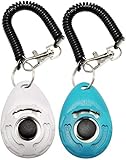
- New communication tool about you and your puppy.
- Pet Dog Training Clickers for Puppy, Cat, Potty, Bird, Horse, Pet, Trainer Training Tools, Behavior Aids
- Just press to mark desired behavior, then reward for faster learning.
- The spring wrist length : 16cm/6.3inches and can strength to 25cm/9.84inches.
- Package include : Black + Blue,each color 1 pcs.
NIOSH’s Job Training Analysis: A Process for Quickly Developing a Roadmap for Teaching and Evaluating Job Skills is specifically intended to help structure jobsite skill instruction. In safety-related work, OSHA guidance likewise emphasizes role-specific and hazard-related training. Use the analysis to connect instruction to the work rather than treating safety as a separate, generic lecture.
- What steps must the worker perform, and in what order?
- What decisions or signs require the worker to pause, seek help, or follow an escalation procedure?
- What equipment, procedures, or other controls should be used?
- What mistakes or changing conditions could expose the worker, coworkers, members of the public, or animals to harm?
- Which tasks can be practiced safely in the field, and which need a controlled setting first?
3. Build phases around demonstrated ability
Set a timeline and define what each phase covers, who may train or assess it, and what evidence is required to progress. A schedule makes the program manageable, but elapsed time or completed shifts alone do not show that a trainee can perform a task competently.
- Orient and explain: Introduce the role, relevant procedures, hazards, controls, and limits on the trainee’s authority.
- Demonstrate: Have a qualified trainer show the task and explain the decisions, precautions, and standards involved.
- Practice under supervision: Let the trainee perform the task with a trainer observing and providing feedback. Adjust the level of supervision to the task’s risk.
- Assess against stated criteria: Record whether the trainee meets the defined standard, needs more practice, or must not yet perform the task independently.
- Authorize progression deliberately: Move to less direct supervision or independent work only when the required evidence supports that decision and organizational rules permit it.
Best Friends Animal Society’s 2022 field-service playbook recommends planning phase timelines, procedures for testing, checklists and forms, resources, and a program manual. Use those elements to make a program consistent, but adapt the sequence and criteria to the role being taught.
Rank #2
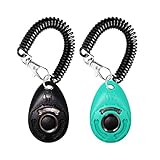
- ▼Come in 2 pack button clickers with wrist strap in 2 different colors: Lake Blue, White
- ▼Can be used to train the dog basic obedience, small trick, and correct the bad behavior; Scientific method of training your pet safely and easily.
- ▼Stop barking and dog obdeience. Train your dog quiqly just by simply pressing the clicker and command.
- ▼Well constructed and durable, metal clicker will not rust or break.
- ▼Big button for easy clicking and loud sound. Easy to use in any position.
4. Choose instruction to fit the task and its risk
Peer-to-peer instruction, on-the-job training, and demonstrations at the worksite can help workers learn in context. The method should also control the risks of learning and provide enough evidence for the decision being made. OSHA advises making training understandable to workers, including by accounting for language and literacy needs. UK Health and Safety Executive (HSE) guidance states: “’On-the-job’ training should be structured and linked to risk assessments and associated control measures including procedures.”
Do these 3 things before closing this tab:
1Repair Windows errors before they cause bigger problems2Fix the driver behind crashes, sound loss and screen glitches3Clear out junk files and repair common Windows errors| Method | Useful for | Key design consideration |
|---|---|---|
| Worksite demonstration and coached practice | Tasks where the real setting, equipment, and workflow matter. | Plan supervision and controls so practice does not expose people to unacceptable risk; standardize what trainers demonstrate and observe. |
| Peer-to-peer instruction | Sharing practical knowledge and supporting learning within a team. | Confirm the peer trainer is qualified and aligned on procedures and assessment criteria; familiarity alone is not proof of competence to train. |
| Classroom instruction | Explaining procedures, concepts, and decisions before field practice. | Pair it with practical assessment when the learner must demonstrate a field skill. |
| Simulation or controlled practice | Rare, complex, or safety-critical situations where practice in live conditions is unsuitable or insufficient. | Make clear what the exercise can and cannot establish about performance in the actual work setting. |
HSE says assessment should be more robust for safety-critical work and notes that on-the-job training in such settings may need support from classroom instruction or simulation. The U.S. Government Accountability Office’s 2026 federal training guide describes a move toward integrated, blended approaches in federal training; that trend does not establish that blended training is best for every workplace. Choose based on task realism, risk during practice, consistency between trainers, accessibility, staffing needs, and the strength of the competence evidence.
5. Prepare trainers, materials, and records
Before a trainee begins, identify qualified trainers and align them on the procedures, boundaries of their role, feedback approach, and criteria for passing each phase. Give trainers usable materials so the content does not depend on which person happens to be available.
Rank #3

- Cat Training Clicker Kit - Includes a finger ring clicker and a retractable target stick with yellow ball, giving you two tools for guiding and interacting with your cat during training or play.
- Finger Ring Clicker for Clear Feedback - The included finger clicker produces a crisp, easy-to-press sound, helping guide your cat during training or interactive play without startling them.
- Eye-Catching Yellow Target Ball - The bright yellow ball at the tip of the target stick catches your cat’s attention and supports guided movement for interactive sessions.
- Retractable Stick for Convenient Use - The stainless steel target stick extends and retracts smoothly, allowing adjustable length for comfort, while keeping the target clicker compact and easy to store or carry.
- Versatile Training Accessory - Suitable for kittens and adult cats, this dual clicker kit can be used for a variety of interactive play or guided training sessions, and can also be used with other small pets.
Best Friends Animal Society’s 2022 animal field-service playbook names equipment checklists, field-training checklists, field report logs, daily and weekly observation reports, recommendation reports, remedial-training worksheets, and phase summaries as examples. An organization can adapt relevant forms into a manual containing its procedures, phase plan, resource list, and assessment process. These are practical examples, not universally required documents.
- Task checklist: The steps or decisions to observe, with clear performance criteria.
- Observation record: What the trainee did, the conditions observed, feedback given, and the result against the criteria.
- Phase summary: Which requirements are met, outstanding, or referred for further practice or assessment.
- Remediation record: The performance gap, the practice or instruction planned, and how the skill will be reassessed.
Keep records specific enough to support decisions and follow-up. A checked box or completed form documents an activity; it does not by itself prove competence.
6. Assess performance and respond to gaps
Set assessment criteria before training, not after a trainer has formed an impression of the trainee. Use direct observation for practical tasks and add written or oral assessment where it tests knowledge or judgment the task requires. Best Friends’ playbook recommends planning phase-level testing procedures and combining written, oral, and observational assessment.
Rank #4
- EASY TO USE - Simple push button with distinct clicking sound.
- Comes with an elastic wrist band so you can leave it on your wrist or clip it to the leash or your pants.
- Not only train the dog but also the cat, bird, chicken, sheep a new behaviors like sit, fetch, roll over, lie down.
- For effective pet training ALWAYS reward with a treat after clicking.
- Can be used to train the dog basic obedience, small trick, and correct the bad behavior; Scientific method of training your pet safely and easily.
- State the standard: Define what correct performance looks like, including relevant precautions, decision points, and when to seek assistance.
- Observe the task: Assess the trainee performing under conditions appropriate to the skill and risk. Record what was observed rather than relying only on a general rating.
- Give specific feedback: Identify what met the standard and what needs to change, then agree on the next practice or instruction.
- Decide progression: Record whether the trainee met the criteria, needs further supervised practice, or must not yet perform independently.
- Reassess after a gap: Plan retraining and a further assessment that checks the original requirement. Do not treat attendance at retraining as evidence that the gap is resolved.
For safety-critical tasks, match the rigor of assessment to the possible consequences of error. A written test may establish knowledge but cannot alone establish practical ability; similarly, a single observation may not establish reliable performance across different conditions.
Independent reader supportYour contribution helps us test, update, and keep practical guides available for everyone.7. Evaluate the program and improve it
Assess whether the program itself is working, not only whether individual trainees completed it. OSHA’s safety and health program guidance recommends an initial evaluation and periodic evaluations at least annually. That is guidance for the safety and health program it describes, not a universal field-training law. It also recommends involving workers and reviewing both lagging and leading indicators.
| Measure type | Examples | What it can help reveal |
|---|---|---|
| Lagging | Injuries or other adverse outcomes relevant to the work. | Where harm has occurred; a low count alone does not establish that training or controls are effective. |
| Leading | Hazards reported, training completion, and timeliness of corrective actions. | Whether workers are identifying risks, completing planned learning, and addressing problems. |
Interpret measures in context. Training completion is useful to track, but it does not demonstrate that trainees can do the work. Combine program records with worker feedback, observations of performance, information about hazards or incidents as appropriate, and evidence that required controls are followed.
Best Value
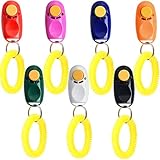
- EFFECTIVE TRAINING TOOL - This dog training clicker helps train dogs basic obedience and tricks instead of a dog bark shock collar while correcting bad behavior. Training like stop barking, sit, fetch, shake, lie down, and roll over it's as a useful sound training aid tool for your pets.
- ERGONOMIC DESIGN - The elastic wrist strap can secure the clicker on your hand firmly and makes you will never drop it. The dog training clicker is small enough to be hidden in your palm, comfortable to hold
- SIMPLE TO USE - Its bigger size is designed specifically for Europeans' and Americans' palms, and the bigger button makes it easier to press and comes right back up without getting stuck. easier to press and comes right back up without getting stuck.
- PACK OF 7 WITH BRIGHT, PLAYFUL COLORS - Coolrunner dog training clicker comes in Red, Pink, Blue, Orange, Green, White, and Black, which comes in an array of bright, vibrant colors. It can be an effective and happy communication mode with the pet.
- Size Information: The dog training size is 2.5'' x 1.2'', It’s bigger size is designed specifically for Europeans and Americans' palm.
GAO’s 2026 guide treats planning, design and development, implementation, and evaluation as connected parts of a training process: evaluation informs future planning. Use findings to revise task analyses, materials, trainer preparation, practice opportunities, or assessment criteria where a gap appears. The guide reports that 24 knowledgeable government officials and subject-matter specialists were consulted in its development; that figure describes how the guide was developed, not the effectiveness of any field-training program.
8. Adapt the framework to your setting
The sources describe different contexts, so apply their guidance within its stated scope:
- Best Friends Animal Society: Its 2022 playbook is a concrete field-service example for animal-care and control settings, including sample manuals and forms. Adapt rather than copy its procedures.
- OSHA: U.S. workplace safety guidance on education, training, and safety and health program evaluation. Check the rules and other requirements applicable to the employer and work.
- HSE: UK guidance on training and competence, including structured on-the-job learning linked to risk assessment and controls.
- GAO: A 2026 guide addressing strategic training and development in the U.S. federal government; its process framework can inform program design but does not impose a general workplace requirement.
- DOE: The Department of Energy’s training handbook describes a systematic approach for its context; the handbook states that it contains no requirements.
- OJJDP: Its 2020 publication addresses design, delivery, and evaluation of training and technical assistance. Apply its framework to the relevant setting rather than assuming it establishes animal-service procedures.
There is no broadly applicable success percentage, standard pass score, or fixed program duration established here. Set thresholds and schedules from the tasks, risks, applicable requirements, and evidence your organization needs—not an invented benchmark.
Quick Recap
Product prices and availability are accurate as of the date/time indicated and are subject to change. Any price and availability information displayed on Amazon at the time of purchase will apply.




