Some shelters leave breed names off adoption profiles because a dog’s appearance is an unreliable basis for assigning a breed, and a label can shape how people perceive the animal. Evidence from shelter studies suggests label removal may be associated with better adoption outcomes, but it does not prove that removing labels alone caused them. Profiles can still give adopters useful information by describing the individual dog’s appearance, observed behavior, and compatibility.
Why aren’t the dogs’ breeds listed on their kennels?
A visual breed identification is often an inference, not a verified fact. Fairfax County Animal Services explains that it omits breed from its dog kennel listings because visual identification is often inaccurate. A 2016 peer-reviewed study likewise describes shelter breed assignments as commonly based on owner reports or staff judgments about appearance, and discusses discrepancies between those labels and DNA analysis. The paper does not establish one general percentage for how often visual identifications are wrong.


When a shelter lacks verified documentation or DNA results, a specific breed name may say more than staff know. “Breed unknown” or “mixed breed” can make that uncertainty clearer. An Austin Animal Advisory Commission draft recommendation advises classifying dogs as mixed breed without verified documentation or DNA results; that is a recommendation, not confirmation that Austin adopted or implemented the policy.
Can breed labels change how adopters see a dog?
They can influence perception. In a 2016 video-rating experiment, participants rated pit-bull-type dogs as less attractive when given pit-bull-type labels. Labels describing comparable-looking dogs as other breeds did not improve perceptions over showing the dogs without labels. This finding concerns ratings in an experiment; it does not establish how every adopter will respond in a real shelter.
#1 Best Overall
The study also discusses behavioral differences between breeds alongside substantial variation among dogs within a breed. A label therefore cannot tell an adopter how a particular dog behaves. Specific observations—such as how the dog responds to handling or interacts with other dogs—are more directly useful, provided the shelter explains what has actually been observed.
What do adoption-outcome studies show?
A comparison at Orange County Animal Services found that removing breed labels was associated with more adoptions and shorter waits for adoption across nearly all breed groups, with the greatest impact reported for pit-bull-type dogs. The comparison was observational, and the shelter also expanded advertising and operating hours after label removal. Those simultaneous changes mean the findings do not show that removing labels alone caused the outcome.
Rank #2
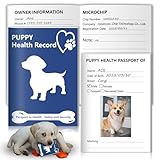
- Product Include:When you choose our dog vaccines records tracker, you'll receive one notebook.This 12-page puppy health journal has 8 dedicated pages for tracking your pup’s health, vet visits, and key details, with 4 blank pages at the end for jotting down extra notes, pet-related info, or anything else you want to record.
- Ideal Size for Record Keeping:Each dog vaccine record book measures 5x3.5 inches folded; 5x7 inches unfolded, allowing for easy portability and storage.These handy health records notebook for dogs with double sided printing, featuring enough space for all your pets important information,plus, it has dedicated spots for sticking on vaccine stickers and adding cute puppy photos.They offer a stylish and organized approach to pet health documentation, a must have addition to your pet supplies.
- Premium Quality: The puppy health record tracker’s cover features 300gsm coated paper with vibrant full-color printing and a protective laminate finish. Inside, 100gsm high-quality offset paper pages are durable and ink-resistant, ensuring no bleeding from pens or markers—so your records stay neat and easy to read.
- Effortlessly Track Vaccinations and More:The canine health record booklets pages include:owner and puppy information,medical history and hospitalizations,vaccination record and sticker,dog service providers,fecal examinations and de-worming,heartworm screening, prevention and treatment etc.This record keeping tool will ensure every important detail is accounted for and make this task easy, organized, and straightforward.Add this essential tool to your pet supplies for a happier, healthier pet.
- Essential for Pet Owners:Designed for veterinary clinics and pet owners, these puppy vaccination record books make tracking key health details—like shots, checkups—simple and organized. When you’re away and leave your pup with a sitter or family, the dog medical record and vaccine book serves as a quick reference for their medical history. Plus, dedicated sections for photos, physical markings, and ID info prepare you for emergencies, helping you recover your friend quickly if they get lost.
The 2026 Austin Animal Advisory Commission draft recommendation summarizes Cohen et al. (2020) as finding that median length of stay fell by 11.3 days across three limited-admission shelters in New York State after labels were removed. Because the figure is reported secondhand in the commission document, it should not be treated as a universal estimate of what shelters can expect.
What should an adoption profile say instead?
A profile without a breed guess need not be vague. It can help a prospective adopter picture the individual animal and decide whether to meet them. Shelters can distinguish confirmed history from staff observation and avoid presenting an inference as fact.
- Appearance: clear photos, approximate size, age, and coat description.
- Observed behavior: specific, contextual notes about how the dog behaves with people, other dogs, or in familiar settings.
- Compatibility: known information about the home, handling, or companions the dog may be comfortable with, while making clear when something has not been assessed.
- Uncertainty: wording such as “breed unknown” or “mixed breed” when lineage is unverified.
Behavior information is useful, but it also needs care. The 2016 paper recommends better-validated behavioral assessments and cautions that many existing shelter assessments may not meet reliability and validity standards. A short shelter assessment should not be presented as a guarantee of behavior in a new home.
How can a shelter put label removal into practice?
- Review every public listing: update kennel cards, the shelter website, adoption-platform fields, and social posts so a removed label does not remain visible elsewhere.
- Align staff and volunteer guidance: explain how to separate verified history from visual inference, and how to answer breed questions with transparent uncertainty and observable details.
- Track outcomes over time: compare adoption rates and length of stay before and after the change. Also monitor returns and bite-quarantine cases; the 2016 researchers specifically recommend continued monitoring of those indicators.
- Interpret changes cautiously: record other operational changes, such as advertising or hours, that could affect outcomes during the same period.
Adoption and length-of-stay measures can help a shelter evaluate its approach, but they do not by themselves establish improved safety or adopter satisfaction.
Rank #4
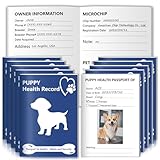
- Sufficient Quantity:When you choose our dog vaccines records, you'll receive 10 notebook.Whether you're a breeder, veterinary practice, or multi pet household, this will ensure you have enough documentation on hand for managing each pet's health history。Every puppy vaccination record book has 12-page puppy health journal has 8 dedicated pages for tracking your pup’s health, vet visits, and key details, with 4 blank pages at the end for jotting down extra notes, pet-related info, or anything else you want to record.
- .Ideal Size for Record Keeping:Each dog vaccine record book measures 5x3.5 inches folded; 5x7 inches unfolded, allowing for easy portability and storage.These handy health records notebook for dogs with double sided printing, featuring enough space and columns for all your pets important information,plus, it has dedicated spots for sticking on vaccine stickers and adding cute puppy photos.They offer a stylish and organized approach to pet health documentation, a must have addition to your pet supplies.
- Premium Quality: The puppy health record tracker’s cover features 300gsm coated paper with vibrant full-color printing and a protective laminate finish. Inside, 100gsm high-quality offset paper pages are durable and ink-resistant, ensuring no bleeding from pens or markers—so your records stay neat and easy to read.
- .Effortlessly Track Vaccinations and More:The canine health record booklets pages include:owner and puppy information,medical history and hospitalizations,vaccination record and sticker,dog service providers,fecal examinations and de-worming,heartworm screening, prevention and treatment etc.This record keeping tool will ensure every important detail is accounted for and make this task easy, organized, and straightforward.Add this essential tool to your pet supplies for a happier, healthier pet.
- Essential for Pet Owners:Designed for veterinary clinics and pet owners, these puppy vaccination record books make tracking key health details—like shots, checkups, and treatments—simple and organized. When you’re away and leave your pup with a sitter or family, the dog medical record and vaccine book serves as a quick reference for their medical history, ensuring care stays on track even in your absence. Plus, dedicated sections for photos, physical markings, and ID info prepare you for emergencies, helping you recover your friend quickly if they ever get lost.
What does this mean for adopters?
A missing breed name is not evidence that a shelter is withholding a known fact; it may reflect a decision not to guess from appearance. Ask what the shelter knows about the dog’s history and what staff have directly observed. Use those specific details, along with a conversation or meeting, to judge whether the individual dog may fit your household.
Does removing breed labels change legal or safety requirements?
Not necessarily. Shelter labeling practices and legal or operational records are separate matters, and requirements can vary by jurisdiction. The ASPCA says shelters should not use breed identification as an arbitrary criterion for immediate euthanasia. That principle should not be stretched into a claim about every local law or recordkeeping requirement; those need to be checked for the relevant location.
Quick Recap
Best Value

- PACKAGE CONTENTS: Set of 30 tri-fold puppy vaccination record cards, perfect for tracking multiple pets' health records or maintaining a breeding program
- CONVENIENT SIZE: Each card measures 5x3.5 inches when folded, making it easy to store in files or carry to vet appointments
- DURABLE DESIGN: Made with ink-resistant paper stock to protect important vaccination and health information from smudges and wear
- COMPREHENSIVE TRACKING: Includes dedicated spaces for recording vaccinations, deworming schedules, and general health information
- PROFESSIONAL USE: Ideal for veterinary clinics, professional breeders, and pet owners to maintain organized, detailed health records
Product prices and availability are accurate as of the date/time indicated and are subject to change. Any price and availability information displayed on Amazon at the time of purchase will apply.




