No single fecal test detects every parasite. For broad routine screening, the Companion Animal Parasite Council (CAPC) recommends centrifugal fecal flotation; antigen assays and PCR can add detection for selected targets, while direct smears and sedimentation answer more specific questions. A veterinarian chooses the method—or combination—based on the animal’s signs, likely parasite, sample and exposure history.
Which fecal test is best for dogs and cats?
For routine microscopic screening, centrifugal flotation is the recommended foundation. It concentrates parasite eggs, cysts and oocysts that can float in the chosen solution, allowing a broad microscopic survey rather than a search limited to a fixed assay panel. CAPC says properly performed centrifugal flotation is consistently more sensitive than simple, passive flotation and does not recommend passive flotation for routine screening. CAPC’s general guidelines were last updated for dogs on April 24, 2025.

“Best” depends on the question. Flotation may miss infections that are not producing detectable eggs or oocysts; antigen assays and PCR can detect certain infections in those circumstances, but only when the parasite is included in the assay. A combination of methods can therefore be more informative than any one test, especially in an animal with symptoms.
How the methods compare
| Method | What it can detect | Useful context | Important limitation |
|---|---|---|---|
| Centrifugal flotation | Microscopic eggs, cysts and oocysts able to float in the selected solution. | Broad routine microscopic screening; CAPC recommends it over passive flotation. | Needs an adequate sample, suitable solution and centrifugation, plus skilled microscopic interpretation. Dense stages may not float well. |
| Passive or simple flotation | Stages that rise in flotation solution without centrifugation. | Requires less equipment. | Less sensitive than centrifugal flotation and not recommended by CAPC for routine screening. |
| Direct smear | Motile trophozoites and some larvae or other organisms in a small amount of feces. | Useful for selected questions involving motility, including Giardia trophozoites in fresh diarrheic stool. | Examines little material and has poor sensitivity for broad parasite screening. For Giardia trophozoites, the sample should be fresh and unrefrigerated, preferably less than 30 minutes old. |
| Sedimentation | Dense eggs or stages that do not recover readily by flotation. | Considered when the suspected parasite and protocol call for it. | Not a broad substitute for routine flotation. |
| Fecal antigen assay | Antigen from selected parasite targets, including certain immature or adult worms and protozoal stages. | Can detect some infections when eggs or oocysts are not being produced or found. | Detects only the targets included in that assay; microscopy may still be needed for broader screening. |
| Fecal PCR | DNA from selected parasite targets. | Can address organism-specific questions and detect some prepatent infections when microscopy is negative. | What it detects depends on the panel and laboratory protocol; it is not an unrestricted parasite screen. |
| AI-assisted fecal analysis | Visual detections of specified eggs and oocysts. | An in-clinic aid for targets supported by the analyzer. | Its target list defines its scope; it does not detect every parasite. |
| Giardia direct fluorescent antibody assay (IFA) | Giardia cysts identified with a laboratory fluorescent assay. | Another diagnostic option listed by CAPC. | Choice and interpretation depend on the clinical question and laboratory context. |
CAPC notes that fecal antigen and PCR can increase detection over centrifugal flotation alone for parasite species detectable by those assays. This does not make them interchangeable with broad microscopy: a negative panel result says nothing about parasites outside the panel. For assays described in its guidance, CAPC reports fecal DNA stability for 10 days at 4°C; follow the testing laboratory’s collection and handling instructions for the specific assay.
Quick wins for a faster PC:
Scan for outdated or missing drivers - takes under a minuteDriver Scan →Repair Windows errors before they cause bigger problemsFix Now →Fix the driver behind crashes, sound loss and screen glitchesFind Drivers →#1 Best Overall

- Includes 2 McMaster Method microscope slides, 2 glass beakers, 2 strainers, 2 transfer pipettes, digital scale, flotation solution mixing bottle, tweezers, gloves, scale cups, and collection bags.
- Easy step-by-step how-to instructions for accurate worm count testing at home.
- Fecal egg count kit for goats, sheep, alpacas, llamas, and all small ruminants.
- Includes FECRT (Fecal Egg Count Reduction Test) instructions to evaluate dewormer effectiveness.
- Save hundreds on vet bills and avoid unnecessary deworming treatments.
Why a fecal test can miss parasites
- Intermittent or absent shedding: Eggs, cysts or oocysts may not be present in the particular specimen. Antigen or PCR may help with some infections that are not producing detectable parasite stages, but only for included targets.
- Too little or very liquid feces: A small amount gives the method less material to examine. CAPC procedure guidance calls for 2 g of soft feces, 4 g of slurry-like feces and says 6 g or more may be appropriate for liquid feces. Its separate pitfalls guidance describes 1 g as ideal for formed feces and recommends increasing the amount as fluid content rises. These are procedure-specific recommendations, not one amount for every sample. See CAPC’s fecal flotation procedure and CAPC’s discussion of diagnostic-testing pitfalls.
- Solution and processing: Recovery depends on the parasite stage, solution density and correct preparation, sieving and centrifugation. CAPC’s procedure guidance gives a flotation-solution specific-gravity range of 1.18 to 1.27, while its pitfalls article gives 1.18 to 1.20 as a desired range in that context. The figures reflect procedural guidance, not a universal setting for every target and protocol.
- Wrong method for the suspected stage: A routine flotation may be a poor choice for dense eggs; a direct smear can be useful for motile organisms but examines only a small sample.
- Interpretation challenges: Similar-looking organisms or pseudoparasites can be confusing under a microscope. CAPC says assessment of coccidia-like organisms considers size, sporulation state and the presence of oocysts or sporocysts. Seeing oocysts alone does not establish that coccidiosis caused an animal’s signs.
A negative result therefore needs interpretation alongside signs, sample quality, exposure risk and what the selected method can detect. It does not universally rule out parasites.
When Giardia testing may need more than one method
The specimen and suspected Giardia stage matter. CAPC describes centrifugal zinc sulfate flotation as primarily useful for cysts in solid or semisolid stool, and direct smear as primarily useful for trophozoites in diarrheic stool. It prefers zinc sulfate because sugar solution collapses Giardia cysts. CAPC’s Giardia guidance calls for combining direct smear, centrifugal flotation and a sensitive fecal ELISA or PCR in appropriate cases.
Giardia shedding can vary. CAPC says testing may need to be repeated over several, usually alternating, days. A single negative specimen may not settle the question when signs and exposure keep suspicion high; the veterinarian can decide whether to repeat testing or add another method.
How often should dogs and cats have fecal testing?
CAPC recommends fecal examinations at least four times during the first year of life. For healthy adult dogs and cats, its general recommendation is at least twice yearly. The veterinarian may adjust the schedule for health status, environmental exposure, travel, outdoor access and contact with other animals. These are CAPC recommendations, not a substitute for an individual care plan. CAPC general guidelines.
Do these 3 things before closing this tab:
1Clear out junk files and repair common Windows errors2Scan for outdated or missing drivers - takes under a minute3Repair Windows errors before they cause bigger problemsRank #3

- PROFESSIONAL GRADE: 50-pack of high-quality fecalyzers designed for veterinary clinics, animal shelters, and professional breeders.
- MESS-FREE COLLECTION: Each tube features a built-in collection spoon for a "no-touch" sampling process, keeping your hands clean.
- LEAK-PROOF DESIGN: Engineered with a secure-locking cap to prevent odors and leakage during transport to the lab or vet clinic.
- UNIVERSAL USE: Ideal for routine parasite, hookworm, and roundworm screenings for dogs, cats, puppies, kittens, and small livestock.
- LAB READY: Standardized size for fecal flotation testing and easy mixing with diagnostic solutions for accurate results.
Choosing a test with your veterinarian
The useful question is not simply whether one test is more accurate than another in general. It is whether the method can detect the suspected parasite in this animal’s sample and clinical circumstances. Ask which targets a proposed antigen or PCR panel includes, whether microscopy is also being performed, and whether the sample’s consistency or freshness affects the choice. For symptomatic animals, the veterinarian may combine methods or recommend repeat sampling rather than treating one negative result as a universal exclusion.
Quick Recap
Best Value
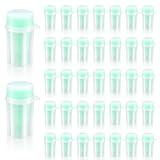
- Comprehensive Kit for Sample Collection: this stool test package includes 50 green and white tubes, ideal for pet parasite testing or any fecal sample collection needs; The ample quantity ensures you have enough for daily replacement use
- Material: crafted from robust plastic, the fecal sample containers are built to last; The two-piece structure functions efficiently as both a collection and flotation examination container for thorough testing
- Process is Simple: open the lid, remove the green insertion tube, insert the tube's small end into the fecal sample, and replace the tube securely; Ease of use means you can confidently hand it over to your veterinarian
- Cost Effective Solution: our pet stool sample collection kit allows you to perform sample tests at home effortlessly; This convenience helps you save on expensive veterinary fees and reduces time costs
- Versatile for Various Needs: designed for versatility and efficiency, this fecal diagnostic kit is ideal for both veterinary clinics and home use; Whether you're conducting parasite tests or general health checks
Rank #4

- Includes 2 McMaster Method microscope slides, flotation solution mixing bottle, 2 borosilicate glass beakers, transfer pipettes, tweezers, gloves, collection bags, and full instructions.
- Easy step-by-step how-to instructions for accurate horse fecal egg count testing at home.
- Equine FEC kit by Eggzamin includes two original 2-chamber McMaster blue-grid slides.
- Includes FECRT (Fecal Egg Count Reduction Test) instructions to evaluate dewormer effectiveness.
- Save hundreds on vet bills and avoid unnecessary deworming treatments.
Product prices and availability are accurate as of the date/time indicated and are subject to change. Any price and availability information displayed on Amazon at the time of purchase will apply.




