The Tool Desk
Outbyte PC Repair FREEClear out junk files and repair common Windows errorsFree Scan →Outbyte Driver Updater FREEFix the driver behind crashes, sound loss and screen glitchesFind Drivers →Veterinary AI can help a clinic review images, spot patterns, organize records, or handle repetitive documentation. It does not examine your pet, interpret every finding in context, or take responsibility for a diagnosis and treatment plan. In an interview published September 27, 2026, Michael Q. Bailey, DVM, DACVR—the 2025–2026 AVMA president and a board-certified veterinary radiologist—describes AI as support for veterinary teams, not a substitute for them. Whether a tool helps a particular patient depends on what it does, the quality of its data, and a veterinarian’s judgment.
What AI can help a veterinary team do
Bailey describes AI as an aid for tasks that can support clinical work. Its output is something a veterinary professional evaluates, not a decision that stands on its own.
Review images and surface patterns
In radiology and other diagnostic modalities, Bailey says AI can flag areas of concern for a veterinarian to assess. It may also help with routine image work, such as putting radiographs in order, or serve as another set of eyes. Analysis of subtle changes over time may help a clinician notice progression earlier, but the interview does not establish a general accuracy rate or guarantee that every tool improves outcomes.
Support prediction and research
An AVMA statement from July 21, 2025, discussed examples including forecasting chronic disease, matching dogs with lymphoma to medications, and analyzing images for tumors and fractures. These are examples of applications the AVMA has discussed; they do not establish that a particular product is available, validated for your pet, or appropriate for an individual treatment decision.
What’s actually slowing this PC down?
Pick the symptom - the matching free tool is one click away.
#1 Best Overall

- Two-way AI pet voice translation technology: It can translate pet barks and meows in 1.2 seconds with an accuracy rate of up to 94.6%; it decodes more than 20 pet emotional states and converts human voices into soothing pet-friendly audio frequencies for smooth communication.
- REAL-TIME GPS SAFETY TRACKING: Adopts Bluetooth 5.0 and low-latency GPS positioning; supports custom geofence safe zones and instant phone alerts when pets wander away to keep your furry friend from getting lost
- SMART HEALTH & STRESS MONITORING: Equipped with dual microphones and 6-axis motion sensor; captures subtle vocal changes to detect early pain, anxiety and discomfort, recording daily emotional activity logs in the dedicated mobile app
- ULTRA-LIGHT & WEATHERPROOF DESIGN: Only 27g lightweight body won’t burden pets; IP65 waterproof construction resists rain, mud and splashes; compatible with most collars and harnesses for daily indoor and outdoor use
- FULL ACCESSORIES: Package includes translator device, charging cable
Reduce repetitive administrative work
AI scribes and voice-to-text systems may reduce the time teams spend on documentation, Bailey says, potentially leaving more room for client communication and clinical care. The AVMA statement also identifies automated recordkeeping, streamlined training, and analysis of client feedback as possible uses. The AVMA’s professional education material cautions that applications vary: some may deliver value, while others fall short, so readiness and effectiveness need evaluation.
What AI cannot do for your pet
An AI tool can process information it receives; it cannot collect everything a veterinarian can learn during an examination. Bailey points to hands-on assessment and even a patient’s smell as information that a remote or computational tool may not capture. An image flag or device reading therefore needs to be interpreted alongside the animal’s history, examination, and other findings.
Rank #2
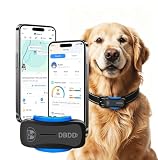
- Flexible Subscription & Compatibility:Unlock real-time tracking with affordable subscription plans available.Fully compatible with both iOS and Android.
- Instant Alerts For Escape Artists: Designed for sneaky dogs who slip out of yards. Set a custom Virtual Fence in the App and get immediate notifications if your dog crosses the boundary. This real-time electronic containment gives you ultimate peace of mind.
- Real-Time Tracking & Movement History: Never lose sight of your furry friend. View your dog's exact live location and movement trajectory instantly on your phone. Perfect for recovering lost pets quickly, whether they are in the neighborhood or exploring the outdoors.
- AI Pet Wellness Companion: More than a tracker, it's a smart care consultant. The built-in AI function monitors activity levels and rest patterns with offers personalized goals, providing professional health insights to keep your medium or large dog (30lbs+) active and happy.
- Easy Setup & Universal Compatibility: Ready to use in minutes. Simply scan the QR code to pair with the user-friendly App, compatible with both iOS and Android. Includes the tracker, USB charging cable, and manual for a hassle-free start.
Bailey puts responsibility with the veterinarian and the veterinary team under that veterinarian’s supervision: they make care decisions and treatment plans in consultation with the client. AI may inform that process, but it does not own the diagnosis or replace discussion of choices with you.
Wearables can add data, but data are not a diagnosis
Pet wearables may record activity, sleep, behaviors such as shaking or scratching, food consumption, ECGs, or other vital parameters. Features differ by device; a reading is useful only if its limitations and context are understood.
Rank #3
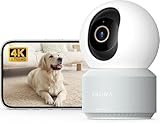
- 【Stunning 4K UHD & 8x Zoom】 Capture tiny details and record 4K ultra-clear videos day & night with the Anona 4K indoor camera, say goodbye to 2K or 3K. The professional-grade lens and 8X zoom bring distant details into sharp focus, so you never miss some wonderful moments.
- 【AI Person/Pet/Crying Detection 】Thanks to the AI algorithms, Anona pet/baby camera is able to detect pets, person, and baby crying. And you will receive a notification from the phone app immediately. Keep track of your loved ones even when you are busy.
- 【Ultra-Smooth 360° Pan & 110°x Tilt】Just pan the camera in 360° or tilt it in 110° to see all around.One indoor security camera covers every angle. The auto-tracking feature will detect a moving object, follow it, and record it.
- 【Faster Dual-Band Wi-Fi 6 】Anona wifi cameras adopts the latest Wi-Fi 6 for data transmission - much faster and more smooth & stable than Wi-Fi 4. Dual-band Wi-Fi enables you to switch between 2.4 GHz and 5 GHz Wi-Fi for the best signal.
- 【Safer Local or Cloud Storage 】Opt to Anona Cloud to save videos on our cloud storage encrypted by AES-128, a highly secure and efficient encryption algorithm. If you prefer local recordings, just insert an up to 512 GB microSD card (not included) to the indoor cameras for home. 2 storage choices - you decide.
Bailey says that if veterinarians rely on a wearable for diagnostic purposes, it needs evaluation for accuracy and reliability in the species for which it is intended. The interview does not identify a validated collar model or compare consumer devices. If you bring tracker data to an appointment, ask your veterinarian what the device actually measures and whether those measurements are useful for your pet.
Why AI can get things wrong
Bailey says performance depends on both training data and the information entered into a system. He identifies inconsistent labeling, biased datasets, and poor-quality inputs as potential sources of inaccurate outputs. Veterinary tools also have to contend with differences among species and substantial variation in canine anatomy. The interview supplies no broadly applicable numerical error rate, so a single accuracy figure should not be assumed to describe veterinary AI as a whole.
Rank #4

- 💡 2-WEEK SMART BASELINE LEARNS YOUR CAT’S “NORMAL” – Unlike generic pet trackers, Catlog’s AI uses data points gathered from 40,000 cats to study your cat’s individual patterns for 14 days to establish a personalized health baseline. After that, the app alerts you to meaningful deviations — higher body temp, reduced activity, restless sleep — that could indicate the beginning of serious health conditions.
Remote veterinary care has limits, too
Bailey uses telehealth as an umbrella term for remote health information, education, guidance, or care. The categories he names include teleadvice, teletriage, telemedicine, telemonitoring, teleconsulting, and telesupervision. They are not interchangeable: some involve general guidance, while telemedicine involves diagnosing or treating a patient.
Bailey describes telemedicine as requiring an existing veterinarian-client-patient relationship (VCPR), generally established through an in-person examination or a visit to the animal’s premises. He describes an exception for a life-threatening emergency or severe animal suffering until a VCPR can be established. He also says AVMA policy generally does not allow a VCPR to be established solely electronically in most states. State laws and rules vary, so these interview comments are not jurisdiction-specific legal advice; check current requirements where you live and consult official policy for legal questions.
Quick Recap
Best Value

- PERSONALIZED INTERACTION: Give your bear or doll a cute name,and it remembers. You can even clone your voice, and the doll talks just like you. A perfect gift for families!(Doll or bear not included in this product)
- EDUCATIONAL ENTERTAINMENT: Play interactive Fun Jokes, Would You Rather,I Spy Game,20 Questions Guessing Game, Word Chain, Story Chain. Explore endless fun with your AI bear!
- ADVANCED SPEECH RECOGNITION: Ask questions and chat—AI doll responds with context, humor and empathy.Ideal for emotional companion and speech therapy aid.
- EASY DIY PROJECT: Perfect for DIY bears and stuffed dolls projects. Simply put AI box into the stuffed body and fasten.
- CUSTOMIZABLE SETTINGS: Choose doll's voice, personality and even languages with a parental control free APP. Define its unique roles and personalities with simple text, no coding needed.
How to think about AI at your pet’s clinic
- Ask what the tool is used for. Image organization, note-taking, and decision support are different jobs, with different implications for your pet’s care.
- Ask how its output is checked. A veterinarian should interpret AI findings in the context of an examination and the rest of the clinical record.
- For wearables, ask whether they suit your animal. Find out what the device records and whether its accuracy and reliability have been evaluated for the intended species and diagnostic use.
- Keep the conversation with your veterinary team. Ask how a result affects the options being considered, and what additional examination or testing may be needed.
Product prices and availability are accurate as of the date/time indicated and are subject to change. Any price and availability information displayed on Amazon at the time of purchase will apply.




