Field Return to Home is an animal-control practice. When an officer finds a loose pet and can identify the family, the officer tries to get the animal back to its people on the spot, instead of impounding it by default. Best Friends Animal Society described the approach in a July 31, 2024 article, presenting it as a way to spare pets shelter stress and to keep shelter space free for animals that need emergency care.
What field return to home means in practice
Best Friends defines the practice as returning pets to their homes in the field rather than automatically impounding them. It depends on what the officer can learn at the scene. The usual sequence looks like this:
- Check the animal for a collar and tags. A phone number or address on a tag may be enough to end the encounter in minutes.
- Scan for a microchip. Officers carry a scanner for this. A chip number is only a lead, because it has to be traced to a registry record.
- Contact the owner using whatever the tag, chip or address provides.
- Knock on doors and talk with neighbors. People nearby often know which home a dog belongs to.
- Return the pet. In some cases that means guiding a dog back into its own yard, or telling the owner the animal got out.
Only when none of this works, or when the animal cannot safely be returned, does the shelter become the next stop.
Why it is presented as a lifesaving strategy
The article’s reasoning has three parts. A pet that goes home skips the stress of a kennel. Its family saves time and heartache, and avoids fines that some households cannot afford. And fewer unnecessary intakes leave room for animals that really need emergency sheltering.
The Tool Desk
Outbyte PC Repair FREERepair Windows errors before they cause bigger problemsFix Now →Outbyte Driver Updater FREEScan for outdated or missing drivers - takes under a minuteDriver Scan →#1 Best Overall

- 【Support Multipe Microchip Formats】Universal microchip scanner supports EMID / ISO11784 / ISO11785 / FDX-B(15 digit microchips). Please note, the microchip reader CAN NOT read Avid chips, and the 9-digit ID can not be recognized. Only the 15-digit international standard protocol can be recognized. Please check the format of the microchip before purchasing.
- 【Easy To Operate & Fast Scan】Our pet microchip scanner is easy to operate, one button to read. Our microchip scanner adopt advanced RFID technology, responsive and fast scanning, it can better improve the efficiency of work. Please note, if no label is scanned, the device will automatically turn off after 180 seconds, or you can press and hold the button for 3 seconds to turn off the device.
- 【 Large Data Storage】Our pet microchip scanner can save 128 animal chips. It can be transferred to a computer or mobile phone via a USB cable connection. Our pet chip scanner also features a data-erase function, refer to the user manual for instructions.
- 【Rechargeable Battery】Our pet chip scanner supports USB charging, eliminating the need for frequent battery replacements, it can last for more than one year after being fully charged.
- 【Easy To Carry】Our scanners are lightweight and compact, making them easy to carry and ideal for both indoor and outdoor use. The package includes one scanner, a USB cable, and a user manual.
These are the organization’s stated reasons. The article does not offer measured data showing that field return causes any specific change in outcomes, so treat it as a reasoned, practitioner-backed approach rather than a proven result.
Identification only works if the details are current
A tag or chip helps only if it leads to a person who can be reached. Best Friends stresses up-to-date contact information and points to free or low-cost microchipping and ID tags as community services. For owners, that means:
Rank #2

- [Support Multiple Protocols] - Support ISO11784(85)/FDX-B/EMID 10/15 digit microchips.Microchips in other formats cannot be read. Please confirm whether your microchip is compatible before purchasing.(Does not read AVID microchip).
- [Improved Recognition Performance] - Faster recognition speed and larger recognition range than older scanners. Upgraded the sensitivity of the scanner. It can better improve the efficiency of work.
- [Battery Performance Improvement] - Use high-capacity built-in lithium battery. With more battery capacity and faster charging speed. Greatly improved recognition range and sensitivity. Improved work efficiency.
- [Built-in Hardware Has Veen Fully Upgraded] - It uses the latest technology scanning chip compared to older scanners. Now the energy consumption is greatly reduced and the performance is greatly improved.
- [Data storage] - Storage capacity is equal to 128 sets of data.USB upload to computer.
- Put a tag with a current phone number on the collar.
- Have the pet microchipped, then confirm the chip is registered to you.
- Update the registry and tag whenever you move or change numbers.
A tag alone does not guarantee recovery. Collars come off, and numbers go stale. The microchip is the backup, and the scanner is professional equipment for officers and shelters, not something owners need to buy. Best Friends’ Return to Home (Owner) Training Playbook says field staff should all carry scanners so officers can return animals without impounding them.
What agencies need behind the scenes
Scanners and repeated checks
The playbook treats repeated microchip scans as a safeguard, and recommends matching impounded animals against lost-pet reports so a missed chip or a found-pet report does not leave a family searching.
What’s actually slowing this PC down?
Pick the symptom - the matching free tool is one click away.
Rank #3

- ❤ Supports Multiple Protocols – Compatible with ISO 11784/11785, FDX-B microchips for seamless reading with one-button operation. Does NOT support FDX-A or AVID chips. The 9-digit ID CANNOT be recognized. Only the 15-digit international standard protocol can be recognized.
- ❤ Efficient Data Management – Built-in storage holds up to 128 tags, eliminating redundant scanning and improving efficiency. The USB transfer feature allows seamless data upload to computers or mobile devices for backup, analysis, and sharing, making it ideal for pet owners, farms, and research institutions.
- ❤ Portable & Durable Design – Lightweight and easy to carry, suitable for both indoor and outdoor use. The robust casing provides strong impact resistance, ensuring stable performance in farms, field research, and rescue operations, even in harsh conditions.
- ❤ Built-in Rechargeable Battery – Eliminates the need for frequent battery replacements, with USB charging for convenience. Includes an auto-shutdown function after 180 seconds of inactivity or manual shutdown with a 3-second press.
- ❤ Support turn on/off the pet reader prompt sound. The pet reader is equipped with a speaker, when you scan successfully, the pet reader will "di" to indicate that the scan is successful. If your pet is afraid of the sound of the card reader, please check the instructions in the package and follow the instructions to turn off the sound.
Handoffs between field and shelter
Best Friends’ broader return-to-home materials describe officers attempting reunification before intake, staff scanning strays, lost-and-found outreach, and finder programs that keep a pet near where it was found while the owner is sought.
One leader and one plan
The article also names a structural obstacle. Animal control and the shelter can have different missions and metrics, which can get in the way of working together. In the author’s experience, a unified department with shared performance measures let animal control focus on keeping pets out of the shelter while shelter staff focused on lifesaving. Tawny Hammond, Best Friends’ Director of No Kill Advancement, advises: “My advice to any shelter or municipal leadership is to organize their animal-related departments under one person operating from one strategic plan that focuses on public safety, lifesaving, and excellent service to your community.”
Rank #4

- Stores lost pets chip numbers
- Alerts the user that a pet is missing
- Rechargeable by plugging into a pc
- Reads most microchips in pets, dogs, cats
How to judge a local program
| Question | What to look for |
|---|---|
| Identification coverage | Officers carry scanners, tags are checked, shelters rescan, and records are matched against lost-pet reports. |
| Access for owners and finders | Owners can be reached quickly, finders have a way to report a pet, and free or low-cost ID is available locally. |
| Coordination | Field officers, intake staff, dispatch and lost-and-found outreach share one workflow and goals. |
| Eligibility and welfare | The pet can be safely returned, ownership has been investigated, and community cats go down the proper pathway. |
The sources behind this article are practical guidance and program descriptions. None is a controlled comparison showing which agency model produces the best outcomes.
Independent reader supportYour contribution helps us test, update, and keep practical guides available for everyone.What the reunification numbers do and don’t show
Best Friends’ Return to Home (Owner) Training Playbook states that fewer than 3% of stray cats without microchips entering the shelter system are reunited with their families, and 22% of stray dogs without microchips. The page available does not state the year or the data period, so these are not current universal rates. They also describe animals without microchips. They are not an estimate of how well Field Return to Home works, though they illustrate how hard reunification can be once an unidentified animal is in the system, especially a cat.
Do these 3 things before closing this tab:
1Scan for outdated or missing drivers - takes under a minute2Repair Windows errors before they cause bigger problems3Fix the driver behind crashes, sound loss and screen glitchesBest Value
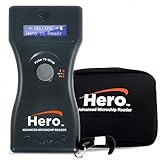
- UNIVERSAL MICROCHIP COMPATIBILITY: Reads all ISO microchips plus 9-, 10-, and 15-digit chips from any brand. Ideal for scanning horses, livestock, pets, and other animals in clinics, shelters, barns, or field settings.
- BLUETOOTH CONNECTIVITY FOR FAST, ACCURATE DATA TRANSFER: Easily sends scanned chip numbers to Bluetooth-enabled devices within a 25-foot range for quick syncing to computers, tablets, or shelter management software. Reduces manual data entry errors and speeds up check-in and intake processes—perfect for busy clinics or multi-pet facilities.
- BACKLIT LCD SCREEN WITH 15-MINUTE DISPLAY HOLD: Features a bright blue backlit LCD screen with bold white text displaying the full chip number on one line for easy reading—day or night. The 15-minute display hold gives ample time to record the scan without rushing, ideal for high-volume or field settings.
- RECHARGEABLE BATTERY WITH AUTO POWER-SAVE MODE: Includes a rechargeable 9V battery and charging unit for long-lasting performance. The auto shut-off function conserves power between uses—great for mobile vets, rescue teams, or animal control officers who need dependable scanning during long sessions.
- LIGHTWEIGHT, DURABLE DESIGN WITH PROTECTIVE CASE: This 7-inch handheld microchip scanner is compact, ergonomic, and easy to carry. Includes a protective carrying case to guard the reader during storage and transport. Built for dependable use in clinics, shelters, barns, or field settings.
Field return to home is not return-to-field
The two terms sound alike but cover different animals. Field Return to Home is for owned pets whose families can be found. Return-to-field (RTF), also called Shelter-Neuter-Return, is for eligible unowned community cats.
The ASPCA’s position statement describes RTF as a live outcome for community cats admitted to a shelter, returned to where they were found after sterilization, vaccination and ear-tipping. Suitability depends on:
- the cat’s ownership status;
- the exact address where it was found;
- how long it has lived in the community;
- whether a caregiver is present;
- whether it appeared to thrive without known safety threats.
Before treating a cat as unowned, staff should scan for a chip and look for a collar or tags. Fairfax County Animal Services shows the split in a municipal setting. It lists Return to Home for lost or stray owned cats separately from spay/neuter services for community cats that would not thrive if removed from their territory, and it encourages microchips and ID-tagged collars.
A Stray Cat Alliance page reports Long Beach live outcomes rising from around 30% in 2014 to 91% in 2020 during its community-cat work. That is a nonprofit’s own local figure for community cats, and it says nothing about owner reunification in general.
Quick Recap
Product prices and availability are accurate as of the date/time indicated and are subject to change. Any price and availability information displayed on Amazon at the time of purchase will apply.




