To lower your risk of an overuse injury while preparing for a half marathon, marathon, or other long-distance goal, build your running load gradually, leave room for recovery, and respond early to symptoms that change how you move. No weekly mileage formula can guarantee that you will stay injury-free: runners adapt differently, so progression should reflect your training history and how your body is responding.
What counts as training load?
Training load is more than weekly mileage. It includes how often and how far you run, how fast you go, how much hill work you do, and the overall effort of your sessions. A sudden change in any one of these can challenge your current capacity; changing several at once can make it harder to tell what your body is struggling to tolerate.
The American Orthopaedic Society for Sports Medicine (AOSSM) identifies rapid mileage changes, added hills or speed work, and too little rest between sessions as common running-training errors. Its guidance is available in Running and Jogging.
How should you increase distance and intensity?
Progress in manageable steps rather than making abrupt jumps. Avoid sharply increasing mileage while also adding intervals, faster running, or more hills. If you change one major part of training, be cautious about increasing the others at the same time.
#1 Best Overall

- Athletic mesh upper with durable leather overlays for added dimension & midfoot support
- Charged+ midsole cushioning provides unmatched softness & all-day comfort
- Durable rubber outsole provides traction & durability with strategically-placed flex grooves for proper toe-off
- Upper contains at least 30% recycled content
- Weight: 10.2 oz , Lace type: Standard tie, NEUTRAL: For runners who need a balance of flexibility & cushioning
AOSSM mentions limiting weekly mileage or pace increases to 10% as a rule of thumb. It is not a proven universal safe limit or a guarantee against injury. The International Olympic Committee’s 2016 consensus on training load emphasizes individualized, flexible adjustments because athletes’ responses vary; its evidence base covers selected sports and athlete populations, not every recreational distance runner. See How much is too much? (Part 1).
That means a percentage alone should not determine your next week’s training. Your current mileage, running background, health, goal date, and response to recent sessions all matter. If you are following a plan, look for one that lets you adjust distance and intensity to your experience and recovery rather than treating every scheduled increase as mandatory.
Rank #2

- Athletic mesh upper with durable leather overlays for added dimension & midfoot support
- Charged+ midsole cushioning provides unmatched softness & all-day comfort
- Durable rubber outsole provides traction & durability with strategically-placed flex grooves for proper toe-off , Upper contains at least 30% recycled content
- Weight: 10.2 oz , Lace type: Standard tie
- NEUTRAL: For runners who need a balance of flexibility & cushioning
How can recovery and strength work help?
Make recovery part of the plan
Rest is part of training, not time lost from it. AOSSM lists insufficient rest between sessions among common training errors. A joint European College of Sport Science and American College of Sports Medicine consensus statement describes the need to avoid excessive overload combined with inadequate recovery; that broad guidance is not a running-specific schedule. Read Prevention, diagnosis, and treatment of the overtraining syndrome.
There is no fixed number of rest days established by these sources for every runner. Pay attention to whether you are recovering between demanding sessions, and reduce or modify training if you are not. Do not try to make up missed mileage by cramming extra distance or intensity into later sessions.
Rank #3

- Men's stylish, slip-on sneakers
- SNUG FIT: Adjustable laces provide a secure fit
- FLEXIBLE UPPER: Soft textile upper is stretchy and comfortable
- CUSHIONED MIDSOLE: Cloudfoam midsole for step-in comfort and superior cushioning
- MADE IN PART WITH RECYCLED CONTENT: This product features at least 20% recycled materials. By reusing materials that have already been created, we help to reduce waste and our reliance on finite resources and reduce the footprint of the products we make
Add strength work suited to you
AOSSM recommends tailored strength training for regular runners, noting that muscle helps support joints and connective tissues as training load rises. The guidance does not prescribe one routine or equipment, so choose work appropriate to your needs and experience rather than assuming a particular exercise program prevents injury.
Which symptoms should change your training?
Do not dismiss severe pain, swelling, loss of motion, or a change in your running form as routine training discomfort. AOSSM advises seeking medical attention for these symptoms. Localized pain over a bone can be associated with a stress fracture, but an article cannot determine the cause; do not train through focal bone pain without getting it assessed.
Rank #4
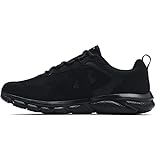
- Lightweight mesh upper with 3-color digital print delivers complete breathability
- Durable leather overlays for stability & that locks in your midfoot
- EVA sockliner provides soft, step-in comfort
- Charged Cushioning midsole uses compression molded foam for ultimate responsiveness & durability
- Solid rubber outsole covers high impact zones for greater durability with less weight
The American Academy of Family Physicians’ 2018 clinical review notes that tibial stress fractures require an extended period of relative rest followed by a gradual return to activity. See Common Running Injuries: Evaluation and Management. If symptoms are severe or are changing how you move, seek medical evaluation rather than trying to self-diagnose or push through them.
Independent reader supportYour contribution helps us test, update, and keep practical guides available for everyone.Do running shoes prevent overuse injuries?
Comfortable shoes that fit well and suit your foot anatomy are a sensible part of running preparation. AOSSM offers this as practical guidance, not as a promise that footwear will prevent injury. The source does not establish a universally protective shoe, brand, or model.
Quick wins for a faster PC:
Clear out junk files and repair common Windows errorsFree Scan →Fix the driver behind crashes, sound loss and screen glitchesFind Drivers →Best Value
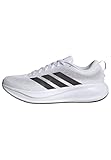
- Shoes with Cloudfoam midsole cushioning for comfort and support.
- Regular fit
- Laces
- Textile and synthetic upper
- Ortholite sockliner
How to assess a training plan
When choosing or adapting a plan, check how it handles the parts of training most likely to create abrupt load changes:
- Progression: Does it build distance and intensity in manageable steps?
- Recovery: Does it make room to recover between demanding sessions?
- Flexibility: Can you adapt it to your training history and response to the workload?
- Symptoms: Does it leave you able to modify training instead of encouraging you to ignore pain that is severe, localized, or changing your form?
These are practical checks based on load-management guidance, not a head-to-head evaluation of specific plans.
Quick Recap
Product prices and availability are accurate as of the date/time indicated and are subject to change. Any price and availability information displayed on Amazon at the time of purchase will apply.




