Help a frightened puppy feel safe by giving them space, letting them choose whether to approach, and pairing people with good experiences from a distance they can handle. Don’t ask strangers to reach for, corner, or pet a puppy who is tense or trying to retreat. If the fear is persistent, worsening, or creates a safety concern, ask your veterinarian for guidance.
Start at a distance where your puppy can stay comfortable
Choose a setting where your puppy can see a person without freezing, retreating, or becoming more tense. The person should stay still or turn slightly sideways, avoid staring or leaning over the puppy, and keep their hands to themselves. Leave the puppy room to move away.
Watch your puppy rather than judging the encounter by whether they take a treat or wag their tail. A puppy who approaches and then withdraws is asking for more space; let them retreat without following or blocking them. Keep the first sessions brief and end while your puppy is still coping.
Make a person’s presence predict something good
When a person appears or remains at a comfortable distance, offer a small treat or another reward your puppy enjoys. You can toss the treat away from the person so your puppy can collect it and return to a safe spot. This avoids using food to draw the puppy close and then trapping them in unwanted contact.
#1 Best Overall

- REAL CHICKEN FIRST: Baby BLUE Training Treats are made with delicious real chicken as the first ingredient, plus DHA for cognitive development, making them the ideal reward for your puppy’s best behavior
- MEATY TRAINING TREATS: For puppies that love a meaty treat, Baby BLUE training dog treats are tender, bite-sized morsels that make them perfect for training
- WHOLESOME INGREDIENTS: These dog treats contain NO chicken (or poultry) by-product meals and are free of corn, wheat and soy; Plus, they’re free of artificial preservatives and colors
- HEALTHY DOG TREATS: Blue Buffalo natural dog treats feature the healthy, wholesome ingredients you’ll love feeding as much as they’ll love eating
- Contains One (1) 4-oz bag of Blue Buffalo Baby BLUE Training Treats Natural Puppy Soft Dog Treats, Savory Chicken
The goal is for your puppy to form a positive association with people, not simply to endure their presence. UC Davis recommends small treats in controlled positive experiences and says fear-related desensitization and counterconditioning should be done very slowly and gradually (UC Davis School of Veterinary Medicine, “Puppy Socialization”).
Increase the challenge only while your puppy remains relaxed
After repeated comfortable encounters, change just one thing at a time: reduce the distance slightly, or let the person make a mild movement. Keep the change small enough that your puppy can continue to observe, eat, and move freely. If your puppy stiffens, hides, freezes, retreats, or otherwise becomes more tense, increase the distance or finish the session. A bigger or longer exposure is not automatically better.
Rank #2
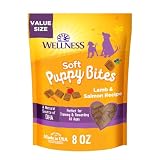
- GRAIN-FREE PUPPY TREATS: These bite-sized, soft puppy training treats are the perfect reward during training sessions or any time you want to thank your dog for good behavior. Puppy bites contain 6 calories per individual treat!
- SUPPORTS BRAIN DEVELOPMENT: Soft dog treats are crafted with salmon, a healthy source of DHA to promote healthy brain development.
- HEALTHY INGREDIENTS: These treats for dogs are made with minimal ingredients focused on quality proteins: made with lamb and salmon, with added vitamins specifically for puppies.
- NO CORN, WHEAT, OR SOY: Treats for dogs do not contain wheat, wheat gluten, corn, soy, or artificial colors.
- MADE IN USA: Our dog treats are quality-assured, made in USA, and crafted from the finest globally-sourced ingredients. Treats are tender, healthy, and bite-sized for small, medium, and large dogs of all lifestages, and activity levels.
UC Davis describes the critical social development period as approximately 3 to 14 weeks and notes that socialization can continue later, though it may be slower with older dogs. AVSAB emphasizes safe exposure during the first three months, not overwhelming a puppy to meet a schedule (AVSAB position statements). The sources do not establish a universal timeline for an individual puppy’s progress.
Read stress signals and protect your puppy’s space
Stress can be subtle. UC Davis lists a tucked tail, lip licking, yawning, shaking, and ears held back among signs to notice during socialization. AVSAB also describes looking away, stiffening, lowering the body, hiding, freezing, and retreating. Look at the puppy’s whole posture and behavior rather than relying on a wagging tail alone.
Rank #3

- Highly Palatable with natural pork liver base
- 500 treats per bag!
- Only 1.5 calories per treat
- Clean ingredients with no corn, soy or artificial flavors
- Made with natural bacon
If a puppy cannot get away from a frightening interaction, they may become defensive. Keep greetings at a distance when you are unsure about safety, and do not let a person pursue a puppy who is hiding or withdrawing.
Don’t force greetings or punish fear
- Don’t ask strangers to corner, stare at, loom over, reach for, or pet a frightened puppy.
- Don’t force contact on the theory that the puppy will “get used to it.” Too much intensity can overwhelm rather than help.
- Don’t punish barking, hiding, or retreating. These responses signal that the puppy needs space.
- Don’t lure a puppy close with food and then prevent them from leaving or accepting unwanted touch.
Instead, let the puppy control whether to approach and whether to move away. Socialization is about safe, positive experiences—not collecting greetings.
Rank #4

- Lots of flavor, not fillers: Just three simple, all-natural ingredients mean low calories and high nutritional value, making a tasty but healthy treat that your pup will actually love
- Ready for training, wherever you are: The best training is consistent training. Our small treats are lightweight and perfectly sized for quick rewards so they are ready to go whenever there is a training opportunity
- Mess free treats: No oily, greasy, crumbly messes here, Pupford treats keep your hands and pouches clean. You can even keep some in your pocket for walks, classes, or mini adventures without worrying about them getting grimy or stale
- Motivate even the pickiest of pups: A wide range of flavors makes it easy to find the perfect fit for your pup’s tastes
- Pupford Promise: We strive to always provide simple, high-quality, healthy pup essentials. If you or your pup aren't happy with a purchase, let us know so we can help find the right fit!
Set realistic socialization goals
UC Davis suggests aiming for 90 different pleasurable situations by 14 weeks as a practical socialization goal (UC Davis School of Veterinary Medicine, “Puppy Socialization”). That is a recommendation, not a guaranteed number of people or encounters that will make a fearful puppy confident. For a puppy who is already worried, the quality and intensity of each experience matter more than rushing to reach a count.
There is no source-backed timetable for how quickly a particular puppy will become comfortable. AVSAB cautions that desensitization and counterconditioning for fearful dogs are not instant fixes and should follow the dog’s pace (AVSAB position statements).
Recommended Free Tools
Best Value

- High Value, Irresistible Flavor: Pups love the taste and aroma, making training sessions more effective and enjoyable
- High-Quality Ingredients: Made in the USA with clean, simple ingredients, starting with chicken - nothing artificial and no fillers
- Low-Calorie: Less than 2 kcal per treat and high in protein, perfect for frequent rewarding without worry
- Perfectly Sized: Small enough for one-bite rewards, which helps prevent overfeeding while keeping training sessions flowing smoothly
- Soft & Chewy: Perfect texture for quick rewarding during training, and great for pups with sensitive teeth like senior dogs
When to ask a veterinarian or behavior professional for help
Contact your veterinarian if your puppy’s fear is marked, persistent, worsening, or raises a safety concern. Your veterinarian can assess the puppy’s individual situation and advise whether a referral is appropriate. AVSAB recommends guided supervision from a board-certified animal behaviorist or certified trainer when a puppy shows fear or tension during socialization. Look for reward-based methods and a plan that accounts for your puppy’s health, age, past experiences, and bite risk.
Ask your veterinarian about class participation and exposure to other dogs in light of your puppy’s health history and local infectious-disease risks. A qualified professional can help adjust the plan if your puppy cannot remain comfortable even at a distance.
Quick Recap
Product prices and availability are accurate as of the date/time indicated and are subject to change. Any price and availability information displayed on Amazon at the time of purchase will apply.




