Sea turtle conservation groups protect nests from flooding and erosion by monitoring beaches, preserving dunes and natural beach movement, restoring sand where appropriate, and moving eggs only when a nest faces a credible, immediate threat. The right response depends on local conditions: routine relocation or a hatchery is not a universal solution, and interventions can create risks of their own.
Why nests are vulnerable to flooding and erosion
Sea turtles usually lay eggs in sand above the high-water mark, but beaches are dynamic. Rising seas and storms can reshape the shore, erode nesting areas, and inundate or wash away nests. NOAA Fisheries describes these as conservation hazards for green turtles in its Green Turtle: Conservation Management overview, updated July 16, 2025.
Coastal barriers can worsen the problem. Seawalls and similar structures may block turtles from reaching higher beach areas. Turtles may then nest lower on the shore, where waves can reach nests more readily. Sea Turtle Conservancy reports more false crawls in front of seawalls than at natural beaches and recommends treating armoring as a last resort; see its Coastal Armoring guidance.
How conservation teams respond to a threatened nest
Monitor and protect nests in place
Beach patrols record nests and watch for threats such as erosion, flooding, beach cleaning, and heavy foot traffic. When a nest can remain safely where it was laid, the least disruptive response is generally to protect it in place. The U.S. Fish and Wildlife Service’s Recovery Plan for the North Atlantic Population of the Loggerhead Sea Turtle calls for scientifically based, standardized protocols and states: “Use the least manipulative method to protect nests.”
Recommended Free Tools
#1 Best Overall

- Turtle House Habitat
- Tortoise enclosure
- Outdoor tortoise enclosure
- Sea turtle habitat
- Ecological Breeding Box
Depending on the site, teams may mark a nest so pedestrians or beach-cleaning equipment avoid it. Lighting problems are best addressed at their source when possible. Patrol methods and what staff or volunteers are legally allowed to do vary by location and jurisdiction.
Move eggs only when a specific risk warrants it
If a nest is likely to be lost imminently to erosion or inundation, a permitted, trained local program may move it to suitable, safer nesting habitat. Relocation involves handling eggs and changing their location, so it is not risk-free; decisions should account for the threat to the original nest, the receiving site’s suitability, incubation conditions, and local evidence.
Rank #2

- Dual-Material Design for Durability & Comfort:Combines natural rattan’s soft texture with a chewproof steel frame to balance coziness and longevity. The rattan surface is gentle on birds’ feathers, while the reinforced steel structure resists biting from playful parrots—ideal for long-term breeding, sleeping, and nesting . Perfect for small to medium birds like cockatiels, budgerigars, lovebirds, finches, and canaries.
- Multi-Functional Hanging Nest & Swing:Features a single-hole design that mimics wild nesting environments, encouraging natural breeding and egg-laying behavior . Equipped with a sturdy hanging mechanism, it doubles as a swing for birds to play and rest—adding fun to their daily activities while providing a secure hideout. The compact size fits most bird cages without taking up too much space.
- Washable & Easy to Clean:100% washable material allows for quick cleaning and bedding replacement, ensuring a hygienic environment for your feathered friends . Simply hand wash or wipe with a damp cloth to remove dirt, feathers, or debris—no complicated disassembly required. Keeps the nest fresh
- Warm & Snug Sleep Hut:Thickened rattan construction and soft inner lining trap heat effectively, offering a warm shelter during cold weather . The enclosed single-hole design creates a sense of security, reducing birds’ stress and promoting restful sleep. It also serves as a private nesting space for breeding, protecting eggs and bird from disturbances.
- Tool-Free Installation & Versatile Use:Comes with all necessary hanging hardware (chain screw) for easy attachment to any bird cage—install inside or outside the cage in seconds . Suitable for multiple scenarios: breeding, sleeping, hiding, or swinging. The classic brown color blends seamlessly with most cage decors, making it a practical and stylish accessory for bird owners.
A NOAA-hosted symposium abstract by Gale A. Bishop and coauthors describes one place-specific approach on St. Catherines Island, Georgia. The program moved at-risk loggerhead nests into “nurturies”—natural nesting areas already used by turtles. The abstract reports average erosion of approximately 3.0 m per year on 88% of the island’s beaches and relocation of 60% to 80% of loggerhead nests into three areas. Those figures describe this island and program, not sea turtle beaches generally. The authors characterize the method as minimally invasive and report enhanced hatching in that setting, while emphasizing the need to balance hatchling production against the effects of moving nests. The account is available in the proceedings abstract, Saving Georgia’s Sea Turtles One Nest at a Time: Loggerhead Sea Turtle Nest Relocations into Nurturies: St. Catherines Island, GA.
Use hatcheries as an exception, not a default
Moving a nest into a hatchery concentrates eggs in one managed area. The U.S. Fish and Wildlife Service recovery plan recommends discontinuing hatcheries as a management technique because concentration can increase exposure to catastrophic events and predators. It also describes a Cape Romain National Wildlife Refuge case where hatchery use was considered appropriate as a last resort in response to severe erosion, pending quantitative assessments. That is a site-specific exception, not a general endorsement of hatcheries.
The Tool Desk
Outbyte Driver Updater FREEScan for outdated or missing drivers - takes under a minuteDriver Scan →Outbyte PC Repair FREEClear out junk files and repair common Windows errorsFree Scan →Rank #3
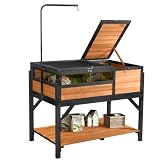
- Multifunctional Tortoise House: The legs of this turtle cage are designed to be removable, you can put it on the table without installing the table legs or install legs to place the lizards cage on the floor.
- Adjustable Heat Lamp Holder: Tortoise house comes with a adjustable light stand. Height of lamp stand: about 11"-31". Width of hanging heating lamp: about 13"-21.1". The roof is freely open with holder's 360 rotation.
- Acrylic Viewing: Reptile cage design with acrylic viewing on activity area,easier to observe your petsand provide a full brightness.Weatherproof hiding area offers safe shelter for your beloved pet.
- Two-bedroom Design: Provide larger and more comfortable living space. In addition to being suitable for turtles, cages can also be used for small reptiles such as snakes, lizards, chameleons and other small animals etc.
- 【INDOOR & OUTDOOR USE】You can trust it with indoor use to protect tortoise from too cold or too hot temperatures or to escape bad weather.Turtle house features with moisture-proof finish, you can also use it outdoors to provide natural sunlight in warm days.
How habitat management reduces beach-scale risk
Protect dunes and native vegetation
Dunes and native plants help stabilize beaches and reduce storm erosion. Sea Turtle Conservancy puts it plainly: “Healthy dunes are one of the best natural ways to protect beaches from eroding during storms.” Protecting dunes from trampling and planting native dune vegetation can support that natural buffer. These measures protect beach habitat rather than guaranteeing that any particular nest will avoid flooding. See Sea Turtle Conservancy’s Beach Erosion page.
Nourish beaches carefully
Beach nourishment adds sand to replace eroded material and may restore nesting habitat when it is properly designed and carried out under applicable resource-protection laws. But the sand and timing matter. Imported sand that is substantially different from the native beach, or that becomes overly compacted, can affect where turtles choose to nest, how they dig, and nest temperature and moisture. Construction during nesting season can bury nests or run over them. Sea Turtle Conservancy discusses these trade-offs in its Sea Turtle Conservation Guide and Beach Erosion page.
Rank #4

- SPECIALIZED FOR BOX TURTLES - Perfect habitat for Yellow-Margined Box Turtles (Cuora flavomarginata), closed-shell turtles and other semi-aquatic species with recommended 30% water/70% land ratio
- CUSTOMIZABLE ECOSYSTEM - Includes multiple drainage holes (4 sides) for creating streams or connecting water basins;Requires separate water pump/bathing pool (not included)
- SOLID CONSTRUCTION BUILD MATERIALS - Clear viewing panels made oftransparent visible panels acrylic securely fitted into durable plastic frame (recommend applying sealant for frequent movers)
- NATURAL HABITAT DESIGN - Supports live plants and bioactive substrates (some soil leakage normal initially);Not for deep-water turtles or fish aquariums
- EASY ASSEMBLY & DRAINAGE - DIY assembly required (gaps are normal); Includes detailed setup guide for creating ideal semi-aquatic environment with proper water zones
The organization also reports a 20% reduction in hatchling success after a beach renourishment project on Captiva Island. Its page does not specify the year or the underlying study citation, so that figure should be understood as a report about that project—not as a typical or universal effect of nourishment.
Leave room for beaches to shift
Instead of relying on barriers alone, coastal planning can give beaches more space to move. Sea Turtle Conservancy identifies landward construction, elevated structures, dune or beach restoration, and coastal construction setbacks as alternatives that can preserve more room for natural beach processes. Its guidance states: “Beachfront armoring should only be used as a last resort to protect upland structures.”
What’s actually slowing this PC down?
Pick the symptom - the matching free tool is one click away.
Best Value

- Comfortable Turtle Cage: Give your pet a place of their own with this turtle cage! Use the cage indoors to keep your turtle warm during the cold winter months, and outdoors on sunny days to provide natural sunlight. Suitable for turtles, lizards, geckos, snakes and other small animals to roam, play, relax and sleep.
- 2 Room Design: The box turtle habitat has a "private" sleeping area and a "public" viewing area. The sleeping area provides a safe shelter from the elements to create a cozy space for your pet.
- Safe & Stable: The turtle habitat is made with solid fir wood for a stable structure that is suitable for daily use. The habitat includes lockable latches to keep your reptile safe while enjoying the outdoor sun.
- Easy Observing: This turtle house has 3 large viewing windows so you can keep an eye on your pet. The side panels of the run area can be pulled out to expand the living space.
- Reptile Cage Information: Overall Dimension: 35.75" L x 23.75" W x 12.5" H. Assembly required.
How to judge whether relocation is appropriate
Whether a nest should be moved depends on more than whether the beach is eroding. A sound decision weighs the immediate threat against the risks of intervention and the longer-term effects on the beach.
- Likelihood and timing of loss: Is the nest facing credible, imminent inundation or erosion, or is the concern a more general future risk?
- Intervention: Can the nest be protected in place, or would relocation require handling eggs?
- Receiving habitat: Is the destination suitable and, where possible, naturally used by nesting turtles?
- Incubation conditions: Could changed sand, moisture, or temperature affect development and hatchling outcomes?
- Beach-wide consequences: Will a project affect sediment, turtle access to upper beach, or the beach’s ability to erode and rebuild naturally?
- Local authority and evidence: Are permits, trained personnel, and monitoring in place, and does location-specific evidence support the proposed action?
What the public can do around nesting beaches
Visitors can help by following local instructions, staying clear of marked nests, avoiding trampling dunes, and not disturbing turtles or hatchlings. NOAA Ocean Service advises that people should not interfere as hatchlings make their way to the water; its How do sea turtles hatch? page, updated September 23, 2026, explains hatching and public conduct guidance.
Quick Recap
Product prices and availability are accurate as of the date/time indicated and are subject to change. Any price and availability information displayed on Amazon at the time of purchase will apply.




