Free tools Windows power users keep installed
One-click scans. No signup required.
Mammoth de-extinction is not a plan to recover an intact extinct species. It is a research platform combining genome analysis, gene editing, cell biology, reproduction and ecological assessment. Some of those methods could help living endangered species through genetic rescue, disease-resistance research, reproductive support and biobanking—but those potential benefits are not proof that a mammoth-like animal can be safely made or released.
Can mammoths really be brought back?
Not as genetically identical woolly mammoths. Ancient DNA is incomplete, so researchers need a living relative as a genomic and biological starting point. For mammals, gestation also requires a surrogate. The resulting animal would be an engineered relative with selected mammoth-associated traits, not a recovered member of the extinct species. The International Union for Conservation of Nature (IUCN) cautions that trait expression may be unpredictable, including because of epigenetic effects.
That distinction matters because a recognizable feature—such as dense hair or cold tolerance—does not make an animal a mammoth, nor does it show that the animal would behave or function like one in an ecosystem. University of Montana wildlife and environment expert Christopher Preston put the distinction plainly: “You’re not actually resurrecting anything — you’re not bringing back the ancient past.”
How could mammoth research help endangered species?
The strongest conservation case is not that a mammoth proxy will directly save endangered wildlife. It is that methods developed or refined along the way may be adapted to living species. A Journal of Heredity synthesis identifies genetic rescue, disease resistance and ecosystem restoration as potential conservation pathways, while emphasizing the value of controlled, longitudinal data on health, development, immune function and behavior.
The Tool Desk
Outbyte Driver Updater FREEFix the driver behind crashes, sound loss and screen glitchesFind Drivers →Outbyte PC Repair FREERepair Windows errors before they cause bigger problemsFix Now →#1 Best Overall

- 【Mammoth Fossil Digging Kit for Kids with 17 Pieces】 -- Dig up and discover 17 mammoth bones hidden inside the excavation block and assemble an incredible Mammoth skeleton. Learn real excavation techniques and experience the thrill of being a true paleontologist.
- 【Complete Paleontologist and Archaeology Kit for Kids】 -- Everything you need for an exciting fossil excavation adventure. This science kit includes 1 excavation block, 1 fossil chisel and 1 fossil hammer, providing all the essential tools to excavate your Mammoth fossil like a real archaeologist.
- 【Educational Book in 8 Languages】 -- Includes a full-color educational guide available in English, Portuguese, Spanish, Italian, French, Dutch, German and Greek, packed with fascinating Mammoth facts and excavation tips that combine science, learning and fun.
- 【STEM Mammoth Excavation Science Kit】 -- Designed to inspire curiosity about prehistoric animals, paleontology and earth science. This educational excavation kit encourages hands-on learning while developing problem-solving skills through the STEAM methodology (formerly STEM).
- 【Perfect Mammoth Gift for Young Explorers】 -- An exciting archaeology and science kit that makes a memorable birthday or Christmas gift for children fascinated by fossils, prehistoric animals and scientific discoveries. A fun hands-on experience they'll never forget.
Genetic rescue and disease resistance
Genetic rescue aims to improve the prospects of a small or isolated population by addressing harmful loss of genetic variation. Genome analysis and gene-editing methods could, in principle, help researchers investigate or introduce useful variation. Disease-resistance research could similarly test how genetic differences affect vulnerability to pathogens. These are potential applications, not a guarantee that a particular edit will improve survival in the wild; any intervention would need careful assessment of health, inheritance and effects on the population.
Reproductive assistance and biobanking
Stem-cell research and assisted-reproduction methods could expand options for species that are difficult to breed, while biobanking preserves biological material for future research or conservation use. These approaches address different bottlenecks: a banked sample is not itself a viable population, and reproductive technology cannot compensate for unsuitable habitat or other threats. Colossal lists conservation biobanking, genome engineering for genetic rescue, stem-cell technologies, advanced reproductive technologies and open genomic resources among its conservation research areas. Those are company-described programs and goals, not independent evidence that each has produced a conservation outcome.
Rank #2

- EDUCATIONAL VALUE: 2-in-1 paleontology activity kit combines excavation and model building, offering hands-on learning about prehistoric mammals for ages 6 and up
- COMPLETE KIT: Includes excavation tools and building materials needed for both digging out mammoth fossils and constructing a detailed display model
- DUAL ACTIVITIES: Features an exciting archaeological dig simulation followed by model assembly, creating an engaging STEM learning experience
- PREHISTORIC LEARNING: Explore the fascinating world of the Ice Age through the Mammuthus from the Cenozoic-Quaternary period
- SPECIFICATIONS: Activity kit measures 12 x 10 x 3 inches, weighs 1.5 pounds, and typically requires about 30 minutes for assembly
Monitoring and ecological knowledge
Developing an animal through a new genetic or reproductive method creates a need to monitor health, development, immune function and behavior over time. The Journal of Heredity synthesis argues that such controlled, longitudinal observations can establish baselines useful to later conservation work. That value depends on collecting and sharing reliable data; a single successful birth would not establish long-term health, reproductive fitness or conservation benefit.
What technologies are involved?
De-extinction is a chain of interdependent research problems rather than one cloning procedure. Each method answers a different question, and a result at one stage does not establish success at the next.
Recommended Free Tools
Rank #3
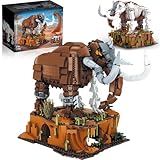
- Product Size: 8.9''L x 8.6'' W x 10.6'' H
- 【Build Your Mammoth Legend】Embark on a prehistoric adventure with our Semi-Skeleton Mammoth building set, complete with a detailed base inspired by the mammoth's natural habitat. Feel the power of this giant creature as you construct its impressive form.
- 【Tech-Revived Giant】Witness the miracle of modern technology bringing this mammoth back to life in a semi-skeleton form. The simulated habitat base, crafted with precision, offers an authentic glimpse into the world of this magnificent wildlife elephant building toy.
- 【Intricate Details Await】Marvel at the Modified Ivories, Long Trunk, and Giant Tusks that bring this huge mammoth building set to life. Each piece is designed to capture the essence of these ancient animal lives, making your construction experience truly captivating.
- 【1310 PCS & Compatible with Lego】With 1310 pieces and clear instructions, building your Semi-Skeleton Mammoth is a breeze. Plus, it's compatible with Lego sets, allowing you to expand your collection and create even more incredible animal toys scenarios.
| Technology | What it contributes | Conservation relevance |
|---|---|---|
| Ancient-DNA analysis and comparative genomics | Reconstructs what can be inferred from preserved DNA and compares it with a living relative’s genome; ancient-DNA gaps remain. | Supports genomic study of living species and helps identify where knowledge is incomplete. |
| Multiplex gene editing | Changes selected genetic targets, potentially in combination, to investigate or produce traits. | Could inform genetic-rescue or disease-resistance research, but edits require evaluation for unintended effects and actual benefit. |
| Stem cells and cell biology | Provide cellular systems for studying and developing reproductive or genetic techniques. | May contribute to reproductive support and research on species that are difficult to breed. |
| Assisted reproduction and surrogacy | Address how an embryo or engineered lineage might develop; mammalian de-extinction requires a gestational surrogate. | Could support breeding or reproductive research for living species, subject to welfare and feasibility constraints. |
| Biobanking and genomic resources | Preserve biological material and make genomic information available for research. | Can support future conservation investigations, but stored material alone does not restore a population. |
| Ecological modeling and post-release monitoring | Assess habitat, ecological effects and performance if release is proposed. | Needed to judge whether an intervention is appropriate beyond the laboratory. |
What does the mammoth work show so far?
One reported experiment illustrates both the technical direction and the limits of the evidence. The Associated Press reported in 2025 that Colossal edited seven genes in mouse embryos to produce long, thick hair and alter fat metabolism associated with cold tolerance. AP also reported that the results had not yet been independently peer-reviewed. A mouse with selected cold-associated traits is not evidence that an elephant can be safely engineered, that the traits would work the same way in an elephant, or that a mammoth has been recreated.
Colossal’s conservation portfolio and broader goals should likewise be distinguished from independently established outcomes. Colossal describes work involving endangered-animal backup, species diversification, CRISPR research and rewilding. Its 2025 impact reporting, as summarized by the company, describes four cloned “ghost wolves” with 69–72% red-wolf ancestry. That is a company-reported figure, not an independently verified result in the evidence available here, and it does not by itself establish recovery of a wild red-wolf population.
Rank #4

- EXTRA-LARGE MAMMOTH DISSECTION KIT – Dissect a giant synthetic mammoth nearly 1' long using safe, kid-friendly tools. This hands-on anatomy activity delivers an exciting STEM science experience.
- REAL ANATOMY LAB EXPERIENCE – Just like a true dissection kit anatomy lab, kids uncover and examine 17 detailed skeletal pieces while learning how mammoths were built.
- 17 GLOW-IN-THE-DARK BONES – Extract replica mammoth bones that glow in the dark, then assemble them into an impressive skeleton model perfect for display.
- BUILD A MASSIVE SKELETON MODEL – Once dissected, assemble the bones into a nearly 12-inch mammoth skeleton that showcases Ice Age anatomy in stunning detail.
- LEARN ABOUT THE ICE AGE – The full-color Learning Guide is packed with fascinating facts about mammoths, their habitats, and their extinction, turning this activity into an engaging science lesson.
How does de-extinction compare with conventional conservation?
These approaches are not simple substitutes. The right question is which intervention addresses a particular species’ limiting problem, with acceptable evidence, welfare costs and ecological risk. The IUCN says synthetic-biology proposals should be assessed case by case and must not replace action on the underlying drivers of biodiversity loss.
| Decision factor | What to ask about conventional conservation | What to ask about de-extinction-enabled tools |
|---|---|---|
| Immediacy of benefit | Can habitat protection, threat reduction or established management help the population now? | How many research and development steps remain before the tool could benefit a living population? |
| Evidence maturity | Is there evidence that the proposed intervention improves the target population’s prospects? | Are results limited to cells, embryos or laboratory animals, or is there evidence of benefit in the target species? |
| Reversibility | Can the action be adjusted or stopped if outcomes are poor? | Could an inherited edit or released population be recalled or contained? |
| Animal-welfare burden | What harms may arise from capture, handling, breeding or management? | What are the risks across editing, embryo development, surrogacy, birth and lifelong health? |
| Ecological and governance risk | Could the intervention alter local ecological relationships or create conflicts? | What happens if engineered animals persist, disperse, reproduce or affect other species? |
| Lost genetic diversity | Can existing populations retain or recover variation through conventional management? | Can a proposed genetic intervention restore useful variation without introducing new harms? |
| Scale, cost and root causes | Can the intervention be sustained across the population and address threats such as habitat loss, disease, invasive species or climate change? | Can the technology be applied at meaningful scale, and does it address those threats rather than distract from them? |
For many conservation problems, protecting habitat and reducing immediate threats remain essential regardless of advances in genetic technology. A genetic tool cannot substitute for a viable place to live, and a technically possible intervention is not automatically the most effective or responsible one.
Best Value

- 【Detailed Mosasaurus Skeleton Replica】Build a realistic Mosasaurus marine reptile fossil skeleton with 191 pieces, featuring streamlined body, fin limbs, and movable joints, capturing the iconic look of the ancient ocean predator.
- 【Museum Display-Ready Design】Includes a brown display base with mechanical movement knob, transparent supports, and a Mosasaurus nameplate, perfect for showcasing your model as a unique piece of prehistoric decor in your home or office.
- 【STEM Learning & Imaginative Play】This building kit combines assembly fun with marine paleontology knowledge, helping kids aged 8+ learn about prehistoric ocean life while developing fine motor skills and logical thinking through hands-on building.
- 【Safe & Easy-to-Assemble Blocks】Made of high-quality, non-toxic ABS plastic, the pieces are smooth, burr-free, and compatible with standard building blocks. Clear instructions guide you through every step, suitable for kids and adult hobbyists.
- 【Unique Gift for Dinosaur & Ocean Lovers】A special gift for anyone who loves dinosaurs, marine life, or model building. It’s a great way to spark curiosity about prehistoric creatures and provide hours of screen-free entertainment.
What are the risks of releasing a de-extinct animal?
The IUCN treats a proposed environmental release of a de-extinction product as a conservation translocation problem. That means the assessment cannot stop at whether an animal can be produced: it must address welfare and performance after release, whether a population could persist, and the wider ecological effects.
- Animal health and welfare: A proxy’s development, immune function, behavior and long-term health would need to be assessed, not assumed from a few engineered traits.
- Habitat suitability: The animal would need an environment that can support it and where its presence would not create unacceptable harm.
- Population persistence: A release would need a credible path to a viable population, rather than a one-off event with no long-term conservation outcome.
- Ecological effects: Interactions with existing species and ecosystem processes would need assessment, including effects that may be difficult to predict in advance.
- Monitoring and governance: Decisions need defined oversight and sustained post-release monitoring so managers can detect adverse effects and respond.
Uncertainty is especially important when the proposed animal is a proxy rather than the extinct species. Incomplete ancient genomes and unpredictable trait expression mean that the organism’s full biology cannot be inferred from a handful of selected traits.
Why the biodiversity context matters
The IUCN stated in 2025 that approximately a quarter of Earth’s species face a high risk of extinction in the wild in coming decades. This is a measure of the biodiversity crisis, not evidence that de-extinction will prevent those losses. It helps explain why new tools attract attention, but it also strengthens the case for evaluating them against proven needs: the drivers of decline must still be addressed.
De-extinction research is most useful to conservation when it generates transferable methods and rigorous biological data for living species, while remaining transparent about what has and has not been demonstrated. A mammoth-like proxy would be an engineered relative; the conservation case for the research rests on whether its tools can help living wildlife without displacing habitat protection, species recovery and responsible management.
What’s actually slowing this PC down?
Pick the symptom - the matching free tool is one click away.
Quick Recap
Product prices and availability are accurate as of the date/time indicated and are subject to change. Any price and availability information displayed on Amazon at the time of purchase will apply.




