Do these 3 things before closing this tab:
1Repair Windows errors before they cause bigger problems2Fix the driver behind crashes, sound loss and screen glitches3Clear out junk files and repair common Windows errorsIf your dog is mothering or guarding another animal, keep them apart whenever you cannot actively supervise and contact your veterinarian—especially if your dog is unspayed, recently had a heat cycle, could have mated, has physical changes, or is becoming aggressive. A false pregnancy (pseudopregnancy) is one possible explanation, but the behavior alone cannot confirm it. In the meantime, protect both animals without punishing or confronting your dog.
Why is my dog mothering or guarding another animal?
There are several possible contexts. A dog with puppies may guard them, while an unspayed female can develop nesting, mothering, mammary changes, or protective behavior during pseudopregnancy after a heat cycle. She may treat a toy, object, or another animal as if it were a puppy. But mothering another animal does not, by itself, show that a dog has pseudopregnancy or rule out actual pregnancy, pain, or another medical contributor to a behavior change.
False pregnancy, also called pseudopregnancy or pseudocyesis, is a common physiologic process in female dogs. Sources describe signs emerging several weeks after heat: Merck gives a typical period of four to nine weeks after heat, while UC Davis places it around 45–60 days after estrus. Possible signs include nesting, mothering objects, restlessness, mammary enlargement, and milk production; severity varies between dogs and cycles. Merck Veterinary Manual, UC Davis School of Veterinary Medicine, and VCA Animal Hospitals describe these signs and timing.
Should I separate my dog from the animal she is mothering?
Yes, if you cannot actively supervise them. Keep the animals in separate spaces using closed doors or a suitable barrier if it is safe and workable. A barrier helps manage access; it does not replace supervision or veterinary assessment. Avoid known triggers while you determine the risk, as recommended in Merck Veterinary Manual guidance on dog behavior.
#1 Best Overall
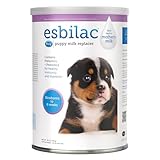
- PUPPY MILK REPLACEMENT — When mom can’t nourish them, Esbilac can. Scientifically the next best to mother’s milk, Esbilac provides all the nutritional elements necessary for puppies, newborn to six weeks old.
- COMPLETE, BALANCED NUTRITION — Our formula is closest to mother's milk in protein, fat, and carbohydrates. We’ve also added vitamins, minerals, and trace nutrients; plus prebiotics and probiotics to support healthy immunity and digestion.
- EASY TO DIGEST — Esbilac is highly palatable and formulated with a special fiber blend for easy digestion and improved gut health.
- EASY-TO-MIX FORMULA — Whisk or shake 1 part powdered Esbilac into 2 parts warm water. Do not mix more Esbilac than can be consumed in 24 hours. Do not use a blender. Must be kept refrigerated after reconstituting.
- ABOUT US — PetAg is a trusted leader in pet wellness, with science-backed formulas in our milk replacers, health supplements, and grooming products helping pet owners to proactively enhance the lives of their pets, for more healthy years together.
- Do not put your hands between animals during a tense interaction or forcibly take an object your dog is guarding.
- If a toy or object appears to trigger guarding, do not approach or grab it. Ask your veterinarian how to manage it safely.
- Do not punish, scold, or confront your dog. Confrontation can increase fear, anxiety, and arousal, potentially raising aggression risk.
What should I do now?
- Separate calmly. Arrange a safe way to keep the animals apart when you cannot watch them closely. If you cannot maintain safe separation, seek prompt professional help.
- Call your veterinarian. Share when the behavior began, whether your dog is spayed, the date of her last heat if known, whether mating was possible, and any changes in her mammary glands, abdomen, appetite, or energy. Describe any growling, snapping, lunging, or bites.
- Have pregnancy and health concerns assessed. Your veterinarian can review reproductive history and examine your dog. If mating was possible, ultrasound or X-rays may be used to assess for true pregnancy. Pain and other medical conditions can also contribute to aggression or behavior changes.
- Avoid stimulating the mammary glands. Do not milk or massage the teats if pseudopregnancy is suspected; stimulation can encourage further milk production. Do not give hormonal medication or try to suppress lactation without veterinary direction.
- Follow a safe behavior plan. Reducing stimulation may shorten pseudopregnancy signs, but do not try close-contact exposure or training exercises while injury risk is unresolved. For moderate or severe aggression, Merck recommends referral to or consultation with a board-certified veterinary behaviorist.
When does this need prompt veterinary care?
Contact a veterinarian promptly if your dog seems physically ill, is markedly distressed, or shows severe or escalating aggression. Painful, hot, swollen, or otherwise abnormal mammary glands also need veterinary attention. If she may have mated, do not rely on behavior to determine whether she is pregnant; ask the veterinarian about assessment and appropriate testing.
For a dog that has recently given birth, fever, lethargy, poor appetite, abnormal vulvar discharge, or continued straining are warning signs that need evaluation. Merck’s postpartum guidance describes fever, depression, poor appetite, lethargy, and abnormal discharge as signs associated with reproductive disease after birth; mastitis can make mammary glands hot and painful. Merck Veterinary Manual postpartum guidance covers these concerns.
Rank #2

- NUTRITIONAL SUPPLEMENT - Esbilac Healthy Development supports healthy growth and development with high-quality protein for dogs weaning to 6 years.
- SUPPORTS COGNITIVE DEVELOPMENT – With DHA (Omega 3 fatty acids) and Vitamin E, our formula supports visual & cognitive development.
- CONTAINS OMEGA 6 FATTY ACIDS - Our powder contains Omega 6 fatty acids to support a healthy skin and coat.
- GREAT TASTE - Esbilac Healthy Development is formulated with a great taste dogs love. Supports transition to solid foods for weaning puppies.
- ABOUT US − PetAg is a trusted leader in pet wellness, with science-backed formulas in our milk replacers, health supplements, and grooming products helping pet owners to proactively enhance the lives of their pets, for more healthy years together.
How long can pseudopregnancy signs last?
Many cases settle with time, but estimates and thresholds differ by source. Merck says pseudopregnancy usually ends on its own in one to three weeks. VCA says mild cases often settle in about 14 to 21 days. UC Davis advises veterinary evaluation for aggression, extreme agitation, mastitis, or signs lasting more than eight weeks; it also recommends screening for possible hypothyroidism or liver dysfunction when signs persist beyond that period. These timeframes describe typical guidance, not a reason to delay care when signs are severe.
Medication such as cabergoline may be used in some cases, but it must be prescribed by a veterinarian. Do not treat a suspected false pregnancy at home with medication.
Rank #3

- MILK REPLACER WITH PROBIOTICS: Suitable for up to 9 young animal species including puppies, kittens, calves, lambs, goats, foals, piglets, llamas, and crias; providing probiotics and balanced nutrition to support healthy growth and development.
- MADE WITH PROTEIN AND FAT: Contains 24% protein and 24% fat; supporting fast, healthy growth, strong muscle development, and overall vitality for young animals during critical early stages of life.
- ALL MILK FORMULA WITH PROBIOTICS: Made with high-quality all-milk protein; supporting healthy growth, proper development, and overall performance for young animals during critical early stages of life.
- SUPPORTS HEALTHY DIGESTION FOR YOUNG ANIMALS: Powered by Opti-Gut probiotics; promoting gut health, nutrient absorption, and digestive balance to support overall growth, vitality, and wellbeing for young animals.
- EASY TO MIX FORMULA: Designed for quick and convenient preparation; ensuring fast mixing, effortless feeding, and optimal consumption so young animals receive balanced nutrition efficiently for healthy growth and development.
Can spaying prevent future episodes?
Spaying prevents future pseudopregnancy, but timing matters. UC Davis notes that spaying close to the end of estrus can induce an episode and says delaying surgery for 8–10 weeks after heat reduces that risk. VCA recommends discussing ovariohysterectomy for dogs not intended for breeding, ideally after signs resolve, because surgery during an episode can leave signs persisting for weeks. Discuss the timing with your veterinarian rather than scheduling surgery without an exam. If maternal aggression recurs, Merck notes that ovariohysterectomy can prevent further incidents of maternal aggression.
Quick Recap
Product prices and availability are accurate as of the date/time indicated and are subject to change. Any price and availability information displayed on Amazon at the time of purchase will apply.




