Puncturevine (Tribulus terrestris) is a low-growing summer annual with sharp, hard burrs that can injure people and pets. Confirm it by its opposite, hairy compound leaves, small yellow flowers, and spiny fruit. Then pull or hoe the plant at its taproot before it sets seed, collect any burrs already on the ground, and clean shoes and equipment before they carry seeds elsewhere.
How to identify puncturevine
Puncturevine, also called goathead or caltrop, grows as a flat mat rather than an upright bush. Look for the combination of these features; the sharp fruit is especially distinctive.
- Growth: Stems spread outward from a central taproot and form a mat that UC IPM says can reach 2 to 5 feet in diameter. The stems do not root where they touch the ground.
- Leaves: Hairy leaves grow opposite one another on the stem. Each leaf is divided into 4 to 8 pairs of opposite leaflets.
- Flowers: Small yellow flowers with five petals appear in the leaf axils, where a leaf joins the stem.
- Fruit: After flowering, the plant produces clusters of hard, flat burrs with sharp spines. Mature burrs are gray or tan and break apart into pieces that can snag in shoes, clothing, or animal fur and feet, and puncture bicycle tires.
See the UC IPM puncturevine profile for identification details.
Why one cleanup is rarely enough
Puncturevine germinates in spring and summer from seed left in the soil. It can begin flowering within about three weeks of germination and continue through summer. Seeds may remain viable in soil for up to five years, so remove plants before they produce seed and keep checking for seedlings in later seasons. Rain or irrigation can prompt new germination.
Do these 3 things before closing this tab:
1Fix the driver behind crashes, sound loss and screen glitches2Clear out junk files and repair common Windows errors3Scan for outdated or missing drivers - takes under a minute#1 Best Overall

- Effortless Maneuverability & Lightweight Design – This lawn roller water filled option is designed for easy use, making it simple to level and smooth your yard. Whether using it as a yard roller tow behind or manually as a lawn roller push pull, its durable poly construction ensures a hassle-free experience. Ideal for both residential and commercial lawn care equipment.
- Versatile Tow-Behind & Push Functionality – This lawn roller tow behind model can be attached to a tractor for larger areas or used manually for smaller yards. Whether you're flattening a garden, pressing down new sod, or using it as a sticker burr roller, this roller adapts to your needs, making it the perfect yard roller pull behind solution.
- Easy Fill & Drain for Adjustable Weight – Built as a lawn roller water filled tow behind, it allows you to quickly adjust its weight for different lawn care tasks. Use it as a soil compactor for new sod or as a sod roller to establish strong seed contact. Its yard roller push design ensures smooth rolling across any terrain.
- Achieve Professional Lawn Stripes & Smoothness – Whether you're looking for a lawn striping kit effect or trying to eliminate uneven patches, this grass roller helps you achieve a pristine lawn. It's also a great goathead roller for yard, ensuring that unwanted debris is pressed down effectively while improving your lawn’s overall appearance.
- Durable, Rust-Resistant & Built for All Conditions – Constructed from high-quality materials, this heavy-duty lawn roller is designed to withstand outdoor conditions. Whether using it as a pull behind lawn roller or a garden roller, it delivers long-lasting performance, making it an essential lawn maintenance tool for any homeowner or landscaper.
The Washington State Noxious Weed Control Board reports that a plant typically produces 200 to 5,000 seeds, and may produce up to 100,000 under some conditions. The board’s surfaced page does not state a publication date. That seed output helps explain why collecting burrs and preventing seed spread matter as much as removing the visible plant.
Remove plants and burrs safely
- Choose the right time. Pull or hoe puncturevine before it sets seed. Moist soil can make hand-pulling easier.
- Remove the crown and taproot. Trace spreading stems back to their junction at the central crown, then pull the plant or use a hoe to cut it at the taproot. Check the crown area so stems are not left behind.
- Wear sturdy gloves. Avoid grabbing burrs directly. The sources recommend gloves but do not establish that any particular glove is puncture-proof.
- Collect burrs on the ground. Carefully rake or sweep the area. UC IPM also describes patting the soil with carpet to pick up burrs; Salt Lake City recommends using a carpet remnant or fabric and bagging collected seeds on site.
- Bag and dispose of the debris. Salt Lake City Public Lands advises putting puncturevine and its seeds in the waste bin, not the compost bin. Follow stricter local disposal rules if they apply.
- Clean items that may carry seeds. Check shoes, clothes, mower wheels, carts, and tires before leaving the infested area. Burrs can hitchhike on people, pets, animals, and equipment.
- Recheck the yard. Look for new plants through the growing season and in subsequent years, especially after rain or irrigation. Remove new growth before it forms burrs.
Salt Lake City’s How to Remove Puncturevine guide states: “Due to its noxious and invasive nature, please dispose of puncturevine and its seeds in the waste bin (not the compost bin).”
Rank #2

- Weeding root lifter:with handle and sharping teeth design, this tool can be used to pull weed and loose soil,yard garden weeding tools
- Portable garden weeder tool:for a wide range of gardening and landscaping projects, including digging, transplanting, and more,garden puller tool
- Standing garden weeder:the gardening tool helps gardening or planting become a leisure and fun activity for family,dandelion weeder tool
- Hand weeding tools:reasonable engineering mechanics design, reasonable bending force to increase strength,garden weeder tool
- Weeding tools gardening:this gardening tool has strong practicability, suitable for transplanting flowers, vegetables and seedlings, loosening soil and weeding,weeder tool for garden
Which removal methods work?
| Method | When it helps | Limitations |
|---|---|---|
| Hand pulling or hoeing | Practical for home landscapes; remove the crown and target the taproot before seed set. | Missed plants or later seedlings can still produce burrs, so keep monitoring. |
| Shallow tilling | UC IPM says tilling about one inch deep can work on seedlings or small plants. | Avoid deeper tilling: it can bury seeds, where they may persist. |
| Mowing | Not an effective control method. | The plant grows low to the ground, so mowing may miss it. |
| Organic mulch | In suitable ornamental beds or gardens, UC IPM says organic mulch should be at least 3 inches thick and block light to be effective. | Use where mulch fits the planting; it does not replace removing existing plants and burrs. |
| Biological control | Two introduced weevil species have been used to suppress puncturevine. | Control can be inconsistent and suppression may cycle. UC IPM generally does not recommend buying and releasing weevils because insects from elsewhere may not survive at the release site. |
| Herbicides | May be considered in some settings with local extension guidance and a product labeled for the specific site and use. | No single product is established as suitable for every yard. Follow the current label and local guidance. |
See UC IPM’s puncturevine management guidance for method details. If considering an herbicide, the UC ANR goathead guidance is a local resource; the product label and your local rules govern use.
Independent reader supportYour contribution helps us test, update, and keep practical guides available for everyone.Keep pets and livestock away from burrs and plants
Sharp burrs can injure feet and become caught in fur. Check pets after they have been in an affected area, and avoid letting them walk or lie among burrs. UC IPM also reports toxicity concerns for livestock, particularly sheep. Do not allow grazing animals to eat puncturevine; contact a veterinarian if an animal may have eaten it or shows symptoms.
Rank #3
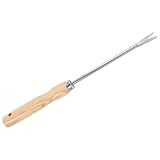
- Manual weeder remover tool--easy to operate and easy to store, which does not take much of your space the weight isn't heavy, which is easy to use for both adults and ,hand weeding tools
- Small lawn weeder--reasonable engineering mechanics design, reasonable bending force to increase strength,weeding tool
- Gardening hand weeder tools--this handheld weed puller tool make the gardening more easier for you, which is labor saving,dandelion weeder tool
- Garden hand weeder--the ergonomic handle is good for you to hold easily and effortlessly,weeder tool for garden
- Garden tools weeder--ergonomically designed handle can reduce hand and wrist fatigue,weeding tool accessories
Keep children and animals away while you remove plants and collect burrs, and dispose of debris where they cannot get into it. Clean pet gear and footwear that may have picked up seeds before taking them to another area.
Monitor beyond the first season
Once visible plants and burrs are gone, revisit the area during spring and summer and after conditions that encourage germination, such as rain or irrigation. Pull seedlings promptly, collect any new burrs, and check neighboring edges, paths, and places where shoes or equipment may have dropped seeds. Because seeds can remain viable for up to five years, sustained follow-up is more reliable than expecting one intensive cleanup to clear the soil.
Quick Recap
Product prices and availability are accurate as of the date/time indicated and are subject to change. Any price and availability information displayed on Amazon at the time of purchase will apply.




