What’s actually slowing this PC down?
Pick the symptom - the matching free tool is one click away.
The Florida panther is the only surviving cougar population in the eastern United States, but its breeding core is concentrated in south Florida. The Florida Fish and Wildlife Conservation Commission (FWC) estimates there are about 120–230 adult panthers; that is an agency estimate, not an exact census. Panthers have been documented across much of the Florida peninsula and as far north as Georgia, but sightings and dispersing animals do not mean there are established breeding populations throughout the East.
What is a Florida panther?
A Florida panther is a cougar (also called a puma or mountain lion) in the surviving population native to the southeastern United States. It is not a separate species. The FWC lists the panther as endangered under the Endangered Species Act and says it is illegal to harm or harass one. The name refers to this population and its south Florida recovery history, not to a different kind of big cat. FWC’s Florida Panther Program
How many Florida panthers are left?
FWC’s current program page gives an approximate estimate of 120–230 adult panthers, accessed in 2026. It is an estimate rather than a precise count, and the stated range is for adults, not kittens. Changes in sightings or reports should not be read as a direct census of the population. FWC’s Florida Panther Program
Where do Florida panthers live?
The population’s breeding core is south of Lake Okeechobee. Panthers have been documented through much of the peninsula and into Georgia, but the broader footprint of documented animals is not the same as the range of a self-sustaining breeding population. A panther seen well north of the core may be dispersing; one sighting does not establish a new population. FWC’s Florida Panther Program
#1 Best Overall

- Sublimated NHL logo on one side, color team logo on the other side
- Stuffed durable polyester canvas-like fabric with crinkle paper feature & squeaker for fun, sensory overload!
- Approximately 5.75" in diameter, 2.5" thick
Historically, cougars occupied a much wider area. The surviving Florida population was reduced to south Florida after a broad decline, so historical maps should not be mistaken for today’s distribution. Federal recovery planning treats expansion beyond the current core as a goal, not an accomplished fact. U.S. Fish and Wildlife Service Florida Panther Recovery Plan material
Why did Florida panthers become endangered?
Hunting and habitat loss sharply reduced cougar numbers and isolated the Florida population. As it dwindled, genetic diversity fell and inbreeding became common. FWC describes a population of roughly 20–30 panthers in the 1980s and early 1990s, when inbreeding was linked to serious health concerns. FWC on Florida panther genetics
Rank #2

- Sublimated Stanley Cup print on one side, color team logo & "32 Teams. 1 Goal." on other side
- Stuffed durable polyester canvas-like fabric with reinforced trim around the edges
- Approximately 10" long; 5.25" wide
- For proud doggos but also a great kicker/cuddler toy for cats!
Genetic restoration helped, but did not solve the habitat problem
In 1995, wildlife managers introduced Texas pumas to restore gene flow resembling the movement of cougars across a wider historic range. The goal was to improve genetic variation in the Florida population, not replace it. FWC reports increased genetic variation and declines in several traits associated with inbreeding after the restoration. The agency also notes that original Florida panther genetic characteristics remain in a large portion of the population; describing today’s panthers as simply “not pure” misrepresents that history. FWC on Florida panther genetics
Habitat remains the central constraint
The federal recovery-plan summary identifies habitat loss, degradation, and fragmentation as the greatest threat to survival. Development, roads, agriculture, mining, and inadequate land-use planning can reduce habitat or divide it into smaller, less connected areas. Prey availability and lack of human tolerance are also limiting factors. Genetic health and habitat capacity are different things: improved genetic variation cannot provide the space or connections needed for a population to expand. U.S. Fish and Wildlife Service Florida Panther Recovery Plan material
Rank #3
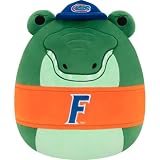
- Show your University of Florida spirit with this 12-inch Albert Squishmallows plush!
- Squishmallows are made with ultrasoft material.
- Official Squishmallows product: look for the official seal and join the Squad!
- Look for other Squishmallows extensions, including FuzzAMallows, HugMees, Mystery Squad, and Stackables, only by Original Squishmallows.
What threatens panthers today?
Vehicle collisions
Cars and trucks are a leading documented cause of panther mortality and can also make it harder for animals to move safely between habitat areas. FWC identifies vehicle collisions among the two most common causes of death. Its mortality graphic covers 1981–2025, but an annual total should not be inferred without examining the underlying report. FWC Panther Biology
Panthers killing other panthers
Intraspecific aggression—panthers killing other panthers—is the other cause FWC identifies among the two most common. This differs from a habitat threat: it is a direct source of mortality, while fragmentation can limit the room and connections needed for a larger, geographically broader population. FWC Panther Biology
Rank #4

- This plush is approx. 4" x 8" x 4" in size
- Made from deluxe materials for a cloud-like softness!
- This light and fluffy Panther plush makes for a great cuddling partner
- Mini Flopsies are designed to lay resting on its belly for easy, fun play
- To ensure stability and quality, this plush contains bean pellets suitable for all ages
Habitat fragmentation and development
Loss of connected habitat is a longer-term constraint on persistence and range expansion. A population can show improved genetic condition and still remain geographically vulnerable if it cannot occupy additional suitable areas. The recovery plan therefore treats habitat quantity, quality, spatial arrangement, and public acceptance as connected parts of recovery. U.S. Fish and Wildlife Service Florida Panther Recovery Plan material
Independent reader supportYour contribution helps us test, update, and keep practical guides available for everyone.What does recovery require?
The federal strategy is not only to maintain the existing south Florida population. It calls for maintaining, restoring, and expanding panther habitat and numbers in south Florida; expansion into south-central Florida; and reintroduction of at least two additional viable populations in the historic range outside south and south-central Florida. Building public awareness and support is also part of the plan. U.S. Fish and Wildlife Service Florida Panther Recovery Plan material
PC Slower Than It Used to Be?
A free scan shows the junk files, broken settings and background clutter dragging Windows down - then fixes them in one click.Free scan · Windows 10 & 11Outdated Drivers Are Slowing You Down
One free scan finds every outdated or missing driver and matches the right update for your exact hardware.Free scan · exact hardware matchBest Value

- PLUSH FIGURE – With the unique ability to stand on their own, Bleacher Creatures are perfect for play or display.
- QUALITY CONSTRUCTION AND DETAIL – Skillfully crafted to capture your favorite mascot’s unique personality.
- DETAILS – 10” tall with sublimated team logos.
- AUTHENTIC – Officially licensed by the Florida Gators.
- MAKES A GREAT PRESENT – A must-have for Florida Gators fans, young or old.
That makes range and population size separate measures of progress. The estimated number of adults does not show whether new breeding populations have become established. Likewise, occasional records outside the core are evidence of presence, not proof of a viable, self-sustaining population.
How do Florida panthers live?
Panthers are meat-eaters that need adequate space and prey. FWC lists deer, raccoons, wild hogs, armadillos, and other animals among their prey categories, and says wild panthers can live 20 years or more. These are general agency descriptions, not a guarantee of lifespan for any individual animal. FWC Panther Biology
FWC also says an unknown disorder affecting wild cats is under investigation. Its cause and prevalence are not established in the cited program information, so no specific explanation should be assumed. FWC’s Florida Panther Program
What should you do if you see a panther?
Do not approach, feed, or try to handle a panther. In panther country, follow FWC’s living-with-panthers guidance and use the agency’s official reporting route to report a sighting. FWC’s reports page also lists current agency plans, annual reports, and educational material. FWC Panther Reports, Plans and Suggested Reading
Quick Recap
Product prices and availability are accurate as of the date/time indicated and are subject to change. Any price and availability information displayed on Amazon at the time of purchase will apply.




