Recommended Free Tools
A happy dog usually shows several signs at once: a loose, relaxed body, a soft face, willing interaction, play invitations, and the ability to settle after excitement. No single behavior proves a dog’s emotional state, and a wagging tail on its own is not a reliable happiness test. The signs below are clues to read together and against your own dog’s normal behavior.
How to read these signs together
Dogs communicate through combinations of posture, facial expression, tail carriage, eye behavior, and muscle tension. Reading one body part in isolation is the most common source of misinterpretation. A dog with a wagging tail and a stiff, braced body is sending a different message than a dog with a wagging tail, a loose spine, and a soft face.
Context matters just as much. The same action can mean different things in different settings, so compare what you see with how your dog normally behaves at home, on walks, and around visitors. A dog who is usually bouncy and suddenly still and withdrawn is telling you something, even if the posture looks neutral.
The American Kennel Club’s body-language guidance describes tail wagging as a sign of emotional arousal that can accompany either positive or negative feelings. That is why the signs below are framed as observations rather than a validated happiness score or a diagnosis.
#1 Best Overall

- New communication tool about you and your puppy.
- Pet Dog Training Clickers for Puppy, Cat, Potty, Bird, Horse, Pet, Trainer Training Tools, Behavior Aids
- Just press to mark desired behavior, then reward for faster learning.
- The spring wrist length : 16cm/6.3inches and can strength to 25cm/9.84inches.
- Package include : Black + Blue,each color 1 pcs.
The 10 signs your dog may be happy
1. A relaxed, loose overall posture
A content dog typically carries its body in an easy, unhurried way. The spine is not arched or hunched, the weight is balanced, and the dog moves or rests without visible effort. Think of a dog who flops onto a side with a relaxed hip and a slightly open chest, rather than one who holds its body low or tight.
2. Soft eyes
Soft eyes have a rounded, unfocused look. The eyelids are relaxed, and the dog blinks normally. Hard eyes are different: a fixed stare, a tight ring of white showing around the eye, or eyes that stay locked on something. Soft eyes read as comfort when they appear alongside the other signs on this list.
3. A body that looks comfortable, not braced
Watch for limbs that move freely. A comfortable dog can shift position, stretch, and sit down without tension. A braced dog keeps its legs rigid, leans away from a person or object, or holds its weight forward as if ready to move quickly.
Rank #2

- ▼Come in 4 pack button clickers with wrist strap in 4 different colors:Black, Green, Orange, Yellow, each color 1 PCS
- ▼Can be used to train the dog basic obedience, small trick, and correct the bad behavior; Scientific method of training your pet safely and easily.
- ▼Stop barking and dog obdeience. Train your dog quiqly just by simply pressing the clicker and command.
- ▼Well constructed and durable, metal clicker will not rust or break.
- ▼Big button for easy clicking and loud sound. Easy to use in any position.
4. A relaxed mouth and face
A relaxed mouth is typically closed or softly open, with the lips not pulled tight or back. The face as a whole should look at ease. Read the mouth with the eyes and ears, because a tight mouth paired with soft eyes can still signal something unsettled.
Windows Errors? Fix Them Before They Spread
Repair common Windows errors and clear accumulated junk for a smoother, more stable PC - no reinstall needed.Free scan · no reinstallOutdated Drivers Are Slowing You Down
One free scan finds every outdated or missing driver and matches the right update for your exact hardware.Free scan · exact hardware match5. Comfortable, willing engagement
A dog who is content tends to approach familiar people, settle near them, and accept touch without freezing or turning away. The engagement should be voluntary. If the dog approaches and then backs off repeatedly, or only tolerates contact, the picture is different.
6. Interest in activities it enjoys
Breed tendencies and personal temperament shape what a dog finds rewarding. One dog may light up at a game of fetch, another at sniffing a new route, and another at a quiet chew. What matters is that the dog shows enthusiasm for activities it has chosen or clearly enjoys, and stays relaxed while doing them.
Rank #3
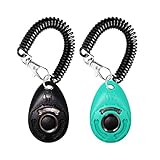
- EASY TO USE - Simple push button with distinct clicking sound.
- Comes with an elastic wrist band so you can leave it on your wrist or clip it to the leash or your pants.
- Not only train the dog but also the cat, bird, chicken, sheep a new behaviors like sit, fetch, roll over, lie down.
- For effective pet training ALWAYS reward with a treat after clicking.
- Can be used to train the dog basic obedience, small trick, and correct the bad behavior; Scientific method of training your pet safely and easily.
7. A play bow or other clear invitation
A play bow is one of the clearest invitations a dog gives. The front end drops down with the elbows bent and the chest low, while the hindquarters stay raised and the tail is often up and moving. A dog who offers a play bow is asking another dog or person to join in.
8. Loose, wiggly movement during play or zoomies
Short bursts of sprinting, circling, and wiggling are commonly called zoomies. When the body is loose, the movements look bouncy rather than stiff, and the dog returns to interaction afterward, the burst is most likely enjoyment. Veterinary guidance from Cornell University College of Veterinary Medicine distinguishes this from a dog that looks frightened, anxious, tense, or in pain during similar movement.
9. Settling after excitement
Happy dogs get excited, but they recover. After play, a walk, or greeting visitors, a content dog gradually calms, drinks water, and lies down. A dog who stays wound up, cannot settle, or keeps reinitiating high arousal may need a calmer routine rather than more stimulation.
Rank #4

- MANUAL AUDIBLE CLICKER: Produces an audible click when manually pressed. The clicker contains no electronics, batteries, remote-control functions, or Electronic Stimulation features.
- INDIVIDUAL RESPONSE TO SOUND MAY VARY: Dogs and other animals may respond differently to audible clicker sounds. Introduce the clicker gradually and discontinue use if the animal shows discomfort or fear.
- COMPACT HANDHELD DESIGN: Small finger-clicker design is intended to be carried and operated by the user. Review the product images and compact size before ordering to confirm it meets your expectations.
- 5-INCH VELCRO FINGER STRAP: Includes an approximately 5-inch adjustable Velcro strap designed to position the clicker on the user's finger or hand. The strap is worn by the user and is NOT intended to be worn by the pet.
- TEAL CLICKER ACCESSORY: Includes one Teal manual finger clicker and training instructions. Remote transmitter, receiver collar, batteries, and other training-system components are NOT included.
10. A consistent pattern across ordinary situations
The most reliable clue is a familiar pattern. A dog who shows relaxed posture, soft eyes, willing engagement, and easy recovery across many ordinary days is giving you a far stronger picture than any single moment. A dramatic signal in isolation, whether a wag, a leap, or a lick, is weak evidence on its own.
Signals that look happy but may not be
The table below compares common signals that owners often read as happiness with the context that changes their meaning.
| Signal | Likely reading when the rest of the body is relaxed | Reading to watch for | What to do |
|---|---|---|---|
| Wagging tail | Positive arousal, such as anticipation or greeting | Wag paired with stiffness, hard eyes, or a lowered tail held tight; this can signal anxiety or frustration | Increase distance, let the dog choose the interaction, and avoid approaching |
| Zoomies | Loose, bouncy play that ends with the dog returning to you | Frightened, tense, or painful-looking movement, or running that seems to be escape | Interrupt calmly, check for a cause, and contact a veterinarian if the behavior is new or unexplained |
| Following you closely | Comfortable attachment when the body is loose and the dog settles nearby | Constant shadowing with restlessness, panting, or inability to rest | Look for stress triggers and whether the dog can settle when you leave the room |
| Lying down | Relaxed rest with soft eyes and a loose body | Lying down with a hunched back, reluctance to move, or withdrawal from family | Watch for changes in appetite, sleep, or willingness to exercise and seek veterinary advice if these persist |
When a change in mood may be pain or illness
Pain rarely appears as an obvious injury. Often it shows up as a change in behavior that owners interpret as sulkiness or laziness. Cornell’s veterinary guidance lists the following as possible signs of pain or illness:
Do these 3 things before closing this tab:
1Clear out junk files and repair common Windows errors2Fix the driver behind crashes, sound loss and screen glitches3Repair Windows errors before they cause bigger problemsBest Value

- Stronger Bark Control with 3X Ultrasonic Emitters: Unlike single-emitter devices, our upgraded dog bark deterrent features three synchronized ultrasonic heads—delivering 3X the coverage to quickly stop barking, biting, and jumping behaviors. Ideal for anti barking training, safer than bark collar, more effective than a dog whistle, offers a humane, high-performance dog training solution
- 6-in-1 Safe & Humane Training Modes:Our dog bark deterrent device features dual ultrasonic frequencies (fixed 25kHz and variable 20-30kHz), combining 4 ultrasonic modes plus an audible beep and LED flashlight for versatile training. Whether for daily training or stubborn, persistent barking, this anti bark device adapts to different dogs providing effective bark control without causing pain or distress. Perfect for training at home or to stop neighbors dog bark that disturbs your peace
- 23 FT Extended Range & Night Safety: Bark Control Anytime, Anywhere: Stop barking and bad behavior from up to 23 feet away with our powerful dog bark deterrent device — perfect for your yard, neighbor’s yard, outdoor walks, and off-leash areas. Whether you're relaxing at home or out for a stroll, enjoy safe, long-distance control to correct disruptions quickly. The built-in LED flashlight adds safety for evening walks, and low-light training
- Fast Charge & Long Battery Life – Always Ready for Training:With a Type-C fast charging port, our dog bark deterrent device reaches a full charge in just 2 hours and provides up to 30 days of regular use on a single charge, along with 180 days of standby time. Whether you're correcting anti barking behavior or training your dog in public places, you’ll always be prepared for any situation. Forget the hassle of frequent charging and enjoy reliable, long-term barks no more support
- Ultra-Compact Design for Everyday Convenience:50% smaller than standard dog bark deterrent devices, our anti barking device is ultra-compact and lightweight, fitting effortlessly into your pocket, bag, or hand. Whether you're on daily walks, outdoor adventures, or dealing with unexpected situations in public places, this portable design helps you stop barking and encourage good behavior anywhere, anytime. Say goodbye to constant noise and enjoy a barks no more experience with your dog
- Lethargy or unusual tiredness
- Reluctance to exercise or to climb stairs
- Withdrawal from people or other pets
- Excessive panting while at rest
- Changes in appetite or sleep
- A new negative response to being touched
These changes are reasons to contact a veterinarian, not to assume the dog is unhappy. Sudden changes, changes that persist, and changes that occur alongside any of the signs above deserve prompt assessment.
Supporting a dog that is happy and stays that way
Play, training, and mental stimulation support a dog’s well-being. The American Kennel Club’s enrichment guidance describes these activities as ways to meet a dog’s needs and suggests durable toys and safe chew options for satisfying natural chewing behavior. A treat-dispensing or puzzle toy can add a few minutes of problem-solving to a day, which many dogs find engaging. No specific product is required for a dog to be happy, and a toy should never replace the attention and exercise a dog needs.
Putting it together
The clearest sign of a happy dog is a pattern rather than a moment. Look for a loose body, soft eyes, willing engagement with the people and activities it enjoys, play invitations, and a steady return to calm. When the picture changes, especially when a dog that was usually social becomes withdrawn, rigid, or unable to settle, read that change as information about the dog’s needs and check with your veterinarian.
In the words of trainer Brenda Aloff, who has more than 20 years of experience and is quoted in the American Kennel Club’s body-language article: “I equate happiness more with a state of comfort.” Comfort is the thread that ties these ten signs together.
Quick wins for a faster PC:
Clear out junk files and repair common Windows errorsFree Scan →Fix the driver behind crashes, sound loss and screen glitchesFind Drivers →Ready to start observing? Choose one ordinary day this week, note each time your dog relaxes, approaches, plays, or settles, and compare the pattern with your own dog’s usual behavior.
Quick Recap
Product prices and availability are accurate as of the date/time indicated and are subject to change. Any price and availability information displayed on Amazon at the time of purchase will apply.




