Quick wins for a faster PC:
Clear out junk files and repair common Windows errorsFree Scan →Fix the driver behind crashes, sound loss and screen glitchesFind Drivers →Flea allergy dermatitis (FAD) is an allergic skin reaction to antigens in flea saliva, which enter the skin when fleas feed. A hypersensitive cat can become intensely itchy from a small number of bites, and the cat may groom away the very fleas causing the problem. Control requires two things at once: removing fleas from the cat and the home, and having a veterinarian assess the skin damage and the itch.
What causes flea allergy dermatitis in cats
FAD is a hypersensitivity to flea saliva, not a simple local reaction to a visible bite. The Merck Veterinary Manual’s entry on flea allergy dermatitis in dogs and cats (reviewed April 2026, updated May 2026) describes saliva antigens as the trigger. Why some cats react strongly while others barely notice bites is not fully understood in cats, so the number of fleas you see does not predict how severe your cat’s reaction will be.
The cat flea, Ctenocephalides felis, is the flea most prevalent on dogs and cats in North America and the species most associated with FAD. Adult fleas feed on the animal, and their eggs fall off into bedding, carpet, and soil. That is why the household environment has to be part of the plan, not just the cat.
How common is FAD in cats?
The American Animal Hospital Association’s 2023 guideline, in its feline section titled “Section 4: Managing Feline Chronic Allergic Conditions,” states: “Flea allergy dermatitis is the most common allergic skin disease, seen solely or concurrently with other allergic conditions.” That statement ranks FAD among feline allergic skin diseases. It is not a count of affected cats, and no cat-specific prevalence figure from these sources should be read as one.
#1 Best Overall

- Advantage II Large Cat is a leading brand in cat flea treatment and prevention for large cats over 9 lbs., at least 8 weeks of age
- Vet-recommended, easy-to-apply monthly topical treatment – no hard-to-swallow pills, no prescription needed
- Delivers total flea protection – kills adult fleas, flea larvae and flea eggs through contact
- Same-day effectiveness – kills fleas within 12 hours of application and keeps working for 30 days
- Fragrance-free formula, waterproof after 24 hours of application
Symptoms to watch for
- Persistent itching, scratching, licking, chewing, or overgrooming
- Small, firm bumps that become crusted from self-trauma, a pattern often called miliary dermatitis
- Hair loss or a rough, unkempt coat
- Irritation, scabs, or scratch wounds around the head and neck
- Lesions on the back, tailhead, hindquarters, or belly
Some cats show other feline hypersensitivity patterns, such as eosinophilic plaques or granulomas, either instead of or alongside these signs. FAD ranges from mild to severe. Because these patterns overlap with many other skin conditions, they are a reason to see a veterinarian, not a basis for self-diagnosis.
Why you may not see fleas
A highly sensitive cat can groom so intensively that fleas are removed before an owner notices them. A quick visual inspection can therefore miss fleas entirely, and a missing flea sighting does not rule out FAD. Indoor cats can develop it too. In warm climates, FAD can occur year-round.
Rank #2

- EFFECTIVE, WATERPROOF FLEA TREATMENT FOR CATS: PetArmor Plus is a waterproof, flea & tick topical prevention for cats that kills fleas, flea eggs, flea larvae, ticks, and chewing lice for up to 30 days after application.
- TRUSTED, VET QUALITY FORMULA: Containing fipronil and (S)-methoprene, the same active ingredients as FRONTLINE Plus for Cats. PetArmor Plus for Cats has a powerful formula that starts to kill fleas within 24 hours.
- BREAK THE FLEA CYCLE: Unlike other flea and tick treatments that may temporarily suppress flea activity, PETARMOR Plus Cat Flea Treatment works by effectively breaking the flea life cycle Kill flea eggs and larvae to prevent re-infestation.
- FLEA AND TICK PROTECTION: PetArmor Plus for Cats flea drops protects your furry family members from brown dog ticks, American dog ticks, Lone Star ticks, and deer ticks (which may transmit Lyme disease).
- EASY-TO-USE, LONG-LASTING: PetArmor Plus flea and tick treatment comes with three (3) waterproof topical applications that provides your pet flea protection and control for three (3) months.
How veterinarians diagnose it
Diagnosis is built from several sources of evidence rather than a single test. A typical assessment includes:
- History. When the itching started, whether it follows a seasonal pattern, outdoor access, other animals in the home, and any flea products already used.
- Skin examination. The vet looks closely at the head, neck, back, tailhead, hindquarters, and abdomen for bumps, crusts, and hair loss.
- Flea evidence. Combing the coat with a fine-toothed flea comb and checking for live fleas or flea dirt.
- Response to flea control. Improvement after appropriate flea treatment supports the diagnosis.
- Screening for lookalikes. Parasites, ringworm, food or environmental allergies, medication reactions, and skin infections can mimic FAD or occur alongside it.
Flea dirt is a useful inspection clue, though not a diagnosis on its own. It looks reddish-black, cylindrical, and pellet- or comma-shaped. To check it, place a suspect speck on a damp paper towel and crush it. Flea dirt is digested blood and will dissolve into a reddish-brown stain. Finding fleas or flea dirt does not rule out a second cause of itching.
Rank #3
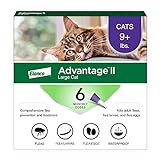
- Advantage II Large Cat is a leading brand in cat flea treatment and prevention for large cats over 9 lbs., at least 8 weeks of age
- Vet-recommended, easy-to-apply monthly topical treatment – no hard-to-swallow pills, no prescription needed
- Delivers total flea protection – kills adult fleas, flea larvae and flea eggs through contact
- Same-day effectiveness – kills fleas within 12 hours of application and keeps working for 30 days
- Fragrance-free formula, waterproof after 24 hours of application
Skin or allergy testing may be used in context, but the Merck Veterinary Manual cautions that it does not always reliably identify feline FAD. Testing results should be interpreted by your veterinarian alongside the history and examination.
Independent reader supportYour contribution helps us test, update, and keep practical guides available for everyone.Treatment and prevention
A durable plan has four parts: eliminate fleas on the affected cat, treat every other animal in the home, address the environment, and manage the itch and any skin damage under veterinary direction.
Rank #4

- SHIPMENT CONTAINS: One 6-dose pack of Amazon Basics Flea Topical for Large Cats (over 9 pounds)
- FAST ACTING: Eliminates fleas in just 12 hours, providing your cat with swift relief from discomfort with our effective flea medication
- DUAL INGREDIENT FORMULA: Formulated with Imidacloprid and Pyriproxyfen to kill adult fleas and prevent flea infestations
- LONG-LASTING PROTECTION: Protect your cat from infestations for up to 4 weeks with each application, killing reinfesting fleas within 2 hours and efficiently halting the flea lifecycle
- EASY APPLICATION: Designed for monthly use, apply directly to dry skin between the shoulder blades for best results
1. Control fleas on the affected cat
AAHA’s 2023 guideline advises using FDA-approved flea products labeled for cats, with long-term prevention. Choose the product with your veterinarian and check the current label. Consider:
- Whether the product is labeled for cats
- The cat’s age and weight eligibility
- The route of application and dosing interval
- Which parasites the product covers
- Whether it is suitable alongside any products used on other household animals
- Your veterinarian’s advice for this particular cat
Never use dog flea products on a cat. Some dog products contain ingredients that can be dangerous to cats, and product labels and approvals can change, so confirm the current label before buying or applying anything.
Best Value
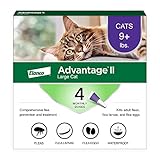
- Advantage II Large Cat is a leading brand in cat flea treatment and prevention for large cats over 9 lbs., at least 8 weeks of age
- Vet-recommended, easy-to-apply monthly topical treatment – no hard-to-swallow pills, no prescription needed
- Delivers total flea protection – kills adult fleas, flea larvae and flea eggs through contact
- Same-day effectiveness – kills fleas within 12 hours of application and keeps working for 30 days
- Fragrance-free formula, waterproof after 24 hours of application
2. Treat every animal in the household
Other dogs and cats in the home need suitable prevention as well. An untreated animal can keep bringing fleas back to the cat, and FAD flare-ups often follow reinfestation.
3. Address the environment
Wash pet blankets and bedding, and vacuum the places the cat rests, including carpet edges and under furniture. These steps support flea control but do not replace treating the animals. Merck’s cat-owner guidance on fleas (undated on the version reviewed) says a household infestation typically takes two to three months to bring under control, because flea life stages remain in the environment. Visible fleas can persist during that time. This is a typical timeline, not a guarantee, so keep treating for the full period your veterinarian recommends.
4. Relieve itch and treat complications with your veterinarian
Supportive veterinary treatment may be needed when itching is severe or scratching has caused wounds or a secondary infection. Cornell University’s College of Veterinary Medicine guidance on flea allergy cautions that systemic medicines should be used only on a veterinarian’s recommendation. Medication can relieve symptoms, but it does not replace flea control.
See a veterinarian promptly if you notice:
- Open wounds, pus, or spreading redness
- Hair loss that is growing or spreading
- A cat that is lethargic, stops eating, or seems unwell
- Itching that continues despite consistent flea control
Persistent or complex cases may be referred to a veterinary dermatologist, a decision your veterinarian makes based on the cat’s history and response to treatment.
Quick Recap
Practical tips for owners
- Use a fine-toothed flea comb to check the coat regularly. The comb helps you find evidence of fleas but does not treat the allergy.
- Keep a note of when itching flares and which products were applied, so your veterinarian can compare patterns.
- Be consistent. Stopping flea prevention when the cat looks better is one of the most common reasons FAD returns.
Product prices and availability are accurate as of the date/time indicated and are subject to change. Any price and availability information displayed on Amazon at the time of purchase will apply.




