Crashes, No Sound, or Screen Glitches?
Random freezes, missing sound and display glitches usually trace back to one bad driver. Find and replace yours safely.Free scan · under a minutePC Slower Than It Used to Be?
A free scan shows the junk files, broken settings and background clutter dragging Windows down - then fixes them in one click.Free scan · Windows 10 & 11The rainbow cichlid, Herotilapia multispinosa, is a Central American freshwater cichlid that grows to about 5 inches (12.5 cm) at most. It does best in a stable, moderately hard, slightly alkaline aquarium with plenty of rockwork, a diet that includes algae and plant matter alongside protein, and tankmates chosen for peaceful, mid-sized behavior. Its main care risk is territorial aggression, which can intensify when a pair breeds.
Identifying the rainbow cichlid
The species is Herotilapia multispinosa. FishBase lists “Rainbow cichlid” as its common name. Do not confuse it with the many African mbuna and Malawi or Tanganyika cichlids that are sold under similar nicknames; they come from different lakes, have different water requirements, and are usually more aggressive.
Adult size
Fluval’s species spotlight (published around 2022) gives a maximum length of 5 in / 12.5 cm. Plan the tank around an adult that size, not the juvenile sold at the store.
Water conditions
Two published care sources give slightly different ranges. Both overlap, so a tank kept inside the overlap meets either recommendation. Treat these as target ranges rather than hard limits, and prioritize keeping the readings steady over chasing exact numbers.
#1 Best Overall
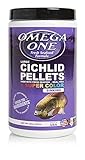
- Made in USA
- Made with fresh seafood
- never clouds water
- fresh, natural fats
- low in ash
| Parameter | Fluval species spotlight (c. 2022) | American Cichlid Association Community Cichlids brochure (undated) |
|---|---|---|
| Temperature | 76–82°F / 24–28°C | Not stated |
| pH | 7.0–8.0 | 7.5–8.0 |
| Hardness | 6–18 dH | Up to 20° dH |
- Test pH and hardness with a liquid kit before adding fish, then retest weekly for the first month.
- Avoid sudden swings. A stable tank matters more than landing exactly on either source’s midpoint.
- If your tap water is very soft or very acidic, buffer it deliberately with a product designed for that purpose and verify the result with a test, rather than assuming the tap value is fine.
Diet
Fluval’s species spotlight states: “The daily diet should contain foods with significant algae and plant matter, as well as insect protein.” Build the feeding plan around that balance.
- Algae and plant matter: use an algae-based cichlid food as the staple, and add blanched vegetables such as spinach or zucchini occasionally if the fish accepts them.
- Insect protein: offer insect-based foods as a secondary item so the diet is not all vegetable matter.
- Portions: feed only what is eaten within a few minutes. Uneaten food fouls water quickly, and that is a more common problem in cichlid tanks than underfeeding.
Neither source gives a feeding frequency, so adjust it by watching body condition and how fast the food disappears.
Rank #2

- IDEAL BALANCE: Omega One Floating Cichlid Pellets are formulated with a variety of fresh seafoods, ocean kelp, and spirulina to address the opportunistic dietary needs of cichlids
- KEEP A CLEANER TANK: Our Floating Cichlid Pellets are naturally insoluble, which reduces water pollution, and they have significantly less starch, which reduces fish waste
- SUPERIOR QUALITY: No meals, hydrolysates, digests, or any other pre-processed protein
- INSTRUCTIONS: Feed 1-3 times daily, using only as much food as fish can consume in two minutes
- GUARANTEED ANALYSIS: Min Crude Protein 42% / Min Crude Fat 11% / Max Crude Fiber 2% / Max Moisture 8.5% / Max Ash 8%
Tank setup and space
The American Cichlid Association brochure says the species benefits from plenty of rockwork. Stack stones or use caves and flat slates to create visual breaks, so each fish can claim a space and step out of sight of the others. Open floor with no cover tends to produce more chasing.
No dependable minimum tank volume or footprint is established for this species in the sources cited here, so this guide does not give one. Choose the largest tank you can manage, and make sure there is room for several separate territories rather than one open area.
Do these 3 things before closing this tab:
1Clear out junk files and repair common Windows errors2Scan for outdated or missing drivers - takes under a minute3Repair Windows errors before they cause bigger problemsRank #3

- Tailored Nutritional Blend: Crafted specifically for Mbuna African Cichlids, Ron's Mbuna Fish Food offers a meticulously balanced diet to support vibrant coloration, robust growth, and overall vitality.
- Protein-Packed Formula: Our fish food is enriched with premium proteins that cater to the unique dietary needs of Mbuna Cichlids, promoting muscle development and maintaining their active nature.
- Immunity Boosting Formula: Packed with essential nutrients, vitamins, and antioxidants, this food bolsters the immune system of Mbuna Cichlids, ensuring they stay resilient against illnesses and thrive in their habitat.
- Brilliant Color Enhancement: Featuring a specialized blend of natural ingredients, including carotenoids, our food intensifies the striking colors of Mbuna Cichlids, transforming your aquarium into a vibrant spectacle.
- Optimized Sinking Pellets: Engineered to match Mbuna's feeding habits, our slow-sinking pellets encourage natural foraging behavior, minimize waste, and preserve the water quality within your aquarium.
Tankmates
Fluval describes the rainbow cichlid as compatible with a wide range of other mid-sized, peaceful fish. Its examples include other cichlids, larger characins and cyprinids, and bottom dwellers such as Corydoras, loaches, and loricariids. This is general guidance. Individual fish vary, and a compatible species list does not replace watching how your specific fish behave in your specific tank.
- Choose tankmates of similar size, not smaller fish that may be seen as food or easy targets.
- Add bottom dwellers first if you want them to occupy a different level of the tank.
- Introduce all new fish together where possible, and observe the first few days closely.
Behavior during breeding
The Greater Chicago Cichlid Association profile notes that temperament can change when a pair spawns, and that territorial behavior may intensify. Compatibility that worked before breeding can fail afterward. Monitor tankmates during any spawning, and plan ahead:
Rank #4

- Spirulina-Rich Herbivore Formula: Balanced, plant-forward nutrition designed for herbivorous and algae-feeding tropical and marine fish, providing essential nutrients for everyday health and vitality
- USA Farm-Grown Spirulina: Features organic, non-GMO spirulina purposefully cultivated in the USA under controlled growing conditions for a consistent, quality nutritional source
- Enhances Vibrant Natural Color: Naturally occurring carotene pigments from spirulina and other color-enhancing ingredients help intensify and maintain the brilliant natural coloration of aquarium fish
- Supports Growth, Digestion & Immunity: Nutrient-rich spirulina helps support uniform growth, healthy digestion, immune function, energy metabolism, and overall condition in freshwater and marine species
- Vitamin C & Brewers Yeast: Fortified with stable Vitamin C and Brewers Yeast to provide additional nutritional support for healthy gill, fin, tissue development, and overall fish wellness
- Watch for a pair claiming a site, guarding eggs, or chasing other fish away from a defined area.
- Have a separation plan ready before eggs appear, such as a second tank, a divider, or a way to move tankmates out quickly.
- Remove or relocate fish that are being persistently harassed, rather than waiting for injuries.
Compatibility is not guaranteed in all circumstances. Treat any tankmate arrangement as something to monitor, not a permanent setting.
Quick Recap
Best Value

- 1MM SLOW SINKING PELLET - small enough for juveniles and shell dwellers to take whole
- WHAT AWARD WINNING BREEDERS FEED - cichlids, discus, bettas and the wider hobby
- WHOLE ANTARCTIC KRILL MEAL FIRST - then whole herring meal and whole sardine meal
- GUARANTEED ANALYSIS - 42% min protein, 5% min fat, 5% max fiber, 9% max ash
- ASTAXANTHIN AND SPIRULINA - pigment sources, with organic kelp and montmorillonite clay
Quick setup checklist
- Tank sized for an adult up to 5 in / 12.5 cm, with room for several territories
- Water held steady within 76–82°F / 24–28°C, pH roughly 7.0–8.0 to 7.5–8.0, and hardness around 6–20 dH
- Rockwork and caves arranged to break sight lines
- Staple algae-based cichlid food plus insect-based protein
- Peaceful, mid-sized tankmates with a separation plan for breeding
Product prices and availability are accurate as of the date/time indicated and are subject to change. Any price and availability information displayed on Amazon at the time of purchase will apply.
Quick wins for a faster PC:
Clear out junk files and repair common Windows errorsFree Scan →Scan for outdated or missing drivers - takes under a minuteDriver Scan →Repair Windows errors before they cause bigger problemsFix Now →



