What’s actually slowing this PC down?
Pick the symptom - the matching free tool is one click away.
A cat that rarely meows is not necessarily unwell. Some cats are simply quiet communicators, and a low-meowing cat that eats, moves, grooms and uses the litter box as usual is not showing a sign of illness. What matters is change from that cat’s own normal. A sudden loss or change in its voice, or quietness combined with withdrawal or other health changes, is a reason to call your veterinarian. Breathing difficulty, little or no urination, or not eating properly for 24 hours needs immediate veterinary attention.
Why some cats rarely meow
According to VCA Animal Hospitals’ guidance on cat vocalization, meowing is a behavior cats use mainly to communicate with people. Different tones and contexts signal different needs, such as greeting, wanting attention, asking for food, or wanting access to a room. Cats vary in how much they use this channel. A quiet cat is not doing something wrong because a noisier cat in the household or on social media meows more.
The guidance reviewed for this article does not establish a particular breed, personality type or medical diagnosis as the explanation for an individual quiet cat. Compare your cat with its own history, not with other cats.
Quiet by nature or newly quiet?
The most useful question is whether the quiet is longstanding or new. The table below separates the three situations that matter in practice.
Free tools Windows power users keep installed
One-click scans. No signup required.
#1 Best Overall
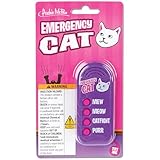
- This 3½" (8.9 cm) electronic Emergency Unicorn noisemaker includes four phrases: You’re Amazing, Glitter & Rainbows, Believe in Unicorns and Come Frolic.
- It has always been a dream of mankind to communicate with our cats. This set of four buttons puts us one step closer to a universal cat translator.
- our party squawkers are made of quality plastic and paper, safe and non-toxic to touch, not easy to break or tear, reliable to use for a long time, nice to create funny.
- These funny metallic noise makers can produce funny and cheerful sounds and liven up the party atmosphere.
- Save your voice for the more important parts of your party performance without letting down your fans. This battery-operated device features 4 classic cat sounds that you can use to delight any audience.
| Pattern | What it looks like | What to do |
|---|---|---|
| Longstanding quiet | The cat has always communicated with few meows, often using body language, tail position, or approaching you. Appetite, activity, grooming, sociability and litter-box use are normal for this cat. | Low meowing alone is not evidence of disease. Keep observing for changes from this baseline. |
| New voice change | The meow has suddenly disappeared, or it now sounds changed, such as raspy or hoarse. | Contact your veterinarian. VCA advises consultation for sudden changes in vocal habits, and a changed or raspy meow is a warning sign to take seriously. |
| Quietness with other changes | The cat is quieter and also withdrawn, less active, hiding more, eating or drinking less, grooming differently, or showing other changes. | Contact your veterinarian promptly. These changes together can point to illness even when the voice itself seems unremarkable. |
This is a cautious reading of VCA’s guidance, not a diagnosis. A cat that has always been quiet and shows no other change is in a different category from a cat whose voice has just gone.
Why withdrawal matters more than silence
Cats often hide illness, so a change in behavior can be the only early sign an owner sees. VCA’s guidance on recognizing illness in cats, last updated May 8, 2024, states: “In the early stages of illness, often the only thing that a cat owner may notice is that the cat has become quiet and withdrawn.” The page names VCA Animal Hospitals as publisher and LifeLearn Animal Health as the content provider. It does not attribute this sentence to a named individual.
Rank #2
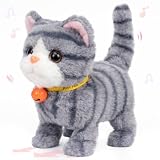
- WALKING AND WIGGLING: This is a vivacious cat, it features with walking, wiggling tail and make sound meow. This interactive cat will walk forward and make a sound meow, while the toy's head will begin to node, cute enough to attract the attention of children. It is a good cat toy to make your child happy after opening switch.
- A INTERESTING TOY FOR KIDS: Still buy some boring stuffed animals or dolls for your little one? Why not try this animated walking cat? Adorable cat can swing head up and down, wag tail and go walking. It will meow when it play. Perfect gift for a little one that loves animals.
- GREAT REPLACEMENT: Give your child the responsible role of taking care of a pet! Almost every little boy and little girl dreams of owning a pet at some point in their lives. However, to those who loves cat but are allergic to the fur or kids who are too little to hug a four-leg friend with paws and fangs, this toy may be a safe alternative to make girls’ and boys’ dreams come true without the hassle or the mess.
- ABOUT WALKING CAT: This adorable cat measures about 7 inches long, the portable size and light weight can let kids take it everywhere and play with. Walking cat could attract children's attention easily, it gives you more space and time to do your own thing. Inspire your children and surprise friends or guests with an ideal interactive gift for any occasion. Let your kids’ mind run freely, connect their imagination and enjoy happy game time.
- CONSIDERATIONS: Adults should open the battery box with a screwdriver. Put in 2 AA batteries (NOT INCLUDED), and turn the switch to “ON”, it will play. Please remove the batteries if for long time storage and keep it away from fire and water for safety reasons. Do not wash it. If you have any questions about the problem, please don’t hesitate to contact us. We’ll response in 24 hours.
The sentence describes quietness and withdrawal as possible signs of illness. It does not mean that a cat with a naturally quiet voice is sick. The distinction is the change from the cat’s own baseline.
What to check across the whole cat
Judge your cat by its overall condition rather than its voice alone. VCA’s illness guidance points to these areas as useful context:
Rank #3

- SIMULATE MOUSE TAIL: Motorized mouse wand silently moves back and forth and changes direction when you least expect it. Unpredictable cat toy tricks cats into believing there's a mouse under the canvas cover and they won't be able to resist the urge to try and catch it ! The interactive toy is ideal for keeping cats active.
- 3 SPEED SETTINGS: Slow, medium, fast, and random, attract your cat instantly with a press of a button. The moving wand changes directions and speeds randomly to keep your cat's attention and keep them on their toes, great for cats of all ages. Your cat will love the Cat’s Meow toy.
- PREVENTS CLAWING & SCRATCHING: Long Lasting durable polyester cover, works great on all floors. Carpet, wood, or tile won’t interfere with kitty’s fun. Both mouse and mat are resistant to pouncing, pawing, and scratching. This motorized cat toy will help to stop your cat clawing and scratching your furniture.
- EASY TO USE: No complicated and difficult to use methods, just need to install the wand into the motor and cover the base with the included cover. Then press the central button to set the speed: slow, medium, fast, or random and keep your cat entertained with this clever moving toy.
- POWER: requires three 3 (C) batteries (not included). Clean cover with a clean moist towel. Dry thoroughly. Do not immerse in water.
- Energy: whether the cat is playing, jumping, and moving around as usual.
- Sociability: whether it still seeks contact, greets you, or retreats to hiding places.
- Appetite and thirst: whether it is eating and drinking normally, and whether either has changed.
- Grooming: whether the coat looks clean and whether the cat grooms as it normally does.
- Litter-box use: frequency, posture, and whether the cat is passing normal-looking stool and urine.
- Breathing and discharge: whether there is any change in breathing, or any eye or nose discharge.
What to note before you call
A clear timeline helps your veterinarian understand the change. Write down:
- When you first noticed the change, and whether it came on suddenly or gradually.
- Whether the cat makes any other sounds, such as chirps, trills, or purrs, and whether those have changed.
- Changes in appetite, water intake, energy, sociability, grooming, breathing, or litter-box habits.
- Any recent events, such as a new household member, a move, or a change in diet or medication.
A short audio or video recording of the cat’s usual sounds from before the change can help you describe what you are hearing. This is a practical suggestion, not standard veterinary instruction, and it does not replace an examination.
Rank #4

- Hidden Cat Prank That Sparks Instant Confusion: Turn an ordinary room into a hilarious mystery when this cat noise maker prank begins meowing from an impossible-to-find location, sending everyone searching for the “missing cat” that isn’t actually there
- Realistic Meowing Sound That Tricks Everyone: This cat meow prank noise maker plays two different cat sounds, a calm curious meow followed by a more urgent one, creating the convincing illusion that a wandering feline is hiding somewhere nearby
- Random Timing Makes the Prank Hard to Track: Instead of repeating constantly, the noise prank device meows every 3 to 15 minutes with unpredictable spacing, giving targets just enough silence to think it stopped before the mysterious cat sound returns
- Tiny, Easy to Hide, and Ready in Seconds: The slim design with adhesive backing lets you hide this Fun Delivery sound prank under desks, behind furniture, or in cabinets, while the simple one-button switch means no apps, setup, or complicated instructions
- Small Device, Big Reactions: Built for office pranks, roommate mischief, family jokes, and viral reactions, this harmless cat prank noise maker delivers hours of shared laughter, and the unforgettable moment when everyone realizes there was never a cat
When to call your veterinarian
Do not wait a fixed number of days when a voice change is sudden or appears alongside other signs. Contact your veterinarian promptly if you notice a new or changed voice, or quietness that comes with withdrawal or other changes in the list above.
Independent reader supportYour contribution helps us test, update, and keep practical guides available for everyone.Signs that need immediate veterinary attention
VCA’s guidance lists these as urgent, whether or not the cat has also lost its voice:
Best Value

- 🐱 REALISTIC CAT MEOW SOUND This hidden cat prank device produces authentic kitten sounds that make people believe a real cat is hiding nearby. The realistic cat meow prank audio creates curiosity and keeps coworkers, friends, and family members searching for a cat that never appears.
- 🐱 RANDOM PLAYBACK FOR MAXIMUM CONFUSION The hidden noise maker plays realistic meows every 10–20 minutes at unpredictable intervals. This clever secret sound prank creates long-lasting confusion and makes it extremely difficult for anyone to locate the source.
- 🐱 QUICK & DISCREET SETUP Featuring a built-in 5-second delay, this practical joke gadget allows you to place the device and walk away unnoticed. Perfect for creating unforgettable office prank moments and roommate surprises.
- 🐱 PERFECT GAG GIFT FOR ADULTS A hilarious funny gag gift for adults, prank lovers, coworkers, and roommates. Great for birthdays, White Elephant parties, graduation gifts, and anyone who enjoys a creative hidden speaker prank
- Breathing difficulty.
- Absent or markedly reduced urination.
- Not eating properly for 24 hours.
Conditions a veterinarian would consider
Silence alone cannot tell you what is causing a change, and this article does not diagnose laryngitis, airway disease, pain, thyroid disease, kidney disease or any other condition. VCA’s vocalization guidance discusses pain, endocrine dysfunction, high blood pressure, and age-related sensory or cognitive change in the context of changed or excessive vocalization. Those are possibilities a veterinarian would assess through examination and, where appropriate, testing.
Products and remote advice
No product in the reviewed guidance is recommended to make a quiet cat meow, and no toy, supplement or voice product should be used as a remedy for silence. VCA’s vocalization guidance mentions toys and feeding activities in the context of excessive or nighttime vocalization, not a cat that does not meow.
Remote veterinary advice may be useful for deciding whether a non-urgent change needs an appointment. It is not a substitute for in-person care when breathing difficulty, reduced urination, or refusal to eat is present.
What the sources do and do not establish
The available material is practical veterinary guidance. It does not include prevalence statistics on how many cats rarely meow, or how often quietness signals illness. No such figure is offered here. The main sources are:
- VCA Animal Hospitals, “Why Do Cats Meow?” No publication date shown.
- VCA Animal Hospitals, “What Do Cat Meows & Dog Barks Mean.” No publication date shown.
- VCA Animal Hospitals / LifeLearn Animal Health, “Recognizing the Signs of Illness in Cats.” Last updated May 8, 2024.
- VCA Animal Hospitals, “Cat Behavior Problems – Vocalization.” Edited July 22, 2019. This is older behavior guidance, used here for context on causes and enrichment rather than as a product recommendation.
Because the vocalization guidance is older, check with your veterinarian about any current recommendations that depend on the specific cat.
Quick Recap
Product prices and availability are accurate as of the date/time indicated and are subject to change. Any price and availability information displayed on Amazon at the time of purchase will apply.




