Quick wins for a faster PC:
Clear out junk files and repair common Windows errorsFree Scan →Scan for outdated or missing drivers - takes under a minuteDriver Scan →Bordetella bronchiseptica is one bacterial cause of respiratory infection in cats, and it is most often seen where cats live in crowded groups, such as shelters and breeding catteries. Its early signs (coughing, sneezing, and eye discharge) overlap with many other feline respiratory illnesses, so a cough or sneeze alone cannot tell you it is Bordetella. Your veterinarian decides whether testing, antibiotics, supportive care, or vaccination makes sense for a particular cat. Difficulty breathing or blue-tinged gums are emergencies.
What Bordetella bronchiseptica is and where it shows up
Bordetella bronchiseptica is a bacterium that commonly infects the upper respiratory tract of cats housed at high density, according to the Cornell Feline Health Center’s “Respiratory Infections” guidance. Infections are most often described in shelters and breeding catteries, where many cats share air, bowls, litter, and close contact.
Cornell reports that in these high-density populations, about 5% of cats with upper respiratory infection signs and about 1.5% of cats that appear normal may carry the bacterium. Those figures describe the shelter and cattery groups studied and the undated Cornell page in which they appear. They should not be read as an estimate of how often pet cats in ordinary homes carry it.
How it spreads
The bacterium passes through oral and nasal secretions. Several exposure routes matter in practice:
Recommended Free Tools
#1 Best Overall

- Kennel Cough Relief: Addresses not only coughing but also nasal congestion, and other symptoms associated with kennel cough. Suitable for Dogs and Cats Cough and Allergy Relief - for Dogs and Cats of All Breeds and Sizes
- Portable Pet Support: The compact bottle of kennel cough drops slips easily into a bag or pocket, making it simple to bring dog cough relief along on trips, walks, or boarding stays.
- Suitable for All Ages: Whether you have a playful puppy or a senior dog, these drops are suitable for pets of all ages, offering relief to furry companions at any stage of life.
- Targets Various Cough Types: Designed to address dry, wet, or barky coughs in pets, providing relief for a range of respiratory issues.
- Optimal extract Balance - Tailored specifically for cats and dogs, our supplement ensures that pets of any breed, size, or age can effortlessly reap its benefits.
- Cat-to-cat contact in crowded housing. Shared spaces and close contact are the main setting Cornell describes.
- Dogs. Infected dogs can spread the bacterium to cats, so a cat that has spent time with dogs in a shelter, boarding setting, or multi-animal household can be exposed even without contact with other cats.
Whether an individual household cat is at meaningful risk depends on what that cat is exposed to, which is why the exposure history is the first thing your veterinarian will ask about.
Can people catch it from cats?
Cornell characterizes transmission of B. bronchiseptica to people as very rare. That is not the same as zero, and it is not a common concern for healthy adults. If you are immunocompromised or have other health concerns, ask your own healthcare professional how to handle contact with a sick cat.
Symptoms: mild signs and serious disease
Mild, often self-limiting signs
Many cats show coughing, sneezing, and eye discharge. These signs can be mild and may resolve, but they are nonspecific. Feline herpesvirus, calicivirus, and other organisms cause the same pattern, so the signs point toward a respiratory infection rather than to a particular germ.
Rank #2
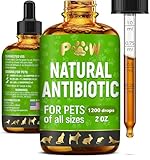
- NATURAL COMPOSITION: No artificial additives! The newest formula! Our Antibiotics for dogs & cats include Cranberry, Echinacea, and Oregano. Completely organic dietary supplement.
- GENTLE SUPPORT: Formulated with ingredients that support the digestive system, our natural Antibiotics for dogs and cats aid nutrient absorption and maintain gut function. Results may vary by pet.
- COMPLEX HELP: It helps support pets' organs during kennel coughs, ear infections, allergies, UTIs & digestive moments. Use for 2–3 weeks, then pause for 1–2 weeks before repeating.
- FOR EVERY PET: Whether you have a small breed dog/cat or a large one, it does not matter; our dog & cat Antibiotic is excellent for different breeds and sizes. Please consult a specialist before use.
- DROPS FORM: Perfect option for the pet’s comfort! We provide our Antibiotic for dogs and cats in drops, so drop a bit into the pet’s mouth or add to the pet’s food or water.
Serious disease
Bordetella can progress to lower respiratory involvement and pneumonia. Difficulty breathing and cyanosis (blue-tinged mucous membranes) indicate that the lungs or airways are compromised, and severe disease can be fatal. Cornell notes that severe lower respiratory disease is especially concerning in young cats, though it also occurs in older cats.
Free tools Windows power users keep installed
One-click scans. No signup required.
Why symptoms cannot confirm Bordetella
Bordetella is only one possible contributor to feline respiratory disease. Merck’s feline respiratory disease overview (last updated May 2025) identifies feline herpesvirus and calicivirus as major causes of acute feline upper respiratory infection, with other organisms contributing or complicating illness. Cornell’s respiratory testing panel includes B. bronchiseptica alongside feline herpesvirus, calicivirus, Mycoplasma felis, Chlamydia species, and other agents. A veterinarian who suspects Bordetella still has to consider the others.
Testing: what culture and PCR can and cannot tell you
A veterinarian may submit respiratory samples for bacterial culture or PCR (polymerase chain reaction) testing. Both methods can be useful, but Cornell warns that either one can come back negative in a cat that is infected. A negative result therefore does not rule Bordetella out, and a positive result has to be read alongside the cat’s exposure history and clinical picture.
Rank #3

- CAT & DOG COUGHING TREATMENT: We provide this supplement to help your pets with dog cough, allergies, sneezing, and other breathing moments. Suitable for all pets who need support & care.
- ORGANIC COUGH FOR DOGS: The product does not contain chemical additives, artificial flavors, and colors. Here are Marshmallow root, Mullein leaf, Calendula, and other effective herbs.
- OPTIMAL RATIO OF LIQUID TO EXTRACT: Our SalutemPet Cough for dogs and cats is specially formulated so that pets of any age can easily use it with benefits.
- DROPS SUITABLE FOR PETS: Our supplement is provided in a convenient liquid form that is easy to apply – add to the food bowl or directly to the pet’s mouth.
- PROPER DOSAGE FOR ALL PETS: Under 10 lbs = 1/2 dropper (0.5 ml), 10-35 lbs = 1 dropper (1 ml), 36+ lbs = 2 droppers (2 ml). This Cough supplement can be used up to three times per day.
Lab panel descriptions we reviewed are dated 2019. Cornell’s diagnostic panel description lists nasal or pharyngeal swabs, tracheal washes, bronchoalveolar lavage, and respiratory tissue as appropriate sample types. Confirm current panel contents, sample requirements, and turnaround with your veterinarian or the laboratory before ordering, since these can change.
Treatment and expected course
Cornell describes antibiotic therapy as the mainstay of treatment, with doxycycline as the usual choice. Its wording on the point is direct: “Antibiotic therapy (usually doxycycline) is the mainstay of therapy, although supportive care, including assurance of adequate nutrition and hydration, are very important in managing B. bronchiseptica infection in cats.” Cornell also notes that even mild cases may be treated to keep them from getting worse.
What’s actually slowing this PC down?
Pick the symptom - the matching free tool is one click away.
Do not start, stop, or dose antibiotics on your own. Drug choice, dose, and duration depend on the cat’s weight, age, and other conditions, and that decision belongs to your veterinarian.
Rank #4

- BREATHING CARE: Our cat & dog cough medicine alternative helps maintain normal breathing & lung function, while supporting throat comfort during occasional coughing, seasonal or environmental changes.
- COMPOSITION: Expertly crafted formula with herbal ingredients is free from artificial colors, flavors, or unnecessary additives. It features Calendula, Marshmallow Root, and other components.
- DOSAGE: This liquid supplement can be mixed with food, water, or given directly into your pet’s mouth. Dose as follows: pets under 10 lbs – 0.5 ml; 10–35 lbs – 1 ml; over 36 lbs – 2 ml.
- HOW LONG: Administer cat and dog cough suppressant 1-2 times a day for 2–3 weeks, followed by a 7–14-day break. Then repeat the course and provide advanced support for your pet.
- EASY-TO-USE FORMAT: The liquid format allows for precise, flexible dosing and easy adjustment. It also disperses quickly, helping support efficient absorption and convenient daily use.
For most cats with uncomplicated infection, Cornell reports recovery within about 10 days of starting antibiotic therapy. This is a reported typical course, not a guarantee for any one cat. Without appropriate treatment, the infection can worsen and progress to life-threatening pneumonia.
The nasal vaccine: who it is for
A nasal Bordetella vaccine is available. Cornell does not consider it a core vaccine for all cats, but it says the vaccine should be considered for cats entering high-density housing situations. Use the table below to see how the main factors bear on the decision. Your veterinarian makes the final call based on the individual cat.
| Situation | What the guidance says |
|---|---|
| Cat entering a shelter, cattery, or other high-density housing | Should be considered (Cornell Feline Health Center) |
| Ordinary household cat with no planned dense housing | Not a core vaccine for all cats; discuss exposure risk with your veterinarian |
| Cat younger than four weeks | Should not be given |
| Cat receiving antibiotics, or scheduled to receive them | Should not be given |
| Any cat after vaccination | Mild upper respiratory signs may follow |
When to act
- Emergency care now: difficulty breathing or cyanosis (blue-tinged gums or other mucous membranes). Do not wait to see whether it improves.
- Prompt veterinary visit: any cat with coughing, sneezing, or eye discharge that persists or worsens, especially a young cat, a cat recently housed in a shelter or cattery, or a cat that has been in contact with a dog that has a cough.
- Ask about testing: whether culture or PCR is appropriate, which sample your veterinarian would collect, and what a negative result would and would not mean.
- Ask about vaccination: if your cat is going into dense housing, or if you are boarding, fostering, or adopting cats from a group setting.
Keep a cat with respiratory signs away from other cats until your veterinarian has assessed it, and tell the clinic about recent contact with other animals so they can plan the visit.
Best Value

- CAT & DOG COUGH SUPPORT DROPS: HomeoPet Cough is a natural cat and dog supplement that may help with coughing-related symptoms, including wet cough, dry cough, barky cough, and other respiratory issues.
- SAFE FOR ALL LIFE STAGES: These drops support all ages of dogs, cats, rabbits, and other pets in solo or multi-pet homes. This liquid formula is made with high-quality homeopathic ingredients and has no known side effects.
- PET-FRIENDLY FORMULA: These tasteless drops don’t have a strong odor, so they are easy to administer to picky pets. They can also be stored in a cool, dry space without refrigeration, making it simple to keep them on hand to support your pet.
- FLEXIBLE DOSING: Dose the liquid cough drops directly into mouth, in water, or at meal/snack time 3 times a day for up to 2 days until symptoms improve. For acute cases, give 1 dose every 15 minutes for up to 4 doses. Discontinue use when symptoms subside.
- A FAMILY LEGACY OF NATURAL PET CARE: Founded by veterinarian Thomas Farrington and his brother Daniel, HomeoPet is rooted in European homeopathic traditions, bringing high-quality, safe, and natural supplements to pets and pet parents worldwide.
Frequently asked: what a visit usually involves
Expect a history of exposures, a physical examination focused on breathing and lung sounds, and a discussion of whether testing or treatment is warranted. Severity guides the plan: a mildly affected cat may be managed with supportive care and monitoring, while a cat with breathing difficulty needs immediate stabilization and may need hospitalization.
Mild signs can resolve, but the sign pattern is not a diagnosis. Keep an eye on appetite, hydration, and breathing, and report any change to your veterinarian promptly.
Quick Recap
Product prices and availability are accurate as of the date/time indicated and are subject to change. Any price and availability information displayed on Amazon at the time of purchase will apply.




